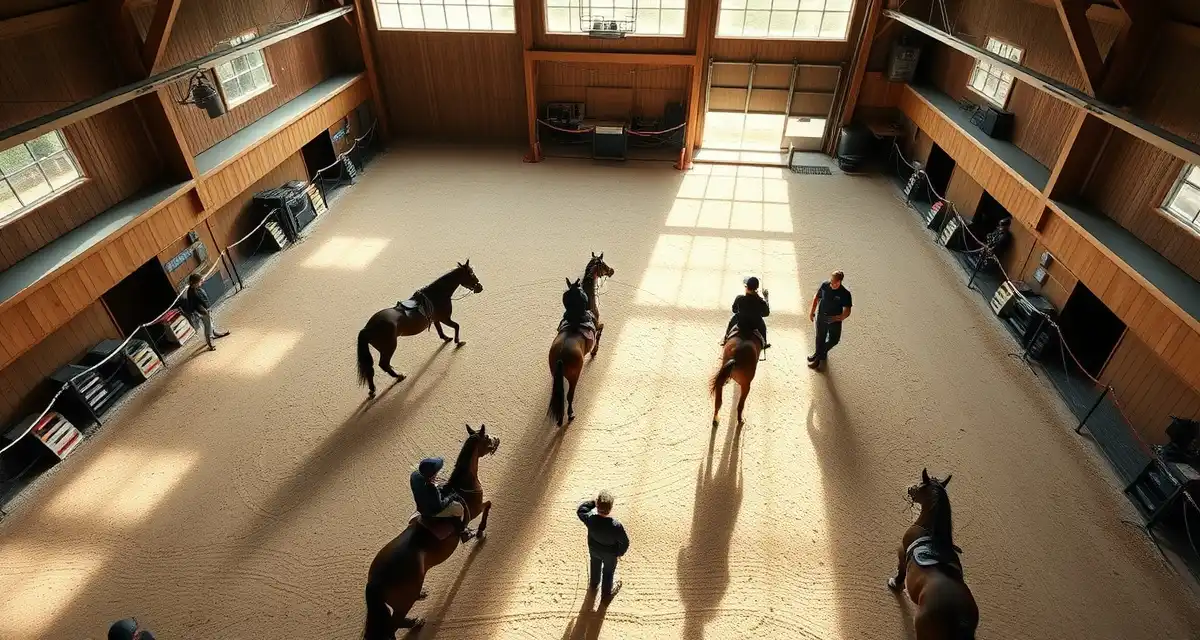
Dressage Barn Barn Management: Complete Guide for Facility Managers
Dressage horse fitness peaks require precise nutrition and schedule management, and that demands barn management systems built around those peaks rather than generic facility tools. Running a dressage barn is different from managing a boarding barn or a trail riding facility. The precision that dressage training demands shows up in every aspect of facility management, from the training schedules linked to competition season to the daily care protocols that protect horses in intensive work.
TL;DR
- Discipline-specific facilities have billing and scheduling demands that differ meaningfully from general boarding operations.
- Performance horse health monitoring needs to track training load and recovery, not just routine care events.
- Show and competition billing requires real-time charge capture at events to avoid reconstruction errors after returning home.
- Owner communication expectations at training facilities are higher than at basic boarding operations.
- Trainer-client trust depends on documented progress records, not just verbal updates after each ride.
- BarnBeacon supports performance-focused facilities with training logs, competition billing, and owner update automation.
This guide covers the barn management workflows specific to dressage facilities and explains how software like BarnBeacon supports those workflows.
What Makes Dressage Barn Management Unique
Dressage horses are athletes managed to very precise specifications. Conditioning programs are tied to show calendars months in advance. Nutrition adjustments follow training intensity. Veterinary and farrier schedules are planned around competition dates. Every element of daily management feeds into the horse's performance readiness.
This creates a barn management environment where records matter more and schedules have tighter consequences than at general boarding facilities. A dressage horse whose shoeing appointment falls too close to a major show is a problem. A horse whose conditioning was interrupted by a mismanaged turnout schedule is a problem. The barn management system needs to support precision.
Daily Barn Management Workflows at Dressage Facilities
Training Schedule Integration
Dressage training schedules are tied to competition seasons and individual horse development plans. Barn management needs to coordinate around those training schedules rather than treating them as separate from facility operations.
A well-run dressage barn connects the training calendar to daily care tasks. Horses in heavy training have different feeding requirements, different turnout needs, and different monitoring considerations than horses in a lighter maintenance phase. Your barn management system should reflect those differences.
BarnBeacon lets you track each horse's current training phase and connect care notes to that status. When a horse moves from maintenance to competition preparation, the care team sees that context in their daily tasks.
Stall Management for Dressage Horses
Dressage horses often spend more time in their stalls than horses at trail barns or pasture-focused facilities. This creates specific management needs: consistent bedding depth and type, monitoring for stall vices that develop from confinement, and careful attention to hydration when horses aren't out moving and grazing.
Barn management software should let you log stall condition notes, track bedding usage, and flag horses whose behavior warrants extra monitoring. These are the small daily details that add up to either a healthy, performing horse or a horse with problems that compound over time.
Turnout Coordination
Dressage horses need carefully managed turnout that fits their training and social needs without creating injury risks. A horse going into a competition cannot afford a pasture injury from a poorly managed group turnout situation. Dressage barn managers often maintain individual or small-group turnout schedules for exactly this reason.
BarnBeacon's scheduling tools let you set up and track individual turnout schedules, flag any changes to the standard plan, and note any behavior or health observations from turnout time.
Health Records in a Dressage Context
Competition Health Documentation
USDF and USEF competition requirements include specific health documentation. Coggins results, vaccination records, and in some cases vet-signed health certificates need to be current before a horse can compete. Dressage horses often compete at multiple venues across a season, which means health documentation gets pulled frequently.
Having those records in an organized, accessible system rather than a filing cabinet or a binder in the barn makes pre-show preparation faster and reduces the risk of arriving at a show without required documentation.
Vet and Farrier Scheduling Around Competition
Dressage barn managers schedule vet and farrier appointments with competition dates in mind. A farrier appointment too close to a major show can leave a horse on new footing at the worst time. Vaccination timing matters for competition eligibility. BarnBeacon keeps all of this in one place so you can plan appointments with show dates visible.
Monitoring High-Performance Athletes
Dressage horses in competitive training are monitored more closely than leisure horses. Weight checks, coat and muscle condition, attitude changes, and subtle lameness indicators all matter. BarnBeacon lets barn staff log daily observations and flag anything that warrants veterinary attention before it becomes a performance-limiting problem.
Communication with Owners and Trainers
Dressage facilities often have a close three-way relationship between the barn manager, the trainer, and the horse owner. Owners are typically invested in their horse's progress and want regular updates. Trainers need barn management support that doesn't create friction for training plans.
BarnBeacon's owner portal keeps owners informed without requiring the barn manager to personally contact each one. Health updates, veterinary visit summaries, and daily care notes can be shared through the portal so owners stay informed without overwhelming the barn team with phone calls.
Trainers benefit from knowing that care notes are being logged and that the barn management team is working from the same information they are. When a trainer notes in a session that a horse felt stiff on the right hind, that observation can be logged in BarnBeacon where the vet and barn staff will see it.
Scheduling at a Dressage Facility
Competition Season Planning
Dressage competition seasons follow USDF and local organization calendars. Barn managers at dressage facilities plan the full season's show schedule early and coordinate care and management around those dates. BarnBeacon's scheduling tools let you set up the show calendar and plan backward from show dates for preparation tasks.
Arena Scheduling
Dressage arenas need to be coordinated carefully when multiple horses and trainers are using the space. Arena footing maintenance, watering, and dragging are daily tasks that need to fit around training schedules. BarnBeacon handles arena scheduling alongside training coordination so nothing gets double-booked and footing maintenance doesn't get skipped because of a scheduling conflict.
Instructor and Groom Coordination
Larger dressage facilities may have multiple trainers, assistants, and grooms. Coordinating staff assignments, scheduling groom coverage for shows, and managing the barn team's daily tasks requires a system that everyone can access and update. BarnBeacon handles staff scheduling alongside the broader facility management functions.
Setting Up BarnBeacon for Your Dressage Facility
BarnBeacon's core tools cover what dressage facilities need: health records, scheduling, billing, and owner communication in one place. Setting up for a dressage barn starts with entering your horses and their current status, your show calendar, and your standard care protocols.
From there, you can configure billing for your training and boarding clients, set up owner portal access, and start logging the daily observations that feed into good decision-making for performance horses.
Learn more about BarnBeacon's full barn management capabilities and how the platform supports dressage-specific operations at /dressage-barn-operations-guide.
Frequently Asked Questions
How do dressage barn managers handle barn management?
Dressage barn managers handle barn management with a level of precision that reflects their horses' athletic demands. Daily feeding, turnout, stall care, and health monitoring are all planned around the training and competition calendar. Many dressage barn managers use dedicated equine management software to keep health records, coordinate care schedules, and communicate with owners and trainers in one organized system.
What software do dressage facilities use for barn management?
Dressage facilities use a range of tools, from spreadsheets to general barn management platforms to equine-specific software. BarnBeacon is designed for training facilities and boarding barns serving dressage horses, with health records, scheduling, billing, and owner communication tools that fit the precision requirements of dressage facility management.
What are the unique barn management challenges at dressage barns?
The primary challenges at dressage barns are the tight connection between daily care and performance outcomes, the need for precise health record management for competition documentation, and the coordination of training, care, and show schedules across a season. Dressage horses are high-investment athletes, and barn management errors have direct performance consequences that make organized systems more than just convenient.
How is billing structured differently at a Dressage facility compared to a general boarding barn?
Competition-focused facilities like Dressage operations typically add event billing layers on top of standard board and training fees. These include entry fees, venue stabling, hauling, and professional services at shows. Capturing these charges in real time, at the event rather than from memory afterward, is the most important billing practice specific to competition-focused facilities.
What records are most important for Dressage horses that travel to competitions?
Competition horses need their Coggins test results, current vaccination records, and a summary of any active health issues accessible from a phone for travel. Some venues require specific documentation at check-in. Health observations from the trip home, including any signs of travel stress, should be logged immediately on return so the training team can factor them into the recovery and reconditioning plan.
How do I track which horses are in the best condition for upcoming events?
Per-horse fitness and health records that log training load, competition history, and the trainer's condition assessments are the foundation for competition readiness decisions. A horse that competed three weekends in a row has a different physical profile than one resting for two weeks, and those decisions need to be based on documented history, not only the trainer's memory. Digital logs that capture each training session's intensity alongside health observations give the clearest picture.
What is Dressage Barn Barn Management: Complete Guide for Facility Managers?
Dressage Barn Management: Complete Guide for Facility Managers is a comprehensive resource covering the specialized workflows required to run a high-performance dressage facility. Unlike general boarding operations, dressage barns require precision scheduling tied to competition seasons, performance health monitoring, real-time competition billing, and detailed training logs. The guide explains how to build barn management systems around the specific demands of dressage horses in intensive training, and how BarnBeacon supports these workflows.
How much does Dressage Barn Barn Management: Complete Guide for Facility Managers cost?
This guide is a free educational resource available on BarnBeacon. BarnBeacon itself offers barn management software with pricing plans based on facility size and feature needs. There is no cost to read the guide. For software pricing details, visit BarnBeacon's pricing page or contact their team directly to find a plan suited to your dressage facility's size and billing requirements.
How does Dressage Barn Barn Management: Complete Guide for Facility Managers work?
The guide walks facility managers through dressage-specific management workflows: building training schedules aligned to competition season, monitoring performance horse health against training load rather than routine care alone, capturing charges at shows in real time, maintaining detailed progress records for trainer-client communication, and automating owner updates. BarnBeacon integrates these workflows into one platform, replacing manual tracking across spreadsheets, paper logs, and separate billing tools.
What are the benefits of Dressage Barn Barn Management: Complete Guide for Facility Managers?
Key benefits include reduced billing errors through real-time charge capture at competitions, stronger trainer-client relationships through documented progress records, better horse health outcomes through training-load-aware monitoring, and time savings from automated owner communications. Dressage facilities also gain scheduling tools built around performance cycles rather than generic boarding calendars, giving managers visibility across training, competition, and recovery phases simultaneously.
Who needs Dressage Barn Barn Management: Complete Guide for Facility Managers?
Dressage facility managers, barn owners, and head trainers running performance-focused equestrian operations benefit most from this guide. It is especially relevant for facilities transitioning from general boarding management to discipline-specific systems, operations preparing for a busy competition season, and trainers who want to formalize owner communication and progress documentation. Any equine professional managing horses in intensive dressage training will find the workflows directly applicable.
Related Articles
- Breeding Barn Staff Management: Complete Guide for Facility Managers
- Dressage Barn Billing: Complete Guide for Facility Managers
Sources
- United States Equestrian Federation (USEF), competition rules and facility standards
- American Horse Council, equine industry economic and performance data
- American Association of Equine Practitioners (AAEP), equine athlete health and performance guidelines
- National Reining Horse Association (NRHA) or relevant discipline governing body, standards and resources
- University of Kentucky Equine Initiative, equine business and performance management resources
Get Started with BarnBeacon
BarnBeacon handles the competition billing complexity, health tracking, and owner communication demands that Dressage facilities need, in one platform built for equine operations. Start a free 30-day trial to see how it fits your specific facility type and client mix.