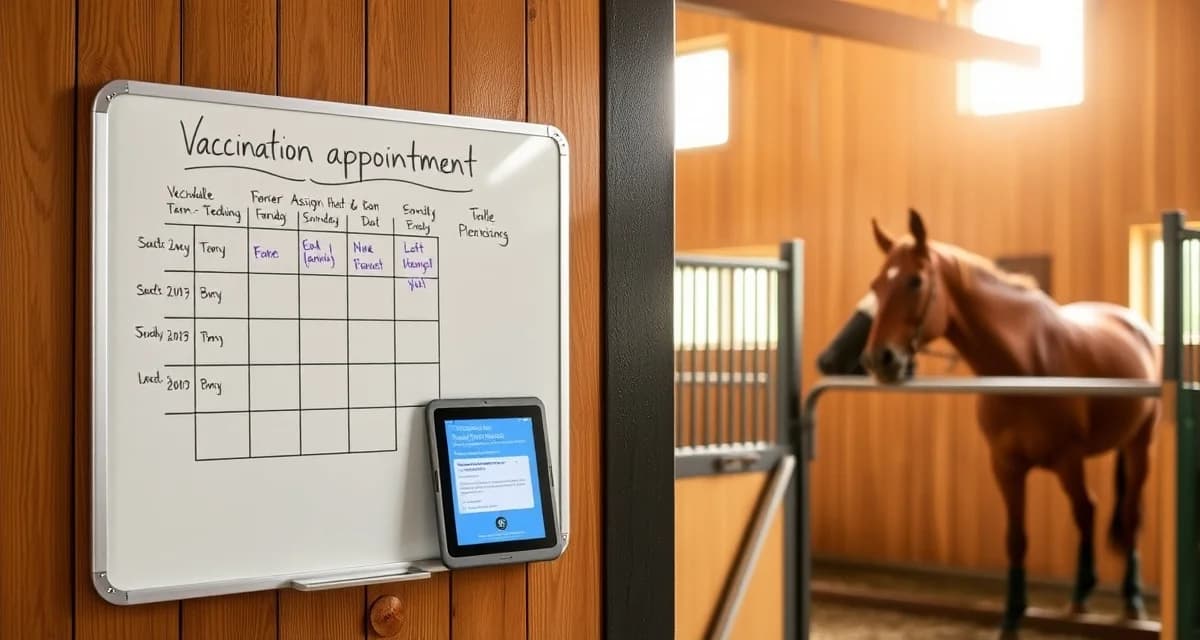
Equine Health Reminders: Never Miss a Vaccine, Dental, or Farrier Appointment
The biggest gap in most barn health management programs is not knowledge of what care is needed. Every barn manager knows horses need vaccines, dental care, and regular farrier visits. The gap is the reminder system. When you are managing 20 or 50 or 100 horses with different service histories and different intervals, the only reliable way to know what is coming due is a system that tracks it and tells you in advance.
Why Manual Tracking Fails at Scale
With one or two horses, a calendar and a good memory work. You vaccinate in April, you put a note in your phone for next March, and you remember to call the vet.
At a barn with 30 horses, that approach breaks down in several ways. Horses arrive with different vaccination histories: one was vaccinated in January, one in October, one has no records and needs to be treated as unvaccinated. The interval between farrier visits varies by horse. Some horses need semi-annual dental care, others annual. Coggins tests expire on different dates throughout the year.
A manual system requires remembering 30 individual service schedules across six or more categories of care. It also requires doing this reliably month after month, across staff turnover, through busy show seasons when attention is elsewhere, and during the kind of stretches where three horses need vet calls in the same week.
Most barns that track this manually end up with a few horses that are consistently current, and a few that drift behind every year.
Setting Up a Reminder System
A useful reminder system has three components: a record of the last service date, a configured interval, and a delivery mechanism for the reminder.
Last service date: Every time a vaccine is given, a float is done, or the farrier visits, that date needs to be recorded in the system. This is the starting point for calculating the next due date.
Interval configuration: Different horses have different intervals based on their use, age, health status, and veterinary recommendations. A performance horse that travels to shows may need influenza vaccines every six months. A pasture horse with no travel may only need annual core vaccines. A 30-year-old horse may need dental work every six months rather than annually. The reminder system needs to respect individual intervals rather than applying a single barn-wide default.
Delivery mechanism: A reminder that sits in a system nobody opens is not useful. Reminders need to arrive somewhere that gets checked: email, a notification in the barn management app, or a daily task list that is part of the regular workflow. The lead time before the due date matters too. Two weeks is generally appropriate for scheduling a farrier or vet visit. One month is better for anything that requires coordination with an outside provider who has a full schedule.
Categories of Care to Set Reminders For
Vaccinations: Set reminders for each vaccine product individually. A horse that received a combination vaccine covering four diseases on a single date still has individual expiration dates for each disease if the products differ, and if the horse receives some vaccines annually and some semi-annually, they need separate reminders.
Coggins/EIA testing: Track the test date and set a reminder before the expiration date. For horses that travel frequently, set the reminder far enough in advance that the test gets done before the old certificate expires, not after.
Dental floating: Typically annual, but the vet or equine dentist may recommend a specific interval for a particular horse. Record that recommendation in the health record and configure the reminder accordingly.
Farrier visits: Track the last appointment date and the horse's typical cycle. A horse on a six-week cycle should get a reminder at week five so you can contact the farrier before the horse is actually overdue.
Deworming: If the barn uses targeted selective treatment based on fecal egg counts, set reminders for when counts are due. If using a rotational protocol, track which product was last used and when.
Coggins for travel documents: If a horse travels regularly, track health certificate expirations in addition to Coggins.
BarnBeacon tracks all of these categories for every horse on the property and generates reminders at configurable lead times. For more on connecting reminders to the full health record, see equine health record management. For scheduling the care events that reminders trigger, see equine health scheduling.
A reminder system is the difference between proactive health management and perpetual catch-up.
FAQ
What is Equine Health Reminders: Never Miss a Vaccine, Dental, or Farrier Appointment?
Equine Health Reminders is a structured approach to tracking and scheduling recurring horse care appointments — vaccines, dental exams, farrier visits, Coggins tests, and more. Rather than relying on memory or manual calendars, it uses a system that monitors each horse's individual service history and sends advance notifications when care is coming due. For barns managing multiple horses with different schedules, it closes the gap between knowing what care is needed and actually delivering it on time.
How much does Equine Health Reminders: Never Miss a Vaccine, Dental, or Farrier Appointment cost?
BarnBeacon offers equine health reminder tools as part of its barn management platform. Pricing depends on the plan tier and number of horses managed. Basic reminder functionality is included in entry-level plans, with more advanced scheduling, multi-horse tracking, and staff notification features available in higher tiers. Visit BarnBeacon's pricing page for current rates. The cost is typically far less than a single missed Coggins test or the vet call that follows a delayed vaccination.
How does Equine Health Reminders: Never Miss a Vaccine, Dental, or Farrier Appointment work?
You enter each horse's care history and set service intervals — for example, every six weeks for farrier visits or annually for dental exams. The system calculates upcoming due dates and sends reminders ahead of the scheduled date. When a service is completed, you log it and the next reminder resets automatically. This creates a self-updating schedule for every horse in your barn, so nothing falls through the cracks even as horses arrive, leave, or change service providers.
What are the benefits of Equine Health Reminders: Never Miss a Vaccine, Dental, or Farrier Appointment?
The core benefit is reliability at scale. A good reminder system ensures no horse goes overdue on vaccines, no Coggins expires before a show, and no farrier cycle gets missed during a busy season. It also improves communication with owners, reduces liability exposure, and makes it easier to onboard new staff without losing institutional knowledge. Over time, consistent records also give vets and farriers better context when they arrive, which improves the quality of care.
Who needs Equine Health Reminders: Never Miss a Vaccine, Dental, or Farrier Appointment?
Any barn managing more than a handful of horses benefits from a structured reminder system. This includes boarding facilities, show barns, breeding operations, riding schools, and private properties with multiple horses. It is especially valuable for barn managers overseeing horses owned by multiple clients, where each animal has a different service history and the manager is accountable for keeping everything current. Solo horse owners with busy schedules also benefit from automated reminders over manual tracking.
How long does Equine Health Reminders: Never Miss a Vaccine, Dental, or Farrier Appointment take?
Setting up reminders for an existing horse takes a few minutes — you enter the animal's service history, select care categories, and set intervals. Initial setup for a full barn of 20 to 30 horses typically takes an afternoon, especially if records need to be gathered from prior vets or owners. Once configured, ongoing maintenance is minimal. Logging a completed appointment takes under a minute, and the system handles all future scheduling automatically from that point forward.
What should I look for when choosing Equine Health Reminders: Never Miss a Vaccine, Dental, or Farrier Appointment?
Look for a system that supports multiple care categories beyond just vaccines — farrier cycles, dental exams, Coggins tests, deworming, and custom reminders. It should allow per-horse intervals since not every horse is on the same schedule. Advance notice settings matter: you want reminders days or weeks out, not the day something is due. Integration with appointment scheduling and the ability to share reminders with staff or horse owners adds significant practical value for managed barn operations.
Is Equine Health Reminders: Never Miss a Vaccine, Dental, or Farrier Appointment worth it?
For any barn managing more than a few horses, yes. The cost of a missed vaccination, an expired Coggins at a show gate, or a farrier cycle that slips by six weeks is higher than any software subscription. More importantly, manual tracking degrades over time as the number of horses grows and staff changes. A reliable system removes the cognitive load from barn managers and creates a consistent standard of care that protects horse health, client relationships, and barn reputation.