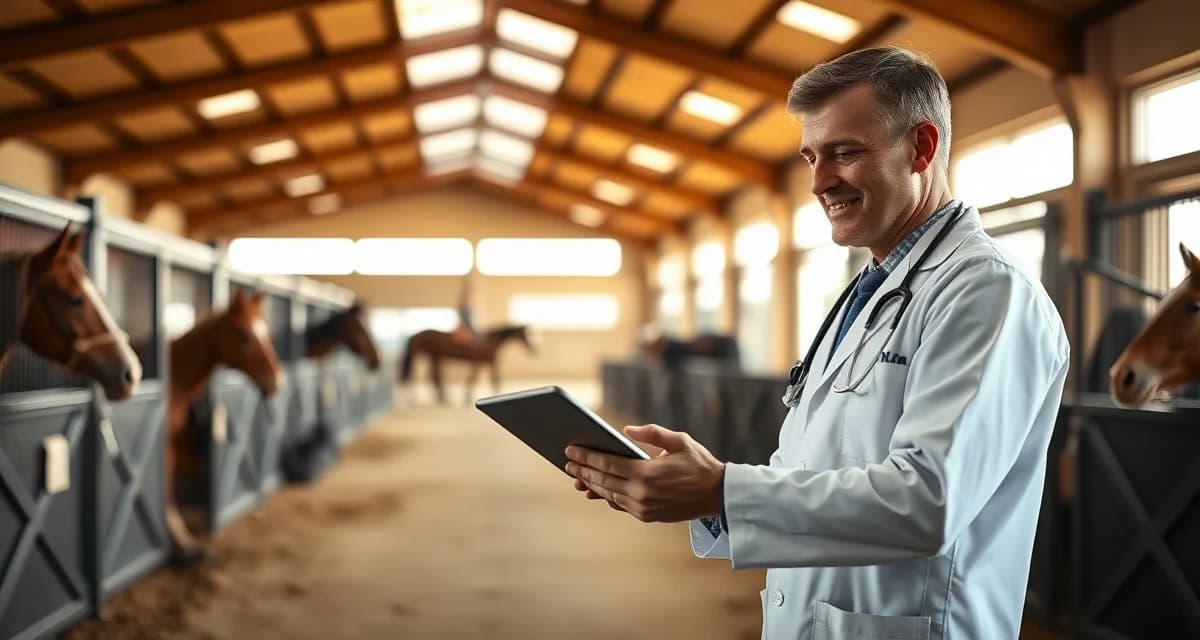
Tracking Health Incidents Across a Herd
Tracking health incidents for a single horse is manageable with a notepad and good intentions. Tracking health incidents across a full barn of twenty, thirty, or fifty horses requires a system. Without one, patterns stay invisible until they become problems.
The Value of Herd-Level Visibility
Individual horse records matter enormously. But herd-level tracking adds a layer of insight that individual records cannot provide on their own.
When you can see all health incidents across your barn in a single view, a few things become possible:
You catch environmental problems faster. If three horses in the same row develop respiratory symptoms within a week, that is not a coincidence. It is a ventilation problem, a dusty hay lot, or something in the water. You see it immediately in aggregate view. You might miss it completely if you are only looking at individual records in isolation.
You see patterns in your care practices. A spike in hoof abscesses after wet weather, a cluster of colic episodes following a hay change, increased skin conditions in late summer. These patterns are actionable. They tell you where your management practices could change.
You track facility risks. If your facility has a known drainage problem in one paddock, herd-level tracking lets you confirm whether horses using that paddock have higher rates of certain issues.
Setting Up Consistent Incident Categories
For herd-level tracking to be useful, incidents need to be categorized consistently. If one staff member logs "colic" and another logs "GI upset" and another logs "belly ache," you cannot aggregate those records meaningfully.
Define your incident categories clearly and train staff on them:
- Colic (mild, moderate, severe)
- Lameness (front left, front right, hind left, hind right, unspecified)
- Respiratory
- Wound or laceration
- Eye issue
- Skin condition
- Dental
- Off-feed or off-water
- Behavioral change
- Other (with required description)
Standardized categories let you run simple reports: how many colic incidents this quarter, how many lameness cases in the past year, which horses have had the most incidents.
What to Capture for Each Incident
Every incident entry in your herd tracking system should include:
Horse identifier. Name and stall number at minimum. Some facilities also track the paddock the horse was in when the incident was observed.
Date and time. Be specific. Time matters for evaluating care response speed and for identifying time-of-day patterns.
Category and description. Category for sorting and filtering, description for clinical detail.
Severity rating. Even a simple low/medium/high rating helps you filter for significant incidents when reviewing the record later.
Action taken. Monitored, treated in-barn, vet called, owner notified.
Resolution status. Open, resolved, ongoing management.
Running Reports on Your Herd
The payoff of consistent tracking is the ability to run reports that give you real insight.
At minimum, review your herd health incidents monthly. Look for:
- Any horse with more than two incidents in the month
- Any incident category that is trending upward
- Any pattern linking incidents to location, weather, staff on duty, or feed changes
Quarterly, look at year-over-year comparisons. Are incidents increasing or decreasing? Are certain horses consistently driving more incidents than others?
BarnBeacon makes this kind of reporting straightforward because incident data is attached to structured records rather than sitting in notebooks or spreadsheets. You can filter by horse, by date range, by incident type, or by outcome.
Integrating With Seasonal Management
Some health incident patterns are seasonal and predictable. Heat stress cases rise in summer. Respiratory issues increase in winter when barn ventilation drops. Hoof issues change with wet and dry cycles. Colic risk increases with weather changes.
When you have multiple years of incident tracking data, you can anticipate these seasonal spikes and take preventive action rather than responding reactively. Increase electrolyte access before summer, improve ventilation before winter, adjust feeding schedules around weather fronts.
This shift from reactive to proactive management is one of the real benefits of sustained, consistent incident tracking.
Sharing Herd Health Data With Your Veterinarian
Your farm vet should see herd-level incident data at least annually, ideally at a scheduled herd health visit. A summary of incident frequency, common categories, and any unresolved or recurring issues gives your vet context that makes their recommendations more precise.
For individual horses with frequent incidents, connect the herd tracking data to individual horse health profiles so your vet has the full picture in one place.
See also health record tracking for guidance on maintaining complete individual records alongside your herd-level data.
FAQ
What is Tracking Health Incidents Across a Herd?
Tracking health incidents across a herd means recording, organizing, and reviewing every health event — illness, injury, colic, respiratory issue, or lameness — for all horses in your barn as a unified dataset. Unlike keeping separate notes per horse, herd-level tracking gives you an aggregate view so you can spot patterns, identify environmental risks, and compare incident rates across paddocks, stalls, or feed groups. It turns scattered observations into actionable barn management intelligence.
How much does Tracking Health Incidents Across a Herd cost?
BarnBeacon offers herd-level health incident tracking as part of its barn management platform. Pricing depends on barn size and subscription tier. Basic plans cover smaller operations, while larger barns with fifty or more horses typically use professional or enterprise plans. Visit BarnBeacon.com for current pricing. Many barn managers find the cost offsets veterinary expenses quickly once patterns are caught early and preventable incidents are reduced.
How does Tracking Health Incidents Across a Herd work?
You log each health incident — date, horse, symptoms, severity, treatment, and outcome — into a centralized system. BarnBeacon then displays all incidents across your herd in a timeline or map view. You can filter by location, incident type, date range, or individual horse. The system surfaces clusters and trends automatically, so a spike in respiratory cases in one barn aisle, for example, becomes immediately visible rather than buried in separate individual records.
What are the benefits of Tracking Health Incidents Across a Herd?
Herd-level tracking helps you catch environmental problems faster, identify management patterns driving repeat incidents, and document facility risks over time. You can see whether a drainage issue in one paddock correlates with higher lameness rates, or whether a hay change preceded a cluster of colic episodes. It also strengthens communication with your veterinarian, who can review aggregated incident history rather than relying on memory or fragmented notes.
Who needs Tracking Health Incidents Across a Herd?
Any barn managing more than a handful of horses benefits from structured herd tracking. It is especially valuable for boarding facilities, breeding operations, training barns, and equine rescues where multiple horses share space and resources. Barn managers responsible for twenty or more horses will find individual-record-only approaches quickly become inadequate. Herd-level visibility is also important for facilities that have experienced disease outbreaks or recurring unexplained health clusters.
How long does Tracking Health Incidents Across a Herd take?
Initial setup — importing horse profiles and configuring your barn layout — typically takes a few hours. Logging an individual incident takes two to five minutes once you have a routine. The ongoing time investment is minimal compared to managing paper logs or spreadsheets. Reviewing herd-level reports is a weekly habit for most barn managers, taking fifteen to thirty minutes to scan for patterns and flag anything that warrants a veterinary consultation.
What should I look for when choosing Tracking Health Incidents Across a Herd?
Look for a system that makes incident logging fast enough that staff will actually use it consistently. You want filterable herd-wide views, not just per-horse records. Integration with vaccination and scheduling records adds context. Mobile access matters if your team is logging from the barn aisle. Check whether the system lets you attach photos, vet notes, or lab results. Reporting tools that surface trends automatically — rather than requiring manual analysis — are a strong indicator of a purpose-built equine platform.
Is Tracking Health Incidents Across a Herd worth it?
Yes, if you manage more than a few horses. Patterns that are invisible in individual records become obvious in aggregate — and catching a ventilation problem, feed issue, or paddock risk before it affects ten horses instead of two pays for the tool many times over. Beyond prevention, herd tracking improves your conversations with veterinarians, supports insurance documentation, and gives you confidence that nothing is slipping through the cracks in a busy barn.