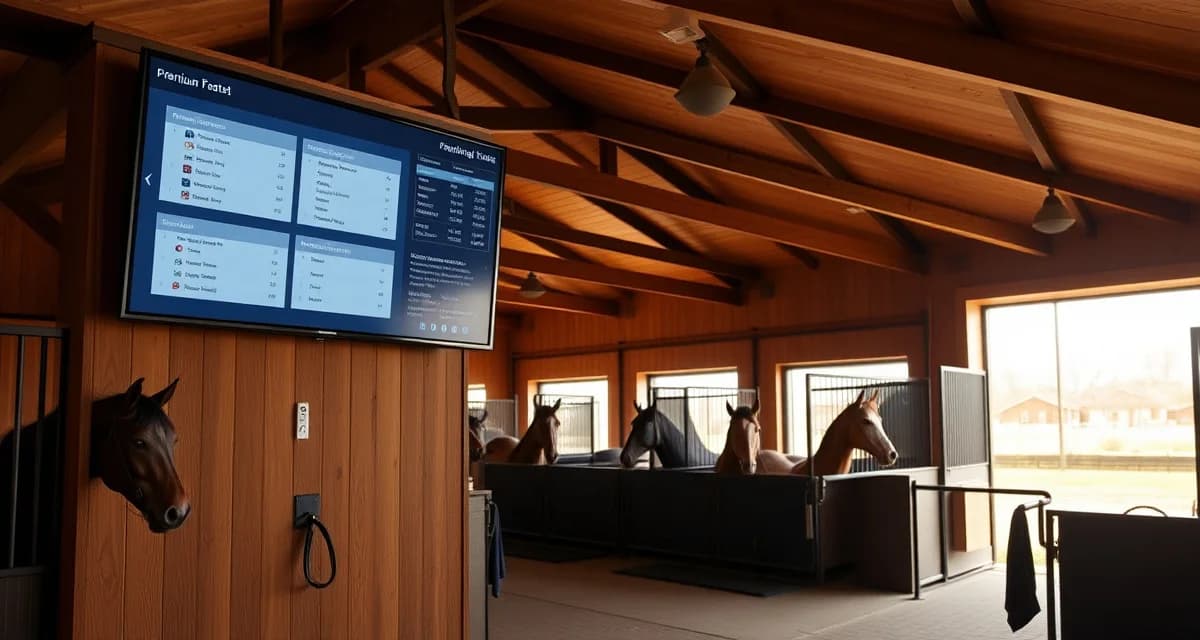
Reining Barn Barn Management: FAQ for Managers
Reining barn barn management is not a one-size-fits-all operation. Reining facilities have unique barn management needs not addressed by generic barn software, from tracking NRHA points and pattern training schedules to managing multiple horses across futurity and derby classes simultaneously.
TL;DR
- Reining barns have barn management requirements that differ meaningfully from general boarding facilities
- Purpose-built software reduces time spent on barn management tasks by several hours per week compared to manual processes
- Generic tools lack the fields and workflows specific to Reining operations, leading to gaps in records and billing
- Facilities that move to dedicated barn management software report improved accuracy and fewer client disputes
- Documentation requirements at Reining facilities often carry compliance implications that manual records cannot adequately support
- The right barn management system should match your actual daily workflows, not require workarounds to fit a general template
This FAQ covers the questions reining barn managers ask most often, with direct answers and practical guidance.
The Core Problem With Generic Barn Software at Reining Facilities
Most barn management tools were built for boarding stables or lesson programs. They handle stall assignments and invoice generation well enough, but they fall apart when you need to track a horse's sliding stop progression, coordinate with multiple trainers on a futurity prospect, or manage the logistics of hauling to NRHA affiliate shows across multiple states.
Reining operations run on precision. A horse in training for a major futurity has a different daily schedule, feeding protocol, and health monitoring cadence than a recreational trail horse. Your software needs to reflect that difference, not force you to work around it.
Direct Answer: What Does Reining Barn Management Actually Require?
Effective reining barn management requires coordinating horse health records, training logs, competition schedules, client communication, and billing inside a single system. When those functions live in separate spreadsheets, text threads, and paper files, things fall through the cracks.
The facilities that run tightest are the ones that have centralized their records and automated their routine communications, so managers can focus on horses instead of paperwork.
How do reining barn managers handle barn management?
Most reining barn managers rely on a combination of daily handwritten logs, shared spreadsheets, and phone calls to keep operations running. This works until the facility scales past 20 or 30 horses, at which point the manual approach creates real risk: missed farrier appointments, inconsistent feed cards, and billing errors that damage client relationships.
The managers running the most efficient reining facilities have moved to purpose-built barn management software that centralizes horse records, training notes, and client billing in one place. They use digital daily logs that every staff member can update in real time, and they set automated reminders for recurring tasks like deworming cycles, vaccination schedules, and shoeing appointments.
The key shift is moving from reactive management (responding to problems) to proactive management (catching issues before they become emergencies). That shift is nearly impossible without a system that gives you a complete picture of every horse in the barn at a glance.
What software do reining barns use for barn management?
Most reining facilities start with generic tools: QuickBooks for billing, Google Sheets for horse records, and text messages for staff coordination. These tools are not wrong, but they were not built for equine operations, and they definitely were not built for the specific demands of a reining program.
BarnBeacon is purpose-built for reining equine facility barn management, with features designed around how reining trainers and barn managers actually work. That includes training log templates aligned with pattern work, competition tracking for NRHA events, and client portals where owners can check in on their horse's progress without calling the barn.
When evaluating any software for a reining facility, look for these capabilities: mobile access from the arena or pasture, customizable feeding and medication tracking, integrated billing with itemized training charges, and a client communication layer that keeps owners informed without creating extra work for staff. Tools that lack reining-specific workflows will require significant customization to be useful, and that customization rarely holds up as the facility grows.
What are the barn management challenges at reining facilities?
Reining facilities face several challenges that generic barn operations do not. First, the training intensity is high. Horses in futurity or derby prep are on structured programs where small deviations in feed, rest, or conditioning can affect performance. Tracking that level of detail manually is error-prone.
Second, client expectations are elevated. Reining horse owners are typically serious competitors who have invested significantly in their horses. They expect regular updates, transparent billing, and evidence that their horse is progressing. Barn managers who cannot deliver that communication lose clients to facilities that can.
Third, competition logistics are complex. Coordinating hauling schedules, entry deadlines, stall reservations at shows, and health certificate requirements across a full show season is a significant administrative burden. Without a system to manage it, details get missed.
You can read more about how these challenges play out day-to-day in our guide to reining barn operations, which covers staffing, scheduling, and show season planning in detail.
What does software for reining facilities typically cost?
Dedicated equine management software is typically priced at a flat monthly rate, often between $50 and $200 per month depending on the platform and feature set. Purpose-built tools like BarnBeacon are structured for independent facility owners rather than large commercial operations, keeping costs accessible for single-barn managers.
How long does it take to transition from spreadsheets to dedicated software?
Most facilities complete the core setup for a platform like BarnBeacon in under a week. Horse profiles, service templates, and billing configurations can be imported or entered incrementally. The majority of managers see a reduction in administrative time within the first billing cycle after switching.
Can reining barn staff access the software from the barn aisle?
Yes. BarnBeacon is designed for mobile use, allowing staff to log health observations, complete task checklists, and send owner updates from a phone without returning to an office. Mobile access is particularly important at facilities where staff spend most of their day in the barn rather than at a desk.
FAQ
What is Reining Barn Barn Management: FAQ for Managers?
Reining Barn Management FAQ for Managers is a practical resource addressing the unique operational challenges of running a reining facility. Unlike general boarding stables, reining barns must track NRHA points, pattern training schedules, futurity and derby class entries, and discipline-specific billing. This FAQ consolidates the most common questions barn managers face daily, covering software selection, workflow optimization, compliance documentation, and client communication — giving managers a structured reference to run their operation more efficiently.
How much does Reining Barn Barn Management: FAQ for Managers cost?
The cost of reining barn management varies based on the tools and systems you adopt. Purpose-built barn management software typically runs $50–$300 per month depending on facility size and features. While generic tools may appear cheaper upfront, the hidden costs — staff time spent on workarounds, billing disputes, and compliance gaps — often exceed the price difference. Investing in reining-specific software generally pays for itself within the first few months through recovered time and reduced errors.
How does Reining Barn Barn Management: FAQ for Managers work?
Reining barn management works by centralizing horse records, training schedules, NRHA point tracking, billing, and client communication into a single system. Managers log daily activities, assign horses to pattern work or futurity prep, generate invoices tied to specific services, and maintain documentation that meets competition and compliance standards. When the system is purpose-built for reining, the workflows match how the barn actually operates — reducing the need for spreadsheets, paper logs, or manual reconciliation.
What are the benefits of Reining Barn Barn Management: FAQ for Managers?
Purpose-built reining barn management delivers several concrete benefits: fewer billing disputes through accurate service tracking, better compliance documentation for NRHA requirements, time savings of several hours per week compared to manual processes, improved scheduling for pattern training and futurity prep, and clearer communication with clients about horse progress and costs. Facilities that standardize their management processes also report stronger client retention, since owners gain confidence through transparency and consistent record-keeping.
Who needs Reining Barn Barn Management: FAQ for Managers?
Any manager running a reining-focused facility benefits from a structured management approach — whether that's a small private barn with a handful of futurity horses or a large commercial operation managing dozens of horses across multiple show circuits. Trainers who handle client horses particularly need reliable documentation to protect themselves from disputes. Barn staff responsible for feeding, turnout, and health monitoring also benefit from clear digital logs that reduce miscommunication and missed tasks.
How long does Reining Barn Barn Management: FAQ for Managers take?
Setting up a reining barn management system typically takes one to four weeks depending on facility size and how much historical data needs migrating. Initial configuration — entering horses, clients, services, and billing structures — usually takes a few days. Staff training adds another week for full adoption. The ongoing time investment is minimal once the system is running: most managers report spending 30–60 minutes daily on documentation and scheduling rather than the multiple hours previously spent on manual processes.
What should I look for when choosing Reining Barn Barn Management: FAQ for Managers?
When evaluating reining barn management software, prioritize NRHA-specific fields for tracking points and show records, flexible billing that handles training fees, show expenses, and board separately, pattern training scheduling tools, health and vet record documentation, and client-facing reporting. Avoid generic tools that require extensive workarounds. Ask vendors whether their system was built for performance horse disciplines or adapted from a lesson-barn template — the difference shows up immediately in daily workflows and compliance readiness.
Is Reining Barn Barn Management: FAQ for Managers worth it?
Yes — for any reining facility managing client horses, a structured barn management approach is worth the investment. The combination of reduced administrative time, fewer billing errors, stronger compliance documentation, and improved client trust creates measurable operational value. Managers who switch from spreadsheets or generic software consistently report that the transition pays off within the first quarter. The question isn't whether organized management matters; it's whether your current system is purpose-built for the specific demands of a reining operation.
Sources
- American Association of Equine Practitioners (AAEP)
- National Reining Horse Association (NRHA)
- United States Equestrian Federation (USEF)
- American Competitive Trail Horse Association (ACTHA)
- American Horse Council
Get Started with BarnBeacon
The management questions answered in this guide all have a practical answer: systems built around your reining facility's actual workflows. BarnBeacon gives managers the documentation tools, billing infrastructure, and owner communication platform to address the challenges described here without manual workarounds. Start a free trial and see how the platform fits your daily operation.