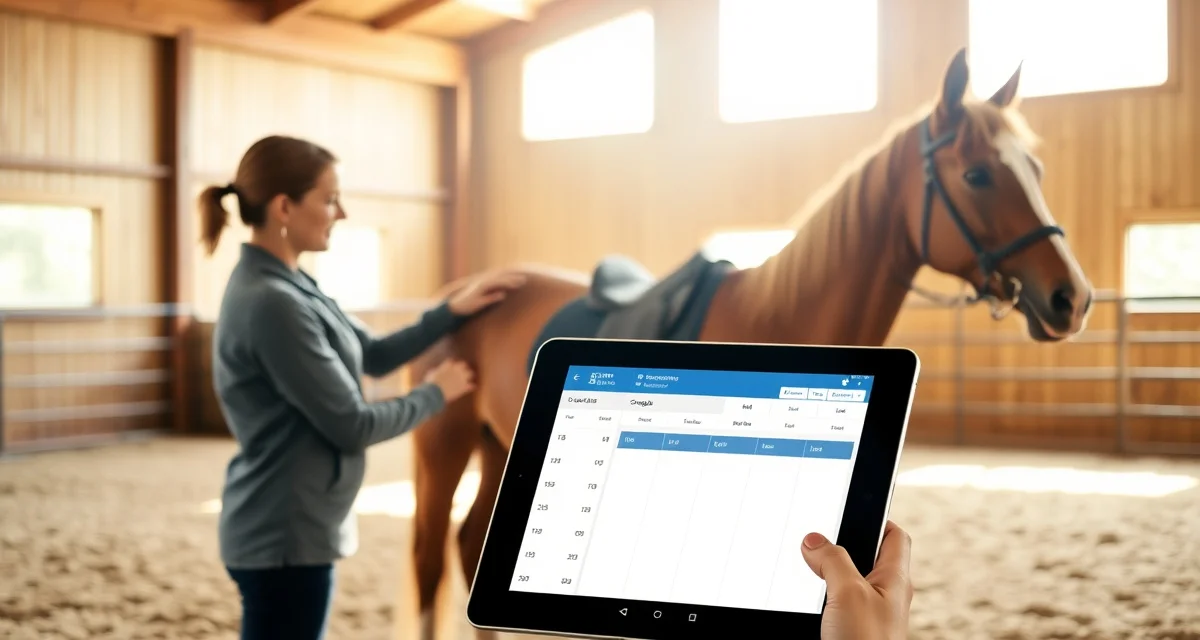
Therapeutic Riding Barn Scheduling: Complete Guide for Facility Managers
PATH International certifies 900+ therapeutic riding centers in the US, and scheduling at those centers is more complex than scheduling at any other equine facility. Horse rotation tied to participant needs and session scheduling isn't just a logistical task: it's a clinical decision that affects participant safety and therapeutic outcomes. The right horse, for the right participant, at the right time, with the right support staff, is the scheduling goal at every therapeutic riding center.
TL;DR
- Therapeutic riding facilities operate under PATH Intl. accreditation standards that create specific documentation and billing requirements.
- Sliding-scale fees, scholarship funds, and multi-payer invoicing are daily realities that generic barn software was not built to handle.
- Session documentation tied to IEPs or therapist review requirements must stay connected to billing records for payer verification.
- Grant and scholarship reporting requires session-level data that manual spreadsheet tracking makes time-consuming and error-prone.
- Purpose-built therapeutic program software eliminates the parallel spreadsheet systems most centers currently maintain.
This guide covers how to build a scheduling system that manages that complexity without creating the administrative chaos that informal systems produce.
The Scheduling Dimensions of Therapeutic Riding
Participant scheduling. Each participant has a session slot: a specific time, frequency, and session type. Managing those slots, handling cancellations and makeups, and communicating the schedule to families requires the same systems you'd find at a lesson program, but with additional sensitivity to the therapeutic context.
Horse assignment. This is what makes therapeutic riding scheduling distinct. Horses aren't simply available or unavailable: they need to be matched to participants based on each participant's physical needs and therapeutic goals, and based on each horse's current behavioral state, energy level, and physical condition. A horse that worked with a high-need participant in the morning may need to be paired with a less demanding participant in the afternoon.
Volunteer scheduling. Sessions at a therapeutic riding center require a minimum number of trained volunteers as sidewalkers and leaders. If volunteers don't show up for a scheduled session, the session may need to be cancelled. Managing volunteer availability alongside session scheduling is a critical dependency that most scheduling systems don't handle.
staff scheduling. Certified instructors and any clinical staff (therapists, aides) need to be assigned to sessions. Their availability drives the session schedule. When a staff member is absent, their scheduled sessions need coverage or cancellation.
Get Started with BarnBeacon
Therapeutic riding billing and program documentation have requirements that general-purpose barn software consistently fails to meet. BarnBeacon is built for equine facilities with complex billing structures, including sliding-scale fees, multi-payer invoicing, and the session documentation requirements that grant funders and therapists need. If your current system requires parallel spreadsheets to manage what your software cannot handle, BarnBeacon offers a platform designed for the work you actually do.
Managing Horse Rotation
The horse rotation at a therapeutic riding center is the most distinctive scheduling challenge. Here's how to manage it systematically:
Maintain a current horse status for every horse. Available, rested, needs light session, unavailable. This status should be updated at least daily, and it should be visible to whoever is building the day's session assignments.
Track each horse's workload. How many sessions per day, per week? A horse that worked four sessions on Wednesday needs consideration for Thursday's schedule. Building a simple workload tracking system, even a tally on a whiteboard or in a spreadsheet, prevents horses from being over-scheduled.
Document horse-participant compatibility notes. Over time, you'll learn which horses work best with which participant types. These compatibility notes inform future scheduling decisions and are particularly valuable when a new participant joins or a regular horse is unavailable.
Have designated backup horses. For each participant, identify an acceptable backup horse in case the primary is unavailable. This backup plan should be built into the scheduling system, not figured out on the morning of.
Managing Volunteer No-Shows
Volunteer scheduling is the most unpredictable element of therapeutic riding scheduling because volunteers don't have the same commitment to attendance that paid staff have.
Build a cancellation buffer. Require volunteers to cancel 24 hours in advance. Track cancellation patterns and address volunteers who cancel frequently.
Maintain a session-day volunteer pool. A list of volunteers available for last-minute coverage, sorted by availability and session type they're trained for, is invaluable when someone cancels morning of. Build this list and keep it current.
Plan sessions around minimum staffing. If a session requires three volunteers and you only have two confirmed, the session needs to either be modified or cancelled. Having a clear minimum staffing threshold, and a protocol for what happens when you're below it, prevents unsafe sessions.
Using Software for Therapeutic Riding Scheduling
BarnBeacon's barn management software supports the multi-dimensional scheduling that therapeutic riding centers require. Participant session slots, horse availability, and staff assignments can all be managed in the same system. Horse status updates are visible when building session assignments, so rotation decisions are made with current information.
For a complete view of therapeutic riding facility operations, see the therapeutic riding barn operations guide.
Frequently Asked Questions
How do therapeutic riding barn managers handle scheduling?
Therapeutic riding centers manage participant session slots, horse rotation assignments, and volunteer staffing simultaneously. The most organized centers maintain real-time horse status data that's visible during session assignment, have documented backup horse plans for each participant, and maintain a session-day volunteer availability pool.
What software do therapeutic riding facilities use for scheduling?
Therapeutic riding centers need scheduling software that connects horse status to session assignments, tracks volunteer availability alongside session requirements, and manages participant session records. BarnBeacon supports this multi-dimensional scheduling environment.
What are the unique scheduling challenges at therapeutic riding barns?
Horse rotation tied to participant needs is the most distinctive challenge: the horse assignment isn't just a logistics decision, it's a safety and therapeutic outcomes decision that requires current information about each horse's behavioral and physical status. Volunteer scheduling dependency, where sessions can't safely run below a minimum staffing level, adds a layer of uncertainty that most other equine facilities don't face.
What documentation do therapeutic riding facilities need for insurance and grant reporting?
Documentation requirements vary by funder, but most grants and insurance programs require session attendance records by rider name and date, instructor and volunteer records for each session, horse records documenting the equines used in the program, and incident reports for any safety events. A barn management system that organizes these records by category and allows export for reporting periods reduces the administrative cost of compliance significantly.
What is Therapeutic Riding Barn Scheduling: Complete Guide for Facility Managers?
Therapeutic riding barn scheduling is a specialized management approach for PATH International-accredited equine therapy centers. Unlike standard barn scheduling, it coordinates horse rotation based on participant clinical needs, session documentation tied to IEPs, multi-payer billing, and support staff assignments simultaneously. This guide helps facility managers build systems that satisfy accreditation requirements, connect session records to billing, and eliminate the parallel spreadsheets most centers rely on to manage riders, horses, volunteers, and grant reporting.
How much does Therapeutic Riding Barn Scheduling: Complete Guide for Facility Managers cost?
This guide is a free educational resource for therapeutic riding facility managers. The scheduling systems and software solutions it references vary in cost depending on the provider and center size. Purpose-built therapeutic program management platforms typically offer subscription pricing, often with nonprofit discounts. Many PATH International centers operate on tight budgets with sliding-scale fees and scholarship funds, so evaluating total administrative time saved versus software cost is the practical framework to use.
How does Therapeutic Riding Barn Scheduling: Complete Guide for Facility Managers work?
Therapeutic riding barn scheduling works by linking four variables for every session: the right horse matched to participant needs, the certified instructor, trained volunteers, and a time slot that fits the participant's therapy plan. Effective systems connect that session record to billing, payer documentation, and grant reporting automatically. Centers using purpose-built software replace manual spreadsheet tracking with a single platform that handles scheduling, documentation, and invoicing in one connected workflow.
What are the benefits of Therapeutic Riding Barn Scheduling: Complete Guide for Facility Managers?
A well-designed therapeutic riding scheduling system reduces administrative overhead, improves horse welfare through appropriate rotation, strengthens accreditation compliance, and supports better clinical outcomes. When session documentation stays connected to billing records, multi-payer invoicing and payer verification become faster and more accurate. Grant and scholarship reporting that once required hours of manual data pulling can be generated directly from session-level records, freeing staff to focus on participant programming.
Who needs Therapeutic Riding Barn Scheduling: Complete Guide for Facility Managers?
Facility managers at PATH International-certified therapeutic riding centers are the primary audience for this guide. It is also relevant to program directors, administrative coordinators, and board members overseeing operations at equine-assisted therapy programs. Any center managing sliding-scale fees, IEP-linked documentation, multiple funding sources, or volunteer coordination alongside horse rotation will find the framework applicable, regardless of whether the center is newly certified or has been operating for years.
How long does Therapeutic Riding Barn Scheduling: Complete Guide for Facility Managers take?
Building an effective therapeutic riding scheduling system is an ongoing operational process rather than a one-time setup. Initial implementation of purpose-built software typically takes two to six weeks depending on center size and data migration needs. Establishing consistent documentation workflows and training staff may take one full program season to stabilize. Centers transitioning from spreadsheets should plan for a parallel-run period to verify that billing, session records, and reporting are accurate before fully retiring manual systems.
What should I look for when choosing Therapeutic Riding Barn Scheduling: Complete Guide for Facility Managers?
Look for software built specifically for therapeutic or adaptive riding programs rather than generic barn management tools. Key features include session documentation linked to billing records, support for multi-payer invoicing and sliding-scale fees, grant and scholarship fund tracking, horse rotation management tied to participant profiles, and reporting tools that satisfy PATH International accreditation requirements. Verify that the platform can generate the session-level data your funders require, and ask whether it integrates with accounting tools your center already uses.
Related Articles
Sources
- PATH International (Professional Association of Therapeutic Horsemanship)
- American Hippotherapy Association
- American Association of Equine Practitioners (AAEP)
- Equine Assisted Growth and Learning Association (EAGALA)
- American Horse Council