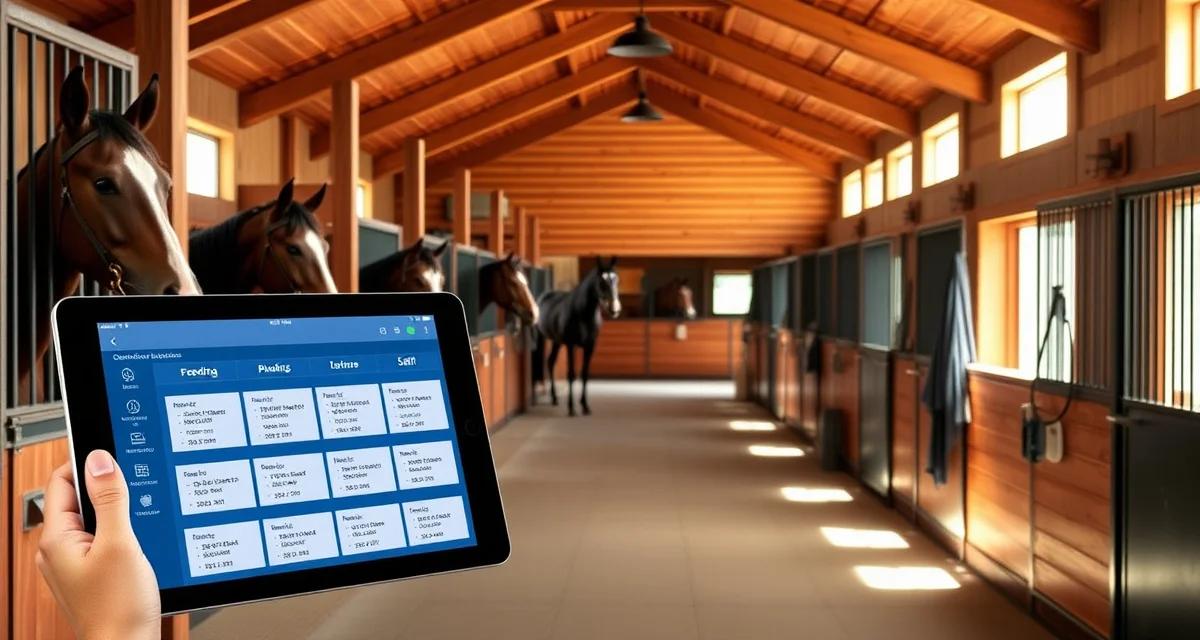
Barn Management Best Practices for Horse Facilities
Most barn managers are running their operations across a patchwork of tools: a spreadsheet for feeding schedules, a group chat for staff updates, a separate app for billing, handwritten notes for vet visits. The average barn manager uses 6 or more separate tools daily, and consolidating those workflows saves an average of 2.4 hours every day. That time adds up fast across a busy season.
TL;DR
- The average barn manager uses 6 or more separate tools daily; consolidating to one integrated platform saves an average of 2.4 hours per day.
- Every horse should have a centralized record covering feeding, medications, vet history, farrier dates, and behavioral notes accessible to all staff in real time.
- Health events, medication changes, and injury observations must be logged before the end of the shift they occur, delayed documentation causes billing disputes and owner trust issues.
- Irregular billing is one of the fastest ways to create cash flow problems; pick a consistent billing date and connect services to records automatically to catch missed charges.
- A 15-minute weekly staff briefing catches problems before they escalate and gives staff a structured place to raise concerns, reducing informal side conversations that create confusion.
- Separating urgent from routine owner communication (text for colic, app notification for farrier reminders, email for monthly statements) keeps owners attentive and prevents alert fatigue.
- Purpose-built equine facility management software connects health records, scheduling, billing, and owner communication so a single logged health event can trigger owner notifications, billing entries, and follow-up tasks automatically.
This guide covers the barn management best practices that actually move the needle: documentation habits, staff protocols, owner communication, and the software workflows that tie it all together.
Step 1: Build a Documentation System That Runs Without You
Create a Single Source of Truth for Each Horse
Every horse in your care should have a centralized record that includes feeding instructions, medication schedules, vet history, farrier dates, and any behavioral notes. If a staff member has to ask you where to find that information, the system is broken.
Use a format that anyone on your team can access and update in real time. Paper binders fail the moment someone is out sick or a new hire starts their first shift.
Log Health Events the Day They Happen
Delayed documentation is the root cause of most billing disputes and vet miscommunications. If a horse colicked on Tuesday and you're writing it up on Thursday, details get lost and owners lose trust.
Set a rule: health events, medication changes, and injury observations get logged before the end of that barn shift. No exceptions.
Step 2: Standardize Staff Protocols
Write Down Every Routine Task
Feeding times, turnout rotations, stall cleaning checklists, blanketing criteria, and medication administration all need written protocols. Not because your staff is incapable, but because verbal instructions drift over time and create inconsistency.
A new hire should be able to complete a full morning shift using your written protocols alone. If they can't, the protocols need more detail.
Assign Clear Ownership for Each Task
Ambiguity is where things fall through the cracks. When two people both think the other is handling evening check, horses get missed. Assign specific tasks to specific roles, not just to "whoever is around."
Daily task boards, whether physical or digital, reduce the mental load on your senior staff and create accountability without micromanagement.
Run a Weekly Staff Briefing
A 15-minute weekly check-in with your team catches problems before they escalate. Use it to review any horses with active health concerns, flag upcoming farrier or vet visits, and address any protocol gaps from the previous week.
This rhythm also gives staff a structured place to raise concerns, which reduces the informal side conversations that create confusion.
Step 3: Set a Communication Rhythm with Horse Owners
Define What Owners Can Expect and When
One of the most common complaints from horse owners is not knowing what's happening with their animal. Set clear expectations upfront: what you communicate proactively, what requires a phone call, and what owners can check on their own through a portal or app.
Monthly updates for routine care, same-day contact for any health incident, and weekly billing summaries are a reasonable baseline. The specifics matter less than the consistency.
Use Templates for Routine Updates
Writing individual messages for 30 horse owners every time there's a farrier visit or a feed change is not sustainable. Build templates for the most common communication types: health updates, billing notices, schedule changes, and seasonal reminders.
Templates save time and ensure you're not accidentally leaving out critical information when you're tired or rushed.
Separate Urgent from Routine Communication
Not every message needs to feel like an emergency, and not every emergency should get buried in a group email thread. Use different channels for different urgency levels. A text or phone call for a colic episode. An app notification for a routine farrier reminder. Email for monthly statements.
When everything comes through the same channel at the same volume, owners stop paying attention.
Step 4: Tighten Your Billing Workflow
Invoice on a Consistent Schedule
Irregular billing is one of the fastest ways to create cash flow problems and owner friction. Pick a billing date and stick to it, whether that's the 1st of the month, the 15th, or weekly for active training clients.
Consistent billing also makes it easier to catch discrepancies early. If a horse received 12 farrier visits but only 10 are on the invoice, a regular billing cycle surfaces that before it becomes a larger dispute.
Connect Services to Records Automatically
The most common billing errors come from manual entry: a vet call that never made it onto the invoice, a medication charge that got missed, a training session logged in one place but not another. When your health records and your billing and invoicing system are connected, charges flow through automatically.
This is where integrated platforms have a clear advantage over tools that handle isolated tasks. If your barn management software and your billing tool don't talk to each other, you're doing double entry and creating error risk every single day.
Step 5: Use Software That Connects Your Operations
Stop Managing in Silos
The biggest operational drag in most horse facilities is not any single task. It's the friction between tasks. Logging a vet visit in one place, then manually updating the owner, then creating a billing entry, then notifying the farrier about a related issue is four separate actions that should be one.
Good barn management software connects health records, scheduling, owner communication, and billing into a single workflow. When one thing updates, everything downstream updates with it.
Evaluate Tools on Integration, Not Features
When comparing equine facility management tips and tools, most barn managers focus on individual features: does it have a good calendar? Can I send invoices? But the right question is whether those features are connected or isolated.
A platform that handles health, billing, communication, and scheduling in one place eliminates the re-entry problem entirely. BarnBeacon is built specifically for horse facilities with this integration at its core, so a health event logged in the morning can trigger an owner notification, a billing entry, and a vet follow-up task without any additional steps.
Automate the Repeatable Work
Recurring billing, scheduled medication reminders, routine farrier alerts, and monthly owner reports are all tasks that follow a predictable pattern. Once they're set up in a system, they should run without manual intervention.
Every hour you spend on repeatable administrative work is an hour not spent on the horses or on growing your business.
Common Mistakes to Avoid
Relying on memory for health events. Even experienced barn managers miss details when they're managing 30 or 40 horses. Documentation is not optional.
Using personal phones for owner communication. When a staff member leaves, you lose the communication history. Use a platform that keeps all owner interactions in one place under the barn's account.
Treating billing as an afterthought. Billing errors erode trust faster than almost anything else. Build it into your weekly workflow, not your end-of-month scramble.
Buying tools that don't integrate. Adding a fifth or sixth app to your stack does not solve the coordination problem. It makes it worse.
FAQ
What is the most important thing a barn manager can do to improve operations?
Build a documentation system that doesn't depend on any one person's memory or presence. When health records, task assignments, and owner communication are all written down and accessible to your team, operations become consistent regardless of who is on shift. This single change reduces errors, disputes, and staff confusion more than any other improvement.
How do I reduce time spent on barn administration?
Consolidate your tools. Most of the time spent on administration comes from re-entering the same information across multiple systems: logging a health event, then billing for it, then notifying the owner separately. When those workflows are connected in one platform, the time savings are significant. Barn managers who move from 6+ separate tools to an integrated system typically recover more than two hours per day.
What tools do professional barn managers use?
The most effective barn managers use platforms that handle health records, scheduling, billing, and owner communication in one place rather than separate apps for each function. Standalone tools for individual tasks create coordination gaps and manual re-entry errors. Purpose-built equine facility management software like BarnBeacon is designed specifically for horse facilities and connects all of these functions so information flows automatically between them.
How should I handle onboarding a new horse owner to my barn's communication system?
Set expectations in writing during the intake process. Give new owners a one-page overview of how you communicate: which channel you use for health emergencies, where they can view their horse's records and billing history, and how often they'll receive routine updates. Owners who understand the system from day one generate far fewer urgent calls and misunderstandings down the road.
Can small barns with fewer than 10 horses benefit from barn management software?
Yes, and often more immediately than larger operations. Smaller barns typically have less administrative staff, so the barn manager is handling documentation, billing, and owner communication personally. Automating recurring billing and medication reminders at a 10-horse barn saves the same two-plus hours per day as it does at a 40-horse facility, and those hours matter more when one person is doing everything.
How do I get my staff to actually follow written protocols?
Keep protocols short, specific, and physically accessible at the point of task completion. A blanketing checklist posted in the tack room gets used; a protocol document saved on your laptop does not. Review protocols during your weekly staff briefing and update them when gaps appear rather than letting outdated instructions create confusion. Staff follow written task assignments consistently when those assignments are clear and tied to a specific role rather than left to whoever is available.
What is Barn Management Best Practices for Horse Facilities?
Barn Management Best Practices for Horse Facilities is a practical guide covering how to streamline daily barn operations for horse facilities. It addresses consolidating tools, maintaining centralized horse health records, consistent documentation, billing practices, staff communication, and owner updates. The goal is to help barn managers reduce inefficiency—research cited in the article suggests the average barn manager uses six or more separate tools daily, and consolidating them saves around 2.4 hours per day.
How much does Barn Management Best Practices for Horse Facilities cost?
Barn Management Best Practices for Horse Facilities is a free editorial article published on BarnBeacon. There is no cost to read it. BarnBeacon provides barn management resources and software tools for equine facilities, and pricing for any associated platform features would be listed separately on the BarnBeacon pricing page.
Sources
- American Association of Equine Practitioners (AAEP), equine health recordkeeping and veterinary communication guidelines
- University of Minnesota Extension, Horse Program, equine facility management and boarding operation resources
- Equine Business Association (EBA), barn operations and equine business management publications
- United States Equestrian Federation (USEF), horse care standards and facility management recommendations
- The Horse magazine, Equine Network, operational and health management reporting for equine professionals
Get Started with BarnBeacon
BarnBeacon is built specifically for boarding barns that are ready to stop managing across six different tools and start running their operation from one place. Everything covered in this guide, health records, staff task assignments, owner communication, and billing, connects inside a single platform so information moves automatically instead of getting re-entered by hand. Try BarnBeacon free and see how much time your barn gets back in the first week.