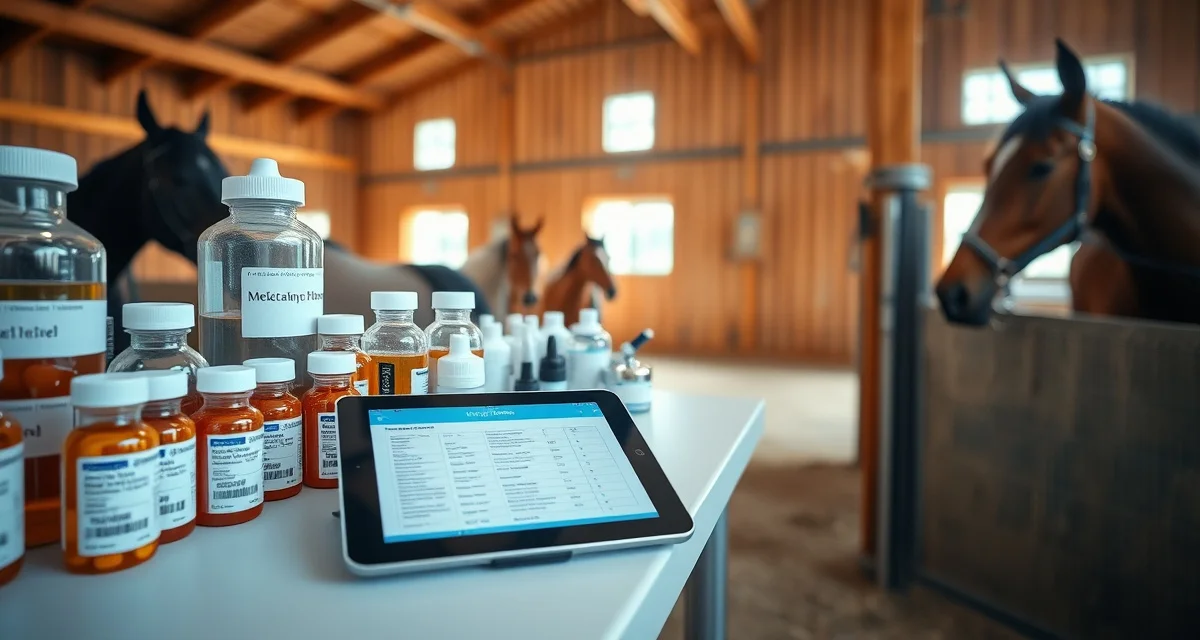
Tracking Medications for All Horses in Your Barn
Medication tracking at a barn is one of those management tasks where small facilities can get away with informal systems for a while, but the system eventually fails at a critical moment. The horse that received its neighbor's medication. The dose that was given twice because nobody wrote it down. The owner who insists their horse is not getting the supplement they are paying for. These situations all stem from the same root: inadequate tracking.
Good medication tracking systems are not complicated, but they do need to be consistent. The goal is to know, at any moment, what every horse in your barn is on, when they last received it, and when they are due for their next administration.
What to Track
Every barn should maintain medication records that cover at minimum:
Prescription medications. Any medication prescribed by a veterinarian for a specific horse. This includes ongoing medications like thyroid supplements, antibiotics prescribed for a specific infection, anti-ulcer medications, and any other pharmaceuticals under veterinary direction.
Over-the-counter medications. Bute (phenylbutazone), banamine (flunixin meglumine), and other OTC products that barn staff administer at owner or veterinarian direction. Even if no prescription is required, administering these without documentation creates liability.
Supplements. Many horse owners and barn managers track supplements alongside medications to maintain a complete picture of what each horse receives. At minimum, tracking that a horse is on a specific supplement and at what dose is useful for managing inventory and for providing veterinary reference.
Topical and wound treatments. Daily wound care, leg wraps with topical medication, and other external treatments should be documented as part of the horse's health record.
The Tracking System
The tracking system you use should match the scale and complexity of your operation. A small facility with two or three horses on medications can manage adequately with a physical binder and handwritten logs if it is maintained consistently. A facility with 20 or more horses, multiple staff members, and complex protocols across several horses needs a more organized approach.
BarnBeacon provides centralized medication tracking that gives barn managers a complete view of every horse's current medications, upcoming administrations, and full history in one place. Staff can log administrations from their phone in real time, which removes the delay and inaccuracy of end-of-day documentation.
Regardless of system, the key requirements are:
- Records are updated at the time of administration, not reconstructed later
- Every person who administers medications has access to current protocols
- The system shows what is due at each administration time
- The history is searchable and can be shared with the veterinarian when needed
Creating Medication Boards or Feeds Boards
For facilities that manage daily administration through physical barn rounds, a medication board or feeding board that shows the current day's administrations provides a working reference for staff during rounds. Each horse that has a medication due gets listed with the medication name, dose, and time. Staff check off each administration as it is completed.
The board should be updated daily and should reflect the current protocol, not a protocol from a previous week that has not been updated. Outdated boards with medications that have been discontinued or changed are a significant source of errors.
If you use a digital board, integrate it with your main tracking system so that when the barn manager updates a protocol in BarnBeacon, the change is immediately visible to staff. Manual boards require the extra step of physically updating the board whenever protocols change.
Communicating with Owners
Owners who have horses on medications generally want to know what their horse is receiving and how the medication protocol is going. Providing regular updates, either through your barn management communication tools or through direct messages, keeps owners informed and builds confidence in your management.
When a medication protocol ends, notify the owner. When a new protocol is prescribed, notify the owner and confirm they understand the plan. When there is a concern about a horse's response to medication, contact the veterinarian and the owner promptly.
For related guidance, see our articles on medication administration records and medication inventory management.
FAQ
What is Tracking Medications for All Horses in Your Barn?
Tracking medications for all horses in your barn is the practice of systematically recording every prescription drug, over-the-counter medication, and supplement administered to each horse in your care. A proper system documents what was given, the dosage, the time and date, and who administered it. This creates an accurate, real-time picture of each horse's health status and prevents dangerous errors like double-dosing, missed doses, or mix-ups between horses.
How much does Tracking Medications for All Horses in Your Barn cost?
Medication tracking itself costs nothing beyond the time to implement a system. A simple paper log or whiteboard costs a few dollars. Digital barn management apps typically range from free basic tiers to $30–$100 per month for full-featured platforms. The real cost of not tracking is far higher: a medication error, a liability dispute with a horse owner, or a failed competition drug test can cost thousands of dollars.
How does Tracking Medications for All Horses in Your Barn work?
A barn medication tracking system works by assigning each horse a dedicated record where staff log every administration in real time. When a medication is given, staff record the horse's name, the drug or supplement, dosage, route, time, and their initials. The record is reviewed before each subsequent dose to confirm timing and avoid duplication. Digital systems can send reminders and flag withdrawal periods automatically.
What are the benefits of Tracking Medications for All Horses in Your Barn?
Consistent medication tracking prevents dangerous dosing errors, protects you from liability when horse owners dispute treatments, and ensures competition horses meet withdrawal period requirements. It also gives your veterinarian accurate history during health emergencies, helps you spot patterns like recurring pain episodes requiring frequent bute, and demonstrates professional barn management to clients who trust you with their horses.
Who needs Tracking Medications for All Horses in Your Barn?
Any barn housing more than one or two horses benefits from a formal medication tracking system. Competition barns are particularly exposed to regulatory risk around withdrawal periods. Full-care boarding operations face the greatest liability, since staff administer medications on behalf of owners who aren't present. Breeding farms, rehabilitation facilities, and equine rescues managing horses with complex health needs also have urgent tracking requirements.
How long does Tracking Medications for All Horses in Your Barn take?
Setting up a basic medication tracking system takes one to two hours: create a log template, assign a record for each horse, and brief your staff. Maintaining it requires only a few seconds per administration once the habit is established. Digital platforms can be configured in an afternoon. The ongoing time investment is minimal compared to the time lost resolving errors, fielding owner complaints, or managing a veterinary emergency caused by a missed or duplicated dose.
What should I look for when choosing Tracking Medications for All Horses in Your Barn?
Look for a system that is fast to use at the stall—staff won't maintain a system that's cumbersome. It should capture drug name, dosage, route, time, administrator, and prescribing vet where applicable. Withdrawal period tracking is essential for competition horses. Choose something your whole team will actually use consistently, whether that's a laminated stall card, a shared spreadsheet, or a dedicated barn management app with mobile access.
Is Tracking Medications for All Horses in Your Barn worth it?
Yes. A medication tracking system is one of the highest-value, lowest-cost risk management tools available to barn managers. One prevented dosing error, one resolved owner dispute backed by documented records, or one competition horse cleared because withdrawal periods were logged correctly will more than justify the investment. Beyond liability protection, it simply makes your barn safer and more professional—something every horse owner paying for board will notice and appreciate.