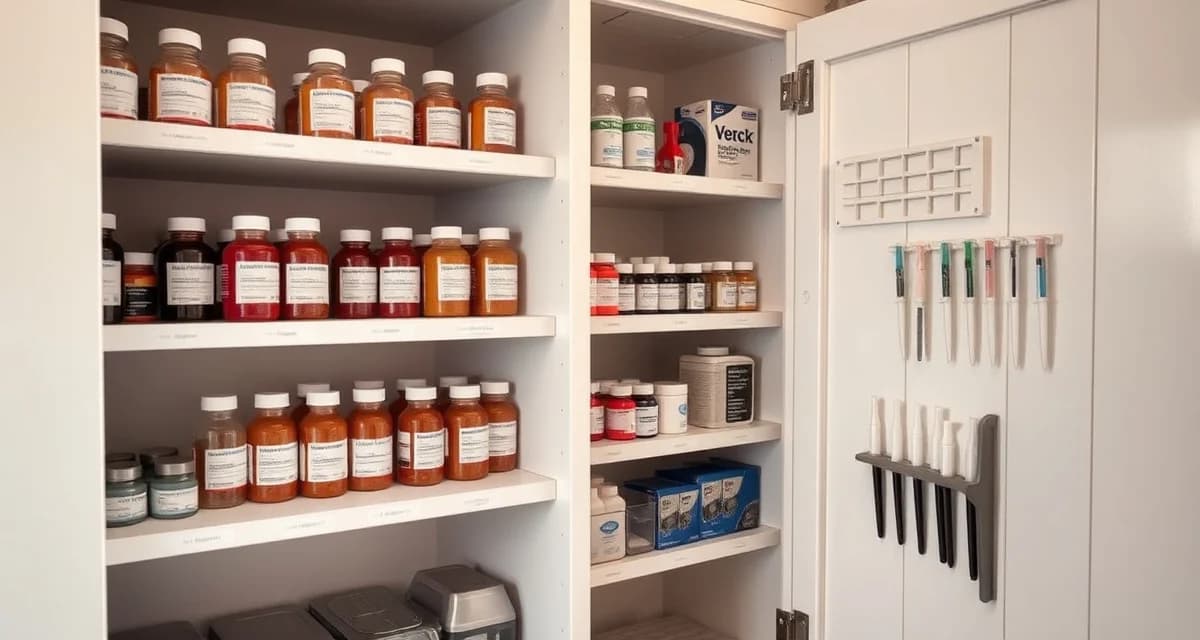
Managing Medication Inventory at a Barn
Medication inventory management at a barn is unglamorous but consequential. Disorganized medication storage leads to expired products being used, medications being mixed up between horses, and controlled substances being unaccounted for. Good inventory management prevents these problems and is a foundational element of safe and professional horse care.
Setting Up Your Storage System
Physical organization of medication storage is the first step. A few principles guide effective setup:
Individual horse storage. Each horse with active medications should have a clearly labeled storage location: a bin, shelf, or cubby that belongs to that horse. Labels should show the horse's name prominently, not just the medication name. When staff go to retrieve a medication, they should be selecting it from the correct horse's designated location, not from a general pool where it could be confused with another horse's medications.
Prescription medications separate from over-the-counter. Keep prescription-only medications in a separate area from over-the-counter supplements and topical products. This reduces the risk of mixing up products and makes it clearer which items require veterinary authorization before use.
Secure storage for controlled substances. If your facility handles controlled substances under the direction of a licensed veterinarian, these must be stored in a locked cabinet. Access should be limited and logged. Check the applicable regulations in your state and with your veterinarian of record for specific requirements.
Temperature requirements. Some medications require refrigeration. Confirm storage requirements for every medication in your inventory and ensure compliance. A medication that has been improperly stored may be ineffective even if it has not reached its expiration date.
Tracking Inventory Levels
Knowing what you have on hand at any given time requires an inventory system. For a small facility with a limited number of horses on medications, a simple log that records each medication received and each dose administered may be sufficient. For larger facilities managing complex medication protocols across many horses, a more organized system is necessary.
BarnBeacon tracks medication inventory as part of its health management tools. When a medication is administered and logged, the inventory balance updates automatically. This provides a running record of what is on hand and flags when stock is getting low before you run out.
For facilities without digital systems, a paper inventory log that is updated every time medications are used and every time new stock arrives can accomplish the same goal if maintained consistently.
Managing Expiration Dates
Expired medications in your inventory are a liability on two levels: they may be ineffective, and they are a liability risk if an expired product is administered and contributes to harm. A regular review of medication inventory to remove expired products is basic management hygiene.
Assign someone the responsibility of checking expiration dates monthly. Remove any expired products from the active storage area immediately; do not leave them in place where they could be picked up by mistake. Dispose of expired medications appropriately. Many pharmacies and veterinary clinics participate in medication take-back programs. Do not flush medications unless specifically instructed to do so by your veterinarian, as this can contaminate water supplies.
When you are managing long-term protocols for multiple horses, consider stocking in quantities that will be used before expiration. Buying in bulk may be economical, but not if the excess expires before it can be used.
Receiving New Medications
Every medication that enters your facility should be received and logged. Note the date received, the medication name, the quantity, the lot number, and the expiration date. This intake record is the first entry in the audit trail for that medication.
When medications arrive from the veterinarian or a pharmacy, check the label carefully. Confirm the horse's name, the medication name, the dose, and the instructions match what was prescribed. If anything is unclear or looks incorrect, contact the prescribing veterinarian before administering the medication.
Disposal of Unused Medications
Medications that are no longer needed because a horse's protocol has ended, the horse has left the facility, or the medication has expired need to be disposed of properly. Prescription medications, including both the product and the packaging, should not simply be discarded with regular trash.
Contact your veterinarian about disposal options. Many veterinary clinics will accept medications for proper disposal. The FDA and DEA both have guidance on appropriate disposal methods for various medication categories, and participating in a take-back program is the safest and most responsible approach.
For related guidance, see our articles on medication tracking and medication audit trails.
FAQ
What is Managing Medication Inventory at a Barn?
Managing medication inventory at a barn refers to the organized system of storing, tracking, and administering medications and supplements for horses in a facility. It includes labeling individual horse medications, separating prescription from over-the-counter products, securing controlled substances, monitoring expiration dates, and maintaining accurate records. A well-run system ensures the right medication reaches the right horse at the right time, reducing errors and supporting professional, safe horse care.
How much does Managing Medication Inventory at a Barn cost?
Setting up a barn medication inventory system has minimal direct cost. Basic supplies like labeled bins, a logbook or spreadsheet, and a locking cabinet for controlled substances are inexpensive. The primary investment is staff time for initial setup and ongoing maintenance. Compared to the cost of a veterinary visit triggered by a medication error or an expired product causing a health issue, the investment is negligible.
How does Managing Medication Inventory at a Barn work?
Effective barn medication inventory works by assigning each horse a dedicated, clearly labeled storage location for their medications. Prescription and over-the-counter products are kept separate. Controlled substances are secured under lock and key. A log tracks what was administered, when, and by whom. Regular audits check for expired products and restock needs. Staff are trained to pull medications only from the correct horse's designated space, not from a shared pool.
What are the benefits of Managing Medication Inventory at a Barn?
Good medication inventory management prevents expired products from being administered, eliminates mix-ups between horses, keeps controlled substances properly accounted for, and ensures medications are available when needed. It also supports clear communication with veterinarians, simplifies emergency response, and demonstrates a professional standard of care. For multi-horse facilities especially, a reliable system reduces liability and gives horse owners confidence that their animals are receiving correct treatment.
Who needs Managing Medication Inventory at a Barn?
Any facility housing multiple horses benefits from a formal medication inventory system, including private barns, boarding facilities, training barns, and equestrian centers. The need increases with the number of horses and the complexity of their medical needs. Facilities handling controlled substances under veterinary supervision have a legal obligation to maintain accurate records. Even small private barns with just a few horses benefit from organized storage to prevent medication errors.
How long does Managing Medication Inventory at a Barn take?
Initial setup of a medication inventory system typically takes a few hours to a day, depending on barn size and the volume of existing medications to organize, label, and audit. Ongoing maintenance is lighter: a few minutes per medication administration to log the event, plus a monthly or quarterly audit to check expiration dates and restock supplies. Staff training adds some upfront time but becomes routine quickly once the system is in place.
What should I look for when choosing Managing Medication Inventory at a Barn?
Look for a system that assigns individual storage locations per horse, clearly separates prescription medications from over-the-counter products, and provides secure storage for any controlled substances. The logging process should be simple enough that staff actually follow it consistently. Choose a format—paper log, spreadsheet, or barn management software—that fits your team's habits. Prioritize clarity and ease of use over complexity; a simple system followed reliably outperforms an elaborate one that gets ignored.
Is Managing Medication Inventory at a Barn worth it?
Yes. The consequences of poor medication management—giving a horse the wrong medication, using an expired product, or losing track of a controlled substance—can be serious and costly. A basic inventory system requires minimal expense and effort but meaningfully reduces these risks. For boarding facilities, it also demonstrates professionalism and builds owner trust. Whether you manage two horses or twenty, the discipline of organized medication storage pays for itself many times over.