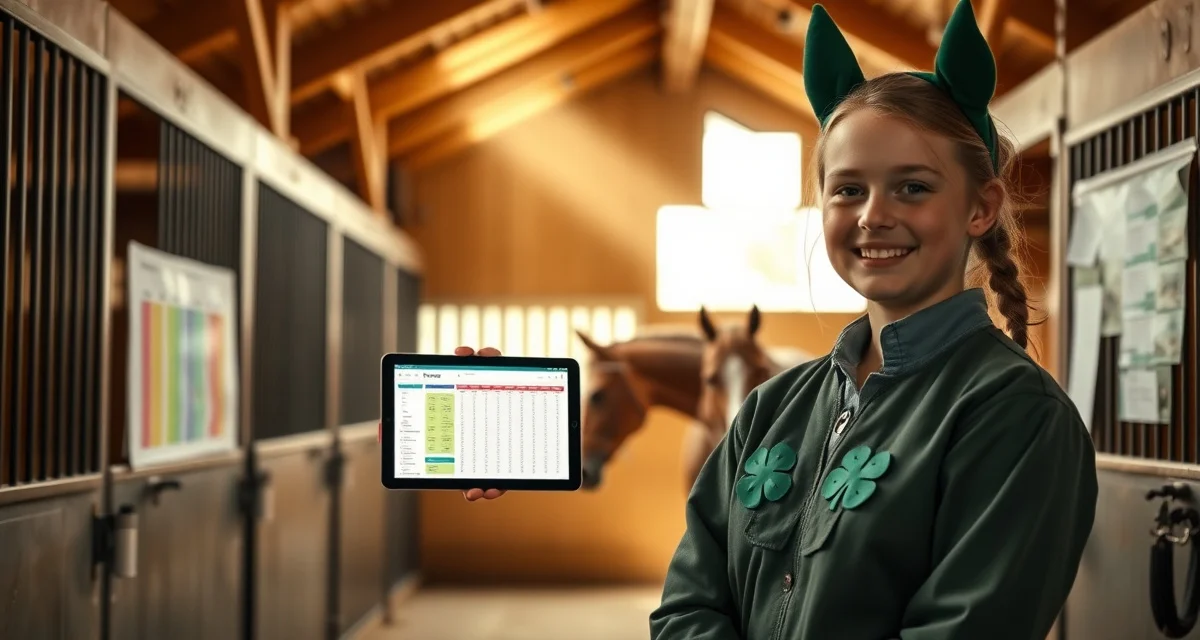
Barn Management Software for 4-H Programs
Running a barn that supports 4-H equine projects is different from running a standard boarding facility. You have rotating groups of youth members who may only be at the barn a few times a week, parents who need updates but aren't always present, project deadlines tied to county fair schedules, and animals whose care records need to be airtight for show eligibility. Standard boarding software often falls short here. Getting the right systems in place makes the difference between a chaotic fair prep season and one that runs smoothly.
What Makes 4-H Barn Management Different
The biggest difference is the record-keeping requirement. 4-H horse project members are typically required to maintain detailed logs of care, training hours, vet visits, and farrier appointments. These records get reviewed by project leaders and sometimes county extension agents. If a member can't produce documentation, they may be ineligible to show. That puts real pressure on barn managers to help members stay organized, even when the members themselves are twelve years old.
You also have a unique billing situation. Some 4-H programs operate on donated space, others charge nominal board fees, and many have a tiered structure where the program pays a facility fee and members contribute separately. Getting those invoices sorted out without creating confusion for families requires a clear billing setup from the start.
Finally, communication flows in multiple directions. You're not just talking to horse owners. You're talking to youth members, their parents, project leaders, and occasionally county extension staff. Each group needs different information at different times.
Setting Up Records for Project Requirements
For each horse in the 4-H program, you need to track:
- Ownership or lease documentation
- Current Coggins test (most fairs require a negative test within 12 months)
- Vaccination records, especially rabies and influenza/rhinopneumonitis
- Farrier visit dates and work done
- Dental and vet check history
- Training log by the member, separate from facility records
Keeping these records organized in a central system means that when fair season hits and every family is scrambling to verify eligibility, you can pull up documentation quickly. BarnBeacon allows you to attach health record files to each horse's profile and note key dates so you know when Coggins tests are expiring across the whole herd.
Fair Prep Scheduling
County fairs typically have specific windows for health certificate requirements. A Coggins pulled too early won't count; one pulled too late creates a scramble. Build your vet appointment calendar around the fair schedule, not around convenience. Schedule Coggins pulls 3 to 4 weeks before the earliest fair date, which gives time to receive paperwork and handle any issues.
A week-by-week prep schedule for fair season typically looks like:
- 8 weeks out: Confirm all member registration paperwork is filed
- 6 weeks out: Schedule group vet day for Coggins and health certificates
- 4 weeks out: Review farrier status for all show horses
- 3 weeks out: Conduct a tack and equipment inspection
- 2 weeks out: Run a practice show day with full grooming and presentation
- 1 week out: Confirm all paperwork is in hand and transport is arranged
Parent Communication Systems
Parents of 4-H members need more touchpoints than a typical horse owner. They're often coordinating multiple children in multiple activities, and the barn is one stop among many. Clear, consistent communication reduces the number of individual calls and texts you field every week.
Set up a regular communication rhythm: a brief update at the start of each month covering upcoming vet and farrier days, show prep milestones, and any barn policy reminders. Use a group messaging channel or email list specifically for 4-H families so messages don't get lost in general barn communications. When a member misses care responsibilities, the parent needs a prompt follow-up that same day, not a week later.
Billing for 4-H Programs
Some 4-H facilities operate as part of a county fairgrounds or extension program where fees are minimal. Others are private barns that host 4-H members at a discounted rate. Either way, billing needs to be clear from day one.
Create a written fee schedule that covers: monthly board (if applicable), arena use fees, participation fees for club activities, and any additional charges for extra services like blanketing or medical care. Invoice the same way every month so families can budget reliably. Track any scholarships or fee waivers in your system so you don't accidentally bill a family who has an exemption on file.
Year-Round vs. Project Year Scheduling
4-H runs on an October-to-September project year in most states, with fair season hitting July or August. Plan your facility calendar around this cycle. New members typically start in fall, which means fall is your onboarding season: new horses arriving, new care routines being established, new parents learning the barn rules. Spring is show prep. Summer is fair season. Fall is evaluation and re-enrollment.
Building this rhythm into your barn calendar, alongside your standard boarding and lesson schedule, keeps 4-H activities from feeling like a disruption to the rest of the operation.
FAQ
What is Barn Management Software for 4-H Programs?
Barn management software for 4-H programs is a digital tool designed to help barn managers and youth members track horse care records, manage billing, coordinate schedules, and communicate with parents. Unlike general boarding software, these solutions address the unique demands of 4-H equine projects, including documentation required for show eligibility, county fair deadlines, rotating member schedules, and tiered billing structures shared between programs and families.
How much does Barn Management Software for 4-H Programs cost?
Pricing varies widely depending on the platform and facility size. Basic options may start around $30–$60 per month, while full-featured platforms with parent communication, record-keeping, and billing tools can run $100–$300 per month. Some providers offer nonprofit or youth program discounts. Many facilities find the cost justified when weighed against time saved on manual record-keeping and the reduced risk of members being disqualified for missing documentation.
How does Barn Management Software for 4-H Programs work?
The software centralizes horse care logs, training hours, vet and farrier records, and billing into one system. Barn managers enter or approve records, members and parents log in to view or update their own data, and the system generates reports for project leaders or county extension agents. Automated reminders help members meet deadlines, while invoicing tools handle the split billing arrangements common in 4-H facility agreements.
What are the benefits of Barn Management Software for 4-H Programs?
Key benefits include reduced administrative burden, fewer documentation gaps at show time, cleaner billing for families and programs, and better communication between barn managers, youth members, and parents. Members learn accountability by maintaining their own records within the system. Barn managers spend less time chasing down incomplete logs before county fairs, and parents stay informed without needing to be physically present at the barn every day.
Who needs Barn Management Software for 4-H Programs?
Any barn hosting 4-H equine projects can benefit, but the need is greatest for facilities managing multiple members across rotating schedules. Project leaders, county extension agents, and barn managers who currently rely on paper logs or spreadsheets will see the biggest improvement. Programs preparing members for county fairs where show eligibility depends on complete care records have the most to gain from a structured digital system.
How long does Barn Management Software for 4-H Programs take?
Setup typically takes one to two weeks depending on the platform and how much existing data needs to be imported. Onboarding staff, leaders, and families adds a few more days. Once running, the system becomes part of daily barn routines rather than a separate task. Most users report that after the first full fair cycle, record collection and billing feel significantly more manageable than before implementation.
What should I look for when choosing Barn Management Software for 4-H Programs?
Look for built-in equine care logging that matches 4-H documentation requirements, parent and member access portals, automated reminders tied to show or project deadlines, and flexible billing that handles split invoicing. Communication tools, mobile access for members logging care from the barn, and simple export or report features for project leaders are also important. Avoid platforms built purely for commercial boarding that lack youth program or record-keeping workflows.
Is Barn Management Software for 4-H Programs worth it?
For barns running active 4-H equine programs, yes. The biggest return comes from preventing show disqualifications due to missing records, reducing billing confusion across families and programs, and saving hours of administrative work during fair season. The investment is modest compared to the cost of a member missing a show or a billing dispute derailing a season. Programs that have made the switch consistently report less stress and better outcomes for members.
Related Articles
- Barn Management Software for Alabama Equestrian Facilities
- Barn Management Software for Alabama Horse Facilities
- Barn Management Software for Alaska Horse Facilities
- Barn Management Software for Horse Facilities Near Albany, New York
- Barn Management Software for Horse Facilities Near Albuquerque, New Mexico