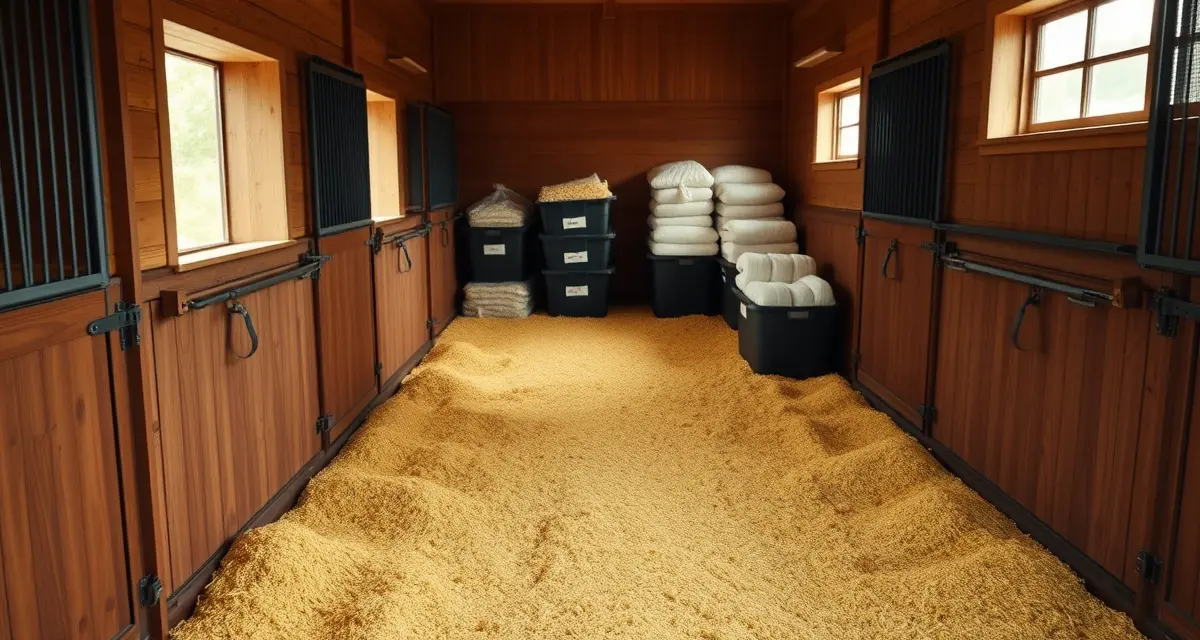
Bedding Management for Horse Barns: Inventory and Rotation
Most bedding problems in horse barns aren't about the product you're using. They're about not knowing how much you have, who used it, or whether the stall was actually cleaned to standard.
TL;DR
- Effective bedding management horse barn at equine facilities relies on consistent written protocols accessible to all staff.
- Digital records reduce errors and create the documentation needed during emergencies, audits, and client disputes.
- Owner visibility into their horse's daily care reduces communication friction and improves retention.
- Centralizing billing, health records, and scheduling in one platform outperforms managing separate tools.
- Staff adoption of digital tools improves when interfaces are mobile-friendly and task-based.
- BarnBeacon supports all core barn management functions from a single platform built for equine facilities.
Facilities with digital cleaning accountability see 44% fewer stall quality complaints. That gap comes down to one thing: knowing exactly what happened in each stall, and when.
The Real Cost of Poor Bedding Management
Inconsistent bedding depth causes more than comfort issues. Wet, under-bedded stalls contribute to thrush, white line disease, and respiratory problems from ammonia buildup. Over-bedding wastes product and inflates your monthly supply costs.
Without a tracking system, you're relying on visual checks and staff memory. Neither scales past a handful of stalls.
Choosing the Right Bedding Type for Your Barn
Before you can manage inventory, you need to understand what each bedding type demands in terms of volume, rotation frequency, and labor.
Shavings
Shavings are the most common choice. A standard 12x12 stall needs roughly 6-8 cubic feet of shavings for initial bedding, with 1-2 cubic feet added daily during routine cleaning. They're absorbent, easy to muck out, and widely available.
Track shavings in bags or cubic yards depending on your supplier. Know your weekly consumption per stall so you can set reorder points before you run short.
Pellets
Pelleted bedding expands when wet, so you use less volume upfront. A 12x12 stall typically needs 6-8 bags to establish, then 1-2 bags per week for top-ups. Pellets break down into sawdust over time, which means you need to strip stalls more frequently.
The cost per bag is higher than shavings, but waste is lower. Track pellet inventory by bag count and monitor how quickly each stall cycles through product.
Straw
Straw is cheaper per unit but requires more volume and more frequent full changes. It doesn't absorb as well as shavings or pellets, and wet straw packs down fast. Horses that eat their bedding are a real concern with straw.
If you're using straw, plan for full stall strips every 5-7 days rather than daily spot cleaning.
Rubber Mats
Mats reduce bedding volume by 40-60% when used as a base layer. They're a significant upfront investment but cut ongoing supply costs substantially. Mats still require bedding on top for comfort and moisture absorption.
With mats, your cleaning protocol shifts. You're removing less waste per session, but you need to lift mats periodically for deep cleaning underneath.
How to Set Up a Bedding Inventory System
Step 1: Audit Your Current Stock
Count every bag, bale, or cubic yard on hand. Record it by type and location in your barn. This is your baseline. Without it, you're guessing at reorder timing.
Step 2: Calculate Per-Stall Weekly Consumption
Run each stall for two weeks and track exactly how much product goes in and how much waste comes out. This gives you a real consumption rate, not an estimate.
Multiply that by your stall count to get your weekly barn-wide usage. Add 15-20% buffer for high-use periods, sick horses, or foaling stalls.
Step 3: Set Reorder Points
A reorder point is the inventory level that triggers a purchase order. For most barns, that's 1.5-2 weeks of supply on hand. If you're ordering weekly, set your reorder point at 10 days of stock.
Build this into your barn daily checklist so staff are recording stock levels as part of their morning routine, not as a separate task.
Step 4: Assign Stall-by-Stall Cleaning Accountability
This is where most barns fall short. A cleaning log that says "barn cleaned" tells you nothing. You need to know which stalls were done, by whom, and whether they met your standard.
BarnBeacon timestamps every stall cleaning with the responsible staff member and supports photo attachments, so you have a verifiable record for every stall, every day. That level of detail is what closes the gap between "I think it was cleaned" and "I know it was cleaned at 7:42 AM by Sarah."
Some tools on the market track barn-level tasks but lack stall-by-stall completion records or photo documentation. That's a meaningful gap when you're managing 20+ stalls and multiple staff members.
Step 5: Build a Rotation Schedule
Not all stalls need the same cleaning frequency. High-use stalls, foaling stalls, and stalls housing horses with respiratory conditions need more frequent attention. Build a tiered rotation that reflects actual use.
Your stall cleaning schedule should specify cleaning type (spot clean vs. full strip), bedding top-up amounts, and who is responsible for each stall on each day.
Step 6: Document and Review Weekly
Pull your cleaning logs every week. Look for stalls that are consistently over-bedded or under-bedded. Look for staff patterns. If one person's stalls are generating more waste or more complaints, that's a training issue you can address with data.
Photo documentation is particularly useful here. A photo taken at completion gives you a before/after reference and makes quality reviews objective rather than subjective.
Common Mistakes in Bedding Management
Buying in bulk without tracking consumption. Bulk purchasing saves money, but only if you know your actual usage rate. Buying too much ties up cash and creates storage problems. Buying too little means emergency orders at higher prices.
Treating all stalls the same. A horse that's stalled 22 hours a day needs different bedding management than one that's out most of the day. Blanket policies waste product and miss problem stalls.
Relying on verbal confirmation. "Did you clean stall 7?" "Yes." That exchange is not accountability. Timestamped digital records with staff attribution are.
Skipping mat maintenance. If you're using rubber mats, they need to come up every 4-6 weeks for cleaning underneath. Ammonia and moisture accumulate under mats and cause hoof problems that are hard to trace back to the source.
Not tracking equine stall bedding inventory separately from other supplies. Bedding is often lumped into a general supply budget. Tracking it as its own category gives you the data to negotiate better supplier pricing and spot waste faster.
What should a stall cleaning schedule include?
A stall cleaning schedule should specify the cleaning type for each stall (spot clean or full strip), the frequency, the staff member responsible, and the expected bedding top-up amount. It should also note any stall-specific requirements, such as horses with respiratory conditions that need lower-dust bedding or more frequent changes. Tying the schedule to a digital tracking system ensures it's followed consistently rather than approximated.
How do I track which staff member cleaned each stall?
The most reliable method is a digital system that requires staff to log stall completions individually, with a timestamp and their user ID attached to each entry. BarnBeacon handles this automatically, creating a permanent record of who cleaned what and when. Paper sign-off sheets work at small scale but become unreliable as staff count and stall count grow.
How do I verify stalls are cleaned to standard?
Photo documentation at the time of cleaning is the most practical verification method. A photo taken immediately after cleaning shows bedding depth, cleanliness, and condition, and it's timestamped to the cleaning record. Managers can review photos during spot checks or weekly audits without being physically present for every cleaning. Pairing photo records with a defined standard (minimum bedding depth, no visible wet spots, water bucket full) makes quality reviews consistent and fair.
What is the most common mistake barn managers make with record-keeping?
The most common record-keeping mistake is logging health events, billing items, and care tasks after the fact from memory rather than at the time they occur. Delayed logging introduces errors, omissions, and disputes that are difficult to resolve because the original record does not exist. Moving to real-time digital logging, from any device, is the single most impactful record-keeping improvement available to most facilities.
How does barn management software save time at a multi-horse facility?
The largest time savings come from eliminating manual tasks that recur at high frequency: sending owner updates, generating monthly invoices, tracking care task completion across shifts, and scheduling recurring appointments. At a facility with 25 or more horses, these tasks can consume several hours per day when done manually. Automating the routine layer returns that time without reducing quality of communication or care.
Related Articles
- Hay Inventory Management for Horse Barns
- Barn Management Mobile App: Why Mobile-First Matters for Barns
FAQ
What is Bedding Management for Horse Barns: Inventory and Rotation?
Bedding management for horse barns refers to the systematic process of tracking, rotating, and replenishing stall bedding materials across an equine facility. It includes maintaining consistent bedding depth, documenting stall cleanings, monitoring supply inventory, and establishing written protocols for staff. Effective management reduces health risks like thrush and ammonia buildup while controlling material costs. Digital platforms like BarnBeacon help centralize these records so barn managers always know what was used, when, and by whom.
How much does Bedding Management for Horse Barns: Inventory and Rotation cost?
Bedding management itself is an operational practice, not a purchased service, so there's no fixed cost. Your expenses come from bedding materials, labor, and any software used to track inventory. Facilities that implement structured tracking systems typically reduce waste from over-bedding and catch under-bedding before it causes health issues. Platforms like BarnBeacon that consolidate scheduling, cleaning logs, and supply tracking are generally priced per facility and can offset costs by reducing product waste and staff miscommunication.
How does Bedding Management for Horse Barns: Inventory and Rotation work?
Bedding management works by establishing standardized protocols for stall cleaning, bedding depth, and inventory replenishment, then consistently documenting each step. Staff log completed cleanings and material usage digitally or on paper. Managers review records to verify compliance and identify patterns. Inventory counts trigger reorder points before supplies run out. Digital tools like BarnBeacon automate much of this workflow, giving managers real-time visibility into stall status, usage rates, and supply levels without relying on memory or verbal check-ins.
What are the benefits of Bedding Management for Horse Barns: Inventory and Rotation?
Proper bedding management reduces veterinary costs by preventing moisture-related conditions like thrush, white line disease, and respiratory problems from ammonia buildup. It cuts material waste by eliminating guesswork around bedding depth. Written logs create accountability, reducing stall quality complaints by up to 44% at facilities using digital tracking. Horse owners gain visibility into daily care, which improves trust and retention. Managers spend less time chasing information and more time on higher-value tasks.
Who needs Bedding Management for Horse Barns: Inventory and Rotation?
Any horse barn with multiple stalls, rotating staff, or boarding clients benefits from structured bedding management. Facilities with more than a few horses quickly outgrow verbal instructions and visual checks. Boarding operations especially need documentation to resolve client disputes and demonstrate care standards. Large training barns, breeding operations, and competition facilities that rely on consistent horse health and performance have the most to gain from systematic inventory tracking and stall cleaning accountability.
How long does Bedding Management for Horse Barns: Inventory and Rotation take?
Daily stall cleaning and spot checks typically take 15 to 30 minutes per stall depending on size, horse activity, and bedding type. Full bedding changes are less frequent, usually weekly or monthly depending on your protocol. Setting up a digital management system like BarnBeacon takes a few hours initially for configuration and staff training. Once running, the ongoing time investment is minimal since logging happens as part of routine tasks rather than as a separate administrative burden.
What should I look for when choosing Bedding Management for Horse Barns: Inventory and Rotation?
Look for a system that supports mobile-friendly logging so staff can record cleanings from the aisle, not a desk. Inventory tracking should flag low stock automatically. Stall-level history should be easy to pull for health reviews or client questions. If you have boarders, owner visibility into daily care is a strong retention feature. Platforms that consolidate bedding, health records, scheduling, and billing in one place reduce the friction of managing multiple tools and improve data consistency across your operation.
Is Bedding Management for Horse Barns: Inventory and Rotation worth it?
Yes, for any barn managing more than a handful of horses. The cost of a single colic case, a lost boarding client, or chronic thrush treatment typically exceeds what a year of organized bedding management costs in time and tools. Facilities that track inventory avoid emergency supply shortages. Those with documented cleaning logs resolve staff disputes faster and demonstrate professionalism to clients. The combination of reduced waste, better horse health outcomes, and improved owner communication makes structured bedding management a high-return operational investment.
Sources
- American Horse Council, equine industry economic impact and facility operations research
- American Association of Equine Practitioners (AAEP), equine health care and management guidelines
- University of Kentucky Equine Initiative, equine business management and industry resources
- Rutgers Equine Science Center, equine management research and extension publications
- The Horse magazine, published by Equine Network, equine facility management reporting
Get Started with BarnBeacon
BarnBeacon brings billing, health records, owner communication, and daily operations into one platform built for equine facilities, so the time you spend on administration goes back to the horses. Start a free 30-day trial with full access to every feature, or schedule a demo to see how it handles your specific facility type.