Feed Room Management for Horse Barns: Inventory and SOPs
Feed errors are the #2 cause of preventable colic according to AAEP 2023 data. In a busy barn with multiple staff shifts, the gap between what a horse is supposed to get and what it actually receives can be dangerously wide. Solid feed room management for horse barns closes that gap before it becomes a vet call.
TL;DR
- Effective feed room management horse barn at equine facilities relies on consistent written protocols accessible to all staff.
- Digital records reduce errors and create the documentation needed during emergencies, audits, and client disputes.
- Owner visibility into their horse's daily care reduces communication friction and improves retention.
- Centralizing billing, health records, and scheduling in one platform outperforms managing separate tools.
- Staff adoption of digital tools improves when interfaces are mobile-friendly and task-based.
- BarnBeacon supports all core barn management functions from a single platform built for equine facilities.
The fix isn't complicated, but it does require systems: clear inventory controls, written SOPs, and feed instructions that every staff member can access and trust.
Why Feed Room Chaos Happens
Most barn feed errors aren't caused by careless staff. They happen because instructions live in someone's head, on a whiteboard that got erased, or in a text thread nobody can find at 6 AM.
When a horse's diet changes and the update doesn't reach the person doing the morning feed, that horse gets the wrong ration. Multiply that across 20 or 30 horses with individual needs, and the margin for error grows fast.
Step 1: Set Up Your Physical Feed Room
Designate Zones for Each Feed Type
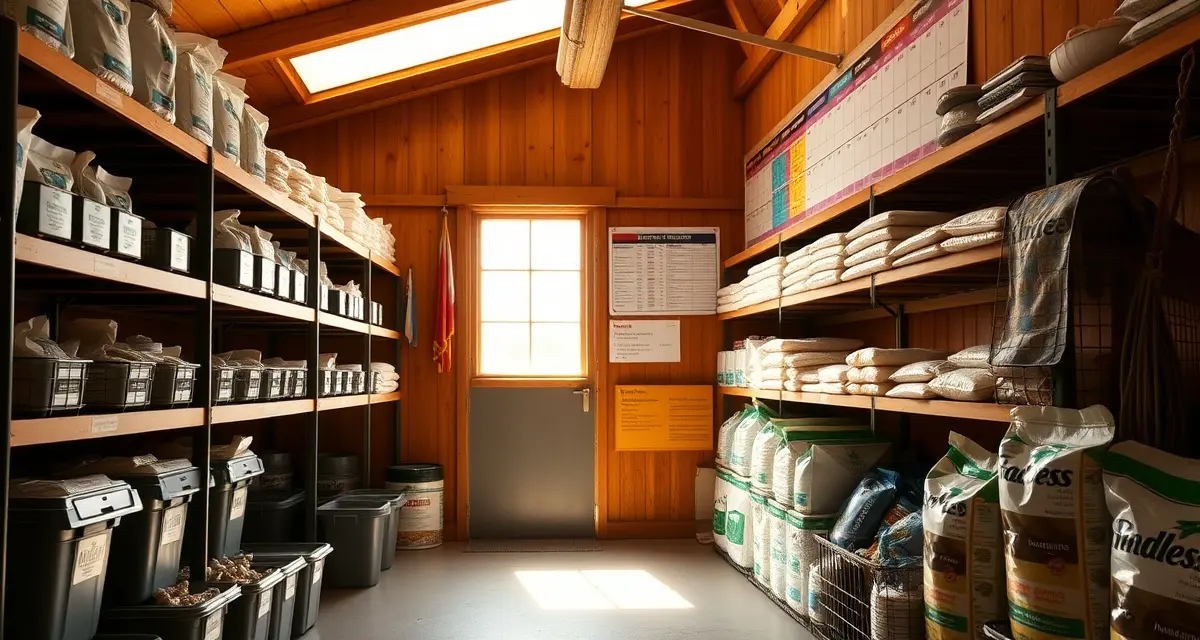
Separate hay, grain, supplements, and medications into clearly labeled zones. Use shelving with bin labels that include the product name and any horses it's assigned to. This reduces the chance of someone grabbing the wrong bag under time pressure.
Keep bagged feeds off the floor on pallets or shelving. This improves airflow, reduces moisture damage, and makes rodent activity easier to spot.
Implement FIFO Rotation
First, Indiana, First Out (FIFO) means older stock gets used before newer stock. Mark each bag or bale with a received date using a paint marker or label gun. Stack new deliveries behind existing stock so staff naturally pull from the front.
FIFO matters most for pelleted feeds and supplements with expiration dates. A bag of senior feed sitting behind a new delivery for six weeks is a waste at best and a health risk at worst.
Rodent Prevention Protocol
Rodents contaminate feed, chew through bags, and can introduce disease. Store all grain in metal or heavy-duty plastic bins with locking lids. Do a weekly perimeter check for droppings, gnaw marks, or nesting material.
Keep a log of when bait stations were checked and replaced. If you're using a pest control service, document their visit dates and findings in your barn records.
Step 2: Build Individual Horse Feed Cards
This is where most barns fall short. A feed card is the single source of truth for what each horse gets, when, and how much. Without it, staff rely on memory or ask whoever is nearby, which introduces inconsistency.
Each feed card should include:
- Horse name and stall number
- AM and PM ration (feed type, amount, and form: soaked, dry, mixed)
- Supplements with exact scoop or gram amounts
- Any dietary restrictions or allergies
- Last updated date and who authorized the change
BarnBeacon generates individual feed cards that are visible to all staff on mobile and update in real-time. When a vet recommends a diet change, it goes into the system once and every staff member sees the updated card on their next login. No whiteboard, no text chain, no confusion.
This is the core limitation with spreadsheets: they can't push an alert when a feed change is pending, and tools that require manual updates depend entirely on someone remembering to make them.
Step 3: Create Staff SOPs for Feeding
Morning Feed SOP
- Check the feed board or app for any overnight notes or changes
- Pull feed cards for your assigned stalls
- Measure each ration using designated scoops or a scale (never estimate)
- Soak feeds that require it before starting the round
- Confirm each horse received its full ration and note any refusals
Post this SOP inside the feed room door and review it during new staff onboarding. A laminated copy survives barn conditions better than a printed sheet.
Handling Feed Changes
Feed changes should never be verbal only. Require that any change, whether from an owner, trainer, or vet, is documented before it takes effect. This protects your staff and your horses.
For barns managing feeding schedules across large numbers of horses, a centralized system that timestamps every update is essential. You need to know not just what the current instruction is, but when it changed and who authorized it.
Supplement and Medication Separation
Supplements and medications should never be stored in the same bin or area. Medications require a separate locked cabinet with a log that tracks what was administered, by whom, and when.
If your barn handles medication tracking alongside feed management, keeping both in one platform reduces the risk of a staff member confusing a supplement with a prescription product.
Step 4: Track Inventory and Set Reorder Points
Count Weekly, Order Ahead
Do a physical inventory count every week, ideally on the same day. Record quantities of each feed, hay type, and supplement. Compare against your usage rate to project when you'll run out.
Set a reorder point for each product. For example: when senior feed drops below two bags, place an order. This prevents the scramble of running out mid-week and substituting a feed that doesn't match a horse's prescription diet.
Document Every Delivery
When a delivery arrives, log the product name, quantity, lot number, and received date. Lot numbers matter if there's ever a product recall. Without that documentation, you won't know which horses were affected or when they received the product.
Keep delivery logs for at least 12 months.
Step 5: Audit Your System Monthly
A system that isn't reviewed drifts. Once a month, walk through your feed room and check:
- Are FIFO labels current and visible?
- Are bins sealed and free of contamination?
- Do feed cards match what's actually being fed?
- Are reorder points being respected?
- Are staff following the SOP or working around it?
The audit doesn't need to take more than 30 minutes. What it catches can prevent a colic episode, a wasted bag of expensive supplement, or a liability issue with an owner.
Common Mistakes to Avoid
Estimating instead of measuring. A "scoop" means different things to different people. Standardize your measuring tools and label them by horse or feed type if needed.
Verbal-only feed changes. If it's not written down, it didn't happen. This is especially important when owners call in changes directly to staff rather than going through a manager.
Ignoring refusals. A horse that leaves feed is telling you something. Log refusals consistently so you can spot patterns before they become a health issue.
Storing supplements near medications. The risk of mix-up is real, especially during a busy morning feed when staff are moving fast.
Related Articles
FAQ
How do I manage feeding schedules for 30+ horses?
At scale, you need a system that assigns each horse a feed card and makes it accessible to every staff member without requiring someone to relay information. Paper systems and whiteboards break down because they depend on a single point of update. A digital platform that lets you manage feeding schedules centrally and push changes in real-time is the only reliable option at 30+ horses.
What should a horse feed card include?
A complete feed card includes the horse's name and stall number, AM and PM rations with exact amounts and preparation instructions, all supplements with precise measurements, any dietary restrictions, and a timestamp showing when the card was last updated and by whom. The "last updated" field is critical because it tells staff whether the card reflects current instructions or might be outdated.
How do I handle owner-requested feed changes across a whole barn?
Require all feed changes to go through a single documented channel, whether that's a barn manager, a software platform, or a written request form. When an owner calls in a change directly to a groom, that information often doesn't reach the full staff. A system that logs the request, timestamps it, and updates the horse's feed card automatically ensures the change actually reaches everyone who feeds that horse.
What is the most common mistake barn managers make with record-keeping?
The most common record-keeping mistake is logging health events, billing items, and care tasks after the fact from memory rather than at the time they occur. Delayed logging introduces errors, omissions, and disputes that are difficult to resolve because the original record does not exist. Moving to real-time digital logging, from any device, is the single most impactful record-keeping improvement available to most facilities.
How does barn management software save time at a multi-horse facility?
The largest time savings come from eliminating manual tasks that recur at high frequency: sending owner updates, generating monthly invoices, tracking care task completion across shifts, and scheduling recurring appointments. At a facility with 25 or more horses, these tasks can consume several hours per day when done manually. Automating the routine layer returns that time without reducing quality of communication or care.
What is Feed Room Management for Horse Barns: Inventory and SOPs?
Feed room management for horse barns refers to the systems and protocols that govern how feed is stored, tracked, and distributed to horses in a barn setting. It includes written standard operating procedures (SOPs), inventory controls, and per-horse feeding instructions that all staff can access. When done well, it eliminates the guesswork that leads to feed errors—one of the top causes of preventable colic according to AAEP data.
How much does Feed Room Management for Horse Barns: Inventory and SOPs cost?
Feed room management itself isn't a product with a price tag—it's a set of operational practices any barn can implement. The cost depends on the tools you choose to support it. Paper-based systems have near-zero upfront cost but carry hidden risks from errors and miscommunication. Digital barn management platforms like BarnBeacon offer structured feed tracking, staff task management, and owner visibility, typically on a subscription basis scaled to your facility size.
How does Feed Room Management for Horse Barns: Inventory and SOPs work?
Effective feed room management works by replacing informal, memory-based instructions with documented, accessible SOPs. Each horse gets a written feed plan visible to every staff member on every shift. Inventory is tracked so supplies don't run out unexpectedly, and feeding tasks are logged to confirm completion. Digital platforms centralize these workflows, reduce handoff errors between shifts, and create an auditable record—giving barn managers confidence that every horse got exactly what it was supposed to receive.
Sources
- American Horse Council, equine industry economic impact and facility operations research
- American Association of Equine Practitioners (AAEP), equine health care and management guidelines
- University of Kentucky Equine Initiative, equine business management and industry resources
- Rutgers Equine Science Center, equine management research and extension publications
- The Horse magazine, published by Equine Network, equine facility management reporting
Get Started with BarnBeacon
BarnBeacon brings billing, health records, owner communication, and daily operations into one platform built for equine facilities, so the time you spend on administration goes back to the horses. Start a free 30-day trial with full access to every feature, or schedule a demo to see how it handles your specific facility type.