Keeping Accurate Breeding Records: Pedigrees, Dates, and Outcomes
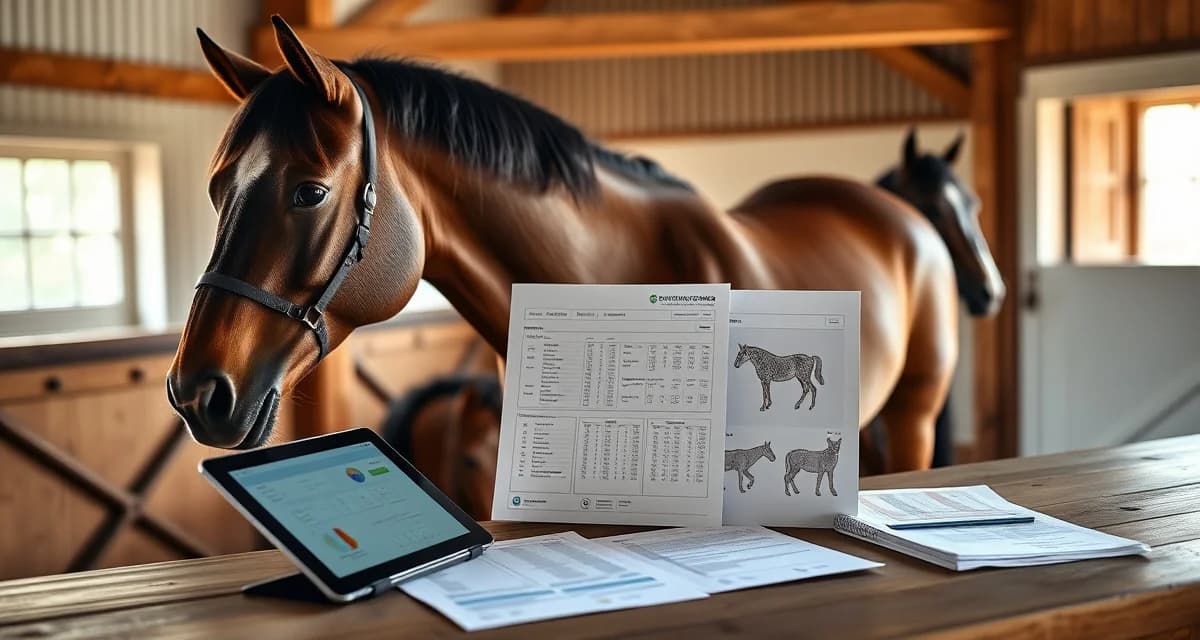
Breeding records are the documentary foundation of everything a breeding operation does. They support registry filings, inform veterinary decisions, protect you in disputes, and tell the story of each mare and foal's history. Getting them right is not optional; it is what separates a professional operation from a hobby farm that got bigger than expected.
What Goes in a Breeding Record
A complete breeding record for a mare covers her entire reproductive history with your operation, not just the current season. When you know a mare's history, you understand patterns. A mare that reliably settles on the first cover behaves differently than one who has needed three attempts and a uterine flush every year before establishing pregnancy.
The core data points for each breeding season include:
- Pre-breeding reproductive exam findings and date
- Teasing observations and dates showing cycle tracking
- Ultrasound findings at each vet visit, including follicle size and uterine health
- Breeding date or insemination date
- Type of breeding: live cover, fresh cooled semen, or frozen
- Stallion name and registry identification
- Post-breeding exam findings, including uterine clearance if performed
- Pregnancy check at 14 days with findings
- Pregnancy check at 28 days confirming heartbeat
- Subsequent pregnancy monitoring records
- Foaling date and outcome, or notation of embryonic loss with date
For foals, a separate record begins at birth and includes:
- Date, time, and presentation notes
- Time to standing and first nursing
- IgG level and date tested
- Vet examination findings
- Vaccinations and treatments
- Weaning date
- Registration application date and registry number when assigned
Pedigree Records and Registry Documentation
Every horse in your breeding program should have their registration papers on file or a clear notation of where those papers are located. For mares and stallions, this means the original registration certificate from the relevant breed registry.
When a foal is born, you need the dam's and sire's registration numbers to complete the foal registration application. Most breed registries now require DNA typing for foals, which means hair samples from both parents and the foal. Know your registry's requirements and collect samples promptly after birth.
Keep a copy of every registration document in your records. Originals may live with the owner, but your facility should have a scanned copy of every horse's paperwork in your system. When a horse leaves your care, you need to be able to confirm their identity and registration status.
For stallion owners standing their stallion publicly, maintain the stallion's breeding report records in a format that mirrors what the registry will eventually request. Annual breeding reports require mare names, owner names, and breeding dates at minimum. Some registries require more detail.
Organizing Records for a Multi-Mare Operation
If you are managing ten mares, you can track breeding records in a well-structured spreadsheet. If you are managing thirty or more, a spreadsheet starts to fail you because it cannot send you reminders, connect to billing, or be updated by multiple staff members simultaneously without version control problems.
The organizational structure for a larger operation needs:
A per-mare folder or record that shows status at a glance: is she bred, open, confirmed pregnant, or foaling?
A season-level view that shows where every mare stands in the breeding process so you can see your whole operation's status without opening thirty individual files.
A task list that generates automatically from records. If a mare's 14-day check is due, that task should appear on someone's assignment list without requiring manual entry.
BarnBeacon provides this structure, letting you maintain individual horse records while keeping a clear view of your entire operation's status.
Recording Outcomes Honestly and Completely
Record outcomes accurately, including unfavorable ones. If a mare had an early embryonic loss at 20 days, record it. If semen quality was poor on a collection day, record it. If a foal had failure of passive transfer and required a plasma transfusion, record it.
These records serve two purposes. First, they inform future decisions. A mare who loses embryos in the second to fourth week may benefit from progesterone supplementation next season. That recommendation only makes sense if the history of losses is documented. Second, they protect you if a client disputes care quality. A detailed record showing every step taken, every vet finding, and every decision made is your defense against unfounded claims.
Do not edit records retrospectively to improve the appearance of outcomes. If an error was made and corrected, document it transparently. Honest records reflect the reality of working with biological systems where things sometimes go wrong despite good management.
Connecting Breeding Records to Billing
Every service in the breeding record has a corresponding charge. Breeding fees, vet visit fees you are passing through, collection and shipping charges, and mare care board should all connect directly to what your records show was provided.
When billing is separated from care records, charges get missed and disputes become harder to resolve. A billing system that references the service record is far more defensible than one that relies on memory or informal notes.
Review your equine billing management setup to confirm that breeding services and their associated charges are captured completely and linked to client accounts.
Long-Term Record Retention
Breeding records have longer useful life than most equine management records. A mare's reproductive history from ten years ago may be relevant if her daughter enters your breeding program. A foal's birth record is relevant throughout that horse's life for registration and health purposes.
Establish a retention policy and stick to it. Digital records are easy to retain indefinitely. Physical records should be scanned and stored digitally with backups. At minimum, retain breeding and foaling records for the life of the horses involved.
Organize archived records so they are searchable. When you need a mare's history from five years ago, you should be able to find it in minutes, not days.
FAQ
What is Keeping Accurate Breeding Records: Pedigrees, Dates, and Outcomes?
Keeping accurate breeding records means documenting every aspect of a mare's reproductive history — pedigrees, breeding dates, veterinary exam findings, pregnancy check outcomes, and foal results. For breeding operations, this documentation supports registry filings, guides veterinary decisions, and creates a traceable history for each animal. It covers everything from pre-breeding exams and teasing observations to stallion identification, insemination type, and confirmed pregnancy milestones.
How much does Keeping Accurate Breeding Records: Pedigrees, Dates, and Outcomes cost?
Maintaining breeding records has no fixed cost — it depends on your tools. A paper-based system costs almost nothing upfront but carries hidden costs in time and error correction. Dedicated barn management software typically runs $20–$100 per month depending on features. The real cost of not keeping accurate records shows up later: failed registry filings, repeated veterinary workups, and disputes with buyers or stallion owners.
How does Keeping Accurate Breeding Records: Pedigrees, Dates, and Outcomes work?
Breeding record-keeping works by capturing key data points at each stage of a mare's reproductive cycle — pre-breeding exam, cycle tracking, breeding or insemination, post-breeding clearance, and pregnancy confirmation. Each entry is dated and tied to the specific mare and stallion. Over time, these records build a longitudinal picture that helps managers spot patterns, anticipate problems, and make better decisions for the next breeding season.
What are the benefits of Keeping Accurate Breeding Records: Pedigrees, Dates, and Outcomes?
Accurate breeding records protect your operation legally, streamline registry filings, and improve reproductive outcomes. Vets can make faster, better-informed decisions when full history is available. Buyers trust documented pedigrees and breeding timelines. Patterns across seasons — like a mare who repeatedly needs a uterine flush before settling — become visible only through consistent records, allowing you to adjust protocols proactively rather than repeat costly mistakes.
Who needs Keeping Accurate Breeding Records: Pedigrees, Dates, and Outcomes?
Any operation that breeds horses needs accurate breeding records — from small private farms to large commercial breeding operations. Stallion managers, broodmare owners, veterinarians, and breed registry coordinators all depend on this documentation. As a farm grows beyond a hobby scale, informal memory-based tracking breaks down fast. If you're filing papers with any breed registry or selling horses with documented bloodlines, accurate breeding records are non-negotiable.
How long does Keeping Accurate Breeding Records: Pedigrees, Dates, and Outcomes take?
Setting up a record-keeping system takes a few hours initially. Recording data for each breeding event takes minutes per entry when done in real time. The time investment compounds when records are neglected — reconstructing a mare's history from memory or scattered notes can take hours and still be incomplete. Consistent, timely entries during each vet visit or breeding event keep the workload minimal and the data reliable.
What should I look for when choosing Keeping Accurate Breeding Records: Pedigrees, Dates, and Outcomes?
Look for a system that captures the full reproductive timeline — not just breeding dates but exam findings, follicle measurements, uterine health, pregnancy check results, and foal outcomes. It should link stallion registry details directly to mare records, support multiple breeding types (live cover, fresh cooled, frozen), and make historical data easy to retrieve. Digital systems that allow vet integration or photo attachment add significant value for complex cases.
Is Keeping Accurate Breeding Records: Pedigrees, Dates, and Outcomes worth it?
Yes — for any serious breeding operation, accurate records are worth every bit of effort. The return shows up in fewer repeated vet procedures, faster registry approvals, stronger buyer confidence, and better reproductive outcomes over time. A mare's history is one of her most valuable assets. Operations that treat record-keeping as optional tend to face the same preventable problems season after season. Documentation is the difference between managing by data and managing by guesswork.