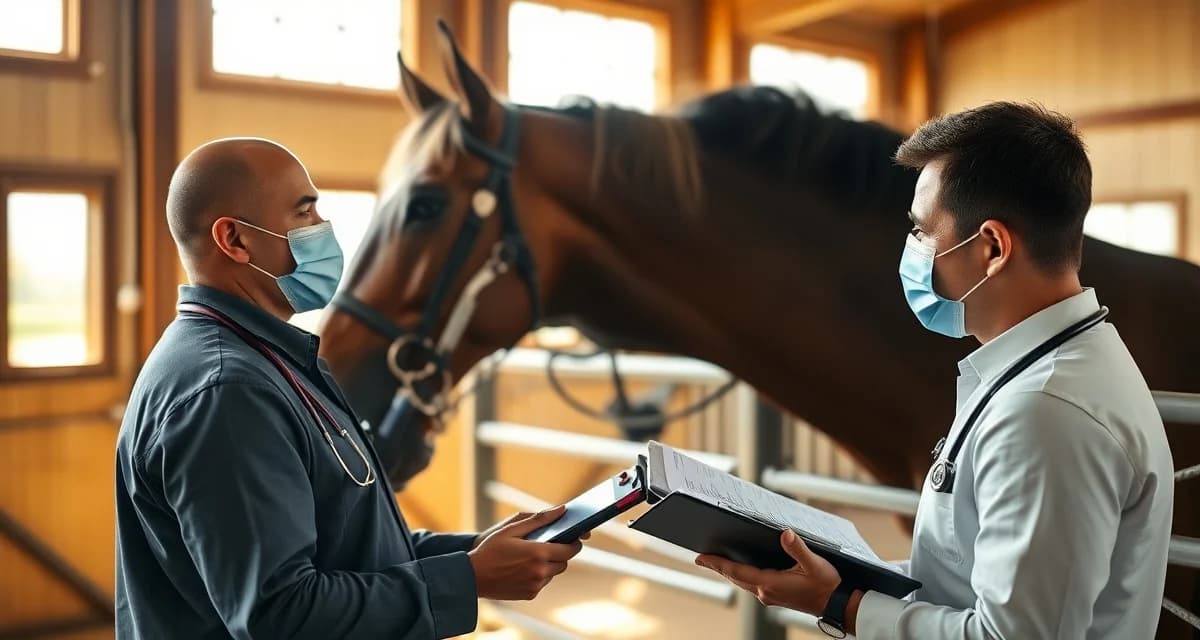
Endurance Barn Health Monitoring: FAQ for Managers
Endurance barn health monitoring is one of the most demanding disciplines in equine facility management. Unlike pleasure or show barns, endurance facilities deal with horses that regularly push physiological limits, which means health tracking needs to be faster, more detailed, and more proactive than what generic barn software provides.
TL;DR
- This FAQ covers the most common questions about endurance barn health monitoring for equine facilities.
- Digital systems reduce manual errors and save time across all key management areas.
- BarnBeacon centralizes records, billing, communication, and scheduling in one platform.
- Most facilities see measurable time savings within the first 30 days of adoption.
- Software works on phones and tablets so staff can log and check data from anywhere on the property.
Why Endurance Facilities Have Different Health Monitoring Needs
Most barn management tools were built with general equine care in mind. They track vaccinations, farrier visits, and basic vitals. That works fine for a boarding barn. It does not work for a facility where horses return from 50- or 100-mile rides with elevated heart rates, compromised hydration, and metabolic stress that can escalate within hours.
Endurance facilities have unique health monitoring needs not addressed by generic barn software. The post-ride recovery window is critical. A horse that looks fine at the trailer can be in early-stage tying-up or experiencing electrolyte imbalance by morning. Managers need tools that flag deviations from each horse's individual baseline, not just population averages.
BarnBeacon was built specifically to address this gap. It gives endurance barn managers purpose-built health monitoring tools designed around the actual demands of the sport.
What Makes Endurance Health Monitoring Complex
High-Frequency Vital Tracking
Endurance horses need vitals recorded before, during, and after competition. Heart rate recovery is a primary metric at most rides, and vets use it to determine whether a horse can continue. Barn managers need to track this data over time to identify patterns, not just capture one-off readings.
Individual Baselines Matter More Than Averages
A resting heart rate of 36 bpm is normal for one horse and a red flag for another. Endurance barn health monitoring requires software that stores and references each horse's individual baseline, so deviations are caught early. Generic tools that flag against breed or age averages miss too much.
Metabolic and Musculoskeletal Monitoring
Tying-up, synchronous diaphragmatic flutter, and laminitis triggered by metabolic stress are real risks in endurance horses. Managers need structured post-ride check protocols built into their workflow, not a blank notes field. Purpose-built tools prompt the right questions at the right times.
Multi-Horse, Multi-Event Coordination
Endurance barns often manage horses competing across different rides on the same weekend. Coordinating health records, vet checks, and recovery monitoring across multiple horses and locations requires more than a spreadsheet.
How BarnBeacon Supports Endurance Health Monitoring
BarnBeacon's health monitoring module includes individual baseline tracking, structured post-ride health check templates, and alert thresholds set per horse. When a horse's recorded vitals fall outside their personal normal range, the system flags it immediately.
The platform also integrates with barn management software workflows, so health data connects directly to feeding schedules, medication logs, and vet communication. Nothing lives in a silo.
For facilities managing multiple horses across competition seasons, BarnBeacon's longitudinal health records make it easy to spot trends that would otherwise get buried in paper logs or disconnected spreadsheets. You can see how a horse's recovery time has changed over a season, which is exactly the kind of insight that prevents breakdowns.
Learn more about how this fits into broader endurance barn operations planning.
How do endurance barn managers handle health monitoring?
Most endurance barn managers use a combination of manual vital checks, vet communication logs, and ride completion records to track horse health. The challenge is that this data often lives in multiple places and does not connect. Effective managers build structured post-ride protocols and use software that stores individual baselines, so they can compare current readings against each horse's own history rather than generic benchmarks. BarnBeacon provides templated check-in workflows that make this process consistent across staff and shifts.
What software do endurance barns use for health monitoring?
Many endurance barns start with general barn management platforms or spreadsheets, but these tools were not designed for the post-ride recovery monitoring and individual baseline tracking that endurance horses require. BarnBeacon is purpose-built for facilities where health monitoring is high-frequency and high-stakes. It includes per-horse vital baselines, structured health check templates, and alert systems that flag deviations before they become emergencies. It is one of the few platforms built with endurance equine facility health monitoring as a core use case rather than an afterthought.
What are the health monitoring challenges at endurance facilities?
The biggest challenges are speed, specificity, and coordination. Health issues in endurance horses can escalate quickly after competition, so delayed data entry or missed check-ins carry real risk. Monitoring needs to be specific to each horse, not averaged across the herd. And when multiple horses are competing across different events, coordinating records and recovery protocols becomes logistically complex. Generic barn software handles none of this well. Purpose-built tools like BarnBeacon address all three challenges with features designed around how endurance facilities actually operate.
What health changes in horses are easiest to miss without a digital log?
Gradual changes in feed intake, water consumption, and body weight are the most commonly missed early health indicators because they occur slowly and are easy to normalize over time. A horse that eats slightly less each day for two weeks may not trigger concern on any single day, but the pattern across logged data makes it obvious. This is why timestamped feeding logs matter: they create a record that reveals trends that daily observation alone misses.
How often should health observations be logged for boarding horses?
At a minimum, health observations should be logged during morning and evening feeding rounds, which catches the majority of acute changes. For horses on medication protocols, active treatment, or rehabilitation, additional check-in logs during the day are appropriate. The goal is not to create data for its own sake but to establish a baseline for each horse that makes deviations detectable quickly.
What should a complete horse health records include?
A complete health record should include vaccination history with dates and products used, deworming records, Coggins test results, farrier visit notes, dental records, any medications administered with dose and duration, vet visit summaries, and any injury or illness events with outcomes. This record should be accessible from a phone for use at events or during emergency vet calls.
Related Articles
FAQ
What is Endurance Barn Health Monitoring: FAQ for Managers?
Endurance Barn Health Monitoring: FAQ for Managers is a practical guide for equine facility managers who oversee horses competing in long-distance riding disciplines. It addresses the specialized health tracking requirements that distinguish endurance operations from standard boarding or show barns. Because endurance horses regularly face extreme physiological stress after 50- or 100-mile rides, managers need faster, more granular monitoring tools. This FAQ covers digital systems like BarnBeacon that centralize records, vitals logging, scheduling, and communication in one platform built for these demanding environments.
How much does Endurance Barn Health Monitoring: FAQ for Managers cost?
BarnBeacon offers tiered pricing based on facility size and feature needs, making it accessible for small private yards and large commercial endurance operations alike. Exact costs depend on the number of horses, users, and modules required. Most facilities find the investment offset quickly by time savings, reduced manual errors, and fewer missed health events. Contact BarnBeacon directly for a current quote tailored to your operation. Many managers report measurable ROI within the first 30 days of adoption through streamlined workflows alone.
How does Endurance Barn Health Monitoring: FAQ for Managers work?
Endurance barn health monitoring works by digitizing and centralizing all health-related data for each horse in your facility. After rides, staff log vitals like heart rate recovery, hydration status, and any metabolic indicators directly from a phone or tablet. The system flags abnormal readings, maintains a complete longitudinal health record, and alerts relevant team members in real time. BarnBeacon connects these health logs with scheduling, billing, and communication tools so nothing falls through the cracks during the high-pressure post-ride recovery window.
What are the benefits of Endurance Barn Health Monitoring: FAQ for Managers?
The core benefits include faster detection of post-ride metabolic stress, reduced paperwork, fewer missed follow-ups, and a complete auditable health history for every horse. Digital logging eliminates transcription errors common with paper systems and ensures all staff work from the same up-to-date records. Managers gain visibility across the entire herd at once rather than relying on verbal handoffs. BarnBeacon also improves owner communication by making health updates easy to share, which builds trust and reduces inbound calls to barn staff.
Who needs Endurance Barn Health Monitoring: FAQ for Managers?
Any manager running a dedicated endurance facility, a multi-discipline barn with a significant endurance program, or a conditioning yard preparing horses for distance events will benefit from specialized health monitoring. Veterinarians, barn managers, grooms, and owners all interact with these systems at different levels. Facilities where horses regularly return from competition or long training rides with elevated physiological stress are the primary candidates. If you are managing more than a handful of endurance horses and still relying on paper logs or generic boarding software, this approach is designed for you.
How long does Endurance Barn Health Monitoring: FAQ for Managers take?
Initial setup for BarnBeacon typically takes a few hours to a couple of days depending on how many horse records need to be imported and how complex your existing workflows are. Once configured, daily health logging takes minutes per horse because forms are optimized for speed on mobile devices. Staff generally reach full proficiency within the first week. Most facilities begin seeing time savings and improved data quality within the first 30 days, making the onboarding investment short relative to long-term operational gains.
What should I look for when choosing Endurance Barn Health Monitoring: FAQ for Managers?
Look for a system built with endurance-specific health parameters rather than a generic equine platform retrofitted for distance riding. Key features include customizable vital sign tracking, heart rate recovery logging, hydration and metabolic status fields, automated alerts for abnormal readings, and a full longitudinal health timeline per horse. Mobile-first design matters because staff log data in the barn and paddock, not at a desk. Integration with scheduling, billing, and owner communication tools in one platform prevents data fragmentation and reduces the number of separate apps your team must manage.
Is Endurance Barn Health Monitoring: FAQ for Managers worth it?
For facilities managing horses that compete in or train for endurance events, a purpose-built health monitoring system is worth the investment. Generic barn software misses the post-ride recovery window where metabolic crises can escalate quickly. The cost of one preventable health emergency typically exceeds a full year of software fees. Beyond risk reduction, the time savings from eliminating paper logs and manual data entry compound quickly across a busy season. BarnBeacon's centralized platform replaces multiple disconnected tools, making the value case straightforward for serious endurance operations.
Sources
- American Association of Equine Practitioners (AAEP), equine health care guidelines and best practices
- American Veterinary Medical Association (AVMA), veterinary standards for equine care
- University of Kentucky Gluck Equine Research Center, equine health research publications
- Colorado State University College of Veterinary Medicine and Biomedical Sciences, equine health resources
- The Horse magazine, published by Equine Network, equine health and management reporting
Get Started with BarnBeacon
BarnBeacon's health monitoring tools build a complete, timestamped health history for every horse on your property and flag deviations from individual baselines before they become serious problems. Start a free 30-day trial to see how it works with your actual horse population.