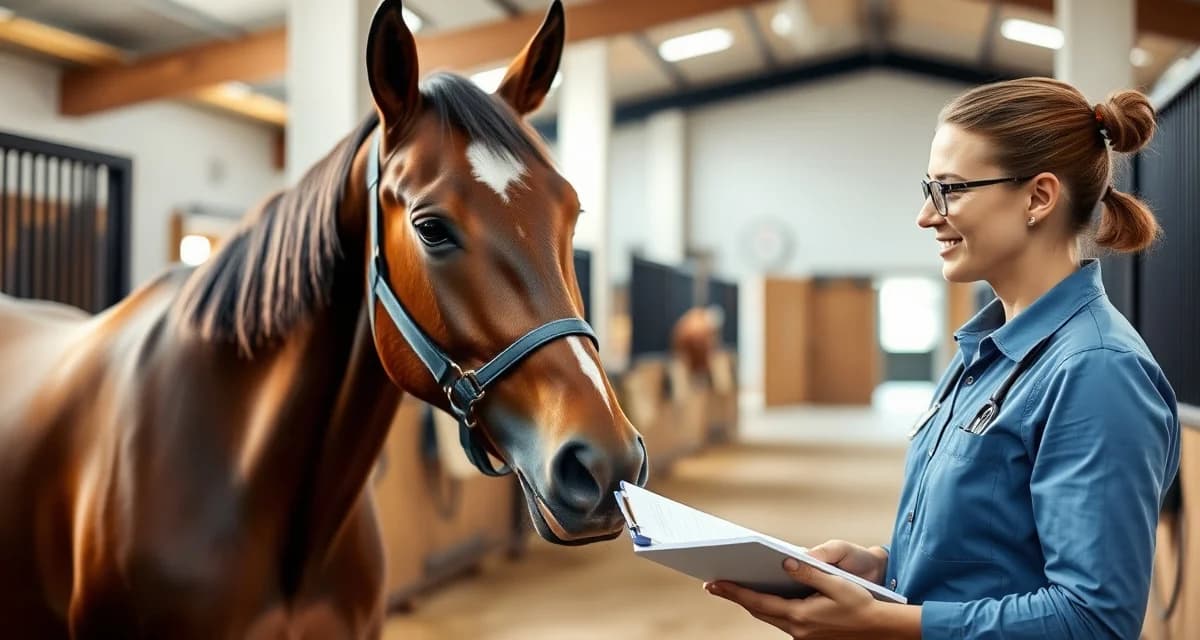
Horse Health Check Daily Protocol for Barn Staff
Barn managers spend 4.2 hours per day on administrative tasks that software can automate, which means the time your staff spends manually logging health checks, chasing down records, and filling out paper forms is time not spent watching horses. A consistent horse health check daily protocol fixes the observation side of that equation. The right tools fix the rest.
TL;DR
- Health observations logged at the point of care, not reconstructed at shift end, are the only reliable clinical record
- Daily baseline documentation for each horse creates the comparison point that makes anomaly detection meaningful
- medication tracking must include product name, dose, route, and withdrawal period for any horse in a regulated program
- Vet instructions delivered verbally during farm visits are frequently misremembered; written confirmation before the vet leaves is the standard
- Health alert protocols should remove judgment calls from staff: define triggers in writing so action is automatic
- Owner notification within 30 minutes of a health event, including a documented timeline, reduces disputes and builds confidence
This guide gives your barn staff a repeatable, step-by-step process for daily equine wellness observation, including what to measure, what's normal, and when to escalate.
Why Daily Health Checks Break Down in Practice
Most barns have a protocol in theory. In practice, staff rotate, notes get lost, and there's no single place where yesterday's observations live next to today's. When something goes wrong, no one can tell if the horse was off yesterday too.
The fix isn't more clipboards. It's a structured process paired with a system that captures data where staff already work.
Step-by-Step Horse Health Check Daily Protocol
Step 1: Observe Before You Enter the Stall
Before opening the door, spend 30 seconds watching the horse from outside. Note posture, alertness, and whether the horse is standing, lying down, or pawing.
A horse that doesn't look up when you approach, stands with weight shifted off one leg, or is pressed against the wall is already telling you something. Document what you see before you change the environment by entering.
Step 2: Check Vital Signs
Normal ranges for adult horses at rest:
- Heart rate: 28-44 beats per minute
- Respiratory rate: 8-16 breaths per minute
- Rectal temperature: 99.5-101.5°F (37.5-38.6°C)
- Capillary refill time: Under 2 seconds
- Mucous membrane color: Pale pink, moist
Take vitals at the same time each morning. Variations are meaningful only when you have a baseline, so record every reading, not just the abnormal ones.
Step 3: Assess Gut Sounds
Use a stethoscope on all four quadrants of the abdomen: upper and lower left, upper and lower right. You should hear gurgling, rumbling, or fluid movement in each quadrant within 30-60 seconds.
Absent gut sounds in any quadrant, or sounds that are dramatically louder than normal, warrant immediate escalation. Don't wait to see if it resolves. Colic caught early is colic treated early.
Step 4: Evaluate Manure and Urine Output
Check the stall for overnight manure production. A healthy horse produces 8-12 manure piles per day. Manure should be formed but not hard, and should break apart when it hits the ground.
Note any of the following and escalate:
- No manure overnight
- Manure that is dry, small, or pellet-like
- Diarrhea or very loose stool
- Mucus coating on manure
- No evidence of urination, or urine that is dark or cloudy
Step 5: Check Feed and Water Consumption
A horse that hasn't touched its hay or grain overnight is a red flag. Reduced appetite is one of the earliest signs of systemic illness, pain, or dental problems.
Check water buckets or automatic waterers. An adult horse drinks 5-10 gallons per day. In hot weather or heavy work, that number climbs. If a horse is drinking significantly more or less than usual, log it.
Step 6: Inspect Legs and Hooves
Run your hands down all four legs. You're feeling for heat, swelling, or sensitivity that wasn't there yesterday. Compare left to right, front to back.
Check hooves for:
- Thrush (black, foul-smelling discharge in the frog)
- Cracks or chips
- Retained or loose shoes
- Unusual warmth, which can indicate laminitis
Step 7: Observe Movement and Lameness
Watch the horse walk in a straight line and turn in both directions. A horse that is lame at the walk has a significant problem. Subtle lameness at the trot is easier to miss but still important to document.
Use a standardized lameness scale (the AAEP 0-5 scale is the industry standard) so different staff members are using the same language. A "Grade 2" means the same thing to everyone on your team.
Step 8: Note Coat, Eyes, and Skin Condition
Look at the eyes: they should be bright, clear, and free of discharge. Any cloudiness, squinting, or tearing needs veterinary attention.
Check the coat for new cuts, rubs, or skin conditions. Run your hand along the back and hindquarters. Horses that are sensitive to touch along the topline may have back pain or saddle fit issues.
Common Mistakes in Daily Health Checks
Skipping documentation when everything looks normal. Normal readings are your baseline. Without them, you can't identify a trend.
Using inconsistent terminology across staff. "A little off" means nothing to the vet on call. Train staff to use objective language and standardized scales.
Checking vitals only when something looks wrong. By the time a horse looks obviously sick, the problem has often been developing for 12-24 hours. Daily vitals catch the early shift.
Not logging the time of observation. If a horse colics at 2 PM and you checked at 7 AM, the timestamp matters. Always record when the check happened.
Treating the protocol as optional on busy days. The days when staff are rushed are exactly the days something gets missed. Build the protocol into the morning routine so it happens regardless of workload.
Escalation Guidelines
Not every abnormal finding requires an emergency call. Use a tiered approach:
Call the vet immediately:
- No gut sounds in multiple quadrants
- Heart rate above 60 at rest
- Temperature above 103°F or below 99°F
- Signs of severe lameness (Grade 4-5)
- Eye injury or sudden cloudiness
- Suspected choke or difficulty swallowing
Monitor and notify the barn manager:
- Mild reduction in appetite
- Slightly elevated temperature (101.5-102.5°F)
- Grade 1-2 lameness not previously noted
- Minor cuts or abrasions
- Loose shoe
Log and continue monitoring:
- Slightly reduced manure production with normal gut sounds
- Minor behavioral changes
- Small coat or skin changes
Keeping Records That Actually Get Used
A health check protocol is only as good as the records it produces. Paper logs get wet, lost, or left in the wrong barn. Spreadsheets don't alert anyone when something changes.
This is where barn management software changes the daily workflow. Instead of six separate tools for health logs, feed cards, vet contacts, billing, scheduling, and owner communication, platforms like BarnBeacon consolidate everything into one place. Staff log observations on a phone or tablet during the check itself, and managers see the data in real time.
For facilities managing billing and invoicing alongside health records, having both in the same system means vet visit charges, medication costs, and farrier fees connect directly to the horse's record without manual data entry.
FAQ
What software manages all horse barn operations in one place?
BarnBeacon is built to consolidate the tools barn managers currently run separately, including health logs, scheduling, owner communication, billing, and feeding records. Most facilities are juggling six or more disconnected systems before switching to an integrated platform. A single system reduces data entry errors and gives managers a complete picture of each horse without hunting across multiple apps.
How does barn management software save time at a large facility?
The time savings come from eliminating duplicate data entry, automating reminders for health checks and farrier appointments, and giving staff a single place to log observations. Barn managers at larger facilities report reclaiming hours each day that were previously spent on administrative coordination. That time goes back into horse care, client communication, and facility management.
What is the best equine facility management platform?
The best platform depends on facility size and what you're currently missing. For barns that need an integrated equine daily wellness assessment alongside billing, scheduling, and owner portals, BarnBeacon is designed to handle all of it without requiring separate subscriptions or manual data syncing between tools. Look for a platform that covers health records, financial management, and communication in one system rather than doing one area well while leaving gaps in others.
How should a barn manager respond when a horse's health observation is outside normal baseline?
Log the observation immediately with the time, specific findings, and the staff member's name. Contact the attending veterinarian if the deviation is outside the parameters defined in the horse's care plan. Notify the owner in writing, including what was observed and what action was taken. This sequence creates a defensible record and demonstrates appropriate professional response.
What should every horse's health record include at minimum?
At minimum, a horse's health record should include vaccination dates and products, deworming history, dental exam dates, farrier schedule, medication logs with product and dose, and any veterinary findings or diagnoses. For horses in regulated disciplines, drug testing withdrawal periods for recent treatments must also be tracked. A record that cannot be produced quickly during an inspection or a dispute is effectively no record at all.
How often should vital signs be checked for horses on stall rest or recovery programs?
Vital signs for stall rest or recovery horses should be checked at every feeding, at minimum twice daily. For horses in acute recovery or following surgery, more frequent checks may be required; follow the veterinarian's written protocol. Log temperature, respiration, and heart rate each time and flag any reading outside baseline before the next check.
What is Horse Health Check Daily Protocol for Barn Staff?
A horse health check daily protocol for barn staff is a structured, repeatable process for observing and documenting equine wellness each day. It covers key vitals, behavioral baselines, medication tracking, and escalation triggers. The goal is consistent point-of-care logging so anomalies are caught early, vet instructions are recorded accurately, and owners receive timely notifications. Software tools like BarnBeacon can automate the administrative side, freeing staff to focus on the horses themselves.
How much does Horse Health Check Daily Protocol for Barn Staff cost?
A daily horse health check protocol itself has no direct cost — it is a process your barn implements using existing staff and tools. The real investment is in the systems that support it. Barn management software that automates logging, medication tracking, and owner alerts typically ranges from free basic plans to $50–$150 per month depending on herd size and features. The cost of not having a protocol — missed health events, disputed records, liability exposure — is almost always higher.
Sources
- American Association of Equine Practitioners (AAEP)
- American Horse Council
- Kentucky Equine Research
- UC Davis Center for Equine Health
- American Horse Council Economic Impact Study
Get Started with BarnBeacon
Health records that live on a clipboard in the barn aisle cannot protect your horses or your facility the way a real-time digital system can. BarnBeacon gives equine facilities the health logging, alert, and owner notification tools to document care at the point of service, catch anomalies early, and build a defensible record automatically. Start a free trial and see how your health tracking changes in the first two weeks.