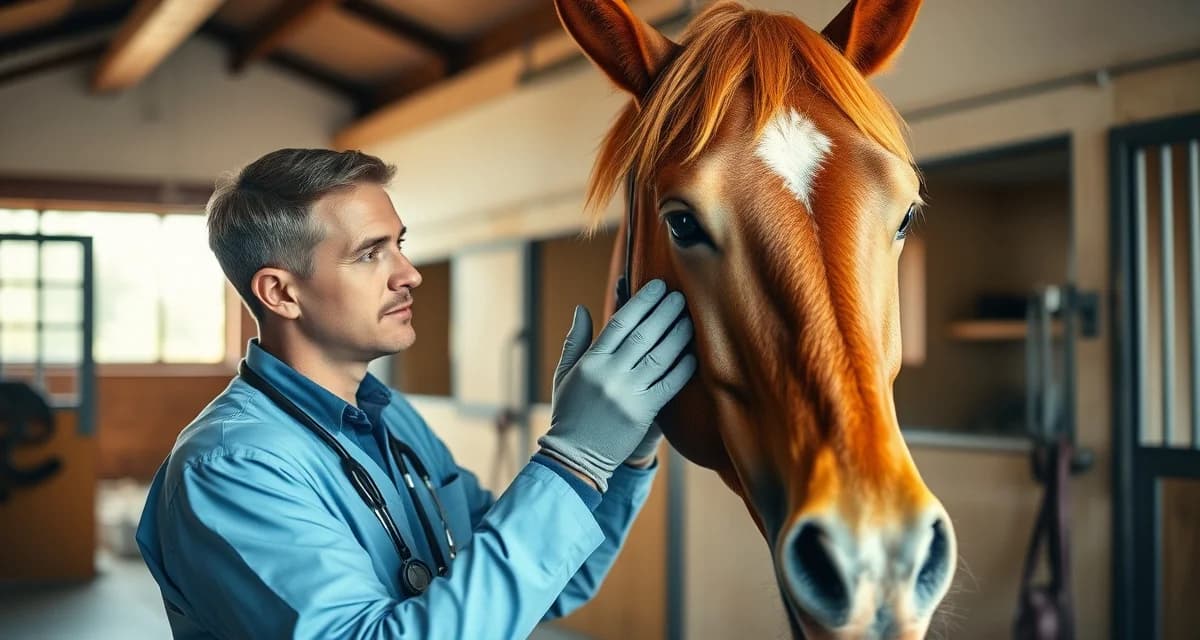
Daily Health Monitoring Protocols for Horses
Daily health monitoring is the first line of defense against developing illness, injury, and disease. A horse that is seen and assessed twice a day by an observant person is far less likely to have a problem go unnoticed than one that is fed and left largely unexamined. Building a structured monitoring protocol into your daily operations turns a good intention into a reliable system.
The Morning Check
Morning rounds are typically the first and most thorough health check of the day. By morning, you can see how a horse has eaten overnight, what the stall condition looks like, and whether the horse came through the night without incident.
A morning health check should cover:
Overnight feed consumption. Hay remaining in the stall tells you how the horse ate through the night. A stall with hay barely touched is a flag for most horses, though you must know each horse's normal eating rate.
Stall condition. Normal manure output in terms of quantity and distribution around the stall. A clean stall with no manure may mean the horse has not passed much overnight. A stall with excessive manure may indicate loose stools. Bedding overturned and piled in corners suggests the horse has been lying down and rolling repeatedly, which is a colic warning sign.
First visual of the horse. Before you open the stall door, look at the horse. Is it standing at the door interested in you? Standing in the back? Lying down and unwilling to get up? The first glance tells you a lot.
Attitude and engagement. Does the horse respond to you normally? Is it bright and curious, or dull and withdrawn?
Visual body assessment. Any new swelling on legs, any visible cuts or injuries from the night, eye condition, nasal discharge, posture.
Temperature if indicated. Any horse that seemed off in the previous day's check or that shows any of the above abnormalities should have a temperature taken.
The Evening Check
Evening checks are typically briefer than morning checks, but they are not optional. You are catching anything that developed during the day: exercise-related issues, injuries from turnout, early digestive changes.
Focus on attitude, eating behavior at the evening feed, and any physical changes since morning.
Monitoring High-Risk Horses
Some horses in your barn need more than twice-daily monitoring. Define which horses are in this category and what their monitoring protocol looks like.
Horses that may need more frequent checks:
- Horses in the first week post-colic event
- Post-surgical recovery horses
- Horses in the final weeks of pregnancy
- Horses recovering from significant infection or illness
- Horses on medications with known side effect risks
- Horses with a history of tying-up or metabolic episodes during exercise
For these horses, create a specific monitoring checklist that covers the observations most relevant to their condition and schedule explicit check times throughout the day.
Recording What You Observe
Observation without documentation loses its value over time. Brief daily health log entries for each horse are the minimum standard.
BarnBeacon supports per-horse daily health logs that staff can complete from a mobile device during morning rounds. This makes documentation a natural part of the check rather than a separate administrative task. The record attaches to the horse's profile automatically, so the barn manager can review all daily logs from anywhere.
When Monitoring Reveals a Problem
The monitoring protocol is only as valuable as what happens when a problem is found. Every staff member should know what to do with a concerning observation: log it, report it to the barn manager, and follow the established escalation protocol.
Do not let staff make unsupported decisions about whether something is serious enough to mention. Train a low threshold for reporting. It is far better to have a staff member flag something that turns out to be nothing than to have them decide independently that a mildly distressed horse is fine.
See health incident reporting for guidance on escalation protocols, and horse health logs for how to structure daily logging effectively.
FAQ
What is Daily Health Monitoring Protocols for Horses?
Daily health monitoring protocols for horses are structured routines where horses are observed and assessed at least twice daily — typically during morning and evening feeding. These protocols cover feed consumption, stall condition, manure output, body language, hydration, and physical appearance. The goal is to catch early warning signs of illness, injury, or colic before they escalate. A consistent protocol turns casual observation into a reliable system that protects horse welfare and reduces emergency veterinary costs.
How much does Daily Health Monitoring Protocols for Horses cost?
Daily health monitoring protocols have no direct purchase cost — they are a management practice, not a product. The investment is your time: roughly 10 to 20 minutes per horse per day depending on herd size and barn layout. Indirect costs may include a basic vitals kit (thermometer, stethoscope, watch) for under $50 total. The real financial case is prevention: catching colic, lameness, or infection early typically saves hundreds to thousands of dollars in veterinary intervention.
How does Daily Health Monitoring Protocols for Horses work?
Daily health monitoring works by building observation into your routine feeding schedule. Each morning and evening, you assess the horse visually and physically — checking feed and water consumption, stall condition, manure output, posture, gait, and coat condition. Deviations from each horse's individual baseline trigger closer inspection or veterinary contact. Over time, you develop a precise picture of what 'normal' looks like for each animal, making abnormalities easier and faster to detect.
What are the benefits of Daily Health Monitoring Protocols for Horses?
The primary benefit is early disease and injury detection, which improves outcomes and reduces treatment costs. Consistent monitoring also strengthens the human-horse relationship, as horses become accustomed to daily handling. It reduces liability risk for boarding and training operations, supports better veterinary communication with documented baselines, and creates accountability across barn staff. Horses that are monitored regularly are statistically less likely to have conditions progress unnoticed to an emergency stage.
Who needs Daily Health Monitoring Protocols for Horses?
Any horse owner, barn manager, trainer, or caretaker responsible for a horse's welfare needs a daily monitoring protocol. This includes backyard horse owners with a single horse, professional trainers managing large strings, and boarding facility operators overseeing multiple clients' animals. The protocol scales to any operation size. Even experienced handlers benefit from a structured checklist, since routine familiarity can cause subtle changes to be overlooked without a deliberate, systematic approach.
How long does Daily Health Monitoring Protocols for Horses take?
A thorough morning check takes 10 to 15 minutes per horse when you know what to look for. Evening checks are typically shorter — around 5 to 10 minutes — focused on feed consumption, water levels, and a visual scan. For a small private barn with two to four horses, full daily monitoring across both checks fits within 30 to 60 minutes. Larger operations benefit from assigning specific horses to specific staff members to keep checks efficient and accountable.
What should I look for when choosing Daily Health Monitoring Protocols for Horses?
When building or selecting a monitoring protocol, prioritize one that is specific to each horse's individual baseline rather than generic thresholds. Look for protocols that cover the full picture: feed, water, manure, posture, gait, skin condition, eyes, and temperature when warranted. A good protocol includes documentation — even brief notes — so trends are trackable over time. It should also define clear escalation criteria: when to call a vet versus monitor more closely.
Is Daily Health Monitoring Protocols for Horses worth it?
Yes. Daily health monitoring is one of the highest-return practices in horse management. The time cost is modest; the potential savings from early colic detection, infection treatment, or lameness intervention are substantial. Beyond finances, consistent monitoring directly improves horse welfare and lifespan. For boarding operations, it also builds client trust and reduces liability exposure. No supplement, feed upgrade, or equipment purchase delivers the compounding protective value of simply looking at your horses carefully every single day.