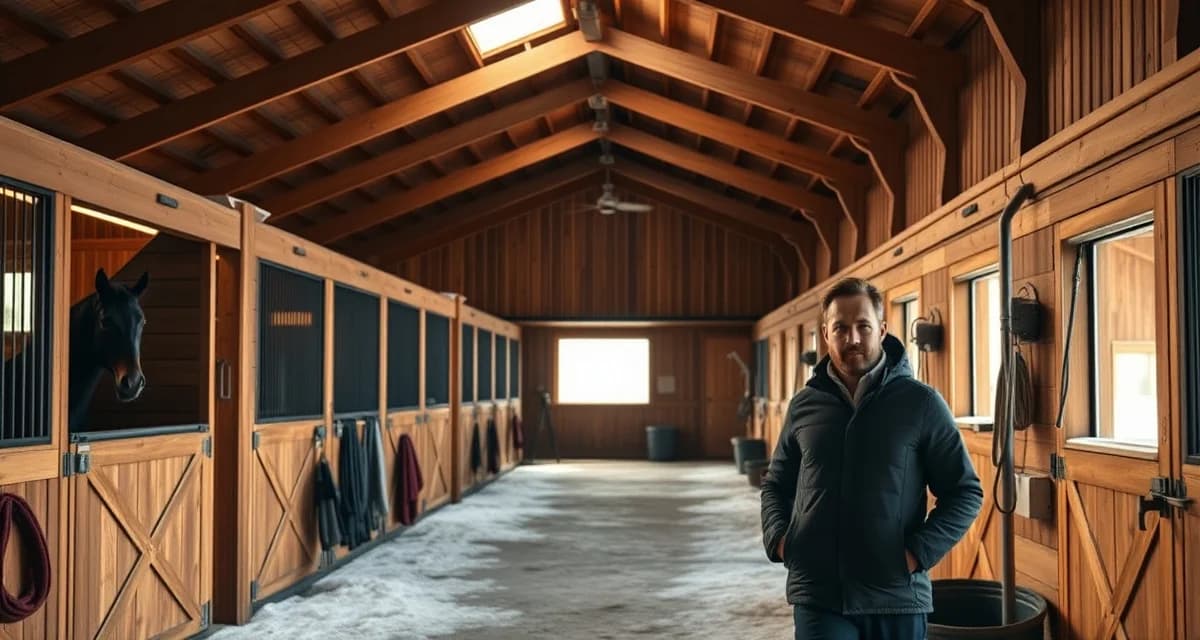
Off-Season Barn Management Guide
The off-season at an equine facility is not the absence of work, it's a different kind of work. Facilities that treat the off-season as an opportunity to do the maintenance, planning, and operational improvement work that competition season doesn't allow for come out of winter and into the following year's season better prepared and better organized. Facilities that simply wait for show season to start again miss the most productive planning window they have.
TL;DR
- Effective barn management requires systems that match actual daily workflows, not adapted generic tools
- Per-horse record keeping with digital access reduces the response time to owner questions from hours to seconds
- Automated owner updates and health alerts reduce inbound calls while increasing owner satisfaction and retention
- Billing errors cost barns thousands of dollars annually; point-of-service charge logging is the most effective prevention
- Staff accountability systems with named task assignments and completion logs prevent care gaps without micromanagement
- Purpose-built equine software connects health records, billing, and owner communication in one place
This guide covers the major operational dimensions of off-season barn management: horse rest and reconditioning, facility maintenance, staff planning, operational system review, and how BarnBeacon's barn management software supports off-season operations. The complete barn management guide covers year-round management in more detail.
Horse Rest and Recovery Management
The off-season is when many performance horses transition from peak competitive fitness to a rest period, and then begin reconditioning for the following season. This period requires active management, not just reduced attention.
Rest period protocols vary by horse, discipline, and the following year's program. Most performance horses benefit from several weeks of reduced work, light hacking or turnout only, after a demanding competitive season. Complete stall rest without exercise is generally not beneficial for horses without a specific injury requiring it; light movement supports metabolic function, joint health, and mental wellbeing.
Body condition management during rest is one of the more practically demanding aspects of off-season horse management. A horse coming off peak show season fitness may be on a high-calorie diet appropriate for that workload. Reducing feed as work reduces is necessary to prevent undesirable weight gain during the rest period. Monitoring body condition regularly, hands-on scoring every two to three weeks, allows for feed adjustments based on actual body condition rather than assumption.
Mental health considerations during rest are often underappreciated. Horses that have been in active training and competition for months may have built expectations about daily work. Abrupt transition to stall rest or minimal turnout without mental enrichment can produce behavioral issues, stall vices, increased anxiety, or difficult handling behavior. Adequate turnout time, forage access, and some daily handling or light work during the rest period supports mental wellbeing.
Injury identification and treatment is one of the most important functions of the off-season. Issues that were managed through during competition season, mild stiffness, a subtle change in gait, a joint that was being supplemented, should be evaluated properly during the off-season. Veterinary lameness evaluations, diagnostic imaging for any concerns, and appropriate treatment and rehabilitation all happen most effectively when there is no upcoming competition creating scheduling pressure.
Logging rest period health observations in BarnBeacon creates a clear record of each horse's off-season health and body condition. When reconditioning begins in early spring, having a documented baseline from the rest period supports an informed approach to building fitness.
Reconditioning Planning
The reconditioning program that brings horses from off-season rest back to competitive fitness is one of the most technically demanding aspects of equine management. Moving too fast is a common cause of soft tissue injuries in horses returning to work.
Working backward from competition dates is the correct approach to reconditioning planning. Know when the horse needs to be at competitive fitness, then build a program backward from that date that allows for appropriate progression through the conditioning stages.
Conditioning stages for most performance horses include: a foundation period of light work (walking and slow trotting), a development period of building aerobic capacity, a strengthening period adding discipline-specific demands, and a peak preparation period of competition-specific work. The length of each stage varies by discipline, horse age, and how long the horse was rested.
Monitoring fitness progression requires observing and logging the horse's response to increasing work. A horse that recovers well from each training session, maintains body condition appropriately, and shows no new stiffness or reluctance is progressing appropriately. A horse that is slow to recover, losing weight despite adequate feed, or showing new stiffness patterns is signaling that the progression needs adjustment.
Logging conditioning sessions in BarnBeacon gives trainers the documented progression history that informs smart reconditioning decisions. When a question arises, "was she working this hard three weeks ago or did we increase too fast?", the answer is in the session log rather than in memory.
Facility Maintenance and Improvement
The off-season is when major facility maintenance and improvement work happens, when the competitive season is not creating daily scheduling demands and horses can be relocated away from work areas as needed.
Arena footing assessment and improvement should be done during the off-season when the arena can be taken out of service for a period without affecting training plans. Adding footing material, leveling and reshaping, or more significant rehabilitation of failing footing is much easier when you have a two-week window rather than trying to work around daily training demands.
Structural repairs and improvements to barn buildings, stalls, fencing, and run-in shelters are off-season work. Roof maintenance, stall door hardware replacement, drainage improvements, and any structural work that requires horses to be relocated from specific areas should happen when competition season is not adding urgency to every other decision.
Equipment maintenance and replacement during the off-season includes tractors and farm equipment, arena drag equipment, and any mechanical systems in the barn. Planned maintenance in the off-season is significantly less disruptive than emergency equipment repairs during show season.
Water system improvements identified during the prior winter or summer, inadequate water access points, freeze-prone pipes, aging trough systems, should be addressed during the off-season. Off-season timing gives you the ability to be without water in a specific area for the time required for plumbing work.
Safety system review is a valuable off-season task. Are fire extinguishers current? Are emergency contact lists posted and up to date? Is the first aid kit adequately stocked? Are barn emergency procedures documented and accessible to all staff? These are easier to address when the operational pace is lower.
Staff Planning and Development
The off-season is the right time for staff review, planning, and development activities that competition season doesn't allow for.
Performance review conversations with key staff members are more productive during the off-season when the daily pace is lower and both the manager and the staff member have time for a genuine conversation. Discussing what went well during the past season, where improvement is needed, and what the staff member's goals are for the coming year builds better working relationships than conversations squeezed between daily tasks.
Training and skill development for staff is most practical in the off-season. First aid training, customer service skills, specific horse handling technique improvements, and any certifications relevant to the facility's programs are all more achievable when the operational load is lighter.
Staffing assessment for the coming season should happen during the off-season. If the coming season will require more staff than currently employed, because the training program is growing, or show season requires both travel coverage and home barn coverage simultaneously, off-season is the right time to hire and onboard, not the week before the first show.
Staff scheduling improvements identified during the past season should be designed and implemented during the off-season. If handoff communication between shifts was a problem, design the handoff protocol now. If scheduling conflicts during show season created coverage gaps, redesign the scheduling process before the next season begins.
Operational System Review and Improvement
Off-season is the ideal time for stepping back from day-to-day operations to assess what's working, what isn't, and what should change for the coming year.
billing software review should assess: how accurately show and event expenses were tracked during the past season, how frequently billing disputes arose and why, and whether billing cycle time is appropriate. If billing was consistently late, or disputes were frequent, this is the time to identify the root cause and build a better process before the next season starts.
Owner communication assessment should ask: are clients receiving the information they need about their horses? Is communication mostly reactive (clients contact you) or proactive (they access information independently)? If communication was a source of client frustration during the past year, the off-season is the time to implement improvements, owner portal setup, training log habit-building, or more structured client communication processes.
health monitoring effectiveness review should assess whether any health issues were caught later than they should have been, and whether the documentation practices in place would have allowed earlier detection if patterns had been visible in the records. If health observation logging is inconsistent, the off-season is the time to build the habit and train the staff.
BarnBeacon utilization review is a specific off-season improvement opportunity. If BarnBeacon features are being used inconsistently, training log entries are missing, health observations are not being logged, billing is still being reconstructed rather than built from real-time entries, the off-season is the time to reset the habit and retrain the team.
Client Relationship Management in the Off-Season
Client relationships don't pause during the off-season, and the interactions that happen between seasons can significantly affect retention and planning.
Year-end billing and account review for each client should be completed early in the off-season. Sending a clean, reconciled year-end summary of services provided, fees billed, and year-end balance gives clients the information they need for their own record-keeping and demonstrates operational professionalism.
Planning conversations for the coming season are most productive in the off-season when both the trainer and the client have time to think strategically. What shows are the goals for next year? What training focus areas are identified? What budget does the client expect? These conversations go better when the trainer has the prior year's billing, training session, and show history available from BarnBeacon as a factual foundation.
Client feedback collection during the off-season gives managers useful input for operational improvements before the next season. Brief, direct conversations asking what went well and what could be better are more valuable than annual surveys, and more productive than waiting for a client to depart before asking what drove their decision.
How does BarnBeacon compare to spreadsheets for barn management?
Spreadsheets require manual updates, lack real-time notifications, and create version control problems when multiple staff members are working from different files. BarnBeacon centralizes records, pushes alerts automatically based on logged events, and connects care records to billing and owner communication in one system. Most facilities report saving several hours per week after switching from spreadsheets.
What is the setup process like for BarnBeacon?
Most facilities complete the initial setup in under a week. Horse profiles, service templates, and billing configurations can be imported from existing records or entered directly. BarnBeacon's US-based support team is available to assist with setup, and most managers are running their first billing cycle through the platform within days of starting.
Can BarnBeacon support a barn with multiple staff members?
Yes. BarnBeacon supports multiple user accounts with role-based access, so barn managers, barn staff, and owners each see the information relevant to their role. Task assignments, completion logs, and communication history are all attached to the barn's account rather than to individual staff phones or email addresses.
FAQ
What is Off-Season Barn Management Guide?
An Off-Season Barn Management Guide is a structured framework for equine facility operators to maximize the quieter months between competition seasons. Rather than treating winter as downtime, it outlines how to complete deferred maintenance, update horse health records, refine billing systems, plan staffing, and improve owner communication workflows so the barn enters the next season better organized and operationally stronger than the one before.
How much does Off-Season Barn Management Guide cost?
An Off-Season Barn Management Guide itself is typically free as an educational resource. The real investment is in the tools and systems it recommends implementing, such as purpose-built equine management software, which varies by provider and barn size. Many platforms offer tiered pricing based on the number of horses managed. The cost of not implementing these systems, through billing errors and owner churn, often far exceeds the software expense.
How does Off-Season Barn Management Guide work?
An Off-Season Barn Management Guide works by breaking facility operations into key dimensions: horse rest and reconditioning schedules, facility maintenance checklists, staff planning, record-keeping upgrades, and owner communication improvements. Barn managers work through each area systematically during the slower months, implementing digital tools and standardized processes so that when competition season resumes, workflows are automated, records are current, and the team is accountable.
What are the benefits of Off-Season Barn Management Guide?
The core benefits include reduced billing errors through point-of-service charge logging, faster responses to owner inquiries via digital per-horse records, higher owner retention through proactive health alerts, and fewer care gaps through named staff task assignments. Facilities that follow an off-season management approach consistently enter competition season better staffed, better equipped, and with stronger owner relationships than those that simply wait for the season to restart.
Who needs Off-Season Barn Management Guide?
Any equine facility operator benefits from an off-season management approach, but it is especially valuable for boarding barns, training facilities, and competition yards managing multiple horses and clients simultaneously. Barn managers dealing with billing disputes, missed health updates, high owner inquiry volume, or inconsistent staff performance will find the most immediate gains. Facilities of any size, from small private barns to large commercial operations, can adapt the framework to their scale.
How long does Off-Season Barn Management Guide take?
A thorough off-season barn management review typically takes four to eight weeks when done properly. Initial audits of records, billing, and maintenance needs can be completed in the first week. Implementing new software or workflows takes two to four weeks depending on data migration and staff training. The remaining time allows for testing systems before the season begins. Rushing the process tends to produce incomplete setups that fail under competition-season pressure.
What should I look for when choosing Off-Season Barn Management Guide?
Look for a guide that covers all operational dimensions, not just facility maintenance. Strong off-season guides address digital record-keeping, owner communication systems, billing accuracy, staff accountability structures, and software integration alongside physical barn upkeep. Prioritize resources that recommend purpose-built equine management tools over generic solutions, since horse health records, billing, and owner updates have specific requirements that adapted general software rarely handles well.
Is Off-Season Barn Management Guide worth it?
Yes, for any barn operator managing multiple horses and clients, a structured off-season management approach pays for itself quickly. Preventing even a handful of billing errors annually can recover thousands of dollars. Reducing owner inquiry call volume through automated updates saves staff hours each week. Most importantly, entering each competition season with systems already functioning rather than scrambling to catch up creates a compounding operational advantage that grows more valuable over time.
Sources
- American Association of Equine Practitioners (AAEP)
- United States Equestrian Federation (USEF)
- American Horse Council
- Kentucky Equine Research
- UC Davis Center for Equine Health
Get Started with BarnBeacon
Running a equine facility well requires the right tools behind the right protocols. BarnBeacon gives managers the health record tracking, billing automation, and owner communication infrastructure to operate efficiently without adding administrative staff. Start a free trial and see how the platform fits the way your barn already works.