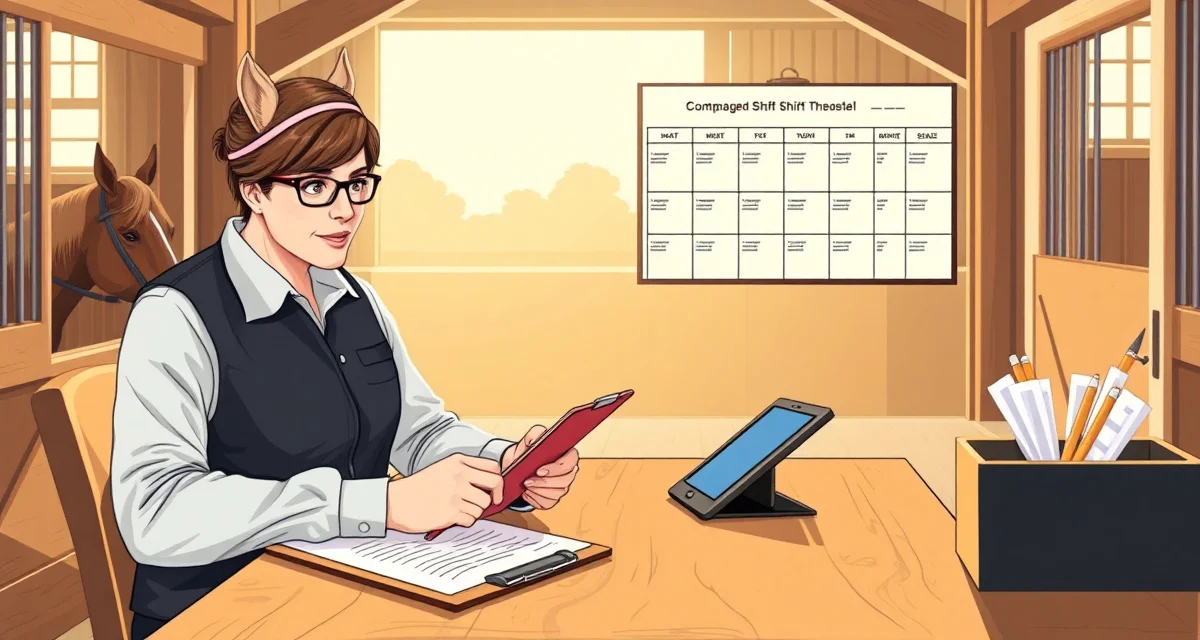
Managing Shift Handoffs in a Multi-Staff Barn
When you have two or three people managing a small barn, shift handoffs are relatively informal. When you have eight to fifteen staff members working staggered shifts across a large facility, handoff management becomes a genuine operational challenge. The systems that work at small scale fail at larger ones, and the consequences of a failed handoff scale with the number of horses and staff involved.
The Core Problem at Multi-Staff Barns
Multi-staff barns create handoff complexity in several ways:
Multiple simultaneous handoffs. At a large facility, the morning crew's departure overlaps with the midday crew's arrival and the preparation for the evening crew. Information does not flow in a single direction. You may have three different people each believing they communicated something to the next person, with the actual transfer of information falling between the cracks.
Inconsistent documentation standards. On a team of ten, you will have some staff who naturally write detailed, useful notes and others who write almost nothing. Without a standard, the quality of the handoff depends entirely on who is working, not on the system.
Accountability gaps. In a multi-person environment, it is easy for a piece of information to not get documented because everyone assumed someone else would handle it. Written records make accountability visible. If it is not in the log, it was not done.
Information overload. At a large barn, each shift generates a significant volume of observations and tasks. Handoff notes that are too long stop being read carefully. The system needs to help staff identify what is urgent, what is important, and what is routine.
Structuring Handoffs at Scale
At facilities with more than six or eight barn staff, formalizing the handoff process is not optional. It needs structure.
Assign handoff responsibility. One person on each shift should be designated as responsible for completing the handoff log. In a team environment, this is usually the lead hand or barn foreman. Everyone contributes information, but one person is accountable for making sure the log is complete before the shift ends.
Use a tiered format. Urgent health and safety flags go at the top and are communicated directly to the incoming crew lead. Routine observations and task notes go in the main log. This structure means the incoming crew lead can scan the urgent section in thirty seconds and then review the full log at their own pace.
Define required fields. Every shift handoff log should include the same basic elements: horses on observation, medications administered, owner communications, facility issues, and tasks incomplete. When staff know exactly what is expected, they fill it in. When the format is open-ended, quality drops.
Set a hard deadline. The handoff log needs to be complete before the outgoing crew lead leaves. Not on the way to the car. Not from home later. Before they leave. This standard requires management enforcement, especially in the early stages of building the habit.
The Manager's Role in Handoff Quality
Barn managers in multi-staff operations need to review handoff logs, not just trust that they are happening. Regular review does several things:
It catches inconsistencies and gaps before they become problems. A horse that was noted as slightly off in yesterday's evening handoff and then not mentioned in today's morning handoff is a flag worth investigating.
It provides feedback to staff. If a staff member is consistently writing insufficient notes, the manager needs to address it directly. "I can see that Rosie's water intake wasn't logged yesterday. Was it checked?" is a specific, correctable conversation.
It builds a health and care record that the manager can reference. Reviewing a week of handoff logs for a horse that is scheduled for a vet visit gives the manager real information to share with the vet about what staff have observed.
BarnBeacon gives managers full visibility into shift handoff logs from any device. Rather than waiting until morning to review the previous night's notes, the manager can check in at 9pm and confirm that everything is in order, or follow up on anything concerning before the overnight crew is well into their shift.
When Handoff Management Breaks Down
The most common cause of handoff management failure at multi-staff barns is not bad intentions. It is competing priorities during the busiest period of a shift change. Everyone is trying to leave or get started, horses need attention, and documentation feels like a bureaucratic hurdle.
The solution is integration. When shift handoff documentation is built into the workflow rather than added at the end, completion rates go up. Staff who log observations during their shift rather than trying to recall everything at the end produce better handoff notes with less effort.
A culture where good handoffs are recognized and poor ones are addressed specifically is more effective than a culture where handoffs are assumed to be happening but never reviewed. See also: staff management and shift handoff checklist for supporting tools and systems.
FAQ
What is Managing Shift Handoffs in a Multi-Staff Barn?
Managing shift handoffs in a multi-staff barn is the process of systematically transferring care responsibility, horse status updates, task completions, and critical observations between outgoing and incoming staff. At large facilities with eight or more employees working staggered shifts, informal verbal updates are insufficient. Effective handoff management involves standardized documentation, designated communication channels, and clear accountability so no horse's needs fall through the cracks between crew changes.
How much does Managing Shift Handoffs in a Multi-Staff Barn cost?
Implementing a shift handoff system has no fixed price—it depends on your chosen tools. A shared paper logbook costs almost nothing. Digital barn management software ranges from free basic plans to several hundred dollars per month for larger operations. The real cost is time: expect to invest a few hours building templates and training staff. The cost of not having a system—missed medications, overlooked injuries, duplicated feeding—typically far exceeds any investment.
How does Managing Shift Handoffs in a Multi-Staff Barn work?
A shift handoff system works by requiring outgoing staff to document key information in a standardized format before leaving, and incoming staff to review that information before beginning work. This typically includes horse health observations, feeding or medication changes, completed and pending tasks, and any safety concerns. Overlap time between shifts—even fifteen minutes—allows for direct verbal confirmation on urgent items before the outgoing crew departs.
What are the benefits of Managing Shift Handoffs in a Multi-Staff Barn?
Effective handoff management reduces medication errors, prevents feeding mistakes, and ensures that emerging health issues are caught early rather than discovered hours later. For the team, it builds accountability and reduces the frustration of discovering missed tasks mid-shift. For horse owners, it means consistent care regardless of which staff members are on duty. At large facilities, it also protects management by creating a documented record of what was communicated and when.
Who needs Managing Shift Handoffs in a Multi-Staff Barn?
Any barn with more than four or five staff members working across multiple shifts needs a formal handoff system. This includes large boarding facilities, training barns, breeding operations, and equine therapy centers. If you have ever arrived for a shift and discovered a horse was not fed, a vet call was missed, or an injury went unnoticed for hours, your operation would benefit from structured handoff protocols regardless of current team size.
How long does Managing Shift Handoffs in a Multi-Staff Barn take?
Building a basic handoff system takes one to two days: drafting a standard form or selecting software, creating templates, and training staff. Embedding it as a genuine team habit takes two to four weeks of consistent reinforcement. Expect some resistance and iteration early on. Once the system is routine, daily handoff documentation should take each staff member ten to fifteen minutes per shift—a small investment relative to the problems it prevents.
What should I look for when choosing Managing Shift Handoffs in a Multi-Staff Barn?
Look for a system that is simple enough that every staff member will actually use it, including those who dislike paperwork. It should have a clear, consistent format so nothing important is omitted. It needs to be accessible to incoming staff before they begin work—not buried in a binder at the back of the office. Accountability features, such as sign-off confirmations, help ensure the loop is genuinely closed rather than assumed.
Is Managing Shift Handoffs in a Multi-Staff Barn worth it?
Yes. At multi-staff barns, the cost of a single serious handoff failure—a missed colic symptom, a skipped medication dose, a horse left without water—can far exceed the investment of building a proper system. Beyond preventing emergencies, structured handoffs reduce staff frustration, improve team communication, and make training new employees easier. Operations that grow past informal management without updating their handoff processes consistently struggle with consistency and staff accountability.
Related Articles
- Documenting Shift Handoffs at a Horse Barn
- Shift Management at Boarding Barns: [staff scheduling and Handover](/shift-management-boarding-barn)