Managing Billing for Horses with Multiple Owners
Split ownership is an increasingly common arrangement in equine facilities across disciplines. The financial realities of horse ownership drive many people toward partnerships, and boarding facilities need systems that handle multi-owner billing accurately without creating administrative chaos.
Setting Up Multi-Owner Accounts
The starting point is how you structure horse accounts in your system. A horse account should be able to accommodate multiple owner contacts, each with defined roles and billing shares. The horse is the central record. The owners are linked to it with their specific billing parameters.
Before setting up a multi-owner account, collect:
- Full contact information for each owner
- Preferred billing contact (who receives invoices and is the primary point of contact)
- Billing split percentage or structure
- Emergency authorization for each owner
- Signed boarding agreement from all owners, or from the primary contact with language covering the full ownership group
Getting all owners to sign the boarding agreement is ideal but not always practical, particularly when one owner is a passive investor who is not actively involved in the horse's care. At minimum, the primary owner should sign an agreement that covers their responsibility for the full board bill even if they collect from co-owners separately.
Common Billing Structures for Split Ownership
Proportional split. Each owner receives invoices for their ownership percentage of all charges. A 50/50 partnership receives two invoices for half the monthly charges. A 70/30 partnership receives invoices reflecting those percentages.
Category split. Different owners are responsible for different expense categories. This is most common when one owner is primarily the rider and one is primarily the investor. Rider pays for training and show fees. Investor pays for board and vet costs. This structure requires careful invoice categorization but can work well when the ownership division reflects genuinely different roles.
Primary payer with reimbursement. One owner pays the full invoice and collects reimbursement from the co-owner directly. The barn has a single billing relationship. This is simplest for the barn but depends entirely on the co-owners having a solid financial relationship.
Preventing Common Problems
Clarify authorization upfront. When two people own a horse and one calls to authorize a service, make sure your boarding agreement specifies who has authorization to approve expenses and in what amount. Some co-ownership arrangements require both owners to agree on expenditures above a certain threshold. Others give full authorization to whoever is designated the managing owner.
Communicate proposed non-routine expenses to all owners. When a significant unplanned expense arises, notify both owners and get confirmation from whoever has authorization before proceeding (except in genuine emergencies). Document who you contacted, when, and what was said.
Handle late payments clearly. Your payment policy should specify who is responsible for the full invoice if one owner does not pay their share. You should not be left chasing two separate people for two separate portions of a bill. In most arrangements, it makes sense to treat one owner as the financially responsible party with the other as secondary.
Keep ownership disputes out of the barn relationship. Co-owners sometimes disagree. When they do, do not get drawn into the dispute. Your relationship is with the horse's care and with whoever is designated as the primary contact. Refer ownership disagreements back to the owners to resolve between themselves.
Invoicing for Multiple Owners
When generating invoices for co-owned horses, each owner's invoice should clearly identify the horse and the billing period, show the itemized charges at the full amount, and indicate their share either as a percentage or as the specific dollar amounts assigned to them.
If owners receive invoices showing only their portion and not the full charge, they cannot verify the math or understand the total cost picture. Transparency builds trust and prevents disputes.
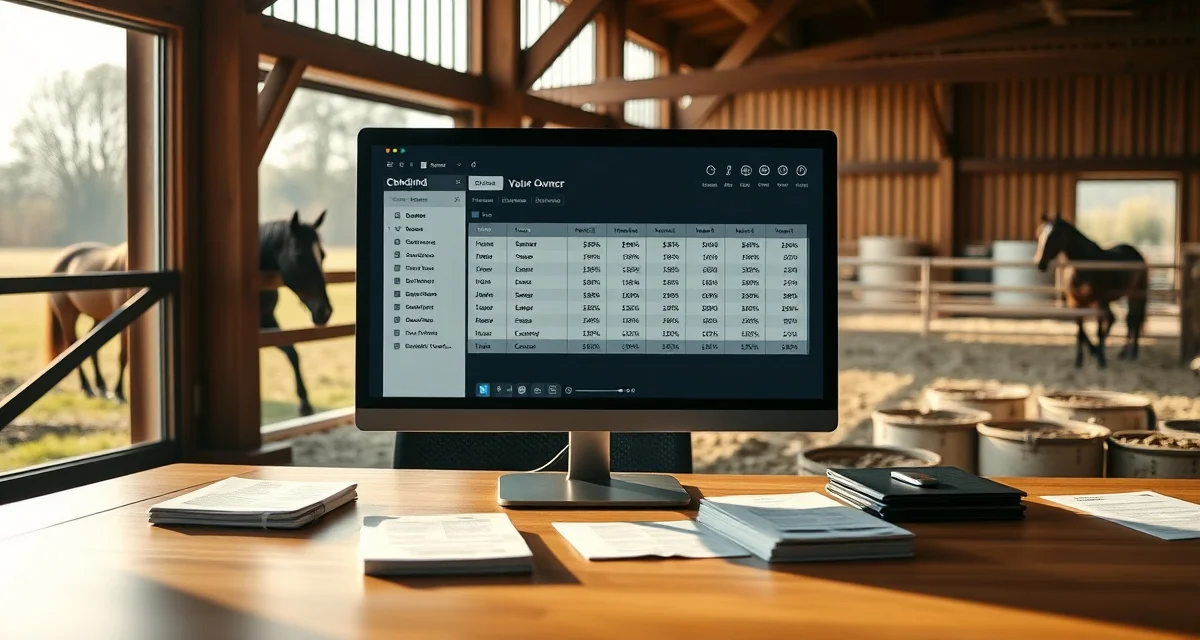
BarnBeacon supports multi-owner horse accounts with automatic charge splitting. Each service logged against a horse account is distributed to the owner accounts according to the configured split. At billing time, each owner's invoice reflects their accurate share of all charges without manual calculation. See also: split-billing-horse-ownership and billing-invoicing.
FAQ
What is Managing Billing for Horses with Multiple Owners?
Managing billing for horses with multiple owners is the process of splitting and tracking boarding, care, and service costs across two or more co-owners of a single horse. Equine facilities set up shared horse accounts that link multiple owner contacts, define each party's billing percentage, and route invoices accordingly. This system ensures every owner is billed correctly, reduces disputes, and keeps the barn's accounts receivable clean without requiring separate horse records for each ownership arrangement.
How much does Managing Billing for Horses with Multiple Owners cost?
There is no fixed cost for managing multi-owner billing—it depends on the software or administrative system your barn uses. Most equine management platforms include co-ownership billing as a standard feature within their monthly subscription, which typically ranges from $50 to $200 per month for full barn management tools. The real cost is administrative time: setting up accounts, collecting signed agreements from all owners, and reconciling payments each billing cycle.
How does Managing Billing for Horses with Multiple Owners work?
Multi-owner billing works by linking multiple owner contacts to a single horse account, each assigned a defined billing share—usually a percentage. When board or service charges are posted to the horse, the system automatically calculates each owner's portion and generates separate invoices. Payments are tracked individually, so the barn knows exactly who has paid and who still owes, without needing to manually split charges every month.
What are the benefits of Managing Billing for Horses with Multiple Owners?
The main benefits are accuracy, transparency, and reduced conflict. Each co-owner receives their own invoice reflecting exactly what they owe, which eliminates confusion and makes disputes easier to resolve. The barn has a clear paper trail showing charges, splits, and payment history. Administrative workload drops significantly compared to handling co-ownership informally. Owners also appreciate the professionalism, which can strengthen their relationship with your facility long-term.
Who needs Managing Billing for Horses with Multiple Owners?
Any boarding facility housing horses with co-owners, investment partnerships, lease arrangements, or syndicated ownership needs a structured multi-owner billing approach. This includes traditional boarding barns, training facilities, and competition yards. It is especially relevant for facilities working with racehorses, high-value sport horses, or young stock where shared ownership is common. Managers who currently handle splits manually in spreadsheets will benefit most from formalizing the process.
How long does Managing Billing for Horses with Multiple Owners take?
Initial setup of a multi-owner account typically takes 15 to 30 minutes per horse once you have collected contact details, billing percentages, and signed agreements from all parties. Ongoing monthly billing then adds minimal time—most systems automate the charge splitting and invoice generation. The longer lead time is usually gathering paperwork: getting all owners to review and sign the boarding agreement before the horse arrives can take several days.
What should I look for when choosing Managing Billing for Horses with Multiple Owners?
Look for a system that lets you assign percentage-based billing splits at the horse account level, generates separate invoices per owner, and tracks each owner's payment status independently. The system should allow one primary billing contact while still notifying co-owners. Confirm it supports notes or audit logs so you can document ownership changes over time. A good boarding agreement template that explicitly covers co-owner liability is equally important as the software itself.
Is Managing Billing for Horses with Multiple Owners worth it?
Yes—if your barn houses even one co-owned horse, formalizing the billing process is worth the effort. Informal splits handled by text message or verbal agreement frequently lead to payment gaps, owner disputes, and awkward conversations for barn staff. A structured system protects the facility by making one party responsible for the full board bill while still accommodating co-owner invoicing. The time saved on manual calculations and follow-ups pays back quickly across a full season of billing cycles.