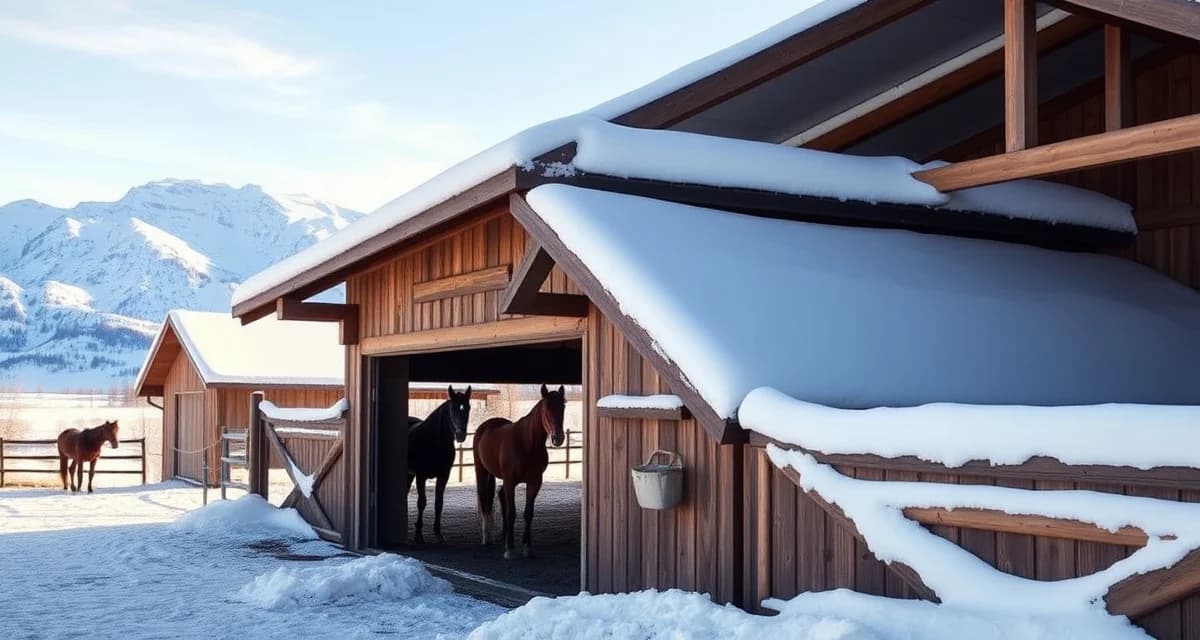
Equestrian Operations in Alaska: Managing Horses in a Cold Climate
Alaska has a smaller but dedicated horse community, concentrated primarily in the Matanuska-Susitna Valley north of Anchorage, the Fairbanks area, and the Kenai Peninsula. Exact numbers are difficult to pin down, but estimates place Alaska's horse population between 10,000 and 15,000 animals. Operating a horse facility in Alaska means solving problems that most barn managers in the lower 48 never think about: extreme cold, compressed daylight, limited veterinary access in some regions, and feed logistics that depend on seasonal supply chains.
Winter Management
Alaska winters are the defining challenge for equine facility operators. In Anchorage and the Mat-Su Valley, temperatures regularly drop below 0 degrees Fahrenheit in January and February. In Fairbanks, temperatures below -40 are not unusual. Horses are hardy cold-weather animals, but Alaska winters require specific management protocols.
Shelter requirements: Horses need protection from wind and precipitation more than from temperature alone. A three-sided run-in shed with the open side facing away from prevailing winds is adequate in milder Alaska winters. For sustained extreme cold below -20, insulated stall housing becomes important, especially for young horses, older horses, or animals in poor body condition.
Water: This is the most critical cold-weather management issue. Horses need 10 to 12 gallons of water per day minimum, and cold temperatures suppress their drinking instinct when water is near freezing. Heated water buckets or tank heaters are not optional; they're essential. Check all water sources twice daily to confirm heaters are functioning. A horse that goes even 24 hours without adequate water in cold weather is at serious risk for impaction colic.
Feed: Horses generate body heat through hindgut fermentation of forage. In cold weather, increase forage, not grain. A horse maintaining body condition at 20 degrees may need 25 to 30 percent more hay than in summer. Feed hay in multiple smaller meals rather than one large meal to keep fermentation and heat production consistent. Free-choice hay access through a slow feeder works well for horses kept outside.
Body condition scoring: Check body condition scores monthly through winter. Horses lose weight under heavy winter coats and you won't notice until the coat comes off in spring. A horse at a 3 on the 1-9 scale in March will need weeks to recover before show season. Monitor proactively.
Feeding in Cold Climates
Feed storage and logistics are more complex in Alaska than in most of the country. Many facilities order hay in bulk during summer and store it for winter use. The Mat-Su Valley produces Timothy and grass hay locally, but quality and availability vary by year. Many facilities supplement with hay shipped from Washington, Oregon, or Idaho.
Key considerations:
- Store hay in covered, ventilated storage. Wet or frozen hay loses nutritional value and can develop mold.
- Order grain and supplements with longer lead times. Supply chain disruptions in Alaska can affect availability for weeks.
- Keep at least a 30-day emergency supply on hand through winter. A blocked road, delayed barge, or supply shortage can strand you without feed mid-winter.
Grain and supplements are generally the same as in the lower 48, though senior horses and hard keepers may need higher-fat rations to maintain condition through winter. Beet pulp is widely used as a digestible, warming feed source.
Daylight and Exercise Management
Alaska's extreme seasonal daylight variation affects both horses and their owners. In summer, daylight lasts 20 or more hours in Anchorage and even longer in Fairbanks. In December, Anchorage gets about 5.5 hours of daylight. This affects mare reproductive cycles (long summer days trigger cycling; short winter days suppress it), exercise schedules, and the ability to see what you're doing during morning and evening chores.
Good barn lighting is especially important in Alaska. LED lighting in barns and outdoor work areas extends usable hours in winter. For breeding operations, artificial lighting to manipulate mare cycles is common practice.
Veterinary and Farrier Access
Urban areas of Alaska near Anchorage have reasonable veterinary access, though equine vets are less abundant than in the lower 48. Rural areas can face serious access challenges. A horse with colic in a remote location may be hours from the nearest equine vet.
Build a relationship with your vet before emergencies happen. Know what emergency protocols your vet wants you to follow. Have a basic emergency kit and know how to assess vital signs, recognize signs of colic and choke, and manage minor wounds.
Farrier availability is similarly limited outside urban areas. Many Alaska horse owners do their own basic hoof care. For facilities, finding a reliable farrier and scheduling regular visits on a 6 to 8 week cycle is a priority. Hoof care gaps in winter can lead to ice-related breakage and balance problems.
Record-Keeping for Alaska Facilities
Keeping organized health and care records matters as much in Alaska as anywhere else, and probably more given the limited access to veterinary support in some areas. BarnBeacon provides a centralized way to track vaccination records, farrier appointments, health observations, and feeding notes. Having that information accessible when a vet consult happens by phone or when you need to brief someone unfamiliar with your horses saves time and reduces the risk of errors.
FAQ
What is Equestrian Operations in Alaska: Managing Horses in a Cold Climate?
Equestrian operations in Alaska refers to the management of horse facilities across the state's unique regions, including the Matanuska-Susitna Valley, Fairbanks, and the Kenai Peninsula. With an estimated 10,000–15,000 horses statewide, Alaskan barn operators face distinct challenges including extreme cold, limited daylight, remote veterinary access, and seasonal feed supply chains. This guide covers the protocols and infrastructure decisions that make horse keeping viable in one of North America's most demanding climates.
How much does Equestrian Operations in Alaska: Managing Horses in a Cold Climate cost?
There is no single cost for Alaska equine operations—expenses vary widely by region, facility size, and infrastructure level. However, Alaska horse owners typically pay significantly more than lower-48 counterparts due to higher feed freight costs, heated water system requirements, insulated stabling needs, and limited local veterinary availability. Budget for heated automatic waterers, reinforced winter shelters, and larger hay reserves as baseline costs that are unavoidable in this climate.
How does Equestrian Operations in Alaska: Managing Horses in a Cold Climate work?
Alaska equine facility management works by adapting standard horse care protocols to extreme environmental conditions. Operators prioritize wind-protected shelter, heated water systems to prevent freezing, increased caloric feeding during cold months, and compressed riding and training schedules around limited daylight. Facilities in remote areas also maintain larger supply stockpiles and build relationships with mobile veterinarians or large-animal vets accessible by small aircraft when needed.
What are the benefits of Equestrian Operations in Alaska: Managing Horses in a Cold Climate?
The primary benefit is the ability to keep horses healthy and productive despite Alaska's harsh climate. A well-managed Alaska equine operation builds self-sufficiency, reduces weather-related health emergencies, and extends the usable riding season. Horses conditioned to cold climates develop exceptional hardiness. For competitive or working horse owners, proper cold-climate management ensures animals maintain body condition, soundness, and performance capability year-round rather than declining through long winters.
Who needs Equestrian Operations in Alaska: Managing Horses in a Cold Climate?
Anyone keeping horses in Alaska needs this operational knowledge—from small private owners with a single horse to commercial boarding facilities and working ranch operators. It is especially critical for newcomers relocating from milder climates who underestimate Alaska's winter severity. Rescue operators, youth equestrian programs, and therapeutic riding centers in the state also rely on these protocols to maintain animal welfare standards through months of extreme weather.
How long does Equestrian Operations in Alaska: Managing Horses in a Cold Climate take?
Alaska equine management is a year-round, continuous commitment with no off-season. Winter preparation begins in late summer with hay procurement and equipment maintenance. Active winter management runs roughly October through April in Southcentral Alaska and longer in Interior regions like Fairbanks. Daily tasks—watering, feeding, shelter checks—take longer in extreme cold due to equipment icing and reduced daylight. Owners should expect winter chores to take roughly twice as long as in moderate climates.
What should I look for when choosing Equestrian Operations in Alaska: Managing Horses in a Cold Climate?
Look for facilities with proven heated water systems, adequate insulated or wind-protected stabling, and reliable hay supply contracts. Ask about the operator's experience with sustained cold below -20°F and their protocols for veterinary emergencies given limited local access. For boarding facilities specifically, evaluate staff-to-horse ratios during winter, backup generator capacity, and proximity to the nearest large-animal veterinarian. Experience managing horses through multiple Alaska winters is a stronger credential than general equine management background.
Is Equestrian Operations in Alaska: Managing Horses in a Cold Climate worth it?
For committed horse owners in Alaska, investing in proper cold-climate equine management is absolutely worth it. Cutting corners on shelter, water systems, or feed reserves creates costly emergencies and risks animal welfare. The upfront investment in insulated stabling, quality waterers, and adequate hay storage pays back quickly in reduced vet bills, healthier horses, and fewer crisis situations. Alaska's horse community is tight-knit and resilient—those who manage their facilities correctly find the lifestyle deeply rewarding despite the challenges.