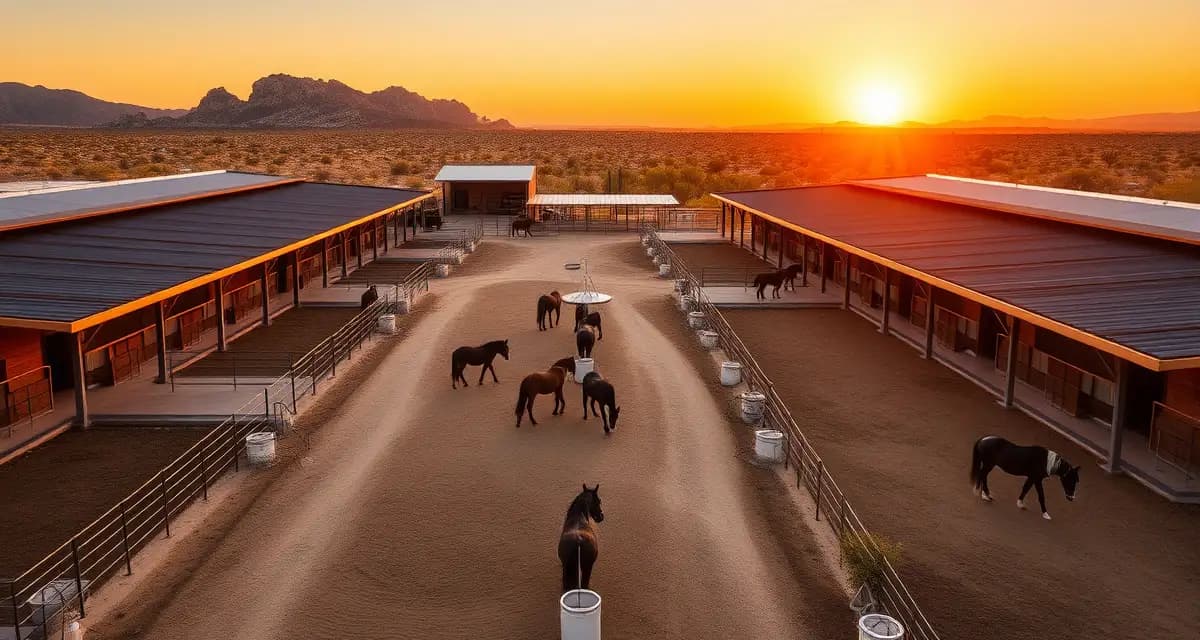
Running a Horse Facility in Arizona
Arizona has one of the most active equestrian markets in the country. The Phoenix metro area, Scottsdale, Tucson, and the Verde Valley all host dense concentrations of boarding facilities, training barns, and show venues. The climate that makes Arizona attractive to horse people for most of the year creates serious management challenges in summer. Facility operators who understand those challenges build management systems that keep horses healthy and clients confident year-round.
Heat Management in Arizona Summers
From May through September, daytime temperatures in the Phoenix Valley regularly exceed 105 degrees Fahrenheit. Horses in this environment face heat stress risk that is severe enough to be life-threatening if management lapses.
Shade and shelter: Horses kept in outdoor paddocks must have access to shade during daylight hours. Shade cloth or loafing shed structures need to be adequate in size: at least 100 square feet per horse. A flimsy 10-by-10 shed for two horses is not adequate protection during an Arizona summer.
Ventilation in enclosed stalls: Indoor stall barns need powerful cross-ventilation or direct cooling. Evaporative coolers (swamp coolers) work well in low-humidity Arizona conditions and can reduce stall temperatures by 15 to 20 degrees. Industrial ceiling fans keep air moving. Stall temperatures above 90 degrees in direct heat are a concern; above 100 degrees becomes a welfare issue.
Misting systems: High-pressure misting around paddock shelters and barn aprons help horses regulate temperature. At lower humidity levels, misting evaporates quickly and provides real cooling rather than just adding wet heat.
Turnout scheduling: Arizona facilities commonly flip turnout schedules in summer. Horses go out at night when temperatures are bearable and stay in stalls or shaded paddocks during the hottest daylight hours. Night turnout from 8 p.m. to 6 a.m. is typical from June through September.
Water Consumption in Hot Weather
Water intake monitoring is critical in Arizona's heat. A horse at rest in moderate temperatures drinks 8 to 12 gallons per day. A horse in active work during an Arizona summer may need 20 to 25 gallons or more. Dehydration leads quickly to impaction colic, which is already more common in arid climates where forage moisture content is low.
Water management requirements for Arizona facilities:
- Check and refill all water sources twice daily minimum in summer
- Water tank temperature matters: horses drink significantly less when water temperature exceeds 85 to 90 degrees. Use insulated tanks, shade tank placement, or tank coolers in summer
- Keep tanks clean, not just full. Algae growth in warm water is rapid; horses avoid foul water
- Electrolyte supplementation is commonly recommended for horses in work during summer. Discuss protocol with your vet
Automatic waterers are common in Arizona, but the "automatic" label creates false security. Automatics malfunction, float valves stick, and horses can drink them down faster than they refill on hot days. Check them manually, not just visually.
Dry Climate Feeding and Forage
Arizona horses typically receive most of their forage as hay rather than pasture grass. Native desert vegetation does not support grazing at meaningful levels for horses. Most facilities feed orchard grass, timothy, or bermudagrass hay, often sourced from Arizona's agricultural areas near Yuma, Buckeye, or from out-of-state suppliers in California or Utah.
Hay quality varies significantly and should be tested. Without visible green pasture to supplement, horses depend entirely on the hay they're fed for forage nutrition. Test new loads from new sources and adjust feeding amounts based on analysis results.
Bermudagrass hay is widely available and affordable in Arizona but lower in protein and energy than orchard grass. Hard keepers and performance horses often do better on orchard grass or alfalfa blends. Alfalfa is widely used in Arizona but requires careful management for horses prone to metabolic issues.
Dust in dry hay can be an issue for horses with respiratory sensitivities. Soaking or steaming hay before feeding reduces dust exposure. This practice is more common in facilities with horses that have heaves or IAD.
Respiratory Health in Dusty Conditions
Arizona's dust is a year-round issue, not just in summer. Dust storms (haboobs) can reduce visibility to zero in minutes and deposit inches of dust across a facility. Fine particulate matter affects equine respiratory health over time.
Barn and paddock surfaces that minimize dust generation: packed decomposed granite is common in Arizona paddocks and performs well compared to bare dirt. Arena surfaces need adequate moisture management or wax-treated footing to control dust during use.
During and after significant dust events, monitor horses for respiratory irritation and reduce work demands if air quality is poor.
Regulatory and Facility Considerations
Arizona has relatively minimal state-level regulation of equine facilities compared to some states. Boarding facilities are not licensed at the state level, though local zoning and land use regulations vary significantly by county and municipality. Maricopa County and the City of Scottsdale both have specific regulations around animal keeping that affect facility density and waste management.
Manure management in Arizona is straightforward from a storage perspective: the dry heat composts organic material quickly and reduces the volume of manure that needs removal. However, facilities near residential areas face nuisance complaints related to odor and flies, which are amplified in summer. Regular manure removal or composting at a distance from residential boundaries is good practice.
BarnBeacon helps Arizona facility operators track horse health records, monitor water and feeding schedules, and manage the increased care demands of summer operations from a central platform.
FAQ
What is Running a Horse Facility in Arizona?
Running a horse facility in Arizona means managing a boarding barn, training operation, or equestrian venue in a state with one of the most active horse markets in the country. It involves caring for horses year-round in a climate that is ideal for most of the year but presents serious heat stress risks from May through September. Successful operators build systems for shade, ventilation, hydration, and client communication that keep horses safe and businesses running smoothly.
How much does Running a Horse Facility in Arizona cost?
Startup costs for an Arizona horse facility vary widely based on land, infrastructure, and scale. A basic boarding barn with 10 to 20 stalls can require $200,000 to $500,000 or more in improvements. Ongoing monthly costs include feed, water, labor, farrier and vet services, and utilities. Summer utility bills spike significantly due to evaporative cooling and water demands. Most operators charge $400 to $800 per month per boarding horse depending on services, location, and amenities.
How does Running a Horse Facility in Arizona work?
An Arizona horse facility operates by providing horses with daily feeding, turnout, stall cleaning, and veterinary oversight. In summer, management shifts heavily toward heat mitigation: adjusting turnout schedules to early morning or evening, running evaporative coolers in stalls, and ensuring constant access to fresh water. Staff monitor horses for signs of heat stress. Client communication systems keep owners informed. Software tools help track feeding schedules, health records, billing, and maintenance tasks across a busy operation.
What are the benefits of Running a Horse Facility in Arizona?
Arizona's climate allows for nearly year-round riding and training, which is a major advantage over facilities in colder or wetter states. Facilities benefit from strong demand driven by Scottsdale, Phoenix, Tucson, and Verde Valley equestrian communities. Well-managed barns build loyal client bases by offering consistent care protocols, transparent communication, and safe summer management. Operators who invest in proper shade, ventilation, and hydration infrastructure see fewer health incidents and stronger reputations in competitive regional markets.
Who needs Running a Horse Facility in Arizona?
Anyone operating or planning to open a boarding barn, training facility, or equestrian venue in Arizona needs to understand the specific demands of this environment. That includes first-time barn owners, experienced equestrians relocating from other states, investors entering the equine industry, and existing facility managers looking to improve summer protocols. Horse owners evaluating facilities also benefit from understanding what responsible Arizona horse care looks like so they can choose providers who meet the standard.
How long does Running a Horse Facility in Arizona take?
Building a well-functioning Arizona horse facility is an ongoing process rather than a one-time setup. Initial infrastructure improvements can take six to eighteen months to plan, permit, and complete. Establishing reliable staff, vendor relationships, and client rosters typically takes one to three years. Seasonal management systems need to be refined each summer. Operators who treat facility management as a continuous improvement process rather than a fixed setup tend to deliver better outcomes for horses and clients.
What should I look for when choosing Running a Horse Facility in Arizona?
Look for adequate shade structures sized at least 100 square feet per horse, functional cross-ventilation or evaporative cooling in enclosed stalls, and a reliable water supply with multiple sources. Evaluate the facility's track record through Arizona summers and ask how staff monitor for heat stress. Check that feeding and health records are organized and accessible. A well-run facility should be able to clearly describe its summer management protocols and show that horses consistently maintain healthy weight and condition.
Is Running a Horse Facility in Arizona worth it?
For horse owners who want professional care without the full burden of private ownership, a well-run Arizona facility is absolutely worth it. For operators, it is worth it when the business is built around genuine horse welfare and sustainable systems rather than cutting corners on shade, water, or staffing. Arizona's strong equestrian market supports profitable operations for those who invest in proper infrastructure and management. Facilities that treat summer heat management as non-negotiable build reputations that generate consistent referrals and long-term client retention.