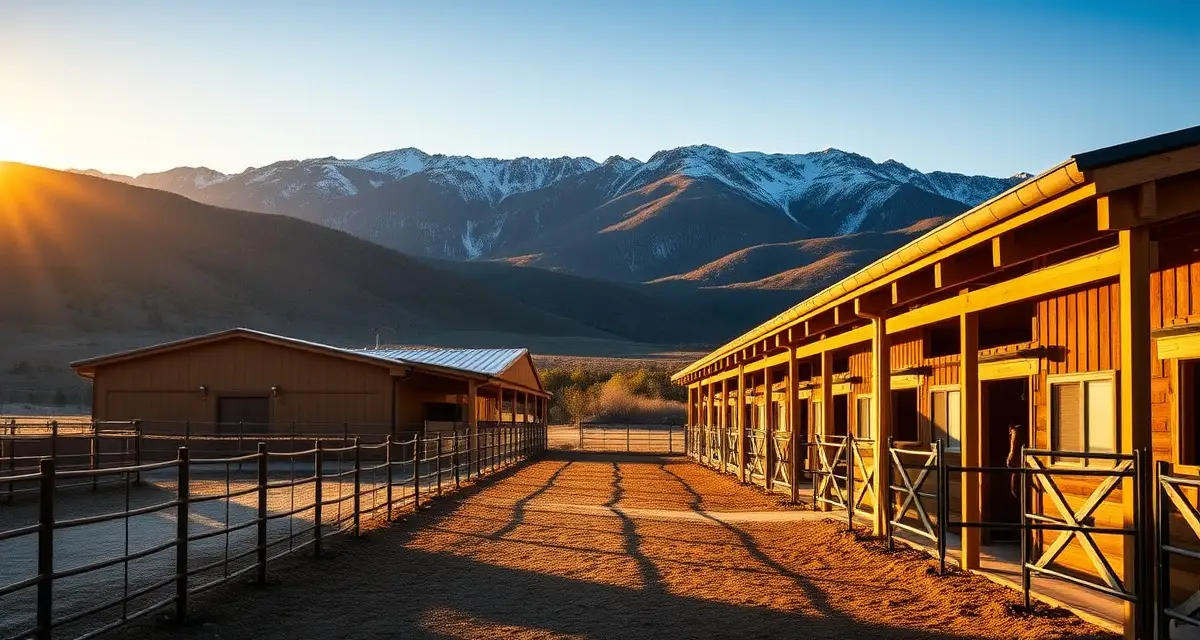
Colorado Equine Facilities: Operating a Barn in the Rocky Mountain State
Colorado's equestrian community is diverse and growing, from Front Range boarding barns serving Denver and Colorado Springs area riders to mountain facilities at elevation that operate in genuinely challenging environments. Running an equine facility in Colorado means managing operations in a climate that ranges from harsh mountain winters to hot, dry summers, with the unique overlay of altitude affecting everything from horse conditioning to equipment function.
Colorado's Equestrian Landscape
Colorado has a significant equestrian industry spanning multiple disciplines. The Front Range corridor from Fort Collins to Pueblo hosts the majority of the state's boarding barns and training facilities, many serving competitive riders in hunter/jumper, dressage, Western, and reining disciplines. Mountain communities from Steamboat Springs to Durango have smaller but active equestrian populations with a strong trail riding and ranch horse culture.
Colorado State University in Fort Collins has one of the country's most respected equine science programs, and CSU's Equine Teaching Hospital is a leading referral center for the region. This veterinary infrastructure benefits Colorado horse owners with access to specialized equine care.
Climate and Operational Considerations
Colorado's climate creates several specific management challenges:
High altitude: Horses at 5,000 to 8,000 feet (most Front Range facilities) or higher need time to acclimate when arriving from lower elevations. Horses in hard work at altitude have higher cardiovascular demands. New horses should have a gradual conditioning period before intensive training begins.
Dry air and UV intensity: Colorado's low humidity and high UV exposure mean horses drink less than in humid climates (which can contribute to impaction colic risk), and skin conditions differ from those in wet climates. Monitoring water intake is important.
Temperature swings: Front Range facilities can see 40°F temperature swings within a single day. Blanketing decisions are more complex than in states with stable temperatures, and per-horse blanketing instructions accessible to staff from the stall are important.
Fire season: Late summer wildfire smoke is an increasing concern for horses with respiratory sensitivity. Having a protocol for reducing work and turnout during high smoke days protects horses.
Winter management: Front Range winters are cold and occasionally snowy. Mountain facilities deal with much more significant winter conditions. Water freeze prevention and winter feeding adjustments are standard operational requirements.
Regulatory Requirements
Colorado equestrian facilities operate under:
- Colorado Department of Agriculture oversight for Coggins requirements and equine disease reporting
- Standard USDA APHIS requirements for interstate horse movement
- County and municipal zoning regulations, which vary significantly across Front Range counties
- Colorado water law (prior appropriation doctrine), which is relevant for facilities with water rights questions
For facilities that also offer instruction or training, Colorado's equine activity statute (Colorado Revised Statutes 13-21-119) provides liability protections for equine professionals when the appropriate warnings are posted and included in agreements. Have an attorney review your boarding agreements for Colorado compliance.
BarnBeacon for Colorado Facilities
BarnBeacon serves equestrian facilities throughout Colorado, handling billing, horse health records, staff management, and owner communication in one mobile-accessible platform. The ability to track per-horse blanketing instructions and access them from a phone in the barn aisle is particularly practical for Colorado's variable weather conditions.
For state-specific barn management software guidance, see barn management software for Colorado. For the full operations framework, see boarding barn management.
FAQ
What is Colorado Equine Facilities: Operating a Barn in the Rocky Mountain State?
This article is a comprehensive guide to operating equine facilities in Colorado, covering the state's unique climate challenges, altitude considerations, and regional equestrian landscape. It addresses the needs of barn operators across the Front Range corridor—from Fort Collins to Pueblo—as well as mountain communities like Steamboat Springs and Durango, offering practical guidance for managing horses and facilities in one of the West's most demanding environments.
How much does Colorado Equine Facilities: Operating a Barn in the Rocky Mountain State cost?
Operating a Colorado equine facility involves ongoing costs that vary significantly by region and elevation. Front Range boarding barns typically charge $400–$900/month for full board, while mountain facilities often command premium rates due to higher feed, heating, and infrastructure costs. Facility owners should budget for elevated winter hay consumption, specialized cold-weather equipment maintenance, and altitude-adjusted veterinary care. Labor costs also run higher in resort mountain communities compared to the Front Range.
How does Colorado Equine Facilities: Operating a Barn in the Rocky Mountain State work?
Running a Colorado barn means adapting standard equine management practices to local conditions. Horses at elevation require longer conditioning periods and closer monitoring during exertion. Winter operations demand proactive water heating, ice management, and increased forage to maintain body condition. Summer brings dry conditions requiring diligent irrigation and dust control in arenas. Successful operators build seasonal routines around Colorado's weather patterns and leverage regional resources like CSU's Equine Teaching Hospital for veterinary support.
What are the benefits of Colorado Equine Facilities: Operating a Barn in the Rocky Mountain State?
Colorado offers equine facility operators access to a diverse, active equestrian community spanning hunter/jumper, dressage, Western, reining, trail riding, and ranch disciplines. Proximity to CSU's respected equine science program and Equine Teaching Hospital provides strong veterinary infrastructure. The state's scenic terrain supports premium trail riding experiences that can differentiate a facility. Colorado's growing equestrian population along the Front Range also provides a strong, consistent client base for boarding and training operations.
Who needs Colorado Equine Facilities: Operating a Barn in the Rocky Mountain State?
This guide is essential for anyone operating or planning to open an equine facility in Colorado—including boarding barn managers, training facility operators, ranch owners, and equestrian entrepreneurs. It's particularly valuable for those new to mountain or high-altitude environments, facility managers relocating from other states, and Front Range operators expanding into mountain communities. Anyone responsible for horse welfare, facility infrastructure, or business operations in Colorado's variable climate will find this guidance relevant.
How long does Colorado Equine Facilities: Operating a Barn in the Rocky Mountain State take?
Adapting to Colorado's equine operating environment is an ongoing process rather than a one-time effort. New facility owners should expect a full year of seasonal cycles before feeling confident managing the climate's extremes—from winter freeze management to summer drought conditions. Altitude acclimatization for horses typically takes 2–4 weeks for basic adjustment, while facility systems like heating, ventilation, and water infrastructure may require one to two winters to fully optimize for local conditions.
What should I look for when choosing Colorado Equine Facilities: Operating a Barn in the Rocky Mountain State?
When evaluating a Colorado equine facility—whether to board your horse or purchase/lease as an operator—prioritize water system reliability and freeze protection, adequate hay storage for winter surpluses, quality footing in indoor and outdoor arenas, and proximity to emergency veterinary services. For mountain facilities, assess road accessibility during winter storms. Verify the facility's altitude relative to your horses' current location, and ask about the operator's experience managing horses through Colorado's rapid weather changes and temperature swings.
Is Colorado Equine Facilities: Operating a Barn in the Rocky Mountain State worth it?
For horse owners and operators committed to Colorado's equestrian lifestyle, investing in understanding and properly equipping a facility for the Rocky Mountain environment is absolutely worthwhile. Colorado's strong equestrian community, world-class veterinary resources at CSU, diverse riding disciplines, and stunning terrain create exceptional opportunities for both boarding businesses and personal horse keeping. The challenges of altitude and climate are real but manageable with proper preparation, making Colorado one of the most rewarding states in the West for equine facility operation.