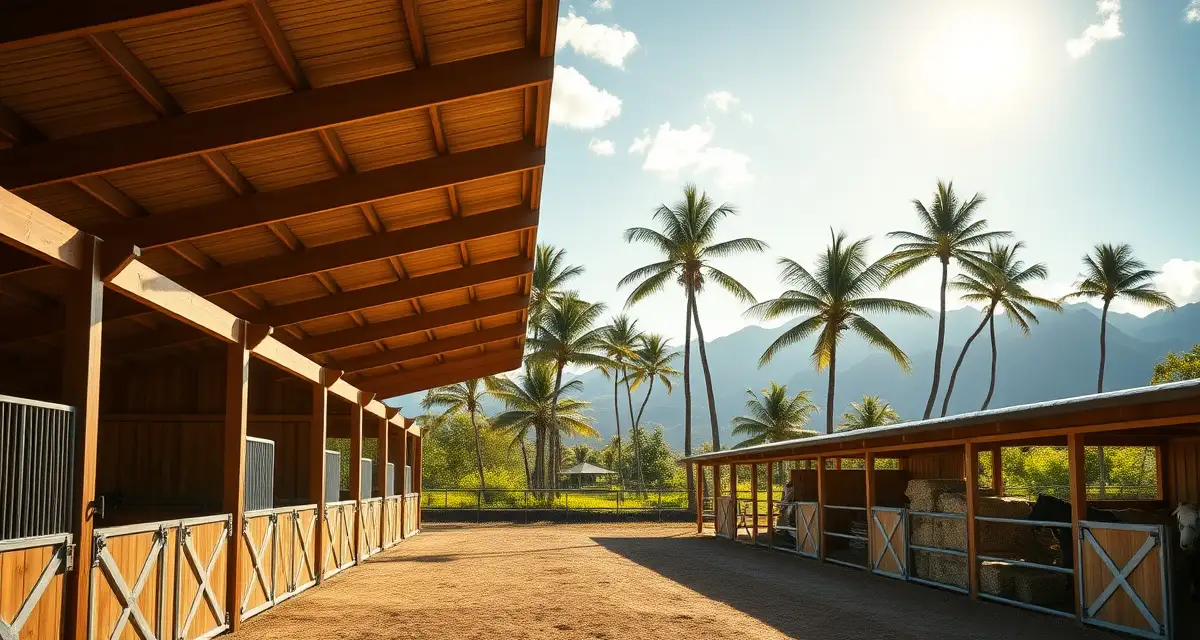
Equestrian Operations in Hawaii: Quarantine, Tropical Climate, and Island Challenges
Hawaii has a distinct and active equestrian community, particularly on Maui and the Big Island, where large ranching operations coexist with competitive riding facilities, trail programs, and polo. Operating or boarding horses in Hawaii presents a set of challenges that are genuinely unique in the United States: one of the strictest animal import programs in the country, a tropical climate with its own disease pressures, and the logistical complexity of island-based operations.
Hawaii's Horse Import and Quarantine Requirements
Hawaii's import requirements for horses are among the most rigorous of any jurisdiction in the United States. The program is designed to protect Hawaii's animal population from diseases that are not present on the islands and could be catastrophic if introduced. Any horse entering Hawaii, including horses owned by Hawaii residents returning after mainland competition, must comply with these requirements.
The requirements change periodically and should be verified with the Hawaii Department of Agriculture before any import is planned. At the time of writing, general requirements include:
Pre-entry permits: A permit from the Hawaii Department of Agriculture must be obtained before the horse arrives. This is not optional and failure to have it results in rejection or quarantine at the shipper's expense.
Health documentation: A Certificate of Veterinary Inspection issued within a short window before departure (verify current requirement, typically 3 to 7 days). The certificate must be issued by an accredited veterinarian and meet Hawaii's specific requirements.
Coggins testing: A current negative EIA test is required.
Additional testing: Hawaii requires negative tests for several diseases not commonly tested for in mainland contexts, including Equine Infectious Bronchitis and others. Work with an accredited veterinarian familiar with Hawaii import requirements well in advance of any planned move.
Quarantine: Upon arrival, horses typically undergo a quarantine period at a designated facility before being allowed to enter the general horse population. The length and conditions of quarantine depend on the horse's documentation and test results.
For horses traveling off-island for competition or other purposes, understand that the return import process must be planned before departure. A horse that competes on the mainland and returns without proper import documentation will face significant complications.
Climate Considerations
Hawaii's climate varies enormously by island and by elevation. Coastal areas are tropical and warm year-round. Higher elevations on Maui and the Big Island can be surprisingly cool and wet.
Heat and humidity at coastal elevations: The challenges are similar to Florida or other subtropical climates, with the addition that trade winds often provide relief that is not present in more continental climates. Facilities designed with trade wind orientation have a significant natural ventilation advantage.
Rain and footing: Higher-elevation equine properties can receive significant rainfall. Footing management in wet tropical conditions requires drainage infrastructure and footing materials appropriate for high moisture environments. Mud management is a year-round concern at many Hawaii locations.
Tropical disease pressures: Leptospirosis is more prevalent in Hawaii than in most mainland U.S. locations due to the climate and the presence of mongoose and other wildlife that serve as reservoir hosts. Consult with a Hawaii equine veterinarian about appropriate vaccination or management strategies for leptospirosis given your facility's specific location and risk factors.
Feed and Hay Logistics
All hay consumed in Hawaii is either grown locally or shipped from the mainland. Shipping costs add significantly to hay prices and mainland hay availability can be disrupted. Facilities in Hawaii typically maintain larger hay reserves than mainland facilities for this reason and often have established relationships with multiple suppliers.
Local hay production on some islands can be high quality but varies in availability and consistency. Understanding your hay supply options and building supplier relationships early is a key operational task for any Hawaii facility.
Record Keeping and BarnBeacon
Hawaii's strict import requirements make thorough health record keeping more important for Hawaii-based facilities than for most mainland operations. Every horse needs current documentation, and the import requirements mean that health records must be accurate and retrievable on short notice when travel is planned.
BarnBeacon maintains all health records and Coggins expiration tracking in one accessible place, supporting the documentation requirements that Hawaii operations depend on. For the health compliance framework, see equine health compliance. For heat management relevant to coastal facilities, see equine heat stress management.
FAQ
What is Equestrian Operations in Hawaii: Quarantine, Tropical Climate, and Island Challenges?
Equestrian operations in Hawaii involve managing horses within a unique set of constraints: strict state import quarantine rules, a tropical climate that affects horse health and facility design, and island logistics that complicate feed sourcing, veterinary access, and equipment shipping. The article covers how Hawaii's ranching and competitive riding communities—concentrated on Maui and the Big Island—navigate these challenges, from pre-entry permits and disease testing to humidity management and emergency planning specific to island environments.
How much does Equestrian Operations in Hawaii: Quarantine, Tropical Climate, and Island Challenges cost?
There is no single cost figure for equestrian operations in Hawaii, but expenses are significantly higher than mainland equivalents. Horse import alone can cost several thousand dollars when accounting for permits, quarantine facility fees, testing, and air freight. Ongoing costs—hay, feed, farrier visits, veterinary care—run 30–60% above mainland averages due to shipping. Boarding rates on Maui and the Big Island reflect these elevated input costs, making Hawaii one of the more expensive U.S. states for horse ownership.
How does Equestrian Operations in Hawaii: Quarantine, Tropical Climate, and Island Challenges work?
Operating horses in Hawaii requires compliance with the Hawaii Department of Agriculture's import program, which includes obtaining pre-entry permits, completing required disease testing, and serving a mandatory quarantine period at an approved facility. Once horses are on-island, daily management adapts to tropical conditions: increased attention to skin conditions, respiratory health, hoof care in wet environments, and parasite control. Facilities are designed for ventilation over insulation, and operations rely heavily on shipping logistics for supplies that are standard on the mainland.
What are the benefits of Equestrian Operations in Hawaii: Quarantine, Tropical Climate, and Island Challenges?
Hawaii's equestrian community benefits from a year-round riding climate, scenic trail systems, and a relatively disease-isolated environment—the same strict import rules that complicate entry also mean horses are largely protected from several diseases common on the mainland. The islands support diverse disciplines including polo, ranch work, trail riding, and arena competition. For facilities that manage the logistics well, Hawaii offers a stable and passionate horse community with strong local demand for quality boarding and training.
Who needs Equestrian Operations in Hawaii: Quarantine, Tropical Climate, and Island Challenges?
Anyone keeping, boarding, training, or competing horses in Hawaii needs to understand this operational framework. That includes ranch owners on the Big Island managing working stock, competitive riders bringing horses back from mainland events, trail operators on Maui, and newcomers relocating to Hawaii with existing horses. Facility managers and barn operators need particular fluency in import compliance, tropical health management, and supply chain planning to run a safe, legally compliant operation in the state.
How long does Equestrian Operations in Hawaii: Quarantine, Tropical Climate, and Island Challenges take?
The timeline for bringing a horse to Hawaii is longer than any other U.S. state import process. Securing a pre-entry permit, completing the required testing window, arranging air freight, and serving the mandatory quarantine period typically takes several weeks to a few months of advance planning. The quarantine stay itself adds days to weeks depending on current requirements. Operators should treat the process as a minimum 60–90 day planning horizon and verify current timelines directly with the Hawaii Department of Agriculture before committing to a move date.
What should I look for when choosing Equestrian Operations in Hawaii: Quarantine, Tropical Climate, and Island Challenges?
When evaluating a Hawaii boarding or equestrian facility, prioritize experience with import compliance and quarantine coordination, strong relationships with island-based veterinarians, and demonstrated ability to manage tropical health challenges like rain rot, thrush, and respiratory issues. Ask how the facility sources hay and feed, what contingency plans exist for shipping disruptions, and whether the barn design promotes adequate airflow. Facilities with established supplier relationships and experienced staff familiar with Hawaii-specific conditions are significantly more reliable than those treating it like a standard mainland operation.
Is Equestrian Operations in Hawaii: Quarantine, Tropical Climate, and Island Challenges worth it?
For those committed to horses in Hawaii, navigating these challenges is simply the cost of doing business in one of the world's most desirable places to ride. The strict import program protects the herd health of all island horses. The tropical climate, once understood, is manageable with proper facility design and veterinary protocols. The logistics are real but solvable with planning. If you're relocating, ranching, or building a facility in Hawaii, understanding this framework thoroughly—not treating it as an afterthought—is what separates successful operations from costly ones.