Equine Heat Stress Management: Cooling, Monitoring, and Prevention
Heat stress in horses is a genuine health emergency that progresses quickly and can be fatal if not addressed promptly. It is also largely preventable with the right protocols. Facilities in warm climates, and any facility during summer heat waves, need a proactive heat management plan rather than improvised responses when a horse starts showing signs.
Understanding Equine Heat Tolerance
Horses generate significant body heat through both metabolism and exercise. Their primary cooling mechanism is sweating, which can reach rates of 10 to 15 liters per hour during intense exercise in hot conditions. When sweat rate exceeds the body's ability to dissipate heat, or when the environment is so humid that sweat cannot evaporate efficiently, body temperature rises.
Normal rectal temperature in horses is 99 to 101.5 degrees Fahrenheit. Heat stress typically begins above 103 degrees. Above 104 degrees, organ damage becomes a risk. Above 106 degrees, the situation is critical and requires immediate aggressive intervention.
Humidity matters as much as temperature. The Temperature-Humidity Index (THI) combines both factors. A THI above 150 (roughly 80 degrees Fahrenheit at 80 percent humidity) presents meaningful risk during exercise. A THI above 170 is dangerous for any significant exertion. Many high-performance facilities post daily THI values and adjust riding schedules accordingly.
Risk Factors
Some horses are at higher risk for heat stress than others:
- Heavy body condition: Fat is an insulator that impairs heat dissipation
- Dark coat color: Absorbs more solar radiation than light-colored coats
- Anhidrosis: A condition common in horses that have been in hot climates for extended periods where sweat production is reduced or absent
- Heavy hair coat: Unclipped horses in summer may retain heat more than clipped horses
- Older horses and horses with metabolic conditions: Thermoregulation is impaired in horses with Cushing's or metabolic syndrome
- Horses that are not acclimatized: A horse moved from a cool climate to a hot one needs two to three weeks to acclimatize before full work in heat
Prevention Protocols
Prevention is more effective than treatment. Key preventive measures:
Water access: Horses in hot weather need continuous access to clean, cool water. Intake can reach 20 to 30 gallons per day in hot conditions. Automatic waterers and large troughs that are checked and cleaned daily are essential. A horse that is reluctant to drink at hot temperatures may benefit from adding a small amount of loose salt to feed to encourage drinking.
Electrolyte supplementation: Exercise in heat depletes electrolytes, particularly sodium, chloride, potassium, and calcium. Supplementing electrolytes before and after heavy work in hot weather supports hydration and recovery. Electrolytes should not be given without ensuring the horse is drinking well.
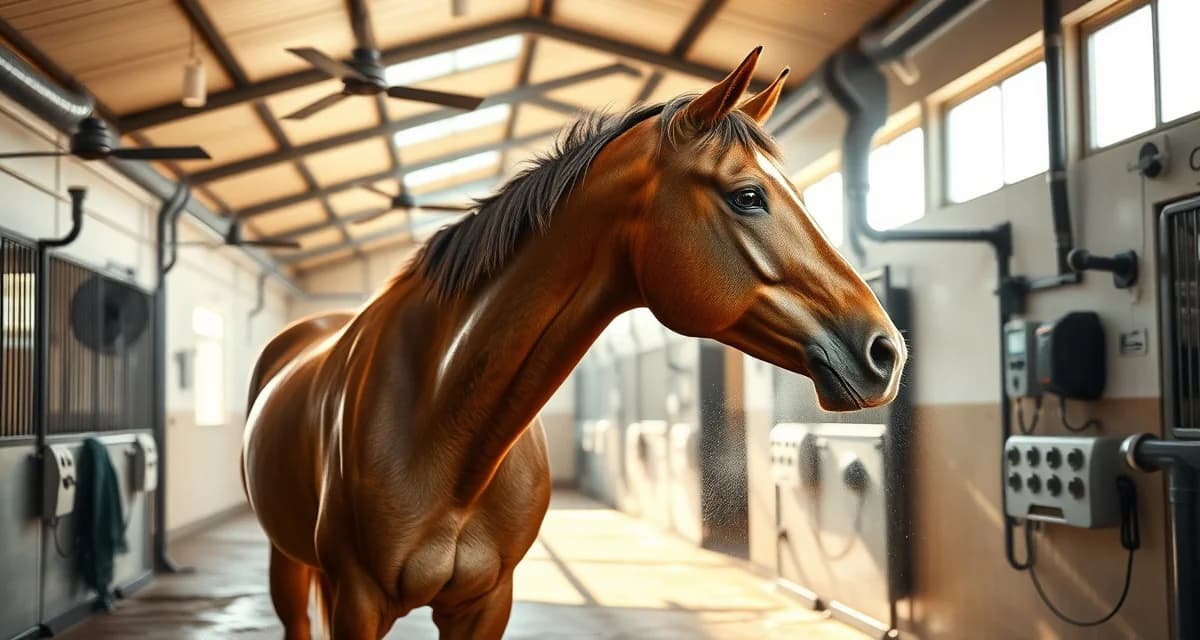
Shade and airflow: Every turnout area should have shade available. Barn fans create air movement that significantly aids evaporative cooling. Fans should be positioned to create cross-ventilation rather than simply moving the same hot air.
Scheduling work during cooler parts of the day: Early morning or evening riding in summer reduces heat exposure during exercise. Midday work in high-THI conditions should be reserved for light hand-walking or ground work at most facilities.
Cool-down protocols after exercise: Walk horses until heart rate drops below 60 beats per minute before stopping, then apply cold water to the neck, chest, and hindquarters. Scrape the water off and repeat rather than leaving wet without scraping, which can trap heat. Cold water on the neck and hindquarters is more effective than ambient temperature water.
Recognizing Heat Stress
Signs of heat stress include: elevated rectal temperature above 103 degrees, rapid or labored breathing that does not normalize within 10 to 15 minutes of stopping work, profuse or completely absent sweating relative to conditions, rapid heart rate that does not recover, lethargy, muscle weakness or staggering, and in severe cases, pawing, rolling, or collapse.
Any horse showing significant signs of heat stress requires immediate intervention: move to shade or a cool environment, apply cold water continuously while scraping, offer water in small quantities rather than unlimited drinking all at once, and call the veterinarian.
Documentation and BarnBeacon
BarnBeacon allows you to document daily observations including temperature readings, note horses on anhidrosis management protocols, and flag horses with elevated heat risk so staff can apply appropriate monitoring. For warm-climate specific management considerations, see Florida equine facilities. For daily care management that incorporates seasonal protocols, see equine daily care management.
Heat stress management is one area where preparation and early intervention make the difference between a horse that recovers quickly and a true emergency.
FAQ
What is Equine Heat Stress Management: Cooling, Monitoring, and Prevention?
Equine heat stress management is a set of protocols covering how to cool, monitor, and prevent dangerous rises in body temperature in horses. It includes understanding the Temperature-Humidity Index, recognizing early warning signs, applying cooling techniques like cold water hosing, and structuring exercise schedules around peak heat. A complete plan addresses both emergency response when a horse is already overheated and daily preventive practices to reduce risk during warm weather or summer heat waves.
How much does Equine Heat Stress Management: Cooling, Monitoring, and Prevention cost?
Implementing heat stress management has no single fixed cost. Basic measures like adjusting turnout schedules and hosing cost nothing beyond water. Fans, misting systems, and shade structures range from a few hundred to several thousand dollars depending on barn size. Veterinary care for a heat stroke case can run $1,000 to $5,000 or more. Investing in prevention is almost always far less expensive than treating a heat emergency after it occurs.
How does Equine Heat Stress Management: Cooling, Monitoring, and Prevention work?
Effective heat stress management works by reducing heat load before it becomes dangerous. Horses are monitored using rectal temperature and the Temperature-Humidity Index. Exercise is limited or rescheduled when THI exceeds safe thresholds. Cooling is applied through cold water hosing, scraping, airflow, and electrolyte replacement. Barns improve ventilation and provide constant access to fresh water. The goal is keeping body temperature below 103°F and giving the body's sweating mechanism enough support to function efficiently.
What are the benefits of Equine Heat Stress Management: Cooling, Monitoring, and Prevention?
A sound heat stress protocol protects horses from organ damage, anhidrosis, and fatal heat stroke. It also improves performance consistency, since horses working in well-managed conditions recover faster and maintain better condition across a hot season. For barn operators, documented protocols reduce liability and support better decision-making during heat waves. Early intervention based on monitoring prevents costly emergency vet calls and reduces the risk of losing a horse to a condition that is largely preventable.
Who needs Equine Heat Stress Management: Cooling, Monitoring, and Prevention?
Any horse owner or barn manager in a warm climate, or anywhere that experiences summer heat waves, needs a heat stress plan. High-performance and competition horses face elevated risk due to exertion. Senior horses, heavily muscled breeds, and horses with anhidrosis or respiratory conditions are especially vulnerable. Facilities that house multiple horses, run training programs, or host events need facility-wide protocols rather than relying on individual handlers to improvise responses when conditions deteriorate.
How long does Equine Heat Stress Management: Cooling, Monitoring, and Prevention take?
Active cooling of a hyperthermic horse typically reduces body temperature to a safe range within 20 to 30 minutes when done correctly using cold water and scraping. Preventing heat stress is an ongoing daily commitment during hot months, not a single intervention. Monitoring the THI before and during exercise takes only minutes but must be done consistently. Full facility preparation, including ventilation improvements and shade installation, should be completed before summer arrives.
What should I look for when choosing Equine Heat Stress Management: Cooling, Monitoring, and Prevention?
Look for a protocol that addresses all three components: prevention, real-time monitoring, and emergency response. It should include specific THI thresholds for adjusting or canceling exercise, clear temperature benchmarks for when to call a veterinarian, and step-by-step cooling procedures. Ensure it accounts for your specific climate, horse population, and facility layout. Protocols backed by veterinary guidance and updated to reflect current research on cooling methods are more reliable than generic checklists.
Is Equine Heat Stress Management: Cooling, Monitoring, and Prevention worth it?
Yes. Horses can die from heat stroke, and the progression from early heat stress to a critical emergency can happen within an hour. A structured management plan prevents the vast majority of heat-related incidents at a cost far below even a single emergency vet visit. Beyond the financial case, horses under well-managed heat protocols perform better, recover faster, and experience less cumulative physiological stress over a season. For any barn operating through warm months, this is essential, not optional.