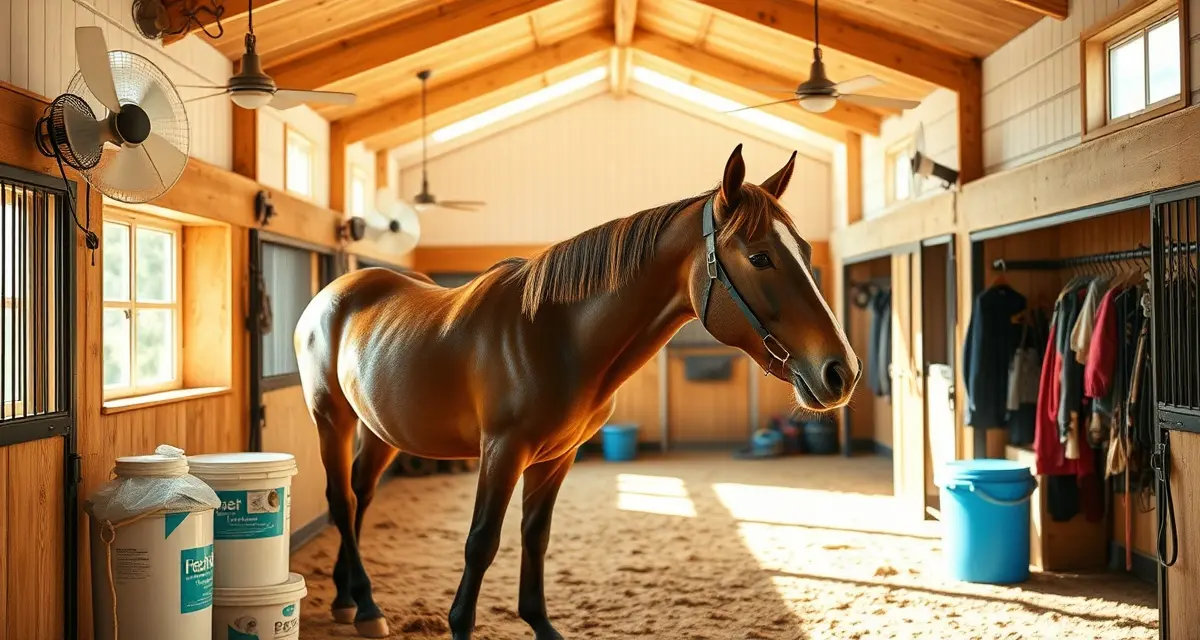
Horse Barn Summer Operations: Heat and Fly Management Guide
Running a horse barn in summer is a different job than running one in winter. The margin for error shrinks when temperatures climb past 90°F, fly pressure peaks, and horses stop drinking enough water. Horse barn summer operations demand a tighter schedule, more consistent monitoring, and faster communication between staff, vets, and owners than any other season.
TL;DR
- Summer operations at equine facilities require adjusted feeding, turnout, and health monitoring protocols specific to the season
- Temperature and weather changes in summer affect blanketing decisions, water intake monitoring, and footing safety simultaneously
- Preventive veterinary scheduling in summer reduces emergency calls and costs more than reactive care
- Summer show season billing requires pre-event billing setup to capture expenses as they occur, not afterward
- Seasonal staffing changes are among the most common sources of care continuity gaps; documentation reduces handover risk
- owner communication during summer transitions should address seasonal care changes proactively to prevent questions and anxiety
The average barn manager already juggles 6+ separate tools to keep a facility running. In summer, that fragmentation costs time you don't have when a horse is showing signs of heat stress at 2 p.m. on a Saturday.
This guide covers every major operational challenge of summer barn management: heat stress prevention, fly control programs, electrolyte protocols, turnout scheduling, and arena footing maintenance. It also covers how to run all of it without burning out your staff.
Understanding Heat Stress in Horses
Horses are less efficient at cooling themselves than humans. A horse generates 10 times more heat during exercise than at rest, and their primary cooling mechanism, sweating, depends on ambient humidity as much as temperature. When the Temperature-Humidity Index (THI) exceeds 150, performance horses face real risk. At THI above 180, even light work becomes dangerous.
The problem is that heat stress builds gradually. By the time a horse shows obvious signs, such as a rectal temperature above 104°F, rapid breathing, or muscle weakness, you're already managing a crisis rather than preventing one.
Recognizing Early Warning Signs
Early signs of heat stress include elevated resting heart rate (above 48 bpm), reduced gut sounds, tacky mucous membranes, and reluctance to move. Horses that stop sweating in hot conditions, a condition called anhidrosis, are at highest risk and need immediate shade, cooling, and veterinary attention.
Train every staff member to check these indicators during summer rounds, not just at feeding time. A horse that looked fine at 7 a.m. can deteriorate quickly by noon.
Barn Ventilation as a First Line of Defense
Stall air temperature can run 10-15°F higher than outdoor temperature when ventilation is poor. Cross-ventilation, ridge vents, and ceiling fans are not optional in summer. Fans should move air at a minimum of 2 mph across the horse's body to support evaporative cooling.
Position fans to push air through the barn rather than just circulating stagnant hot air. A barn thermometer at horse height, not ceiling height, gives you the accurate reading that matters.
Fly Control: Building a Program That Actually Works
A single housefly can lay 500 eggs in its lifetime. A single stable fly bite causes a horse to stomp, which burns energy and raises body temperature. Multiply that across a herd and fly pressure becomes a direct welfare and performance issue, not just an annoyance.
Effective fly control in a horse barn is not a single product. It's a layered program with four components: source reduction, biological control, chemical control, and physical barriers.
Source Reduction
Manure is the primary breeding site for flies. Removing manure from stalls daily and from paddocks at least twice weekly cuts fly populations faster than any spray program. Compost piles should be located at least 200 feet from the barn and turned regularly to generate heat that kills larvae.
Wet bedding, spilled feed, and standing water are secondary breeding sites. Fix leaking water buckets and automatic waterers immediately. Wet spots under waterers can produce thousands of fly larvae per week.
Biological Control with Parasitic Wasps
Parasitic wasps (Spalangia and Muscidifurax species) are commercially available and highly effective when used consistently. They lay eggs inside fly pupae, killing the next generation before it hatches. Release rates of 500 wasps per horse per week, starting before fly season peaks, can reduce fly populations by 70-90% over a full season.
Wasps work best when chemical insecticides are used sparingly, since broad-spectrum sprays kill the wasps along with the flies. Plan your chemical and biological controls so they complement rather than cancel each other.
Chemical and Physical Controls
Premise sprays, feed-through larvicides, and fly baits each target different life stages. Rotating active ingredients prevents resistance. Pyrethroid-based sprays are effective for adult flies but break down quickly in heat and sunlight, so reapplication every 5-7 days is typically needed in summer.
Physical barriers matter more than most managers realize. Fly sheets, fly masks, and leg wraps reduce the number of bites each horse receives. Fly strips and sticky traps near feed rooms and water sources catch adults before they reach horses. Screen doors on feed rooms keep flies out of grain storage where they contaminate feed.
Electrolyte Management in Summer
Horses lose electrolytes through sweat at a rate that varies dramatically with workload and humidity. A horse doing moderate work in hot weather can lose 10-15 liters of sweat per hour, along with significant sodium, chloride, potassium, and magnesium. Plain water alone does not replace these losses.
The practical problem is that horses won't drink enough water if their electrolyte balance is already off. Sodium depletion specifically suppresses thirst, creating a cycle where a dehydrated horse refuses the water it needs.
When to Supplement
Horses in light work in moderate temperatures often get adequate electrolytes from forage and a salt block. Once ambient temperature exceeds 85°F, or when horses are working hard enough to produce visible sweat, active supplementation is warranted.
Offer loose salt free-choice at all times. Salt blocks are better than nothing, but horses consume loose salt more readily and in larger quantities. For horses in heavy work or showing signs of dehydration, electrolyte pastes or water-soluble powders provide faster correction.
Practical Electrolyte Protocols
Never give electrolytes to a horse that doesn't have access to fresh water. Electrolytes increase thirst and sodium load, and a horse that can't drink will become more dehydrated, not less.
For competition horses or horses working in extreme heat, a pre-event electrolyte dose 4-6 hours before work, combined with post-work supplementation, supports better recovery. Work with your veterinarian to establish specific protocols based on each horse's workload and sweat rate.
Monitoring Hydration
The skin pinch test and capillary refill time are quick field assessments every staff member should know. Skin that takes more than 2 seconds to flatten after a pinch, or gums that take more than 2 seconds to return to pink after pressure, indicate dehydration that needs immediate attention.
Track water consumption per horse when possible. A horse that normally drinks 10-12 gallons per day and drops to 6 gallons is a horse that needs intervention before clinical signs appear.
Turnout Timing: Restructuring the Summer Schedule
The instinct to turn horses out in the morning and bring them in at night works well in spring and fall. In summer, it puts horses in direct sun during peak heat hours and keeps them in stalls during the cooler parts of the day.
Flipping the schedule, night turnout from approximately 7 p.m. to 7 a.m. and stall time during midday heat, reduces heat stress exposure significantly. Horses also tend to graze more actively at night when temperatures drop, which supports better forage intake.
Managing the Transition
Horses accustomed to daytime turnout need a gradual transition to a night schedule. Shift turnout time by 1-2 hours every few days rather than making an abrupt change. Sudden schedule changes increase stress and can trigger digestive upset in sensitive horses.
Communicate schedule changes clearly to all staff and to horse owners. Owners who expect to see their horses in the paddock at 10 a.m. need to know the barn has shifted to a summer schedule. This is where a centralized communication system pays for itself: one update reaches everyone rather than a chain of individual phone calls and texts.
Paddock and Pasture Considerations
Shade is not optional for summer turnout. Trees, run-in sheds, or shade structures should provide enough coverage for all horses in a paddock to stand comfortably out of direct sun at the same time. A single small tree for a group of four horses is not adequate shade.
Water in turnout areas needs to be checked and refreshed more frequently in summer. Algae growth accelerates in warm water, and horses will reduce their water intake if the water tastes or smells off. Scrub water tanks at least weekly and consider adding a small amount of apple cider vinegar (1/4 cup per 10 gallons) to slow algae growth.
Arena Footing Hydration and Maintenance
Arena footing that works well in spring can become a dust hazard or a hard, compacted surface by mid-summer. Dust is a respiratory irritant for both horses and riders. Hard, dry footing increases concussive forces on joints and tendons. Both problems are preventable with consistent moisture management.
The target moisture content for most sand and fiber arena footings is 8-12%. Below that range, dust becomes a problem. Above 15%, footing becomes slippery and heavy. In summer heat, surface moisture evaporates quickly, and a footing that was perfect at 7 a.m. can be dangerously dry by noon.
Watering Frequency and Methods
Most arenas in hot climates need watering at least twice daily in summer: once in the morning before use and once in the afternoon. High-traffic arenas may need a third application. The goal is to wet the top 2-3 inches of footing without creating puddles or runoff.
Drag the arena after watering to distribute moisture evenly and break up any surface crust. A crust that forms on dry footing can be slippery when wet and hard when dry, neither of which is safe.
Automated irrigation systems with timers reduce the labor burden significantly. If your arena doesn't have irrigation, a water truck or hose with a sprinkler attachment is the manual alternative. Track watering times and footing condition in your barn log so you can identify patterns and adjust frequency as temperatures change.
Footing Additives for Summer
Dust control additives such as magnesium chloride, calcium chloride, and polymer-based products extend the time between watering by retaining moisture in the footing. These products are applied once or twice per season and can reduce watering frequency by 30-50%.
Rubber and fiber additives improve footing resilience and reduce compaction, which helps maintain consistent moisture distribution. If your arena footing is compacting heavily in summer, adding 10-15% rubber crumb or fiber by volume can improve both performance and moisture retention.
Staff Scheduling and Communication in Summer
Summer operations require more frequent checks, more tasks per shift, and faster response to problems. Without a clear schedule and communication system, things fall through the gaps. A horse that wasn't checked at the 2 p.m. heat check because the schedule wasn't clear is a liability.
Build a summer-specific daily task list that accounts for the shifted schedule. Morning rounds should include temperature checks, water checks, and fly spray application before the heat of the day. Midday checks focus on horses in stalls: ventilation, water consumption, and signs of heat stress. Evening rounds prepare horses for night turnout.
Reducing Administrative Overhead
Barn administration in summer competes directly with horse care for staff time. Every hour spent on invoicing, scheduling, and owner communication is an hour not spent on the horses. The average barn manager loses 2.4 hours daily to administrative tasks that could be handled by integrated software.
Barn management software that combines scheduling, health records, and owner communication in one place eliminates the need to switch between six different tools to get through a morning. When a horse's electrolyte protocol, turnout schedule, and billing are all in the same system, nothing gets missed and nothing has to be re-entered.
Owner Communication During Heat Events
Owners want to know when their horses are affected by extreme heat. A barn that proactively communicates, "We've shifted to night turnout due to heat advisory, your horse is doing well," builds trust. A barn that owners have to call to find out what's happening loses clients.
Set up a communication protocol for heat events before the season starts. Define what triggers a mass notification (THI above a threshold, a horse showing heat stress signs, a schedule change), who sends it, and through what channel. Consistency matters more than the specific tool you use.
Billing and Invoicing in Summer Operations
Summer often brings additional charges: electrolyte supplements, extra fly spray applications, additional bedding from horses spending more time in stalls, and veterinary call fees. These charges need to be tracked and billed accurately without creating extra administrative work.
Miscommunication about summer add-on charges is one of the most common sources of client disputes at boarding facilities. The solution is transparency: document what services are included in the base board rate and what triggers additional charges, and communicate that clearly at the start of the season.
Automated billing and invoicing that tracks per-horse services and generates itemized statements eliminates the manual tracking that leads to missed charges or billing errors. When a horse receives an electrolyte paste on a Tuesday, that charge should be logged immediately and appear on the next invoice without anyone having to remember to add it.
Integrated Operations: Why Fragmented Tools Fail in Summer
Equine facility summer management is a coordination problem as much as a horse care problem. Heat stress prevention requires monitoring. Fly control requires scheduling. Electrolyte management requires health records. Turnout timing requires communication. Arena maintenance requires task tracking.
When each of these functions lives in a different tool, a different spreadsheet, or a different person's head, the system breaks down under summer pressure. A barn manager who is also texting owners, updating a paper health log, and trying to remember who got fly spray this morning is a barn manager who is going to miss something.
The competitor angle in most barn software is to solve one problem well: scheduling, or invoicing, or communication. What professional barn managers actually need is a platform where health records, billing, scheduling, and owner communication are connected. When a horse's health note triggers a billing entry and a staff task automatically, that's not a convenience feature. That's how you run a safe barn in summer.
BarnBeacon is built specifically for this integration. Health events, billing, scheduling, and owner messaging work together in one platform designed for horse facilities, not adapted from generic business software.
Preparing for Emergencies
Summer emergencies, colic triggered by dehydration, heat stroke, severe fly-related wounds, happen faster than any other season. Your emergency protocol needs to be documented, posted, and practiced before you need it.
Every staff member should know the barn's veterinarian contact, the nearest equine emergency clinic, and the steps to take for heat stroke (move to shade, apply cool water to large blood vessels, call the vet) before they're standing in front of a distressed horse trying to remember what to do.
Keep a summer emergency kit stocked: rectal thermometer, electrolyte paste, cooling wraps, and a hose with cold water access near the barn. Review the kit at the start of the season and replace anything that's expired or depleted.
What is the most important thing a barn manager can do to improve operations?
Build systems that don't depend on any single person's memory. The most effective barn managers document protocols, use consistent checklists, and centralize communication so that any staff member can handle any situation correctly. In summer specifically, written heat stress protocols and clear task schedules prevent the gaps that lead to horse health emergencies.
How do I reduce time spent on barn administration?
Consolidate your tools. Most barn managers use 6 or more separate systems for scheduling, health records, billing, and owner communication. Switching to an integrated barn management platform that handles all of these functions together typically saves 2+ hours per day. That time goes back to horse care, which is where it belongs.
What tools do professional barn managers use?
Professional barn managers increasingly use purpose-built equine facility software rather than generic tools like spreadsheets or consumer apps. The most effective setups combine digital health records, automated invoicing, staff scheduling, and owner communication in one system. Standalone tools for each function create data silos and increase the risk of errors, especially during high-pressure seasons like summer.
How does BarnBeacon compare to spreadsheets for barn management?
Spreadsheets require manual updates, lack real-time notifications, and create version control problems when multiple staff members are working from different files. BarnBeacon centralizes records, pushes alerts automatically based on logged events, and connects care records to billing and owner communication in one system. Most facilities report saving several hours per week after switching from spreadsheets.
What is the setup process like for BarnBeacon?
Most facilities complete the initial setup in under a week. Horse profiles, service templates, and billing configurations can be imported from existing records or entered directly. BarnBeacon's US-based support team is available to assist with setup, and most managers are running their first billing cycle through the platform within days of starting.
Can BarnBeacon support a barn with multiple staff members?
Yes. BarnBeacon supports multiple user accounts with role-based access, so barn managers, barn staff, and owners each see the information relevant to their role. Task assignments, completion logs, and communication history are all attached to the barn's account rather than to individual staff phones or email addresses.
FAQ
What is Horse Barn Summer Operations: Heat and Fly Management Guide?
Horse Barn Summer Operations: Heat and Fly Management Guide is a practical resource for barn managers and equine facility operators covering the seasonal adjustments required during hot weather. It addresses heat stress prevention, fly control strategies, modified feeding and turnout schedules, water intake monitoring, and staff communication protocols. The guide is designed to help facilities reduce emergency vet calls, maintain horse welfare, and keep operations running smoothly when summer heat and pest pressure are at their peak.
How much does Horse Barn Summer Operations: Heat and Fly Management Guide cost?
The Horse Barn Summer Operations guide is a free educational resource available on BarnBeacon. There is no purchase required to access the article or implement its recommendations. Some strategies outlined — such as fly control products, cooling fans, or barn management software — carry their own costs that vary by facility size and supplier. The guide itself is provided as part of BarnBeacon's mission to support equine facility operators with practical, actionable information at no charge.
How does Horse Barn Summer Operations: Heat and Fly Management Guide work?
The guide works by walking barn managers through each core area affected by summer conditions: heat monitoring, fly management, adjusted feeding and hydration protocols, turnout scheduling, veterinary planning, and owner communication. It breaks complex seasonal operations into discrete, manageable protocols. Managers can apply recommendations sequentially or prioritize the areas most relevant to their facility. The guide also highlights where fragmented tooling creates risk and how centralizing barn management reduces errors during high-pressure summer months.
What are the benefits of Horse Barn Summer Operations: Heat and Fly Management Guide?
Key benefits include reduced heat stress incidents, fewer emergency veterinary calls, improved fly control outcomes, and better-informed horse owners. Following a structured summer protocol helps staff maintain consistent care across shift changes and seasonal hires. Proactive owner communication reduces anxiety-driven calls. Facilities that implement the guide's scheduling and monitoring recommendations typically see fewer gaps in care continuity — the most common and costly failure point during summer when staffing changes and workload peaks simultaneously.
Who needs Horse Barn Summer Operations: Heat and Fly Management Guide?
This guide is essential for anyone responsible for running a horse boarding barn, training facility, or equine operation through summer months. That includes barn managers, facility owners, head grooms, and equine facility directors. It is equally useful for new managers facing their first high-heat season and experienced operators looking to tighten existing protocols. Owners with horses in full-care boarding can also use it to understand what questions to ask their barn about seasonal care adjustments.
How long does Horse Barn Summer Operations: Heat and Fly Management Guide take?
Implementing summer barn operations protocols is an ongoing seasonal commitment, not a one-time task. Initial setup — adjusting schedules, sourcing fly control products, briefing staff, and updating owner communications — typically takes one to two weeks before peak summer heat arrives. Daily monitoring and protocol adherence continue throughout the season, roughly June through September depending on your region. The investment of time upfront in preparation significantly reduces reactive time spent managing heat emergencies and fly infestations once summer is underway.
What should I look for when choosing Horse Barn Summer Operations: Heat and Fly Management Guide?
When evaluating a summer barn operations guide, prioritize practical specificity over general advice. Look for concrete temperature thresholds, clear decision trees for heat response, and realistic staffing recommendations. The best guides address documentation and communication tools, not just physical care tasks. Check whether the resource accounts for real-world constraints like seasonal staff turnover and multi-tool fragmentation. A strong guide should also integrate preventive veterinary scheduling and billing considerations for show season — not just horse care in isolation.
Is Horse Barn Summer Operations: Heat and Fly Management Guide worth it?
Yes — for any barn running horses through summer heat, a structured operations guide is worth following. The cost of a single heat-related veterinary emergency or a preventable illness typically far exceeds the time investment of implementing seasonal protocols. Beyond horse welfare, consistent summer operations protect staff, reduce owner complaints, and support facility reputation during the high-visibility show season. Barn managers who operate without a seasonal framework tend to spend more time reacting to problems than preventing them.
Sources
- American Association of Equine Practitioners (AAEP)
- United States Equestrian Federation (USEF)
- American Horse Council
- Kentucky Equine Research
- UC Davis Center for Equine Health
Get Started with BarnBeacon
Summer brings specific management demands that catch barns without the right systems off guard. BarnBeacon gives equine facilities the health monitoring, feeding management, and owner communication tools to handle summer transitions without adding administrative work. Start a free trial before your next seasonal shift and see how the platform handles the change.