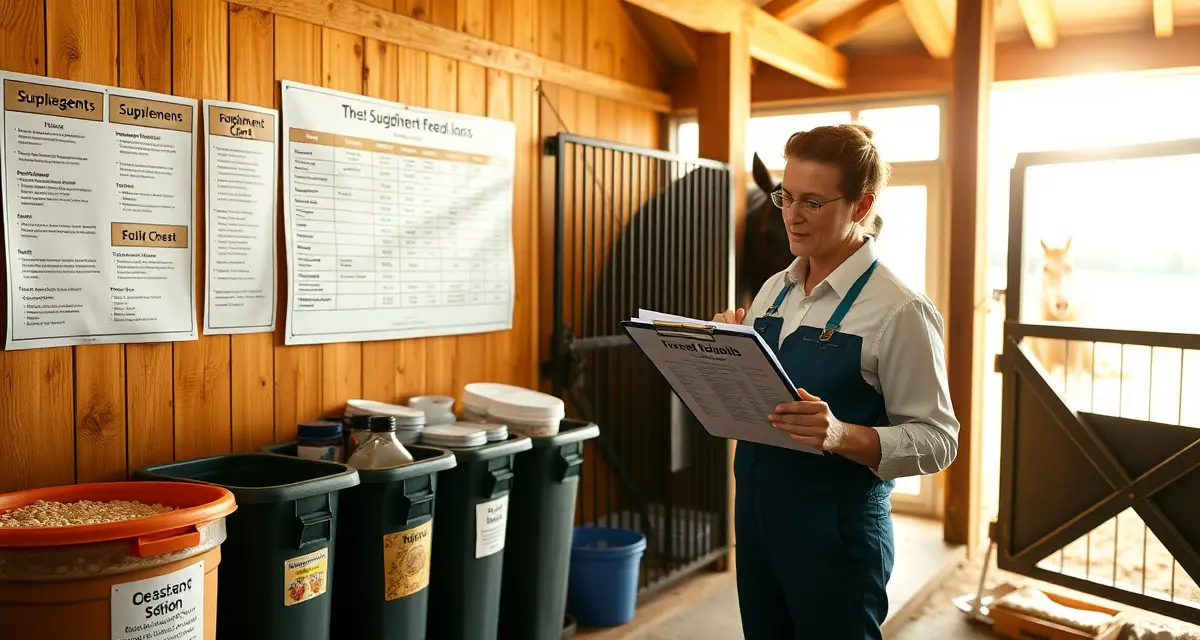
Horse Feeding Management at Boarding Facilities: Complete Guide
Managing horse feeding at a boarding barn is fundamentally different from managing a private farm. You are not feeding your own horses on your own schedule. You are executing dozens of individual feeding plans, each owned by a different client, each with its own rules, supplements, and sensitivities.
TL;DR
- Feed errors are the second leading cause of preventable colic, according to AAEP data
- All rations should be measured by weight, not volume; different feeds have very different densities per scoop
- Any concentrate change must follow a 7-to-14-day transition to reduce colic and GI upset risk
- A feed cards is only useful if it is current; updates must push to all staff in real time, not just to a posted board
- Fixed feeding windows within 30 minutes of schedule reduce ulcer risk from irregular gastric acid cycles
- Verbal feed change handoffs are the most common source of dosing errors in multi-staff barns
Boarding facilities represent a distinct segment with unique management needs, and nowhere is that complexity more visible than at feeding time. When something goes wrong with a feed program, the horse owner finds out. That is a client relationship problem, not just a barn operations problem.
Why Horse Feeding Management at a Boarding Barn Is Uniquely Difficult
A private farm manager knows every horse's diet by heart. A boarding barn manager has to know 20, 30, or 50 diets, and so does every staff member who covers a shift.
The variables multiply fast. One horse gets senior feed twice daily. Another gets a low-starch diet with a magnesium supplement. A third is on a veterinarian-prescribed ulcer protocol with strict timing requirements. A fourth has a new owner who changed the program last Tuesday and told one groom but not the other.
Without a system, errors are not a matter of if. They are a matter of when.
Step 1: Build a Standardized Feed Record for Every Horse
What to Include in Each Horse's Feed Profile
Every horse in your barn needs a written feed record that any staff member can read and execute without asking questions. That record should include:
- Feed type, brand, and quantity per meal
- Number of meals per day and specific timing
- Hay type and amount (weight, not flakes)
- All supplements, including dosage and which meal they go in
- Any restrictions (no grain, no alfalfa, no treats)
- Veterinary or farrier notes that affect feeding
- Date the record was last updated and who updated it
Keep these records somewhere every staff member can access them, not in one manager's notebook.
Getting Accurate Information from Boarders
Ask every new boarder to complete a written feed intake form on arrival. Do not rely on verbal instructions. Verbal instructions change in the retelling.
Schedule a brief annual review with each boarder to confirm their horse's current diet. Horses change. Owners change their minds. Your records need to reflect reality, not what was true six months ago.
Step 2: Create a Feed Schedule That Works for Staff, Not Just Horses
Structuring Feeding Rounds
Group horses by feeding time requirements, not just by barn location. If you have eight horses that need grain at 6 AM and twelve that need it at 7 AM, that is two separate rounds, and your staffing needs to reflect that.
Build your schedule around your most time-sensitive horses first. Horses on timed medication protocols or post-surgical diets set the clock. Everyone else fits around them.
Hay and Grain Separation
Hay and grain management are two different workflows. Hay is typically distributed in bulk rounds. Grain requires individual measurement and supplement addition.
Do not combine these tasks into one chaotic round. Separating them reduces errors and makes it easier to verify that each horse received the correct amount.
Step 3: Set Up a Supplement Tracking System
Supplements are where most feeding errors happen at boarding barns. An owner adds a new joint supplement. A staff member does not see the update. The supplement sits in the feed room for a week without being used.
Organizing the Feed Room
Label every supplement container with the horse's name, stall number, and dosage. Use a consistent location system so staff can find what they need without searching.
Consider a dedicated shelf or bin per horse for their individual supplements. It takes more space but eliminates the wrong-supplement-to-wrong-horse problem.
Tracking Changes in Real Time
When a boarder changes a supplement program, that change needs to reach every staff member before the next feeding. A shared digital feed log, updated in real time, is far more reliable than a whiteboard or a verbal handoff.
Barn management software built for boarding facilities can push feed record updates to staff devices immediately, so a change made at 9 PM is visible to the morning crew at 5 AM.
Step 4: Write Staff Feeding Instructions That Leave No Room for Interpretation
The Problem with Vague Instructions
"Give grain twice a day" is not a feeding instruction. It is an invitation for inconsistency. One staff member gives two pounds. Another gives four. The horse owner notices the bag is disappearing too fast and calls you.
Every instruction should be specific enough that a new employee, on their first solo shift, can execute it correctly.
Format Instructions for Speed and Accuracy
Use a consistent format for every horse's feeding card. A table works well: meal, feed type, quantity, supplements, notes. Staff should be able to scan a card in under 30 seconds and know exactly what to do.
Post physical feeding cards at each stall or in a binder organized by stall number. Digital access is valuable, but a physical backup matters when phones die or systems go offline.
Step 5: Build a System for Communicating Diet Changes
Who Can Change a Feed Program
Establish a clear policy: feed program changes must come from the horse owner in writing, or from a veterinarian. Verbal requests from trainers, family members, or well-meaning barn visitors do not count.
This protects your staff, your clients, and the horses. It also gives you documentation if a dispute arises.
How Changes Get Communicated to Staff
Changes should flow through one channel. Whether that is a shared digital platform, a group message thread, or a physical log book, pick one system and enforce it. Parallel communication channels create gaps.
For a deeper look at how boarding operations handle communication workflows, the boarding barn operations guide covers staff handoff protocols in detail.
Common Mistakes in Boarding Barn Feed Management
Relying on memory. No staff member should have to remember individual feed programs. Memory fails, especially during busy morning rounds with 30 horses to feed.
Inconsistent measurement. "A scoop" means different things to different people. Use a kitchen scale or calibrated scoop for every horse on a grain program. Weigh hay rather than estimating by flake.
Ignoring feed room organization. A disorganized feed room slows down every feeding round and increases the chance of errors. Spend 30 minutes reorganizing it and you will save hours over the course of a month.
Not updating records after vet visits. Veterinary recommendations often change feed programs. Build a habit of updating the feed record the same day a vet visit occurs.
Treating all horses as equal. Equine diet management at a boarding facility requires treating every horse as an individual case. A one-size-fits-all approach will eventually fail a horse with specific medical or metabolic needs.
How do I handle feed changes requested by a horse owner?
All feed change requests from owners should be filtered through the barn manager and confirmed with the attending veterinarian if the change is clinically significant. Document the request, the authorization, and the effective date before anything changes in the feed room. A verbal request from an owner to a staff member that bypasses the manager is the most common path to a feeding error.
What is the safest way to introduce a new feed at my barn?
Transition over a minimum of seven days, starting with 25% new feed mixed with 75% old feed and shifting the ratio every two to three days. Document the transition schedule on each affected horse's feed card so every feeder knows the correct ratio on each day of the transition. Mark each day complete to track progress and catch any horse that goes off feed during the change.
How should I store feed to prevent spoilage and contamination?
Store bulk feed in sealed, rodent-proof containers in a dry, ventilated space. Keep feed off the ground and away from direct sunlight. Most commercial horse feeds have a 90-day shelf life once opened; label bags or containers with the opening date and rotate stock so older product is used first. Contaminated or spoiled feed should be disposed of immediately, never fed.
FAQ
What is Horse Feeding Management at Boarding Facilities: Complete Guide?
Horse Feeding Management at Boarding Facilities is a comprehensive operational framework for barn managers overseeing individualized feeding programs across multiple horse owners. Unlike private farm feeding, boarding barns must execute dozens of distinct ration plans simultaneously, each with unique supplements, sensitivities, and owner specifications. The guide covers feed card systems, staff communication protocols, safe feed transition timelines, and scheduling practices that reduce colic risk and protect client relationships when something goes wrong.
How much does Horse Feeding Management at Boarding Facilities: Complete Guide cost?
This guide is free educational content published by BarnBeacon to help barn managers improve feeding operations. There is no purchase required to access the article. However, implementing the recommended practices may involve costs such as digital feed management software, calibrated scales for weight-based portioning, feed room organization systems, and staff training time. Those operational investments vary widely depending on barn size and existing infrastructure.
How does Horse Feeding Management at Boarding Facilities: Complete Guide work?
The guide works by breaking boarding barn feeding management into core principles: weight-based ration measurement, structured feed change transition protocols lasting 7 to 14 days, standardized feed cards that update in real time across all staff, and fixed feeding windows within 30 minutes of schedule. Each principle addresses a specific failure point common in multi-horse, multi-owner environments where verbal handoffs and outdated posted boards create dosing errors.
What are the benefits of Horse Feeding Management at Boarding Facilities: Complete Guide?
Proper feeding management at a boarding facility reduces the risk of preventable colic, which feed errors contribute to significantly according to AAEP data. It also protects client relationships by ensuring each owner's feeding instructions are followed accurately. Additional benefits include reduced ulcer risk through consistent feeding schedules, fewer staff miscommunications during shift changes, and a more defensible liability position when health incidents occur and feeding records are reviewed.
Who needs Horse Feeding Management at Boarding Facilities: Complete Guide?
Any boarding barn manager, barn owner, or head groom responsible for overseeing feeding across multiple horses and multiple clients needs this framework. It is especially critical for facilities with more than five boarders, rotating staff, or horses with medical dietary requirements. Private farm managers with a single string of horses face fewer coordination challenges, but any operation where more than one person executes the feeding program will benefit from the protocols described.
How long does Horse Feeding Management at Boarding Facilities: Complete Guide take?
Reading and understanding the guide takes roughly 15 to 30 minutes. Implementing the core systems, including setting up accurate feed cards, training staff on weight-based measurement, and establishing real-time update protocols, typically takes one to two weeks for a well-organized barn. Full feed transition periods for any horse switching concentrates require 7 to 14 days by veterinary recommendation. Ongoing maintenance is continuous, as feed plans must be updated whenever an owner or veterinarian changes a horse's program.
What should I look for when choosing Horse Feeding Management at Boarding Facilities: Complete Guide?
When evaluating a boarding facility's feeding management approach, look for written feed cards that are current and accessible to all staff rather than a single posted board. Ask whether feeds are measured by weight using calibrated scales. Confirm that the barn follows a structured transition protocol for concentrate changes. Assess how feed updates are communicated between shifts. Facilities that rely entirely on verbal handoffs or volume-based scooping introduce meaningful risk regardless of how experienced their staff appears.
Is Horse Feeding Management at Boarding Facilities: Complete Guide worth it?
Yes, investing in structured feeding management is worth it for any boarding operation. Feed errors are among the most common and most preventable causes of colic, and a single serious colic case can cost thousands in veterinary bills while damaging the client relationship that took months to build. The systems described, including real-time feed cards, weight-based portioning, and consistent scheduling, are not complex to implement but deliver measurable reductions in risk, staff confusion, and owner complaints.
Sources
- American Association of Equine Practitioners (AAEP)
- American Horse Council
- Kentucky Equine Research
- UC Davis Center for Equine Health
- American Horse Council Economic Impact Study
Get Started with BarnBeacon
A feeding system is only as reliable as its documentation. BarnBeacon gives boarding barns individual digital feed cards that update in real time, push alerts when rations change, and log every feeding with a timestamp and staff name. If feed errors are part of your current risk picture, start a free trial and build your first grain feeding schedule in a system built to close the information gap.