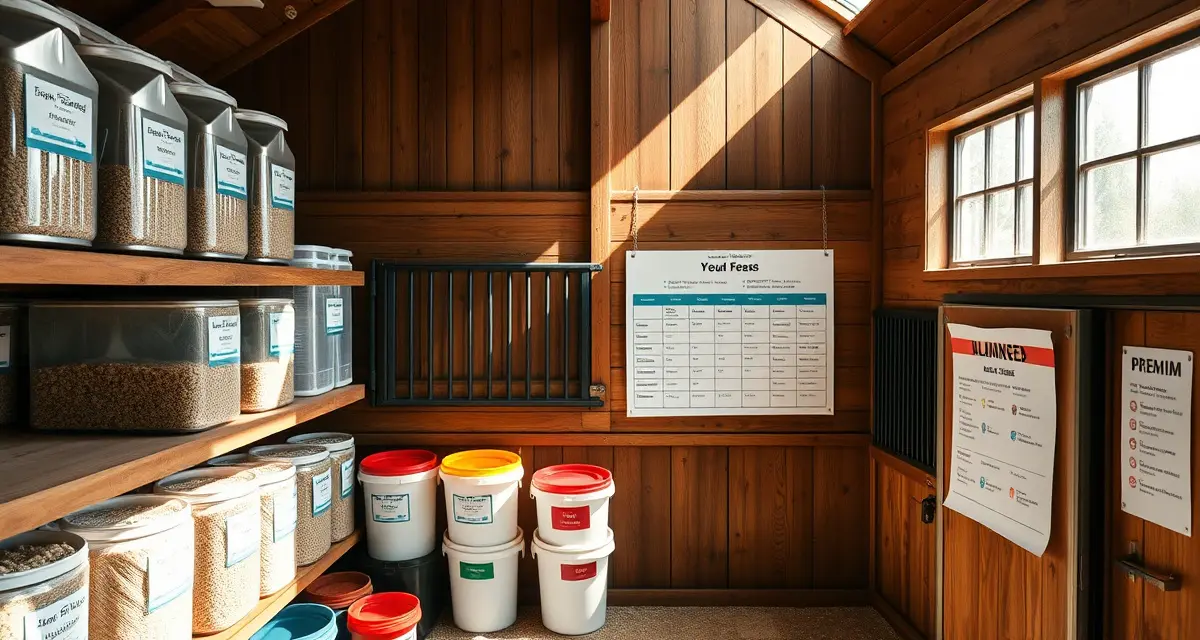
Grain Feeding Schedule for Horse Barns: Management Guide
Feed errors are the number two cause of preventable colic, according to the AAEP's 2023 data. In a busy barn, that risk compounds every time a new staff member grabs a scoop, a diet changes mid-week, or a handwritten feed board gets smudged. Managing a grain feeding schedule across a horse barn is not just about knowing what each horse eats. It is about making sure every person feeding that horse, on every shift, has the right information at the right time.
TL;DR
- Feed errors are the second leading cause of preventable colic, according to AAEP data
- All rations should be measured by weight, not volume; different feeds have very different densities per scoop
- Any concentrate change must follow a 7-to-14-day transition to reduce colic and GI upset risk
- A feed card is only useful if it is current; updates must push to all staff in real time, not just to a posted board
- Fixed feeding windows within 30 minutes of schedule reduce ulcer risk from irregular gastric acid cycles
- Verbal feed change handoffs are the most common source of dosing errors in multi-staff barns
This guide walks through how to build a reliable grain feeding system from the ground up.
Why Grain Feeding Goes Wrong in Barns
Most feeding mistakes do not happen because staff are careless. They happen because the information system fails. A whiteboard in the feed room does not update when an owner calls in a change at 7 PM. A spreadsheet does not alert the morning crew that a horse's ration was modified overnight.
The gap between when a diet changes and when the person holding the scoop knows about it is where colic prevention lives.
Step 1: Audit Every Horse's Current Grain Ration
Collect the baseline data
Before you can manage a feeding schedule, you need accurate starting data for every horse in the barn. Pull together each horse's current concentrate type, daily quantity (in pounds or scoops by weight, not volume), and feeding frequency.
Do not rely on memory or verbal handoffs. Document it in writing, tied to the horse's name and stall number.
Standardize your units
Scoops are not a reliable unit. A coffee can of senior feed weighs differently than a coffee can of oats. Convert all rations to pounds or kilograms and cross-reference with a feed scale. This single step eliminates a significant source of dosing error in most barns.
Step 2: Build Individual Feed Cards for Each Horse
What goes on a feed card
A feed card is the single source of truth for anyone feeding that horse. It should include:
- Horse name and stall number
- Feed type (brand and product name)
- Amount per feeding in pounds
- Number of feedings per day and timing (e.g., 6 AM, 12 PM, 5 PM)
- Any supplements added to grain
- Dietary restrictions or allergies
- Date the ration was last updated and who authorized the change
For a deeper look at what to include in your feeding schedules, including hay and forage documentation, the linked guide covers the full picture.
Make feed cards accessible to all staff
A laminated card on a stall door works until it gets wet, torn, or ignored. The more staff you have, the more you need a system where feed cards are visible on mobile, updated in real-time, and do not require someone to physically walk to the stall to check.
BarnBeacon generates individual feed cards that every staff member can pull up on their phone before they fill a bucket. When a ration changes, the card updates instantly across every device. No one is working from yesterday's information.
Step 3: Set Feeding Times and Assign Responsibilities
Structure your feeding windows
Horses are creatures of habit. Gastric acid production is continuous, and irregular feeding times increase ulcer risk. Set fixed feeding windows and hold to them within 30 minutes. For most boarding and training barns, three grain feedings per day (morning, midday, and evening) is the standard.
Assign specific staff to specific feeding rounds. When everyone is responsible, no one is accountable.
Document who fed and when
A feeding log does not need to be elaborate. It needs to capture that the feeding happened, at what time, and by whom. This matters most when a horse shows signs of colic and you need to reconstruct the last 24 hours quickly.
Step 4: Create a Feed Room Instruction System
Post clear instructions at the point of use
The feed room is where errors happen. Every bag, bin, and supplement container should be labeled. Instructions for each horse should be visible without having to leave the room to check a stall card.
Consider a printed or digital feed room board organized by feeding time, not by stall number. Group horses by their feeding schedule so the person doing the 6 AM round can work through the list in order.
Flag horses with special requirements
Horses on restricted diets, metabolic horses, horses post-surgery, or horses in a diet transition need a visual flag that is impossible to miss. Color coding works. So does a dedicated section on a digital board. The goal is that a substitute feeder who has never been in your barn before can identify a high-risk horse without asking anyone.
Step 5: Build a Diet Change Alert System
The problem with passive updates
This is where most barn management systems fall short. spreadsheets require someone to open them, find the right row, and notice the change. Some platforms require manual updates that do not push notifications to staff. If a vet calls at 4 PM to change a horse's grain ration before the 5 PM feeding, you need that information to reach the person feeding in time.
Set up active alerts for ration changes
Any change to a horse's grain ration should trigger an alert to all staff scheduled to feed that horse. The alert should include what changed, when the change takes effect, and who authorized it. This is especially critical for horses transitioning between feed types, where abrupt changes are a direct colic risk.
BarnBeacon pushes real-time notifications when a feed card is updated, so the evening feeder gets an alert before they walk into the feed room, not after. This closes the information gap that causes most preventable feeding errors.
For barns also managing medications mixed into feed, integrating your medication tracking with your feeding schedule prevents double-dosing and missed doses.
Step 6: Manage Diet Transitions Carefully
Follow the 7-to-14-day rule
Any change in concentrate type or a significant increase in quantity should be transitioned over a minimum of seven days, and ideally 14. Start with 25% new feed mixed with 75% old feed, then shift the ratio every two to three days.
Document the transition schedule on the feed card so every feeder knows what ratio to use on which day. A transition that is clear on day one can go sideways by day five if the documentation is not specific.
Track transition progress
Mark each day of the transition as complete. If a horse goes off feed or shows signs of GI discomfort during a transition, you need a clear record of exactly what they received and when.
Common Mistakes to Avoid
Measuring by volume instead of weight. Different feeds have different densities. Always weigh.
Updating the feed board but not the feed card. These need to be the same document, or one will always lag behind.
Assuming verbal handoffs are enough. They are not. If it is not written down and visible to the next person feeding, it does not exist.
Skipping the transition protocol when switching brands. Even switching between two similar senior feeds warrants a gradual transition.
Not flagging diet changes for overnight or weekend staff. These are the highest-risk feeding windows because supervision is lowest.
How do I handle feed changes requested by a horse owner?
All feed change requests from owners should be filtered through the barn manager and confirmed with the attending veterinarian if the change is clinically significant. Document the request, the authorization, and the effective date before anything changes in the feed room. A verbal request from an owner to a staff member that bypasses the manager is the most common path to a feeding error.
What is the safest way to introduce a new feed at my barn?
Transition over a minimum of seven days, starting with 25% new feed mixed with 75% old feed and shifting the ratio every two to three days. Document the transition schedule on each affected horse's feed card so every feeder knows the correct ratio on each day of the transition. Mark each day complete to track progress and catch any horse that goes off feed during the change.
How should I store feed to prevent spoilage and contamination?
Store bulk feed in sealed, rodent-proof containers in a dry, ventilated space. Keep feed off the ground and away from direct sunlight. Most commercial horse feeds have a 90-day shelf life once opened; label bags or containers with the opening date and rotate stock so older product is used first. Contaminated or spoiled feed should be disposed of immediately, never fed.
FAQ
What is Grain Feeding Schedule for Horse Barns: Management Guide?
A grain feeding schedule for horse barns is a structured system that defines what each horse eats, how much, and when — ensuring every staff member on every shift delivers the correct ration. According to AAEP data, feed errors are the second leading cause of preventable colic, making a reliable, consistent schedule essential for any multi-horse operation. It covers ration amounts, feed types, timing windows, and protocols for communicating diet changes across the entire barn team.
How much does Grain Feeding Schedule for Horse Barns: Management Guide cost?
A grain feeding schedule itself costs nothing to implement — it is a management practice, not a product. The real investment is in the tools and systems used to maintain it: feed scales, feed cards or software, and staff training. Digital barn management platforms vary from free basic plans to monthly subscriptions. The cost of not having a reliable schedule, including colic treatment, vet bills, and lost performance, far exceeds any system setup expense.
How does Grain Feeding Schedule for Horse Barns: Management Guide work?
A grain feeding schedule works by assigning each horse a documented ration measured by weight, paired with fixed daily feeding windows. Staff consult a feed card or digital profile before every feeding rather than relying on memory. When a diet changes, the update is pushed to all staff immediately. Feeding times are held within 30 minutes of schedule to regulate gastric acid cycles. Any new concentrate is introduced gradually over 7 to 14 days to protect digestive health.
What are the benefits of Grain Feeding Schedule for Horse Barns: Management Guide?
The primary benefit is dramatically reduced colic risk by eliminating the feed errors that cause it. Secondary benefits include consistent body condition management, better ulcer prevention through regular feeding windows, and cleaner staff handoffs with fewer miscommunications. A documented schedule also makes it easier to onboard new staff, identify horses whose intake has changed, and provide accurate feeding records to veterinarians and nutritionists when health issues arise.
Who needs Grain Feeding Schedule for Horse Barns: Management Guide?
Any barn with more than one person involved in feeding needs a grain feeding schedule. This includes boarding facilities, training barns, breeding operations, lesson programs, and private barns with part-time help. The more horses and staff involved, the higher the risk of verbal miscommunication and dosing errors. Even small private barns benefit when owners travel or rely on a house-sitter, since a written schedule removes ambiguity and protects the horse regardless of who is feeding.
How long does Grain Feeding Schedule for Horse Barns: Management Guide take?
Setting up a basic grain feeding schedule takes a few hours — documenting each horse's current ration, creating feed cards, and briefing staff. The ongoing time investment is minimal once the system is in place: a few minutes to update a record when a diet changes. Diet transitions themselves take 7 to 14 days to execute safely. The biggest time cost is usually the initial audit of what each horse is actually being fed versus what was intended.
What should I look for when choosing Grain Feeding Schedule for Horse Barns: Management Guide?
Look for a system that measures by weight rather than volume, since different feeds have significantly different densities per scoop. It should allow real-time updates so all staff see changes instantly, not just a posted board that may be overlooked. Strong transition protocols for introducing new feeds are essential. Ideally the system includes a clear audit trail so you can confirm who fed what and when. Simplicity matters — the best system is the one staff will actually follow consistently.
Is Grain Feeding Schedule for Horse Barns: Management Guide worth it?
Yes. Feed errors are the second leading cause of preventable colic, and colic is the leading cause of death in horses. A reliable grain feeding schedule is one of the highest-leverage management changes a barn can make. It protects horse health, reduces vet costs, improves staff accountability, and gives owners and managers confidence that every horse is getting exactly what it needs on every shift. The structure pays for itself the first time it prevents a serious digestive event.
Sources
- American Association of Equine Practitioners (AAEP)
- American Horse Council
- Kentucky Equine Research
- UC Davis Center for Equine Health
- Penn State Extension Equine Program
Get Started with BarnBeacon
A feeding system is only as reliable as its documentation. BarnBeacon gives equine facilities individual digital feed cards that update in real time, push alerts when rations change, and log every feeding with a timestamp and staff name. If feed errors are part of your current risk picture, start a free trial and build your first grain schedule in a system built to close the information gap.