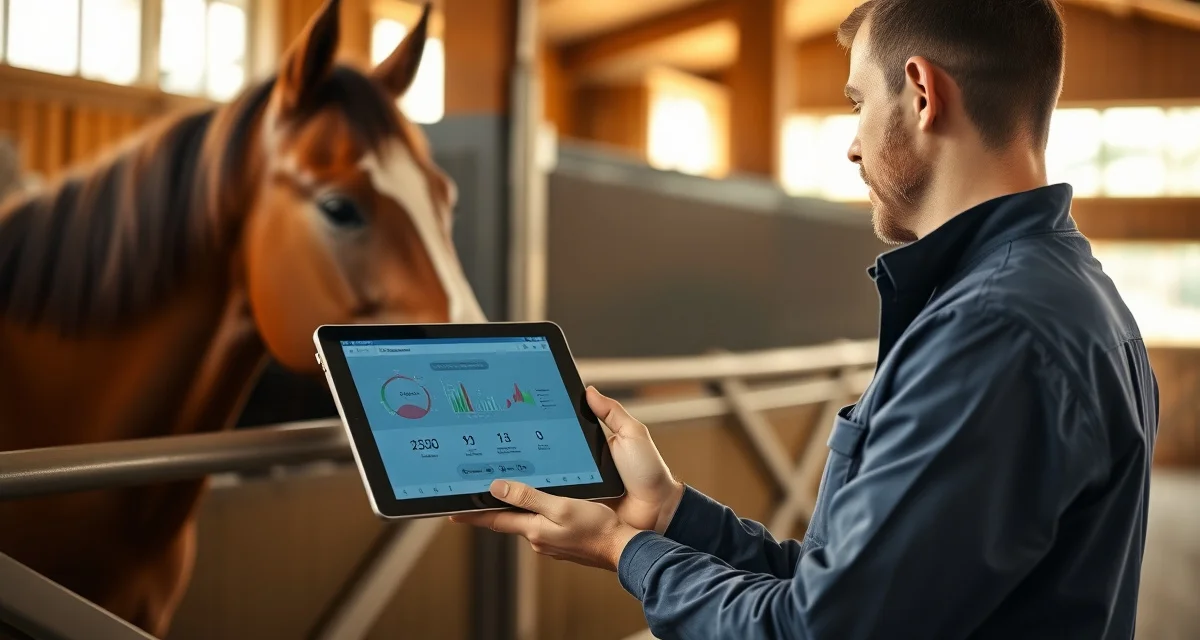
Horse Colic Prevention Monitoring in Barn Management Software
Colic is the leading cause of death in horses, and most cases that turn fatal share one thing in common: the warning signs were there, but nobody caught them in time. Horse colic prevention monitoring is no longer just about gut instinct and barn checks every few hours. Digital tools now give barn managers a structured way to track the behavioral and physiological changes that precede a colic episode.
TL;DR
- Effective barn management requires systems that match actual daily workflows, not adapted generic tools
- Per-horse record keeping with digital access reduces the response time to owner questions from hours to seconds
- Automated owner communication and health alerts reduce inbound calls while increasing owner satisfaction and retention
- Billing errors cost barns thousands of dollars annually; point-of-service charge logging is the most effective prevention
- Staff accountability systems with named task assignments and completion logs prevent care gaps without micromanagement
- Purpose-built equine software connects health records, billing, and owner communication in one place
Medication errors are the third leading cause of preventable horse death according to the AAEP, which means the way you manage daily medications, supplements, and treatment schedules directly affects colic risk. Miss a dose of a motility drug or fail to log a change in water intake, and you may not connect the dots until a horse is already in distress.
Why Manual Tracking Fails at Scale
A barn managing 20 or more horses on spreadsheets is running on borrowed time. Spreadsheets have no alert system. They cannot notify a night groom that a horse skipped water, flag a missed medication dose, or timestamp who administered what and when.
The result is a documentation gap that only becomes visible after something goes wrong. By then, the vet is asking questions you cannot answer.
Step 1: Set Up Individual Horse Health Baselines
Record Normal Manure Output Per Horse
Before you can detect a problem, you need to know what normal looks like for each animal. Log daily manure production per horse, including frequency, consistency, and any notable changes. A horse producing fewer piles than usual, or passing dry, hard manure, is showing an early colic indicator.
Most barn management platforms let you attach daily manure notes to each horse's profile. Make this a non-negotiable part of every stall check.
Document Resting Water Consumption
The average horse drinks 5 to 10 gallons of water per day. A horse drinking significantly less is at elevated risk for impaction colic. Set a baseline for each horse during a normal week, then flag any day where intake drops more than 20 percent.
Automatic waterers make this harder to track visually, so consider timed manual checks or smart water monitoring hardware that feeds data directly into your barn software.
Step 2: Configure Behavioral Change Alerts
Define Alert Triggers in Your Software
Behavioral changes like pawing, flank-watching, lying down repeatedly, or refusing feed are classic pre-colic signs. Your barn management software should allow you to log these observations against a timestamp and trigger a notification to the barn manager or on-call vet.
Set alert thresholds that make sense for your operation. A single instance of pawing may not warrant a call, but two or more behavioral flags within a four-hour window should generate an automatic notification.
Assign Staff Accountability to Each Log Entry
Every observation should be tied to a staff ID. This is not about blame. It is about being able to reconstruct a timeline if a horse deteriorates. Knowing that the 6 a.m. check was logged by one groom and the 10 a.m. check by another, and that neither flagged abnormal behavior, tells the vet something important.
Platforms like BarnBeacon log every entry with a staff identifier automatically, removing the guesswork about who saw what and when.
Step 3: Build a Medication Tracking Protocol
Link Medications to Colic Risk Factors
Certain medications directly affect gut motility and hydration. Omeprazole, psyllium, electrolytes, and motility drugs all play a role in colic prevention for at-risk horses. Missing doses is not just a compliance issue. It is a health risk.
Your medication tracking system should connect each drug to the horse's health record, flag missed administrations in real time, and require a staff sign-off for every dose given. BarnBeacon sends automatic alerts before missed doses and logs every administration with a staff ID, which closes the gap that basic medication modules leave open.
Set Escalating Reminders for High-Risk Horses
Not every horse carries the same colic risk. Post-surgical horses, seniors, and horses with a history of impaction need tighter monitoring. Configure your software to send escalating reminders: a first alert 15 minutes before a scheduled dose, a second alert at the scheduled time, and a manager notification if the dose is not logged within 30 minutes.
This tiered approach keeps high-risk horses from slipping through the cracks during busy morning feeds or staff shift changes.
Step 4: Integrate Vet Scheduling with Health Monitoring
Connect Observations to Vet Appointments
A horse that has shown three behavioral flags in the past two weeks should have that history visible when the vet arrives. Your vet scheduling system should pull from the same health record as your daily monitoring logs, so the attending vet walks in with context, not just a complaint.
This integration also helps with equine colic early detection barn protocols. When your vet can see a pattern of reduced water intake over 10 days alongside a recent medication change, they can make a faster, more accurate assessment.
Document Every Vet Visit Against the Monitoring Log
After each vet visit, log the outcome against the health flags that triggered it. Over time, this builds a dataset that shows which early warning signs in your barn actually predict colic events. That information is worth more than any single diagnosis.
Step 5: Run a Weekly Monitoring Review
Review Flagged Events as a Team
Set aside 15 minutes each week to review any flagged behavioral changes, missed medications, or water intake anomalies from the past seven days. This is not a blame session. It is a pattern-recognition exercise.
If three horses in the same paddock showed reduced water intake on the same two days, that points to a water source issue, not individual health problems. You will not see that pattern in a spreadsheet with no alert history.
Adjust Baselines Seasonally
Colic risk increases in winter when horses drink less and in spring when pasture changes affect gut flora. Revisit each horse's baseline metrics at the start of each season and adjust your alert thresholds accordingly. A 20 percent drop in water intake in July may be less alarming than the same drop in January.
Common Mistakes to Avoid
Logging observations without timestamps. A note that says "horse seemed off" is useless without a time. Every entry needs a timestamp and a staff ID.
Using the same alert threshold for every horse. A 1,200-pound Warmblood and a 900-pound Quarter Horse do not have the same baseline. Customize thresholds per animal.
Treating medication tracking as separate from health monitoring. These two systems need to talk to each other. A missed electrolyte dose and reduced water intake on the same day is a red flag. Siloed systems will not surface that connection.
Skipping the weekly review. Alerts are only useful if someone acts on the patterns they reveal. The weekly review is where prevention actually happens.
How does BarnBeacon compare to spreadsheets for barn management?
Spreadsheets require manual updates, lack real-time notifications, and create version control problems when multiple staff members are working from different files. BarnBeacon centralizes records, pushes alerts automatically based on logged events, and connects care records to billing and owner communication in one system. Most facilities report saving several hours per week after switching from spreadsheets.
What is the setup process like for BarnBeacon?
Most facilities complete the initial setup in under a week. Horse profiles, service templates, and billing configurations can be imported from existing records or entered directly. BarnBeacon's US-based support team is available to assist with setup, and most managers are running their first billing cycle through the platform within days of starting.
Can BarnBeacon support a barn with multiple staff members?
Yes. BarnBeacon supports multiple user accounts with role-based access, so barn managers, barn staff, and owners each see the information relevant to their role. Task assignments, completion logs, and communication history are all attached to the barn's account rather than to individual staff phones or email addresses.
FAQ
What is Horse Colic Prevention Monitoring in Barn Management Software?
Horse colic prevention monitoring in barn management software refers to digital tools that help barn managers track behavioral and physiological changes that precede a colic episode. Rather than relying on periodic manual checks, these systems provide structured frameworks for logging feed intake, water consumption, manure output, and activity levels. Because colic is the leading cause of death in horses, software that flags deviations from a horse's baseline gives staff a critical head start in identifying and responding to early warning signs.
How much does Horse Colic Prevention Monitoring in Barn Management Software cost?
Pricing varies widely depending on the platform and barn size. Basic digital record-keeping tools may start around $30–$80 per month, while purpose-built equine management platforms with health monitoring, automated alerts, and owner communication features typically range from $100 to $300 per month. Enterprise or multi-barn solutions cost more. Given that a single colic surgery can exceed $10,000 and billing errors alone cost barns thousands annually, most operators find the monthly software cost modest relative to the financial risk it mitigates.
How does Horse Colic Prevention Monitoring in Barn Management Software work?
Barn management software tracks each horse's daily health metrics — including gut sounds, manure production, appetite, water intake, and activity — against their individual baseline. When a staff member logs an observation that deviates from normal, the system flags it and can automatically alert the barn manager or owner. Medication schedules are tracked to prevent missed doses, which the AAEP identifies as a leading cause of preventable horse death. All data is stored per horse, creating a searchable health history accessible in seconds.
What are the benefits of Horse Colic Prevention Monitoring in Barn Management Software?
The core benefits include earlier colic detection through consistent daily monitoring, reduced medication errors via automated scheduling and dose logging, faster owner communication through built-in alert tools, and cleaner health records that support veterinary decision-making. Staff accountability improves because task assignments and completions are logged by name. Billing accuracy also improves when charges are recorded at point of service. Together, these features reduce both the clinical and financial risks associated with colic and other preventable health events.
Who needs Horse Colic Prevention Monitoring in Barn Management Software?
Any barn housing multiple horses benefits from colic prevention monitoring software — including boarding facilities, training barns, breeding operations, and rehabilitation centers. Barn managers overseeing large numbers of horses are especially dependent on structured systems because manual tracking across dozens of animals is error-prone. Veterinarians working with barn clients also benefit from access to longitudinal health data. If your barn currently relies on paper logs, whiteboards, or memory to track horse health, you are a primary candidate for this type of software.
How long does Horse Colic Prevention Monitoring in Barn Management Software take?
Setup typically takes one to two weeks for data entry, staff training, and workflow integration. Daily use requires only minutes per horse — most observations are logged during routine morning and evening checks already built into barn schedules. The learning curve is short for purpose-built equine platforms designed around actual barn workflows. Unlike adapted generic tools, these systems mirror the way barn staff already think about horse care, which accelerates adoption. Ongoing monitoring becomes a background habit rather than an added workload.
What should I look for when choosing Horse Colic Prevention Monitoring in Barn Management Software?
Look for software built specifically for equine operations rather than adapted from generic livestock or veterinary tools. Key features include per-horse health logging with baseline tracking, automated colic risk alerts, medication and supplement scheduling, integrated owner communication, and point-of-service billing. Mobile accessibility matters because barn staff rarely work from a desk. Also evaluate whether the platform connects health records, billing, and owner communication in one place — fragmented tools create the same gaps as paper systems and undercut the prevention benefit.
Is Horse Colic Prevention Monitoring in Barn Management Software worth it?
Yes, for any barn managing multiple horses. Colic is the leading cause of equine death, and the software's value lies in catching warning signs before they become emergencies. Beyond colic prevention, the same system reduces medication errors, billing losses, owner communication overhead, and staff accountability gaps — all of which represent real financial exposure. The monthly cost is a fraction of one emergency vet call. Barns that switch from paper or generic tools consistently report faster response times, fewer errors, and higher owner retention.
Sources
- American Association of Equine Practitioners (AAEP)
- United States Equestrian Federation (USEF)
- American Competitive Trail Horse Association (ACTHA)
- American Horse Council
- Kentucky Equine Research
Get Started with BarnBeacon
Running a equine facility well requires the right tools behind the right protocols. BarnBeacon gives managers the health record tracking, billing automation, and owner communication infrastructure to operate efficiently without adding administrative staff. Start a free trial and see how the platform fits the way your barn already works.