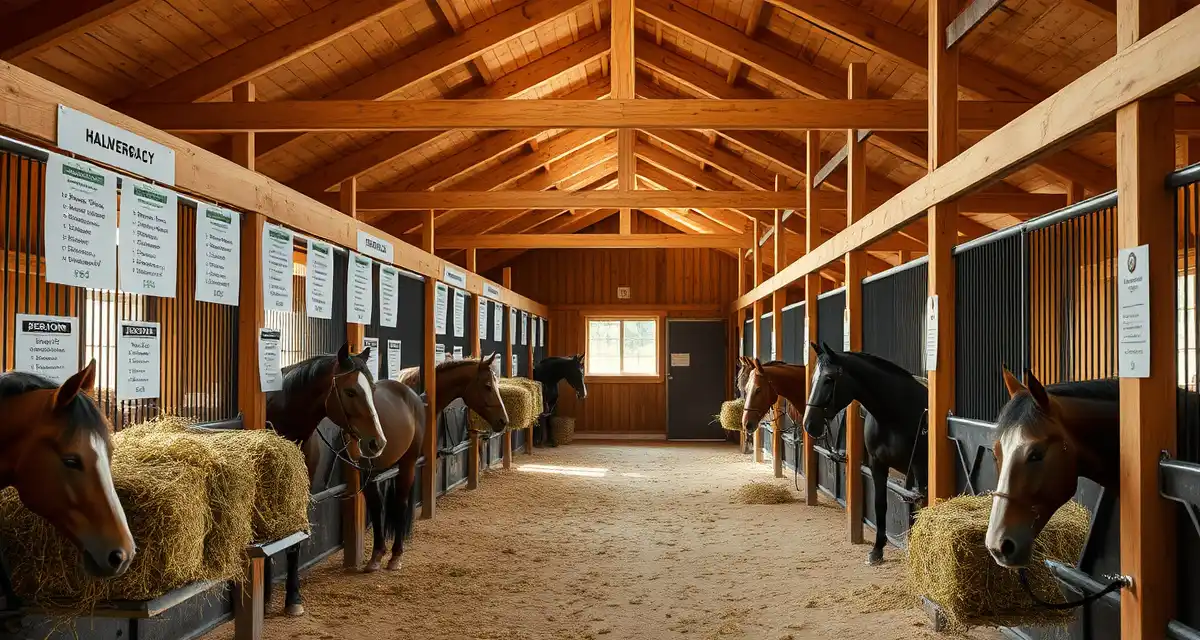
Hay Feeding Schedule Template for Horse Barns
Feed errors are the second leading cause of preventable colic, according to the AAEP's 2023 data. Most of those errors don't happen because barn staff don't care. They happen because the information wasn't clear, wasn't current, or wasn't visible at the right moment.
TL;DR
- Feed errors are the second leading cause of preventable colic, according to AAEP data
- All rations should be measured by weight, not volume; different feeds have very different densities per scoop
- Any concentrate change must follow a 7-to-14-day transition to reduce colic and GI upset risk
- A feed card is only useful if it is current; updates must push to all staff in real time, not just to a posted board
- Fixed feeding windows within 30 minutes of schedule reduce ulcer risk from irregular gastric acid cycles
- Verbal feed change handoffs are the most common source of dosing errors in multi-staff barns
A well-built hay management template fixes all three problems. This guide walks you through exactly how to build one, what to include, and how to keep it accurate when horses, owners, and diets change constantly.
Why Most Barn Feeding Systems Break Down
Paper feeding charts get wet, torn, or ignored. spreadsheets work until someone forgets to update them, and they can't push an alert when a vet changes a horse's hay ration at 7 PM the night before morning feed. Group texts create confusion about which version of the instructions is current.
The result is a staff member feeding three flakes of orchard grass to a horse that was switched to timothy two days ago. That kind of mistake is entirely preventable with the right system.
What to Include in Your Hay Feeding Schedule Template
Before building the template, get clear on the data fields every horse record needs. Missing even one category creates gaps that lead to errors.
Per-horse fields your template must include:
- Horse name and stall number
- Hay type (timothy, orchard grass, alfalfa, mixed, etc.)
- Flake count per feeding
- Number of feedings per day and specific times
- Special diet notes (soaked hay, limited access, slow feeder required)
- Veterinarian or owner instructions with the date they were added
- Allergies or intolerances
- Current health status flags (post-colic, ulcer protocol, metabolic)
Every field matters. "Special diet notes" without a date attached is nearly useless when you're trying to figure out whether an instruction is current.
How to Build a Hay Feeding Schedule Template: Step by Step
Step 1: List Every Horse and Their Stall Location
Start with a master roster sorted by stall number, not alphabetically. Staff feed barn by barn, aisle by aisle. A schedule sorted by stall number matches how they actually move through the barn.
Include the horse's common barn name alongside any registered name. "Midnight" is faster to scan than "Blackwood's Midnight Sonata."
Step 2: Define Feeding Times for Your Operation
Most barns run two or three hay feedings per day. Write out the exact times, not ranges. "Morning feed" means 6 AM to one person and 8 AM to another. "06:00," "12:00," and "18:00" means the same thing to everyone.
If certain horses get a different feeding schedule than the barn standard, flag them clearly. A horse on a restricted diet who gets fed at different intervals than his neighbors needs to stand out visually on the schedule.
Step 3: Build Individual Feed Cards for Each Horse
A feed card is a single-horse view of everything a feeder needs to know. It should be readable in under 10 seconds. Include hay type, flake count per feeding, any soaking or prep instructions, and a notes field for current vet or owner instructions.
This is where most static templates fall short. A printed feed card or a locked spreadsheet cell can't reflect a change made at 9 PM for the 6 AM feeding. Digital feeding schedules that update in real-time solve this directly, because every staff member sees the same current version the moment it changes.
Step 4: Add a Change Log Column
Every time a diet changes, someone needs to record what changed, who authorized it, and when. A change log column next to each horse's record creates accountability and makes it easy to trace back a problem if one occurs.
This is especially important for barns managing horses for multiple owners. When an owner calls to ask why their horse's hay was changed, you need a clear answer.
Step 5: Create a Visual Flag System for Special Diets
Color coding works well in both printed and digital formats. Use a consistent system across your barn:
- Red: Medical restriction, vet-ordered protocol
- Yellow: Owner preference or temporary change
- Green: Standard barn diet, no modifications
Keep the system simple enough that a new staff member or a substitute feeder can understand it without a training session.
Step 6: Distribute and Confirm Access
A schedule that lives only on the barn manager's laptop doesn't help the 5:30 AM feeder. Print copies and post them at each feed room. If you're using a digital system, confirm that every staff member can access it on their phone before the next feeding.
For barns tracking medications alongside feed, integrating your feeding schedule with your medication tracking records reduces the chance of a horse receiving feed that conflicts with a current prescription.
Step 7: Set a Review Cycle
Schedules drift. A horse that was on a restricted diet three months ago may have been cleared by the vet, but if no one updated the template, staff are still soaking hay unnecessarily. Build a weekly review into your barn management routine.
Assign one person to own the schedule. Shared ownership usually means no ownership.
Common Mistakes to Avoid
Using one master list instead of individual feed cards. A single spreadsheet with 40 rows is hard to scan quickly at 6 AM. Individual cards, whether printed or digital, reduce the chance of a feeder reading the wrong row.
Not dating instructions. "Soak hay per vet orders" is meaningless without knowing when that order was given. Always include the date alongside any special instruction.
Relying on verbal updates. A verbal change communicated at evening feed may not reach the morning crew. Every change needs to be written down and visible before the next feeding.
Ignoring substitute feeders. Your regular staff know the quirks of your barn. A substitute doesn't. Your template should be clear enough that someone feeding your barn for the first time can do it correctly without asking questions.
Treating the schedule as permanent. Horses' dietary needs change with season, workload, age, and health. A schedule that was accurate in January may be wrong by March.
How do I handle feed changes requested by a horse owner?
All feed change requests from owners should be filtered through the barn manager and confirmed with the attending veterinarian if the change is clinically significant. Document the request, the authorization, and the effective date before anything changes in the feed room. A verbal request from an owner to a staff member that bypasses the manager is the most common path to a feeding error.
What is the safest way to introduce a new feed at my barn?
Transition over a minimum of seven days, starting with 25% new feed mixed with 75% old feed and shifting the ratio every two to three days. Document the transition schedule on each affected horse's feed card so every feeder knows the correct ratio on each day of the transition. Mark each day complete to track progress and catch any horse that goes off feed during the change.
How should I store feed to prevent spoilage and contamination?
Store bulk feed in sealed, rodent-proof containers in a dry, ventilated space. Keep feed off the ground and away from direct sunlight. Most commercial horse feeds have a 90-day shelf life once opened; label bags or containers with the opening date and rotate stock so older product is used first. Contaminated or spoiled feed should be disposed of immediately, never fed.
FAQ
What is Hay Feeding Schedule Template for Horse Barns?
A hay feeding schedule template for horse barns is a standardized system for documenting each horse's daily ration, feeding times, and any dietary restrictions or changes. It replaces informal verbal handoffs and paper charts with a structured, updatable record that all barn staff can reference. A good template includes horse name, weight-based hay amounts, concentrate details, feeding windows, and a change log to prevent dosing errors across shifts.
How much does Hay Feeding Schedule Template for Horse Barns cost?
Basic hay feeding schedule templates are available for free as downloadable spreadsheets or printable PDFs. Digital barn management platforms that include live feeding schedules, real-time updates, and alert systems typically range from $20 to $100 per month depending on herd size and features. For most multi-horse operations, a paid digital system pays for itself quickly by reducing feed waste and preventing costly colic events.
How does Hay Feeding Schedule Template for Horse Barns work?
A hay feeding schedule template works by assigning each horse a dedicated feed card that specifies ration amounts by weight, feeding times, and any special instructions. Staff consult the card at each feeding, record what was given, and flag any deviations. When a vet or owner changes a diet, the template is updated centrally so all staff see the current information immediately, eliminating the risk of outdated instructions being followed.
What are the benefits of Hay Feeding Schedule Template for Horse Barns?
The core benefits are fewer feed errors, reduced colic risk, and cleaner staff communication. Measuring hay by weight rather than volume prevents under- or overfeeding. Fixed feeding windows reduce gastric acid irregularity linked to ulcers. A written change log eliminates the verbal handoff errors that cause most multi-staff dosing mistakes. Over time, a consistent schedule also makes it easier to spot early signs of health issues tied to appetite changes.
Who needs Hay Feeding Schedule Template for Horse Barns?
Any barn with more than one horse or more than one caregiver benefits from a structured feeding schedule template. It is especially critical for operations with multiple staff shifts, horses on specialized diets, young or senior horses with strict nutritional needs, or facilities managing owner-boarded horses where dietary instructions must be communicated reliably. Even small private barns benefit when owners travel and leave feeding responsibilities to others.
How long does Hay Feeding Schedule Template for Horse Barns take?
Setting up an initial hay feeding schedule template takes one to three hours for a typical barn, depending on herd size and how detailed the existing records are. Once built, daily use adds only a few minutes per shift. The ongoing time investment is minimal, but the consistency it creates compounds quickly. The most time-sensitive step is establishing a reliable process for pushing diet change updates to all staff in real time.
What should I look for when choosing Hay Feeding Schedule Template for Horse Barns?
Look for a template that requires weight-based measurements rather than scoops or flakes. It should include a field for each horse's feeding windows, concentrate details, medical or dietary flags, and a dated change log. If you manage multiple staff, prioritize a system that delivers updates instantly rather than relying on a posted board. Integration with inventory tracking is a strong bonus for managing hay stock relative to actual daily consumption.
Is Hay Feeding Schedule Template for Horse Barns worth it?
Yes, for any barn where feed errors carry real consequences. Feed mistakes are the second leading cause of preventable colic according to AAEP data, and most stem from unclear or outdated information rather than negligence. A reliable feeding schedule template is a low-cost intervention with high protective value. Whether you use a free printable or a full digital platform, the structure it creates reduces risk, saves staff time, and supports better horse health outcomes.
Sources
- American Association of Equine Practitioners (AAEP)
- United States Equestrian Federation (USEF)
- American Horse Council
- Kentucky Equine Research
- UC Davis Center for Equine Health
Get Started with BarnBeacon
A feeding system is only as reliable as its documentation. BarnBeacon gives equine facilities individual digital feed cards that update in real time, push alerts when rations change, and log every feeding with a timestamp and staff name. If feed errors are part of your current risk picture, start a free trial and build your first grain feeding schedule in a system built to close the information gap.