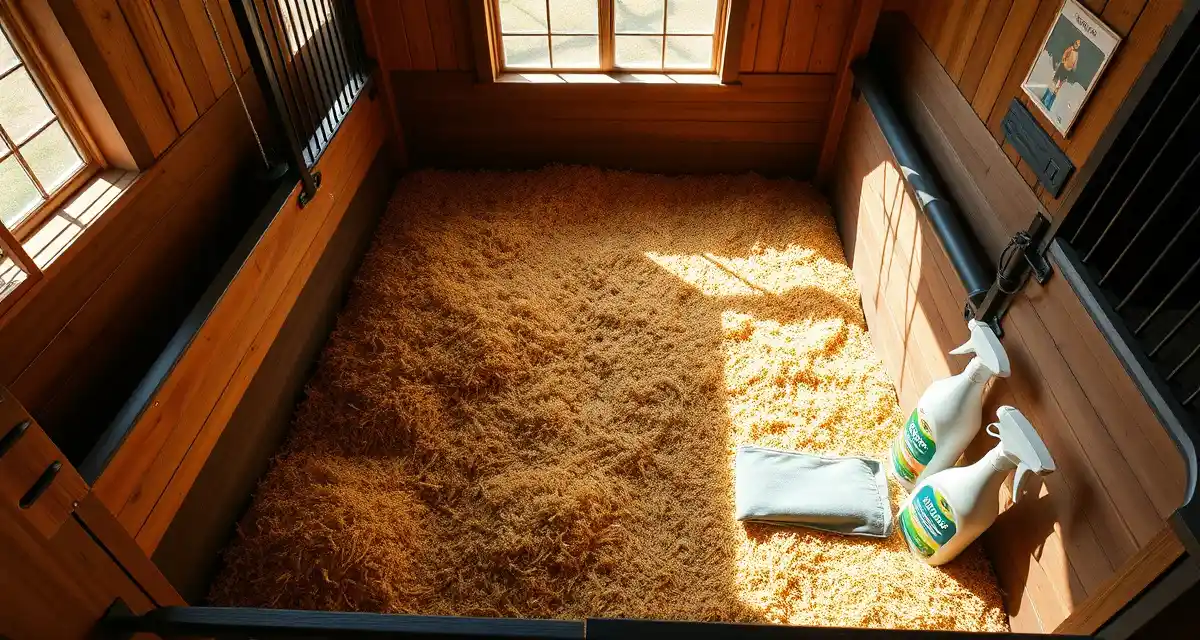
Stall Cleaning Schedule Template for Horse Barns
Stall cleaning is one of the highest-frequency tasks in any horse facility, and it's also one of the most commonly mismanaged. Without a clear stall cleaning schedule template, you end up with missed stalls, inconsistent bedding standards, and no way to know who did what when something goes wrong.
TL;DR
- Facilities with digital cleaning accountability see 44% fewer stall quality complaints than those using paper lists or verbal assignments.
- Every cleaning record should include a timestamp and the specific staff member's name, not just a checkmark.
- Assign staff to stall zones with primary and backup responsibility so gaps in coverage are pre-planned, not improvised.
- Define 'clean' in writing so every staff member works to the same standard, not their own interpretation.
- Weekly physical inspections by a barn manager catch quality drift that daily completion logs alone will not show.
Facilities with digital cleaning accountability see 44% fewer stall quality complaints compared to those running on paper lists or verbal assignments. The difference isn't effort, it's structure.
The Problem With Most Barn Cleaning Systems
Most barns run stall cleaning on memory and habit. The experienced groom knows which stalls need extra bedding. The new hire guesses. Nobody writes it down.
When a horse develops thrush or a skin condition, you can't trace it back to a cleaning gap because there's no record. You can't identify whether the problem is one staff member, one stall, or a systemic issue across the whole barn.
A proper schedule solves this, but only if it captures the right information.
What to Include in Your Stall Cleaning Schedule Template
Before building your rotation, decide what data each completed task needs to capture. A bare-minimum schedule should include the stall number or name, the assigned staff member, the date and time of cleaning, bedding type and quantity used, and a pass/fail condition check.
Better systems also include space for notes (wet spots, manure volume, hoof condition observations) and photo documentation for flagged stalls.
How to Build a Stall Cleaning Schedule: Step by Step
Step 1: Map Your Stall Inventory
List every stall in the barn with a consistent identifier, number, name, or location code. Include stalls that are currently empty. Empty stalls still need regular inspection and light maintenance to prevent pest issues and bedding degradation.
Note the bedding type for each stall. Shavings, straw, and pelleted bedding have different muck-out procedures and different replenishment rates. A stall running rubber mats with minimal bedding needs a different checklist than a deep-bedded foaling stall.
Step 2: Set Cleaning Frequency Per Stall
Not every stall needs the same schedule. A horse in full-time turnout may only need one full muck-out per day. A stall-kept horse or a horse on stall rest may need two. A foaling stall or isolation stall may need three checks daily.
Assign a cleaning tier to each stall: daily single, daily double, or spot-check only. This becomes the backbone of your rotation.
Step 3: Assign Staff to Stall Zones
Divide the barn into zones and assign primary responsibility to specific staff members. Zone-based assignments reduce confusion and create clear ownership, when stall 12 isn't done, you know exactly who to follow up with.
Build in a secondary assignment for days off, sick days, and schedule gaps. A rotation that only works when everyone shows up isn't a real system.
Step 4: Define the Cleaning Standard
Write down what "clean" means for your facility. This sounds obvious, but standards vary widely between staff members without explicit documentation.
Your standard should specify: all manure removed, wet spots stripped to the base, bedding leveled and banked appropriately, water buckets checked, and any observations logged. Some facilities also require a photo of the finished stall for flagged horses or post-illness recovery stalls.
Step 5: Build the Daily Rotation Sheet
Create a daily sheet with columns for stall ID, assigned staff, scheduled time, completion time, condition rating (clean / needs attention / flagged), and notes. This can be a printed sheet, a shared spreadsheet, or a purpose-built barn management tool.
The completion time column is critical. It tells you whether cleaning is happening on schedule and gives you a timestamp if a horse health issue needs to be traced back to barn conditions.
You can use our stall cleaning schedule as a starting point and adapt it to your barn's specific layout and staffing.
Step 6: Add a Weekly Inspection Layer
Daily cleaning logs catch task completion. Weekly inspections catch quality drift. Once a week, a barn manager or senior staff member should walk every stall and rate the overall condition against your defined standard.
Document the inspection results alongside the daily logs. Over time, this data shows you which stalls are consistently problematic, which staff members need additional training, and whether your bedding quantities are appropriate.
Pair this with your barn daily checklist to make sure stall inspections are integrated into the broader facility walkthrough rather than treated as a separate task.
Step 7: Implement Accountability Tracking
A schedule without accountability is just a wish list. Every completed stall cleaning should be tied to a specific person and a specific time.
This is where digital tools outperform paper. BarnBeacon timestamps every stall cleaning with the responsible staff member and supports photo attachments for flagged stalls, so you have a complete, searchable record without any extra paperwork. Some tools on the market lack stall-by-stall completion tracking or photo documentation, which means you still can't answer the question "who cleaned this stall and what did it look like?" when you need to.
Common Mistakes to Avoid
Using one generic checklist for all stalls. Stalls with different horses, different bedding types, and different use patterns need different standards. A one-size checklist leads to over-bedding some stalls and under-cleaning others.
Skipping the timestamp. Knowing a stall was cleaned today is less useful than knowing it was cleaned at 7:15 AM by a specific person. Timestamps let you identify scheduling gaps and correlate cleaning times with horse health observations.
No escalation path for flagged stalls. If a staff member marks a stall as "needs attention," what happens next? Without a defined escalation process, flags get noted and forgotten. Build in a rule: any flagged stall gets a manager review within the same day.
Treating the schedule as static. Stall cleaning needs change with the seasons, with horse population changes, and with individual horse health status. Review your rotation monthly and update assignments when circumstances change.
Relying on verbal confirmation. "Did you get stall 8?" "Yeah, I got it." This is not a record. It's not traceable, it's not searchable, and it won't help you when a vet asks about barn conditions three weeks from now.
What should a stall cleaning schedule include?
A complete stall cleaning schedule should include the stall identifier, assigned staff member, scheduled and actual completion times, bedding type and replenishment notes, a condition rating, and space for observations. For facilities managing horse health closely, photo documentation of flagged stalls adds another layer of accountability. The goal is a record you can reference weeks later if a health issue arises.
How do I track which staff member cleaned each stall?
The most reliable method is a digital log where staff check off or sign off each stall individually at the time of cleaning. Paper sign-off sheets work but are easy to fill in retroactively. Digital tools that timestamp completions and tie them to a logged-in user create a more accurate record. BarnBeacon handles this automatically, attaching each stall completion to the staff member's account with a time and date stamp.
How do I verify stalls are cleaned to standard?
Daily logs tell you whether cleaning happened. Weekly physical inspections tell you whether it happened correctly. A barn manager or senior staff member should walk every stall once a week and rate condition against your written standard. For higher-risk situations, post-illness recovery, foaling stalls, isolation stalls, photo documentation after each cleaning provides verification without requiring a manager to be physically present for every task.
How do I adjust stall cleaning frequency for a horse on stall rest?
A horse on stall rest produces significantly more waste per day than a horse in regular turnout, and the increased time in the stall raises the stakes for cleanliness as a health factor. At minimum, a stall-rest horse should receive two full muck-outs per day with a spot-check between them. Document the stall-rest status on the cleaning schedule itself so staff who work that stall know immediately that the standard single daily clean is not sufficient.
What should I do when a stall cleaning is flagged but no manager is available?
Your escalation protocol should define a deputy -- a senior staff member who can make the immediate call when a manager is unavailable. The flagged stall record should capture what was observed, who made the secondary call, and what action was taken. If no action was taken because the issue did not meet the threshold for a vet call, that determination and the observer's name should still be logged.
Related Articles
- Horse Turnout Schedule Template for Boarding Barns
- Barn Aisle Cleaning Schedule for Horse Facilities
FAQ
What is Stall Cleaning Schedule Template for Horse Barns?
A stall cleaning schedule template for horse barns is a structured document that assigns specific stalls to staff members, defines cleaning standards, sets frequency expectations, and tracks task completion with timestamps. It replaces informal memory-based systems with a repeatable process that ensures every stall is cleaned consistently, accountability is clear, and barn managers can identify gaps or quality issues before they become problems.
How much does Stall Cleaning Schedule Template for Horse Barns cost?
Basic stall cleaning schedule templates are available for free as downloadable spreadsheets or printable forms. Digital barn management tools with built-in scheduling and accountability features typically range from $30 to $150 per month depending on facility size and features. The cost of not using one—in labor inefficiency, horse health issues, and staff disputes—generally far exceeds any software subscription.
How does Stall Cleaning Schedule Template for Horse Barns work?
A stall cleaning schedule template works by dividing your barn into zones, assigning primary and backup staff to each zone, and specifying what tasks must be completed during each cleaning session. Staff log completions with a timestamp and their name. Managers review logs daily and conduct weekly physical inspections to catch quality drift. Digital versions automate reminders and generate completion reports automatically.
What are the benefits of Stall Cleaning Schedule Template for Horse Barns?
The main benefits include consistent stall cleanliness, reduced respiratory and hoof health issues in horses, clearer staff accountability, and faster onboarding for new hires. Facilities using structured digital cleaning accountability report 44% fewer stall quality complaints. Templates also eliminate the ambiguity of 'I thought someone else did it,' creating a documented record useful for staff reviews and client transparency.
Who needs Stall Cleaning Schedule Template for Horse Barns?
Any horse facility with more than one person responsible for stall cleaning needs a schedule template. This includes boarding barns, training facilities, breeding operations, and large private barns with hired staff. Even two-person operations benefit from written standards that define what 'clean' means. Without that shared definition, quality depends entirely on individual interpretation rather than a consistent facility standard.
How long does Stall Cleaning Schedule Template for Horse Barns take?
Daily stall cleaning typically takes 15 to 30 minutes per stall depending on bedding type, horse manure volume, and whether a full strip or spot clean is required. Setting up the schedule template itself takes one to two hours initially. Once in place, logging completions adds under a minute per stall per session. The upfront time investment is recovered quickly through reduced supervision and fewer quality disputes.
What should I look for when choosing Stall Cleaning Schedule Template for Horse Barns?
Look for a template that includes staff name fields—not just checkboxes—timestamp logging, zone-based assignments with backup coverage, and a written definition of cleaning standards. Digital tools should offer mobile access so staff can log completions from the barn aisle. Avoid any system that relies on verbal confirmation or single-column checklists with no accountability trail. Scalability matters if your facility plans to grow.
Is Stall Cleaning Schedule Template for Horse Barns worth it?
Yes, for any barn with more than one staff member handling stall care. The structure a schedule template provides pays off in cleaner stalls, healthier horses, and fewer management headaches. The 44% reduction in quality complaints seen at facilities using digital accountability systems reflects a real operational difference. Whether you use a free spreadsheet or a paid platform, having a documented system beats relying on habit and memory every time.
Sources
- American Association of Equine Practitioners (AAEP)
- University of Minnesota Extension Equine Program
- Penn State Extension Horse Management Program
- The Horse magazine
Get Started with BarnBeacon
A stall cleaning schedule is only as good as the accountability system behind it. BarnBeacon timestamps every stall completion to the logged-in staff member, supports photo documentation for flagged stalls, and gives managers real-time visibility into what has been done and what has not without a physical walkthrough. If your barn is still running stall accountability on paper checklists and verbal confirmation, BarnBeacon offers a more reliable foundation.