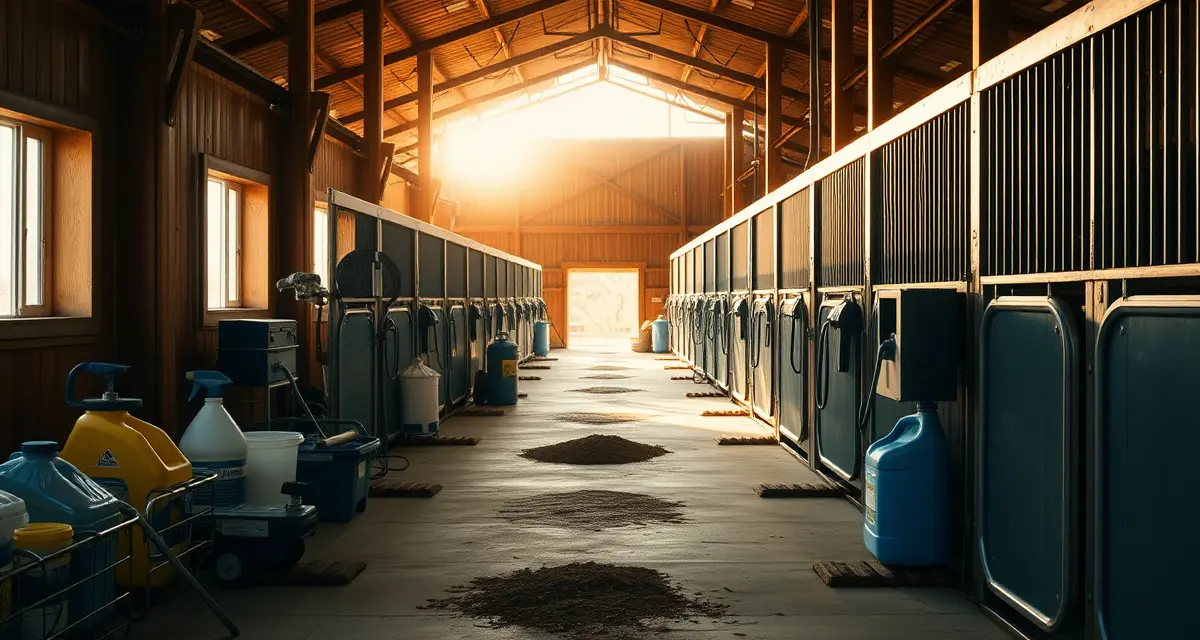
Barn Aisle Cleaning Schedule for Horse Facilities
Most barn managers know when a stall needs cleaning. Fewer have a documented system that proves it happened, who did it, and whether it met standard. Facilities with digital cleaning accountability see 44% fewer stall quality complaints, and the difference usually comes down to structure, not effort.
TL;DR
- Facilities using digital cleaning accountability report 44% fewer stall quality complaints compared to those relying on informal systems.
- A complete barn aisle schedule groups tasks into daily (sweeping, drain checks), weekly (wet mopping, cobweb clearing), and monthly (deep drain cleaning, mat inspection) categories.
- Every aisle task needs a named role or shift assigned, not a general "barn staff" label, to prevent coverage gaps.
- Fire prevention checks, including clearing cobwebs near electrical fixtures and confirming extinguisher access, should be built into the weekly mop cycle and logged.
- Digital logging with timestamps and photo attachments creates a verifiable record that paper checklists cannot reliably provide.
- Reviewing the schedule monthly alongside completion rates helps catch recurring missed tasks before they become safety or boarder complaints.
- Drain maintenance is one of the most commonly skipped aisle tasks and one of the highest-risk: blocked drains create standing water, slip hazards, and ammonia buildup.
A well-built barn aisle cleaning schedule covers more than sweeping. It assigns tasks, sets frequency, and creates a record that protects your staff and your horses.
Why Aisle Cleaning Gets Skipped
Aisles are shared space. When a task belongs to everyone, it often gets done by no one. Without clear ownership and a logged schedule, aisle cleaning becomes reactive, you clean when it looks bad, not before it becomes a problem.
Dust, ammonia buildup, wet spots near drains, and cobwebs near light fixtures are not just aesthetic issues. They are fire hazards, respiratory irritants, and slip risks for horses and handlers alike.
What a Complete Barn Aisle Cleaning Schedule Covers
Before building your schedule, map every task that needs to happen in the aisle. Group them by frequency.
Daily tasks:
- Sweep the full aisle length after morning and evening feeding
- Remove manure, shavings, and debris tracked out of stalls
- Check floor drains for blockages
- Wipe down cross-tie rings and hardware
Weekly tasks:
- Wet mop the aisle with a disinfectant-safe cleaner
- Clear cobwebs from ceiling beams, light fixtures, and corners
- Inspect drain covers and clean out any buildup
- Check fire extinguisher accessibility (not obstructed)
Monthly tasks:
- Deep clean drain channels with a brush and flush
- Inspect electrical outlets and light fixtures for dust accumulation
- Check aisle mats for lifting edges or cracks
- Document any maintenance issues flagged during cleaning
This structure pairs directly with your barn daily checklist to keep aisle tasks from falling through the cracks.
How to Build the Schedule Step by Step
Step 1: List Every Aisle Zone
Break your barn into named zones, main aisle, wash rack corridor, tack room hallway, feed room approach. Assign each zone its own task list. A 12-stall barn might have two or three distinct zones with different traffic levels and cleaning needs.
Step 2: Set Frequency for Each Task
Not every task needs daily attention. Use the frequency groupings above as a starting point, then adjust based on your barn's traffic. A busy lesson barn with 30 horses moving through daily needs more frequent wet mopping than a private facility with five horses.
Write the frequency next to each task. Vague instructions like "clean regularly" create gaps. "Sweep after AM and PM feed" does not.
Step 3: Assign Ownership by Shift
Each task needs a named role or shift, not just a general "barn staff" label. Morning crew handles the AM sweep and drain check. Evening crew handles the PM sweep and hardware wipe-down. Weekly wet mopping goes to whoever opens on Saturday.
When tasks are assigned to a shift rather than a person, coverage gaps during days off become visible before they become problems. This same principle applies when managing barn staff schedules across multiple roles and days.
Step 4: Create a Logging System
A paper checklist on a clipboard works until it doesn't. Pages go missing, handwriting is illegible, and there is no way to verify a task was completed versus just checked off.
Digital logging solves this. BarnBeacon timestamps every cleaning task with the responsible staff member and supports photo attachments, so you have a verifiable record of what was done, when, and by whom. That level of accountability is what separates a schedule that exists on paper from one that actually runs the barn.
Some tools on the market handle general scheduling but lack stall-by-stall completion tracking or photo documentation. When a quality dispute arises, with a boarder, an insurance provider, or during a health investigation, a timestamped photo record is the difference between a clear answer and a guess.
Step 5: Set a Review Cadence
A schedule that never gets reviewed becomes outdated fast. Set a monthly check-in to look at completion rates, flag recurring missed tasks, and adjust assignments if staffing has changed.
If you are running a stall cleaning schedule alongside your aisle schedule, review them together. Patterns in missed tasks often point to staffing gaps or unclear handoffs between shifts.
Fire Prevention Checks in the Aisle Cleaning Routine
Barn fires spread fast. The National Fire Protection Association reports that hay, bedding, and cobwebs are among the most common ignition accelerants in agricultural structures.
Build fire prevention checks directly into your weekly aisle cleaning:
- Confirm fire extinguishers are mounted, visible, and unobstructed
- Clear cobwebs from light fixtures and electrical boxes
- Check that no hay or shavings have accumulated near heat sources
- Verify aisle exits are clear and doors open freely
These checks take under five minutes when done as part of the weekly mop cycle. Logging them creates a documented safety record. Pairing these checks with a broader equine facility safety inspection routine helps ensure nothing gets missed between deep cleaning cycles.
Common Mistakes to Avoid
Assigning tasks to "everyone." Shared ownership without named accountability means the task gets skipped when the barn is busy. Assign every task to a specific role or shift.
Skipping drain maintenance. Floor drains in wash racks and aisle intersections clog with hair, shavings, and debris. A blocked drain creates standing water, which creates slip hazards and ammonia buildup. Check and clear drains daily, deep clean monthly.
Treating cobweb clearing as optional. Cobwebs near electrical fixtures are a fire risk. They also trap dust and allergens that affect horses with respiratory sensitivities. Schedule cobweb clearing weekly, not "when you notice them."
Using a schedule without a log. A schedule tells staff what to do. A log proves it happened. Without a completion record, you cannot identify who missed a task, when a problem started, or whether your cleaning standard is actually being met.
Letting the schedule go stale. Staff changes, seasonal traffic shifts, and new horses all affect cleaning demands. Review and update the schedule quarterly at minimum.
FAQ
What should a stall cleaning schedule include?
A stall cleaning schedule should list every task by frequency, daily, weekly, and monthly, with a named role or shift assigned to each. It should cover stall stripping, bedding replacement, water bucket cleaning, and aisle tasks like sweeping and drain checks. Including a logging method, whether paper or digital, is essential for accountability.
How do I track which staff member cleaned each stall?
The most reliable method is a digital task management system that requires staff to log in and mark tasks complete under their own account. BarnBeacon assigns timestamps and staff names to every completed task, creating an auditable record. Paper sign-off sheets work in small operations but are harder to verify and easier to falsify.
How do I verify stalls are cleaned to standard?
Photo documentation is the most objective verification method. When staff attach a photo to a completed task, managers can review it without being physically present for every cleaning. Spot checks and a defined cleaning standard, specific bedding depth, no wet spots, clean water, give staff a clear target and give managers a consistent benchmark to evaluate against.
How often should barn aisle mats be inspected or replaced?
Aisle mats should be visually inspected monthly for lifting edges, cracks, or compression that reduces cushioning. Lifted edges are a tripping hazard for horses and handlers, and cracked mats can harbor bacteria in the gaps. Most rubber aisle mats last several years with proper cleaning, but high-traffic zones near wash racks or cross-tie areas may need replacement sooner.
What disinfectants are safe to use when wet mopping horse barn aisles?
Quaternary ammonium compounds and accelerated hydrogen peroxide products are commonly used in equine facilities because they are effective against common pathogens and dry without leaving residues that irritate horses' airways or hooves. Always check that the product is labeled safe for use around animals and allow the aisle to dry fully before horses walk through. Your veterinarian or a barn biosecurity resource can recommend products appropriate for your specific situation.
Can a barn aisle cleaning schedule help with boarder retention?
Yes. Boarders who can see a documented cleaning record, and who notice consistent aisle conditions, report higher confidence in the facility's overall care standards. A visible, structured schedule also gives barn managers a concrete response when boarders raise cleanliness concerns, replacing subjective back-and-forth with an objective log of what was done and when.
What is Barn Aisle Cleaning Schedule for Horse Facilities?
A barn aisle cleaning schedule for horse facilities is a structured system that organizes aisle maintenance tasks into daily, weekly, and monthly categories. Daily tasks include sweeping and drain checks, weekly tasks cover wet mopping and cobweb clearing near electrical fixtures, and monthly tasks address deep drain cleaning and mat inspection. Each task is assigned to a named role or shift to prevent coverage gaps, and digital logging with timestamps creates a verifiable record that supports safety, boarder satisfaction, and accountability across the facility.
How much does Barn Aisle Cleaning Schedule for Horse Facilities cost?
BarnBeacon offers barn aisle cleaning schedule templates and digital tracking tools at no cost to get started. Free resources include downloadable schedule templates and checklists suitable for facilities of any size. Premium plans with advanced features such as timestamped digital logging, photo attachments, and completion rate reporting are available at paid tiers. Pricing varies based on facility size and feature needs. Visit BarnBeacon.com to compare plan options and find the right fit for your barn management operation.
Sources
- National Fire Protection Association (NFPA), agricultural structure fire prevention guidelines and ignition accelerant data
- American Association of Equine Practitioners (AAEP), equine facility biosecurity and stable management recommendations
- University of Minnesota Extension, horse stable ventilation, ammonia management, and facility maintenance resources
- Rutgers Cooperative Extension, equine facility design and manure management best practices
- Occupational Safety and Health Administration (OSHA), agricultural workplace slip, trip, and fall hazard standards
Get Started with BarnBeacon
BarnBeacon gives boarding barn managers a structured way to assign, log, and verify every aisle cleaning task, with timestamps, staff accountability, and photo documentation built in. If inconsistent aisle cleaning or missed fire prevention checks are a recurring problem at your facility, a free trial will show you exactly where the gaps are and how a digital log closes them.