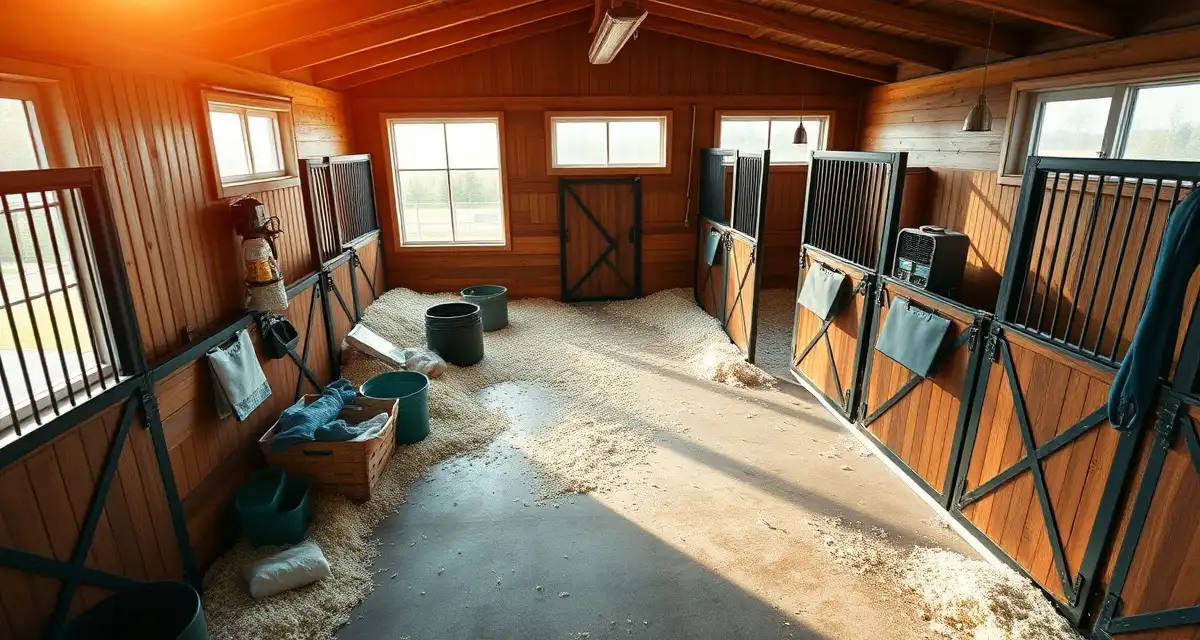
Training Barn Stall Cleaning Schedule for Performance Horses
Stall hygiene in a training barn is not a background task. It directly affects hoof health, respiratory function, and recovery quality for horses in active work. Facilities with digital cleaning accountability see 44% fewer stall quality complaints, and in a competition environment, that margin matters.
TL;DR
- Training barn stall cleaning schedules must account for horses in active conditioning whose turnout and stall time varies daily.
- Stall cleaning timestamps tied to individual staff members create the accountability record needed when horse health issues arise.
- Competition horses on stall rest or reduced turnout need more frequent cleaning checks than horses in regular turnout programs.
- A written bedding standard for each stall type (foaling, isolation, active training) prevents inconsistent cleaning across shifts.
- Digital completion logs that capture condition ratings, not just task completion, give barn managers useful management data.
A training barn stall cleaning schedule needs to account for more than basic mucking. It has to align with training cycles, vet and farrier visits, competition prep windows, and the reality that multiple staff members are working across 20, 40, or 80 stalls per day.
The Problem With Informal Stall Cleaning Systems
Most barns run on verbal handoffs and whiteboard checklists. When a stall gets missed or done poorly, there is no record of who cleaned it, when, or what condition it was in. That gap creates friction with clients, complicates vet visits, and puts horses at risk.
Performance horse stall management requires a higher standard. Horses in hard training produce more waste, sweat more, and spend more time confined than leisure horses. The stall environment has a direct line to their health outcomes.
How to Build a Training Barn Stall Cleaning Schedule
Step 1: Define Your Cleaning Tiers
Not every stall needs the same frequency. Start by categorizing your horses by workload and health status.
- Tier 1 (Active competition horses): Full clean twice daily, deep bed refresh every 48 hours
- Tier 2 (Training horses in regular work): Full clean once daily, spot check mid-day
- Tier 3 (Horses on stall rest or light work): Full clean once daily, no mid-day requirement unless medically indicated
Document these tiers in writing and assign them to each stall in your management system. When a horse moves between tiers due to injury or competition schedule, the cleaning frequency should update automatically or be flagged for review.
Step 2: Set Time Windows, Not Just Task Lists
A schedule that says "clean stalls in the morning" is not a schedule. Assign specific time windows to each cleaning block.
A workable structure for a 30-stall training barn looks like this:
- 6:00–8:00 AM: Full clean, all stalls, before first feed
- 12:00–1:00 PM: Spot checks on Tier 1 stalls, full clean on any stalls flagged from morning
- 4:30–5:30 PM: Pre-evening feed clean on Tier 1 and any horses with vet or farrier visits scheduled the following morning
Time windows create accountability. If a stall is not cleaned by 8:00 AM, that is a visible gap, not a vague complaint.
Step 3: Assign Stalls to Specific Staff Members
Rotating staff randomly across stalls every day creates inconsistency and removes individual accountability. Assign each staff member a consistent stall section.
When a staff member owns a section, they notice changes. They know which horse kicks the water bucket, which one wastes hay on the left side, and which bedding depth that horse prefers. That knowledge improves both cleaning quality and early health detection.
Use your barn management software to log each completed clean against the staff member's name. BarnBeacon timestamps every stall cleaning with the responsible staff member, so if a stall is flagged during a vet visit or client inspection, you can pull the exact record within seconds.
Step 4: Build Vet and Farrier Visit Protocols Into the Schedule
Vet and farrier visits require a clean, dry stall with good footing and clear access. A horse standing in wet bedding during a lameness exam or shoeing appointment creates both a safety issue and a professional one.
Flag upcoming vet and farrier appointments in your schedule at least 24 hours in advance. Any stall with a scheduled visit should receive a full clean and fresh bedding the evening before, plus a spot check the morning of the appointment.
This is where a barn daily checklist becomes essential. A structured daily checklist that includes appointment flags prevents the scramble of realizing at 7:45 AM that the farrier arrives at 8:00 and the stall has not been touched.
Step 5: Add Photo Documentation for Quality Verification
A completed checkbox tells you a task was marked done. It does not tell you whether the stall was actually cleaned to standard.
Photo documentation closes that gap. After a full clean, staff attach a photo of the finished stall to the cleaning record. This takes under 30 seconds and creates a visual audit trail that no whiteboard system can replicate.
Some barn management tools lack stall-by-stall completion tracking or photo documentation entirely, which means quality verification still depends on a manager physically walking every aisle. BarnBeacon supports photo attachments on individual stall records, so managers can review remotely and flag issues before they become complaints.
Step 6: Schedule Weekly Deep Cleans and Bed Refreshes
Daily cleaning maintains baseline hygiene. Weekly deep cleans address ammonia buildup, wall contamination, and bedding compaction that daily mucking does not reach.
Set a fixed day for each stall's deep clean. For a 30-stall barn with three staff members, rotating five stalls per person per day means every stall gets a full deep clean weekly without overloading any single shift.
Track deep clean completion separately from daily cleans. A stall that has been daily-cleaned for 14 days without a deep clean is not the same as one that received a full refresh last Tuesday.
Step 7: Prepare for Competition Departure and Return
The 48 hours before a horse leaves for competition and the 24 hours after return are high-stakes cleaning windows.
Pre-departure: Full deep clean, fresh bedding, check for any foreign objects or hazards. Document the stall condition with a photo so you have a baseline if the horse returns with a health issue.
Post-return: Strip and fully re-bed within two hours of the horse returning. Horses coming back from competition are often stressed, dehydrated, and more susceptible to respiratory issues from poor air quality.
Build these windows into your stall cleaning schedule as recurring events tied to your competition calendar, not as ad hoc tasks that get remembered at the last minute.
Common Mistakes in Training Barn Stall Cleaning
Skipping mid-day checks on high-output horses. A horse in hard training can soil a stall significantly between a 6 AM clean and a 5 PM check. Mid-day spot checks on Tier 1 horses are not optional.
Using the same bedding depth for every horse. Bedding depth affects joint comfort and moisture absorption. Horses with hoof or joint issues often need deeper beds. Standardizing depth across all stalls ignores individual needs.
No record of who cleaned what. When a client asks why their horse had a wet stall at 3 PM, "someone cleaned it this morning" is not an answer. Timestamped, staff-attributed records are the only way to respond with confidence.
Treating deep cleans as optional. Ammonia levels in stalls that are only surface-cleaned rise faster than most barn managers expect. Chronic low-level ammonia exposure is a documented contributor to equine respiratory disease.
What should a stall cleaning schedule include?
A complete stall cleaning schedule should include daily cleaning time windows, mid-day spot check assignments for high-output horses, weekly deep clean rotation, and protocols for vet and farrier visit preparation. It should also specify bedding depth standards, waste disposal procedures, and how completed tasks are logged and verified.
How do I track which staff member cleaned each stall?
The most reliable method is barn management software that requires staff to log each completed clean against their account, with a timestamp. BarnBeacon records the staff member name and exact time for every stall cleaning, creating an audit trail that managers can review without being physically present in the barn.
How do I verify stalls are cleaned to standard?
Verification requires more than a completed checkbox. Photo documentation attached to each cleaning record gives managers a visual confirmation of stall condition after cleaning. Combined with timestamped staff attribution, this creates a quality record that supports client communication, vet visit preparation, and staff performance reviews.
How do I manage stall cleaning accountability when trainers have different standards for their horses?
Establish a facility-wide minimum cleaning standard that applies to all stalls regardless of the individual trainer's preferences. Trainer-specific requests above that minimum -- deeper bedding, more frequent spot checks, specific product use -- should be documented in the horse's care profile. Staff can follow individual protocols while the minimum standard protects horse welfare across the whole barn.
How do competition horses' stall cleaning needs differ during show season?
When competition horses travel, their assigned stalls at the home barn can be repurposed for short-term boarders, clinic horses, or quarantine without losing the cleaning accountability structure. Returning show horses should have their stall condition logged before reoccupancy to establish a clean baseline after any period of alternative use. Stall condition logging before and after travel is a simple practice that prevents the 'it was like that when we got back' disputes.
FAQ
What is Training Barn Stall Cleaning Schedule for Performance Horses?
A training barn stall cleaning schedule is a structured system that defines when, how, and by whom stalls are cleaned for horses in active conditioning. Unlike basic barn routines, it accounts for variable turnout times, training cycles, vet and farrier visits, and competition prep windows. For performance horses, stall hygiene directly impacts hoof health, respiratory function, and recovery quality, making a consistent, documented schedule a core part of the facility's horse care standard rather than an afterthought.
How much does Training Barn Stall Cleaning Schedule for Performance Horses cost?
Implementing a training barn stall cleaning schedule costs little beyond staff time if done manually, but digital systems with logging and accountability features typically run $50–$200 per month depending on barn size and software tier. The real cost calculation should include bedding waste from inconsistent stripping, vet bills linked to poor stall hygiene, and staff time lost to rework. Facilities that track cleaning digitally report measurable reductions in bedding overuse and stall quality complaints, which offsets subscription costs quickly.
How does Training Barn Stall Cleaning Schedule for Performance Horses work?
A training barn stall cleaning schedule works by assigning specific tasks, timing windows, and staff responsibilities to each stall based on the horse's current program. Staff complete checks at defined intervals, log condition ratings, and flag stalls needing extra attention. In digital systems, timestamps and completion records are tied to individual staff members, creating an accountability trail. Managers review the log to catch gaps before they become health issues, adjust frequency during competition prep or stall rest periods, and maintain consistent bedding standards across shifts.
What are the benefits of Training Barn Stall Cleaning Schedule for Performance Horses?
The primary benefits are better hoof health, lower respiratory risk, and faster recovery for horses in hard training. Structured schedules reduce ammonia buildup, prevent wet bedding from going unnoticed between shifts, and ensure isolation and foaling stalls receive appropriate frequency. Staff accountability built into the system means fewer missed cleanings during busy periods. Barn managers gain actionable data from condition logs rather than just task checkboxes, allowing them to spot patterns, adjust bedding budgets, and document stall quality if a health issue requires a vet review.
Who needs Training Barn Stall Cleaning Schedule for Performance Horses?
Any facility housing horses in active conditioning programs needs a formal stall cleaning schedule. This includes training barns, competition yards, rehabilitation facilities, and breeding operations with performance horses. The need increases with barn size—once you have multiple staff working across 20 or more stalls per shift, informal systems break down and consistency suffers. Facilities preparing horses for shows, sales, or racing also benefit because stall quality directly affects how horses present and recover during high-stress performance windows.
How long does Training Barn Stall Cleaning Schedule for Performance Horses take?
Daily stall cleaning for a performance horse typically takes 15–30 minutes per stall depending on bedding type, stall size, and how long the horse has been stalled. A full strip and reset takes 45–60 minutes. For a barn of 20 stalls, a well-organized morning clean with two staff runs two to three hours. Scheduling time is minimal once a system is in place, but setup—defining standards for each stall type and training staff on condition ratings—takes one to two focused sessions to complete properly.
What should I look for when choosing Training Barn Stall Cleaning Schedule for Performance Horses?
Look for a schedule that aligns cleaning frequency with each horse's actual stall time, not a one-size-fits-all interval. Bedding standards should be written per stall type so staff know exactly what a properly cleaned stall looks like. If using a digital tool, prioritize condition logging over simple task completion checkboxes—you need useful data, not just proof of presence. Staff accountability tied to individual logins matters in multi-person barns. Finally, make sure the system can flex during competition prep, stall rest, and seasonal changes without requiring a full rebuild.
Is Training Barn Stall Cleaning Schedule for Performance Horses worth it?
Yes, for any training barn managing more than a handful of performance horses, a formal stall cleaning schedule is worth the investment in setup and, where applicable, software cost. Horses in active work are more sensitive to stall conditions than pastured horses, and the health consequences of inconsistent hygiene are expensive. Beyond horse health, the accountability records protect the facility if a health issue arises and ownership questions stall management. The 44% reduction in stall quality complaints seen at digitally managed facilities reflects real operational value, not just cleaner stalls.
Sources
- United States Equestrian Federation (USEF)
- American Horse Council
- University of Kentucky Equine Initiative
- The Chronicle of the Horse
- Horse & Rider magazine
Get Started with BarnBeacon
Training barn operations run better when task assignment, health monitoring, and owner communication all draw from the same current data. BarnBeacon connects these workflows in a single platform that your team can use from their phones, giving managers real-time visibility without requiring a physical presence at every task. If the operational challenges described in this guide sound familiar, BarnBeacon gives you a practical starting point for building the systems your training facility needs.