Breeding Barn Stall Cleaning: Foaling Stall Protocols
Breeding barn stall cleaning for foaling requires a different standard than routine daily maintenance. A foaling stall is where a newborn foal takes its first breaths, makes first contact with the ground, and begins nursing, all within hours of birth. Contamination at that stage carries serious health consequences.
TL;DR
- Effective breeding barn stall cleaning foaling at equine facilities relies on consistent written protocols accessible to all staff.
- Digital records reduce errors and create the documentation needed during emergencies, audits, and client disputes.
- Owner visibility into their horse's daily care reduces communication friction and improves retention.
- Centralizing billing, health records, and scheduling in one platform outperforms managing separate tools.
- Staff adoption of digital tools improves when interfaces are mobile-friendly and task-based.
- BarnBeacon supports all core barn management functions from a single platform built for equine facilities.
Facilities with digital cleaning accountability see 44% fewer stall quality complaints, and that gap is even more pronounced in foaling operations where the margin for error is near zero. This guide covers exactly what to do, when to do it, and how to verify it was done correctly.
Why Foaling Stall Cleaning Is Not the Same as Daily Stall Cleaning
Standard stall cleaning removes waste and refreshes bedding. Foaling stall preparation goes further: you are creating a near-sterile environment for an immunologically naive animal.
A foal's immune system depends almost entirely on passive immunity from colostrum in the first 12 to 24 hours. Any pathogen load in the stall environment during that window can overwhelm a foal before immunity is established. Neonatal septicemia, joint ill, and umbilical infections are all linked to contaminated foaling environments.
Step 1: Pre-Foaling Deep Clean (2 to 4 Weeks Before Expected Foaling Date)
Strip the Stall Completely
Remove all bedding down to bare floor. Do not spot-clean, pull everything out. Inspect the floor surface for cracks, soft spots, or drainage issues that could harbor bacteria or create pooling.
Sweep and scrape all walls, corners, and the ceiling if accessible. Cobwebs, dust, and dried organic material all carry microbial load.
Wash All Surfaces
Use a pressure washer or stiff brush with hot water and a detergent solution. Pay particular attention to corners, door tracks, feed buckets, and water fixtures. Rinse thoroughly, detergent residue can reduce disinfectant effectiveness.
Allow surfaces to dry completely before applying any disinfectant. Wet surfaces dilute disinfectant and reduce contact time.
Apply a Broad-Spectrum Disinfectant
Use a product labeled effective against bacteria, fungi, and viruses. Quaternary ammonium compounds and accelerated hydrogen peroxide products are commonly used in equine facilities. Follow label dilution rates exactly, stronger is not always better and can leave residue harmful to foals.
Allow the disinfectant to air dry fully before adding bedding. This typically takes 30 to 60 minutes depending on ventilation.
Bed Deep
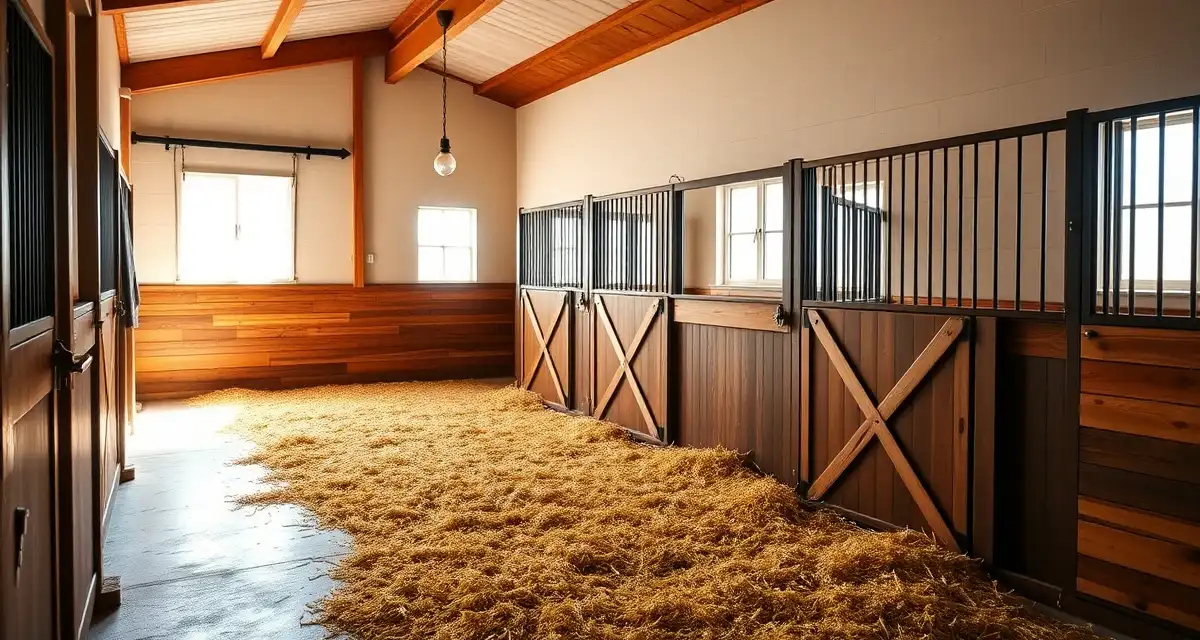
Foaling stalls require a minimum of 12 inches of clean straw bedding. Many breeding operations use 18 inches. Straw is preferred over shavings for foaling because it is warmer, less likely to be inhaled by a newborn, and easier to assess for cleanliness.
Bank the walls to reduce drafts at floor level where the foal will spend most of its time.
Step 2: Pre-Foaling Refresh (24 to 48 Hours Before Foaling)
Top-Dress Bedding
Add a fresh layer of straw on top of the existing bed. Remove any soiled patches identified since the deep clean. The goal is a clean, dry, deep surface with no visible contamination.
Check Water and Feed Fixtures
Scrub the water bucket or automatic waterer. Mares in late gestation drink more, and a dirty water source is a contamination risk. Remove any feed residue from buckets and walls.
Confirm Ventilation
Good airflow reduces airborne pathogen concentration without creating cold drafts. Check that vents are open and functioning. A stall that smells of ammonia is not ready for foaling.
Step 3: Post-Foaling Deep Clean
Timing
Begin the post-foaling clean as soon as the mare and foal are moved to a recovery or turnout space. Do not delay, the stall will contain blood, amniotic fluid, placental material, and meconium, all of which are high-risk contamination sources.
Remove All Bedding
Strip the stall completely. Bag or remove all soiled material immediately. Do not leave it piled outside the stall door where it can be tracked back in.
Scrub and Disinfect Again
Repeat the full wash-and-disinfect process from Step 1. Post-foaling contamination is significantly higher than pre-foaling, so this step is not optional. Blood and organic material can neutralize disinfectants if not fully removed first.
Inspect the Umbilical Stump Environment
Before the foal returns to any stall, confirm the floor and bedding are dry. A wet floor increases the risk of ascending umbilical infection, which is one of the leading causes of neonatal foal illness.
Step 4: Ongoing Cleaning During the Foaling Period
Daily Cleaning Protocol
During the first two weeks post-foaling, clean the stall twice daily. Remove all visible waste, assess bedding depth, and top-dress as needed. The foal is on the floor constantly, bedding quality directly affects its health.
A structured stall cleaning schedule helps ensure twice-daily cleaning is completed consistently across all stalls, not just the foaling stall.
Track Every Clean
This is where most operations fall short. Knowing a stall was cleaned is not the same as knowing it was cleaned correctly, by whom, and at what time. BarnBeacon timestamps every stall cleaning with the responsible staff member and supports photo attachments, so there is a verifiable record for every clean.
That accountability matters when you have multiple staff working different shifts during a busy foaling season. If a foal develops an umbilical infection or joint ill, you need to know exactly what the stall conditions were and who was responsible for each clean.
Common Mistakes in Foaling Stall Cleaning
Skipping the pre-foaling deep clean. Refreshing bedding is not the same as disinfecting. If the stall was used by another horse in the past 30 days, it needs a full strip and disinfect before foaling.
Using shavings instead of straw. Fine shavings can be inhaled by newborns and are harder to assess for moisture. Straw is the standard for foaling stalls for good reason.
Not drying surfaces before adding bedding. Wet disinfectant under fresh bedding creates a humid, warm environment ideal for bacterial growth.
Relying on memory or paper logs. Paper logs get lost, skipped, or filled in after the fact. Digital tracking with timestamps and staff attribution removes the ambiguity. Tools that lack stall-by-stall completion tracking make it impossible to verify which stalls were cleaned and which were missed.
Cleaning the foaling stall the same as other stalls. Foaling stalls need deeper bedding, more frequent cleaning, and stricter disinfection. Treating them the same as a standard boarding stall is a risk not worth taking.
Building Cleaning Accountability Into Your Operation
A barn daily checklist that includes foaling stall protocols by name, not just "clean stalls", creates clarity for every staff member on every shift. When tasks are specific, completion rates go up.
Photo documentation adds another layer. A staff member who photographs the finished stall before leaving is confirming their own work and creating a record that a manager can review remotely. That is not about distrust, it is about maintaining standards across a team during a high-pressure foaling season.
Related Articles
- Retirement Horse Barn Stall Cleaning: Senior Horse Protocols
- Horse Stall Cleaning Checklist: Step-by-Step for Barn Staff
FAQ
What should a stall cleaning schedule include?
A foaling stall cleaning schedule should specify the stall name or number, the task (strip, disinfect, bed, top-dress), the frequency, and the responsible staff member. It should also include a sign-off mechanism, either a physical log or a digital timestamp, so completion is verifiable. During active foaling season, twice-daily cleaning should be the minimum standard.
How do I track which staff member cleaned each stall?
Digital barn management tools that assign tasks to specific staff members and record completion timestamps are the most reliable method. BarnBeacon logs each stall cleaning with the staff member's name and the time it was completed, which removes any ambiguity about who did what and when. Paper sign-off sheets work as a backup but are prone to being skipped or completed inaccurately.
How do I verify stalls are cleaned to standard?
Photo documentation is the most practical verification method at scale. Requiring staff to attach a photo of the finished stall, showing bedding depth, clean walls, and water fixtures, creates a visual record that can be reviewed without a manager being physically present. Spot inspections remain important, but photo logs fill the gaps between inspections and create accountability across all shifts.
What is the most common mistake barn managers make with record-keeping?
The most common record-keeping mistake is logging health events, billing items, and care tasks after the fact from memory rather than at the time they occur. Delayed logging introduces errors, omissions, and disputes that are difficult to resolve because the original record does not exist. Moving to real-time digital logging, from any device, is the single most impactful record-keeping improvement available to most facilities.
How does barn management software save time at a multi-horse facility?
The largest time savings come from eliminating manual tasks that recur at high frequency: sending owner updates, generating monthly invoices, tracking care task completion across shifts, and scheduling recurring appointments. At a facility with 25 or more horses, these tasks can consume several hours per day when done manually. Automating the routine layer returns that time without reducing quality of communication or care.
What is Breeding Barn Stall Cleaning: Foaling Stall Protocols?
Breeding barn stall cleaning for foaling stall protocols refers to the specialized sanitation and preparation procedures required for stalls where mares give birth. Unlike routine daily cleaning, foaling protocols involve deep disinfection, bedding standards, and documented verification steps to protect newborn foals during their most vulnerable hours. Because foals make first contact with the stall environment immediately after birth, contamination risks are significantly higher, requiring stricter hygiene standards, written checklists, and staff accountability systems than standard stall maintenance.
How much does Breeding Barn Stall Cleaning: Foaling Stall Protocols cost?
Foaling stall protocols themselves are standard practice guidelines, not a purchasable product—so there is no direct cost. However, implementing them effectively typically involves staff training, disinfection supplies, and a barn management platform to track compliance. BarnBeacon centralizes cleaning logs, health records, and task accountability in one system, reducing the overhead of managing foaling protocols manually. Facilities using digital accountability tools report fewer stall quality complaints and lower risk of costly foal health incidents, making the investment straightforward to justify.
How does Breeding Barn Stall Cleaning: Foaling Stall Protocols work?
Foaling stall protocols work by establishing a step-by-step cleaning and preparation sequence that staff follow before, during, and after a birth event. This includes removing all old bedding, disinfecting walls and floors with appropriate equine-safe products, allowing drying time, and adding fresh deep bedding. Digital tools like BarnBeacon assign tasks to specific staff members, require sign-off on completion, and create timestamped records. This verification layer ensures nothing is skipped and gives managers and owners real-time visibility into stall readiness.
Sources
- American Horse Council, equine industry economic impact and facility operations research
- American Association of Equine Practitioners (AAEP), equine health care and management guidelines
- University of Kentucky Equine Initiative, equine business management and industry resources
- Rutgers Equine Science Center, equine management research and extension publications
- The Horse magazine, published by Equine Network, equine facility management reporting
Get Started with BarnBeacon
BarnBeacon brings billing, health records, owner communication, and daily operations into one platform built for equine facilities, so the time you spend on administration goes back to the horses. Start a free 30-day trial with full access to every feature, or schedule a demo to see how it handles your specific facility type.