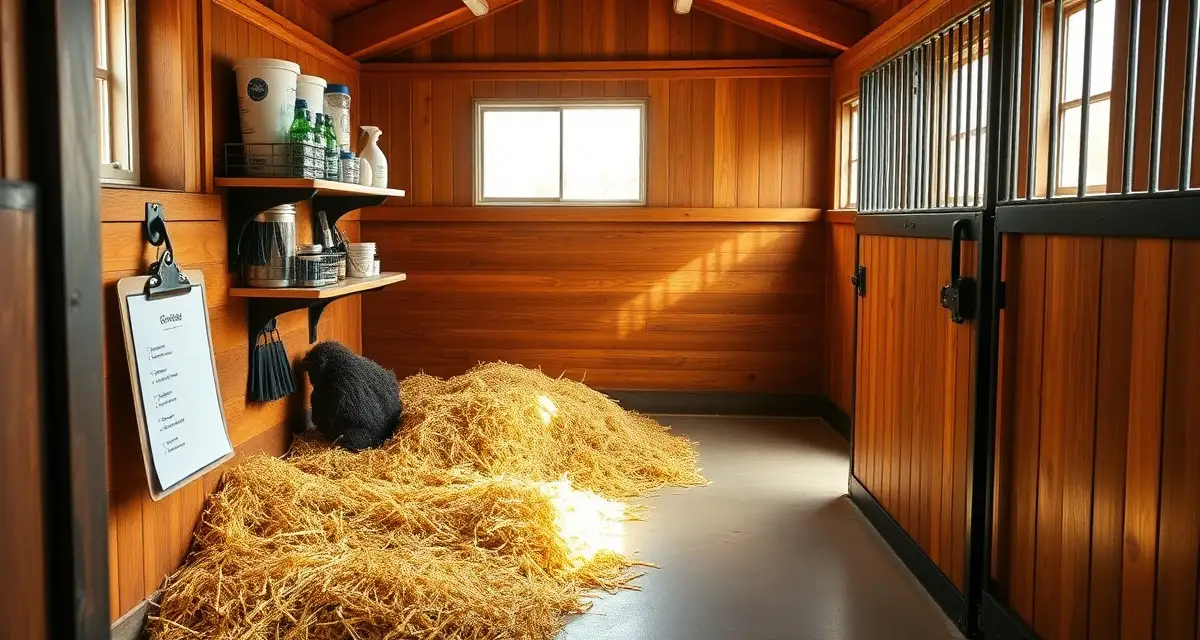
Horse Stall Cleaning Checklist: Step-by-Step for Barn Staff
Stall quality is one of the fastest things to slip when barn staff turnover is high or supervision is inconsistent. Facilities with digital cleaning accountability see 44% fewer stall quality complaints, and the difference usually comes down to whether each step is documented or just assumed. This horse stall cleaning checklist gives your team a repeatable, verifiable procedure for every stall, every day.
TL;DR
- Checklists assigned to specific named staff members have higher completion rates than shared or unassigned task lists
- Digital completion records with timestamps create an audit trail that paper checklists cannot provide
- Per-horse daily checklists tied to each animal's care plan catch individual health changes that generic barn rounds miss
- Morning and evening shift handover checklists prevent the communication gaps where care tasks fall through
- A completed checklist is your documentation that due diligence happened; an incomplete one is a liability exposure
- Review completion rates weekly to identify patterns in missed tasks before they become care or safety incidents
Why Stall Cleaning Goes Wrong
Most stall problems aren't caused by lazy staff. They're caused by unclear standards and no way to verify completion. One groom skips re-banking because they're running late. Another leaves a wet spot under fresh shavings. Without a timestamp or photo record, barn managers only find out when a horse develops thrush or a client complains.
The fix isn't more supervision, it's a documented equine stall mucking procedure that every staff member follows the same way, with accountability built in.
Complete Horse Stall Cleaning Checklist
Work through these steps in order. Skipping sequence is where most quality issues start.
Step 1: Remove the Horse and Secure the Stall
Move the horse to a safe tie area, paddock, or adjacent stall before starting. Never muck around a loose horse.
Check the stall door latch and any kick boards before you begin. Note any damage and report it before it becomes a safety issue.
Step 2: Strip Out Visible Manure and Wet Spots
Start at the back corners and work toward the door. Use a fork to remove all visible manure piles first, then go back for wet spots.
Wet spots are the most commonly missed item in a rushed clean. Lift the bedding around any dark or compressed areas, moisture travels further than it looks. Bag or wheelbarrow all waste immediately rather than piling it in the aisle.
Step 3: Full Bedding Assessment and Removal
Once manure and wet spots are cleared, assess the remaining bedding. Anything that smells of ammonia, is discolored, or is heavily compressed should come out.
For a full strip clean (recommended weekly or per your facility protocol), remove all bedding down to the mat or floor. For a daily clean, remove the bottom third of any questionable bedding and replace it. Partial removal of degraded bedding is one of the most common shortcuts that leads to hoof problems over time.
Step 4: Sweep and Inspect the Stall Floor
Once bedding is cleared, sweep the mats or floor surface. Look for cracked mats, pooling areas, or any foreign objects, wire, nails, broken wood.
Log any floor or mat damage. This step takes 60 seconds but catches hazards before they cause injury. If your barn uses a barn daily checklist, this is where maintenance flags get added.
Step 5: Scrub and Refill the Water Bucket
Empty the water bucket completely. Scrub the inside with a stiff brush, biofilm builds up within 24 hours and horses will drink less when buckets are slimy.
Rinse thoroughly, refill with fresh water, and re-hang at the correct height for the horse. Automatic waterers should be wiped down and checked for flow. A horse that goes off water is often reacting to a dirty bucket before anything else.
Step 6: Clean the Grain Pan or Feed Tub
Remove the grain pan and scrub out any residue from the previous feeding. Old grain left in a pan can mold within hours in warm weather.
Rinse, dry if possible, and return the pan to its hook or corner. Check that it's secured so the horse can't flip it. This step is frequently skipped during busy morning feeds and is worth making a non-negotiable part of your procedure.
Step 7: Re-Bank the Stall
Re-banking means building up bedding along the walls to protect the horse from drafts and reduce the risk of getting cast. Banks should be 12 to 18 inches high along all four walls, depending on your facility standard.
Spread the center bedding evenly to a depth of at least 6 inches. Thin centers are the most common re-banking mistake. Refer to your stall cleaning schedule for facility-specific depth requirements and any horse-specific notes (post-surgical horses, foals, or horses prone to casting may need deeper banks).
Step 8: Final Walkthrough and Sign-Off
Before returning the horse, do a 30-second visual sweep. Check that:
- No manure or wet spots remain
- Water bucket is full and clean
- Grain pan is clean and secured
- Banks are even and at correct height
- Floor is clear of hazards
- Stall door hardware is functional
Sign off on the stall, either on a physical sheet or digitally. This is where accountability lives. BarnBeacon timestamps every stall cleaning with the responsible staff member and supports photo attachments, so barn managers can verify completion remotely without walking every aisle.
Common Mistakes to Avoid
Covering wet spots instead of removing them. Fresh shavings on top of a wet base creates an ammonia trap. The smell will return within hours and the horse's hooves will suffer.
Skipping the bucket scrub on busy days. Biofilm accumulates fast. A quick rinse is not a scrub. Build the scrub into the routine, not the exception.
Inconsistent re-banking. Banks that are too low or uneven are a casting risk. Staff should know the facility standard by measurement, not by feel.
No documentation. Without a record of who cleaned what and when, there's no way to identify patterns, whether that's a stall that consistently needs extra attention or a staff member who consistently rushes. Tools that lack stall-by-stall completion tracking make it impossible to spot these patterns until a problem is already visible.
FAQ
What should a stall cleaning schedule include?
A stall cleaning schedule should specify the frequency of full strip cleans versus daily maintenance cleans, the responsible staff member for each stall, and any horse-specific requirements such as extra bedding depth or allergen-free materials. It should also include water bucket and grain pan cleaning as explicit line items, not assumed tasks. Tying the schedule to a sign-off system ensures nothing gets skipped during busy periods.
How do I track which staff member cleaned each stall?
The most reliable method is a digital log that timestamps each stall completion and records the staff member who signed off. Paper sheets work but are easy to pre-fill or lose. BarnBeacon assigns each stall cleaning to a named staff member with a time stamp, and supports photo attachments so managers can verify quality without being physically present. This creates a clear record if a stall quality issue needs to be traced back.
How do I verify stalls are cleaned to standard?
Verification requires a defined standard and a way to check against it. Written checklists give staff a clear benchmark, but remote verification requires either a supervisor walkthrough or photo documentation. Photo attachments tied to a specific stall and staff member are the most efficient way to verify quality across a large barn without the manager inspecting every stall in person. Spot-checking 20% of stalls daily against the photo record is a practical approach for most facilities.
How does BarnBeacon compare to spreadsheets for barn management?
Spreadsheets require manual updates, lack real-time notifications, and create version control problems when multiple staff members are working from different files. BarnBeacon centralizes records, pushes alerts automatically based on logged events, and connects care records to billing and owner communication in one system. Most facilities report saving several hours per week after switching from spreadsheets.
What is the setup process like for BarnBeacon?
Most facilities complete the initial setup in under a week. Horse profiles, service templates, and billing configurations can be imported from existing records or entered directly. BarnBeacon's US-based support team is available to assist with setup, and most managers are running their first billing cycle through the platform within days of starting.
Can BarnBeacon support a barn with multiple staff members?
Yes. BarnBeacon supports multiple user accounts with role-based access, so barn managers, barn staff, and owners each see the information relevant to their role. Task assignments, completion logs, and communication history are all attached to the barn's account rather than to individual staff phones or email addresses.
What is Horse Stall Cleaning Checklist: Step-by-Step for Barn Staff?
A Horse Stall Cleaning Checklist: Step-by-Step for Barn Staff is a structured, repeatable procedure that guides barn staff through every task required to properly clean and maintain horse stalls. It assigns responsibilities to named staff members, documents completion with timestamps, and creates an audit trail for accountability. Unlike informal routines, a formalized checklist reduces stall quality complaints, catches individual horse health changes early, and protects facilities from liability by proving due diligence was performed on each stall, every day.
How much does Horse Stall Cleaning Checklist: Step-by-Step for Barn Staff cost?
The Horse Stall Cleaning Checklist: Step-by-Step for Barn Staff article on BarnBeacon is free to access. It provides barn managers and staff with a practical, documented procedure they can implement immediately at no cost. For facilities looking to move beyond paper-based tracking, digital barn management tools that support timestamped checklist completion and staff accountability may involve a separate software subscription, but the checklist framework and guidance outlined in the article itself are available without charge.
Sources
- American Association of Equine Practitioners (AAEP)
- American Horse Council
- Kentucky Equine Research
- Penn State Extension Equine Program
Get Started with BarnBeacon
The steps in this guide only deliver results when the tools behind them match your actual daily workflows. BarnBeacon gives equine facilities the task management, health logging, and owner communication infrastructure to run the protocols described here without adding administrative overhead. Start a free trial and build your first digital task system around your horses' real care plans.