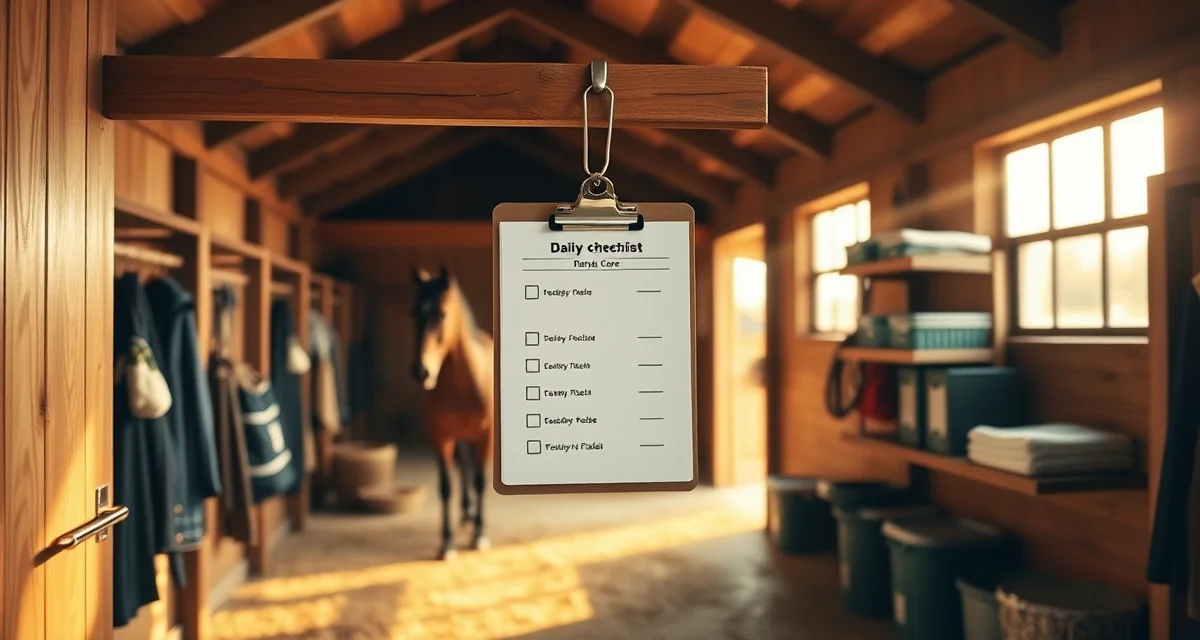
Horse Care Checklist Template: Daily, Weekly and Monthly
A horse care checklist template is a structured list of tasks organized by frequency, covering everything from morning feeding and stall checks to monthly dental and farrier scheduling. Horse barn managers search for these templates among the top 20 most common barn management questions every month, which tells you how universal the need is.
TL;DR
- Checklists assigned to specific named staff members have higher completion rates than shared or unassigned task lists
- Digital completion records with timestamps create an audit trail that paper checklists cannot provide
- Per-horse daily checklists tied to each animal's care plan catch individual health changes that generic barn rounds miss
- Morning and evening shift handover checklists prevent the communication gaps where care tasks fall through
- A completed checklist is your documentation that due diligence happened; an incomplete one is a liability exposure
- Review completion rates weekly to identify patterns in missed tasks before they become care or safety incidents
Whether you run a 4-horse private barn or a 40-stall boarding facility, a reliable checklist is the difference between consistent horse health and costly oversights.
Why Most Horse Care Checklists Fall Short
The free templates floating around online tend to be generic. They list "feed horses" and "clean stalls" without accounting for individual horse needs, medication schedules, or the handoff gaps that happen between morning and evening staff.
A useful horse care checklist template needs to be specific enough to catch real problems, flexible enough to adapt to your barn's routine, and structured so that any staff member can execute it without asking questions.
What a Complete Horse Care Checklist Template Covers
Daily Tasks (Morning and Evening)
Every daily checklist should cover two shifts. Morning tasks typically include:
- Check each horse for injuries, swelling, or behavioral changes
- Provide fresh water and verify automatic waterers are functioning
- Feed hay and grain per individual horse feeding plans
- Muck stalls and refresh bedding
- Turn out horses per their individual schedules
- Check fencing and gate latches in turnout areas
Evening tasks mirror the morning but add:
- Bring horses in from turnout
- Re-check water buckets and top off as needed
- Second feeding per schedule
- Final visual health check before lights out
- Log any observations or concerns in the barn record
Skipping the evening log is where most barns lose continuity. If the morning crew doesn't know what the night crew noticed, small problems become big ones.
Weekly Tasks
Weekly checks catch what daily routines can miss:
- Deep clean water troughs and buckets
- Inspect and clean tack and equipment
- Check blankets, fly sheets, and leg wraps for wear or damage
- Assess hay and grain inventory against upcoming needs
- Walk the full property for fence damage, drainage issues, or hazards
- Review any open health or maintenance notes from the week
A barn daily checklist that rolls into a weekly summary gives you a running record without extra paperwork.
Monthly Tasks
Monthly tasks are where preventive care lives:
- Coordinate farrier visits for trimming or shoeing
- Schedule or confirm upcoming vet appointments
- Review and restock first aid and medication supplies
- Check fire extinguishers, lighting, and emergency equipment
- Assess bedding and forage quality from current suppliers
- Update individual horse records with any weight, condition, or behavioral changes
For boarding barns, monthly is also when you should review each horse's care plan against what owners have requested and what staff are actually doing.
How to Format Your Template
A printable horse care checklist template works best as a two-column layout: task on the left, checkbox and initials field on the right. Add a date line at the top and a notes section at the bottom.
For digital use, the same structure applies but with the added benefit of timestamps, photo attachments, and automatic task assignment. An equine care checklist printable is a good starting point, but it has real limits once your barn grows past a handful of horses.
When Paper Checklists Stop Working
Paper works fine for small, single-staff barns. The problems start when you have shift changes, multiple staff members, or horses with complex care needs.
Tasks get marked complete without being done. Notes get lost. There's no way to verify who checked what and when. For any barn managing more than 10 horses or running a boarding operation, barn management software replaces the paper checklist with a system that tracks completion, flags missed tasks, and keeps every horse's history in one place.
How does BarnBeacon compare to spreadsheets for barn management?
Spreadsheets require manual updates, lack real-time notifications, and create version control problems when multiple staff members are working from different files. BarnBeacon centralizes records, pushes alerts automatically based on logged events, and connects care records to billing and owner communication in one system. Most facilities report saving several hours per week after switching from spreadsheets.
What is the setup process like for BarnBeacon?
Most facilities complete the initial setup in under a week. Horse profiles, service templates, and billing configurations can be imported from existing records or entered directly. BarnBeacon's US-based support team is available to assist with setup, and most managers are running their first billing cycle through the platform within days of starting.
Can BarnBeacon support a barn with multiple staff members?
Yes. BarnBeacon supports multiple user accounts with role-based access, so barn managers, barn staff, and owners each see the information relevant to their role. Task assignments, completion logs, and communication history are all attached to the barn's account rather than to individual staff phones or email addresses.
FAQ
What is Horse Care Checklist Template: Daily, Weekly and Monthly?
A horse care checklist template is a structured task list organized by daily, weekly, and monthly frequency, covering feeding, stall cleaning, health monitoring, farrier visits, dental care, and more. It gives barn managers and horse owners a repeatable system to ensure no care task is missed. Templates can be generic for the whole barn or per-horse, tied to each animal's individual care plan for more precise health tracking.
How much does Horse Care Checklist Template: Daily, Weekly and Monthly cost?
Basic horse care checklist templates are available for free as printable PDFs or spreadsheets. Digital barn management platforms that offer customizable, assignable checklists with timestamp logging typically range from $20 to $100 per month depending on barn size and features. The cost of a missed care task — a health incident, a liability claim, or a boarding complaint — almost always exceeds the cost of a reliable system.
How does Horse Care Checklist Template: Daily, Weekly and Monthly work?
A horse care checklist works by breaking barn responsibilities into timed, assigned tasks. Staff or owners run through each item during morning and evening rounds, marking tasks complete as they go. Digital versions log who completed each task and when, creating an audit trail. Per-horse checklists link tasks to individual care plans, so a change in one horse's appetite or behavior gets flagged rather than absorbed into generic barn rounds.
What are the benefits of Horse Care Checklist Template: Daily, Weekly and Monthly?
The core benefits are consistency, accountability, and documentation. Checklists assigned to named staff members have higher completion rates than shared or unassigned lists. Completed checklists prove due diligence if a health or liability issue arises. They also surface patterns — if a specific task is routinely missed, you can address it before it becomes a care or safety incident. Shift handover checklists specifically close the communication gaps between morning and evening crews.
Who needs Horse Care Checklist Template: Daily, Weekly and Monthly?
Anyone responsible for horses needs a care checklist — private owners with a few horses, boarding barn managers overseeing multiple clients, and competition barns with high-performance care requirements. The larger the barn and the more staff involved, the more critical structured checklists become. Even solo owners benefit from a daily checklist as a reliable habit, especially when stress, fatigue, or schedule disruptions make it easy to skip a step.
How long does Horse Care Checklist Template: Daily, Weekly and Monthly take?
Running through a daily horse care checklist takes 5 to 15 minutes per horse depending on barn setup, task depth, and whether digital or paper logging is used. Creating or customizing a template takes one to two hours upfront. Reviewing weekly completion rates to identify missed task patterns adds another 15 to 30 minutes per week for barn managers. The time invested is minimal compared to the time lost responding to preventable health or operational problems.
What should I look for when choosing Horse Care Checklist Template: Daily, Weekly and Monthly?
Look for a checklist that separates daily, weekly, and monthly tasks clearly, supports per-horse customization rather than only generic barn rounds, and allows task assignment to specific staff members. Digital formats with timestamp logging are significantly more reliable than paper for accountability. Shift handover sections are a strong indicator of a well-designed template. Avoid checklists so long they become burdensome — completion rate drops sharply when lists are unrealistically detailed.
Is Horse Care Checklist Template: Daily, Weekly and Monthly worth it?
Yes, a well-structured horse care checklist is worth it for any barn. The return comes from preventing costly oversights — missed medications, overlooked lameness, skipped farrier or dental scheduling — and from the documentation it creates if a care dispute or liability question arises. Checklists also reduce cognitive load on staff, improve shift handovers, and create a training tool for new hires. Consistent, documented care is the foundation of both horse health and barn reputation.
Sources
- American Association of Equine Practitioners (AAEP)
- United States Equestrian Federation (USEF)
- American Horse Council
- Kentucky Equine Research
- UC Davis Center for Equine Health
Get Started with BarnBeacon
The steps in this guide only deliver results when the tools behind them match your actual daily workflows. BarnBeacon gives equine facilities the task management, health logging, and owner communication infrastructure to run the protocols described here without adding administrative overhead. Start a free trial and build your first digital task system around your horses' real care plans.