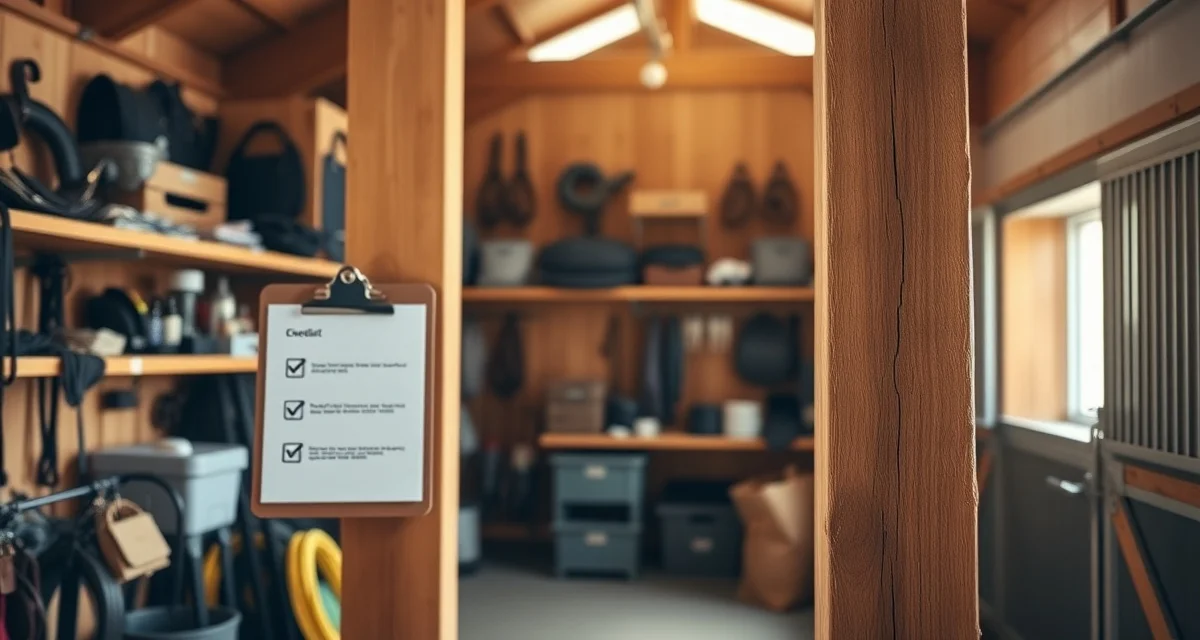
Boarding Barn Daily Checklist: Complete Operations Guide
According to AAEP 2023 data, 73% of barn incidents trace back to missed checklist items. For a boarding facility running 50 to 100 horses across multiple staff shifts, that statistic is not abstract. A skipped water check or a missed medication dose is the kind of error that ends client relationships and, worse, harms horses.
TL;DR
- Daily barn operations run most reliably when tasks are documented in writing rather than held in staff memory.
- Morning and evening rounds should follow a consistent sequence so that nothing is skipped during busy or understaffed periods.
- Feed and medication protocols need to be written per horse and accessible to any staff member covering a shift.
- End-of-day checks on water, gates, and stall hardware prevent overnight emergencies that are costly to address.
- Digital task checklists with completion timestamps create accountability and make it easy to identify missed steps.
- BarnBeacon's daily operations tools let managers set recurring tasks and see real-time completion status from anywhere.
This guide gives you a complete boarding barn daily checklist built for real facility operations, plus a step-by-step process for running it consistently across every shift.
Why Most Barn Checklists Fail Before Lunch
Paper checklists get wet, lost, or ignored. Spreadsheets require someone to open a laptop in a barn aisle, and they miss tasks specific to your facility type. A 30-stall hunter/jumper barn has different daily priorities than a 100-horse retirement facility or a breeding operation.
Generic templates create generic gaps. What you need is a checklist structured around your horse roster, your turnout schedule, and your staff handover points.
How to Build and Run Your Boarding Barn Daily Checklist
Step 1: Divide the Day Into Three Operational Blocks
Structure your boarding barn operations checklist around three shift blocks: morning (6:00 AM to 12:00 PM), midday (12:00 PM to 4:00 PM), and evening (4:00 PM to 8:00 PM). Each block has distinct task categories and a named staff owner.
Assigning ownership to a block, not just a task, creates accountability. If something is missed, you know exactly which shift and which person to follow up with.
Step 2: Build Your Morning Block Checklist
The morning block carries the heaviest task load. Work through it in this order:
Feeding and Water
- Confirm each horse received correct feed per the feeding chart
- Check and refill all water buckets and automatic waterers
- Note any horses that refused feed or drank significantly less than normal
Health and Visual Checks
- Walk every stall and note manure output, bedding condition, and any signs of distress
- Check legs for new swelling, heat, or wounds
- Confirm all horses are weight-bearing on all four limbs
- Flag any concerns in writing before leaving the aisle
Turnout
- Turn out horses per the posted schedule, confirming correct pasture assignments
- Check fence lines and gate latches before releasing horses
- Note any horses kept in due to weather, injury, or owner instruction
Stall Maintenance
- Strip or pick stalls per your facility standard
- Rebed to appropriate depth (typically 6 to 8 inches for shavings)
- Remove and replace water buckets if soiled
Step 3: Build Your Midday Block Checklist
Midday is often understaffed, which makes a tight checklist even more important.
Pasture and Turnout Checks
- Walk all pastures and visually confirm every horse is accounted for and moving normally
- Check water troughs in pastures and refill if below 50% capacity
- Note any horses showing signs of lameness, injury, or unusual behavior
Medication and Treatment Administration
- Administer any scheduled midday medications per the vet-approved treatment board
- Document time, dose, and administering staff member for every treatment
- Restock the first aid kit if any supplies were used
Facility Checks
- Inspect the barn aisle, wash rack, and tack room for safety hazards
- Confirm arena footing is safe if lessons or training are scheduled
Step 4: Build Your Evening Block Checklist
Evening brings horses in, feeds again, and sets the barn up for overnight safety.
Bring-In and Feeding
- Bring horses in per the posted schedule, confirming each horse goes to the correct stall
- Deliver evening feed per individual feeding charts
- Top off all water buckets
Final Health Sweep
- Walk every stall after horses are settled and fed
- Check for any new injuries sustained during turnout
- Confirm all horses are eating and drinking
Barn Lockdown
- Latch all stall doors and confirm no horses are loose
- Turn off non-essential lights and equipment
- Secure the feed room, medication cabinet, and tack room
- Complete the shift handover log before leaving
Step 5: Run a Formal Shift Handover
The handover between shifts is where most boarding barn incidents originate. A verbal "everything's fine" is not a handover. Use a written or digital log that captures any horse flagged during the shift, any tasks that were not completed and why, and any owner communications that need follow-up.
For a detailed process on structuring this handover, see our shift handover guide.
Step 6: Automate Checklist Generation from Your Horse Roster
Manual checklist building is time-consuming and error-prone. When a new horse arrives or a horse's care protocol changes, every checklist that references that horse needs updating.
BarnBeacon generates facility-specific checklists automatically from your horse roster. When you update a horse's feeding instructions, medication schedule, or turnout group, the checklist updates across all shifts without manual edits. This is the core gap that spreadsheets and generic barn apps leave open: they require you to maintain the checklist separately from the horse data.
For a broader look at how software can support daily operations, see our guide to barn management software.
Common Mistakes That Undermine Barn Checklists
Treating the checklist as optional during busy periods. High-traffic days, show prep weeks, and bad weather days are exactly when checklists matter most. These are also the days staff are most likely to skip steps.
Using one checklist for all facility types. A breeding barn, a lesson barn, and a retirement facility have fundamentally different daily priorities. A single template will either be too long for some staff or miss critical tasks for others.
No accountability mechanism. A checklist without a sign-off process is a suggestion. Every completed block should have a staff name, a time, and a supervisor review point built in.
Ignoring the handover log. The shift handover is not a formality. It is the primary mechanism for catching problems before they become emergencies. Skipping it is the single highest-risk gap in most boarding barn operations checklists.
Related Articles
- Retirement Barn Daily Checklist: Complete Operations Guide
- Training [barn daily checklist: Complete Operations Guide](/training-barn-daily-checklist)
FAQ
What should be on a barn daily checklist?
A complete boarding barn daily checklist covers feeding and water checks, individual health observations for every horse, turnout and bring-in procedures, stall maintenance, medication administration with documentation, facility safety checks, and a shift handover log. The specific tasks within each category should reflect your facility type, horse count, and individual care protocols.
How do I track completed barn tasks digitally?
The most effective approach is barn management software that ties task completion directly to your horse roster. This means when a task is marked complete, it logs the staff member, the time, and any notes, all linked to the specific horse or facility area. Spreadsheets can work for small operations but break down quickly when care protocols change frequently or when multiple staff members need real-time visibility.
Can I share checklists with staff on mobile?
Yes, and for facilities with more than a few staff members, mobile access is essential. Staff should be able to view their assigned tasks, mark items complete, and flag issues from their phone without needing to find a shared computer or paper binder. BarnBeacon delivers shift-specific checklists to each staff member's mobile device, with real-time updates when care instructions change.
What should a barn opening checklist include?
An effective barn opening checklist covers: confirming all horses are standing and alert, checking water buckets or automatic waterers, delivering morning feed and medications per each horse's protocol, checking stall hardware and any fencing that borders turnout areas, logging any health observations, and turning out horses according to the rotation schedule. A written checklist completed in the same sequence every morning reduces the chance that any item is skipped regardless of who is doing the opening shift.
How do I make sure the same tasks get done by different staff members?
The most reliable method is a combination of written protocols specific enough to follow without asking questions, and digital task completion logging that creates accountability. When any staff member can open any horse's care record and see exactly what that horse requires, task completion becomes independent of who is on shift. Facilities that rely on verbal handover and staff memory see higher error rates than those with documented per-horse protocols accessible from every staff member's phone.
How often should I review and update barn daily protocols?
At minimum, protocols should be reviewed whenever a new horse arrives, when a horse's care needs change, at the start of each season if seasonal work changes the routine, and after any incident that revealed a gap in the protocol. Many managers do a brief quarterly review of all standing protocols to catch outdated instructions before they cause a problem. Digital protocols are easier to update than printed documents because changes are immediately visible to all staff.
What is Boarding Barn Daily Checklist: Complete Operations Guide?
A Boarding Barn Daily Checklist: Complete Operations Guide is a structured operational framework that documents every task required to safely run a boarding facility across morning and evening shifts. It covers feed and medication protocols, water and equipment checks, gate and stall hardware inspections, and staff accountability measures. For facilities managing 50 to 100 horses, a written checklist reduces the risk of missed steps that can harm horses or damage client relationships.
How much does Boarding Barn Daily Checklist: Complete Operations Guide cost?
BarnBeacon's boarding barn daily checklist tools are available as part of the BarnBeacon platform. Pricing varies by plan and facility size. Visit BarnBeacon's website directly to view current subscription options and any free trial offers available for barn managers looking to digitize their daily operations and task tracking.
Sources
- American Horse Council, equine industry economic impact and facility operations research
- American Association of Equine Practitioners (AAEP), equine health care and management guidelines
- University of Kentucky Equine Initiative, equine business management and industry resources
- Rutgers Equine Science Center, equine management research and extension publications
- The Horse magazine, published by Equine Network, equine facility management reporting
Get Started with BarnBeacon
BarnBeacon's daily operations tools replace scattered checklists and paper logs with a mobile-friendly task system that every staff member can access and complete from anywhere on the property. Start a free 30-day trial to see how it works with your actual morning and evening routines.