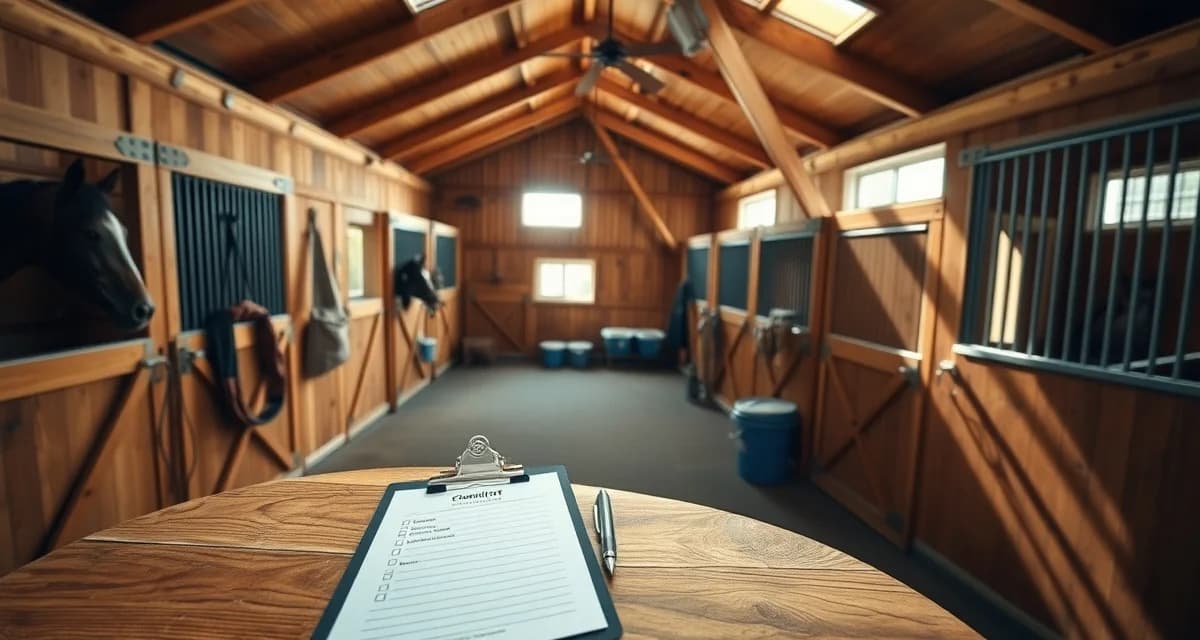
Lesson Barn Daily Checklist: Complete Operations Guide
According to AAEP 2023 data, 73% of barn incidents trace back to missed checklist items. For lesson barns and therapeutic riding centers, where horses interact with beginner riders and vulnerable populations daily, that statistic isn't abstract. A skipped health check or a missed water bucket can end a lesson program's season.
TL;DR
- Checklists assigned to specific named staff members have higher completion rates than shared or unassigned task lists
- Digital completion records with timestamps create an audit trail that paper checklists cannot provide
- Per-horse daily checklists tied to each animal's care plan catch individual health changes that generic barn rounds miss
- Morning and evening shift handover checklists prevent the communication gaps where care tasks fall through
- A completed checklist is your documentation that due diligence happened; an incomplete one is a liability exposure
- Review completion rates weekly to identify patterns in missed tasks before they become care or safety incidents
This guide gives you a complete lesson barn daily checklist you can implement today, plus a smarter way to manage it.
Why Generic Checklists Fail Lesson Barns
A standard boarding barn checklist doesn't account for the specific demands of a lesson operation. You're managing horse rotation across multiple lessons, monitoring animals that carry 10 to 30 different riders per week, and coordinating staff handovers between morning barn crew and afternoon lesson instructors.
Spreadsheets miss tasks because they don't adapt to your horse roster or your facility type. A therapeutic riding center has different requirements than a summer camp barn. If your checklist doesn't reflect your actual operation, gaps appear fast.
Step 1: Morning Health and Safety Checks
Visual Health Assessment for Every Horse
Before feeding, walk every stall and run-in shed. You're looking for:
- Manure present and normal in consistency
- No signs of colic (pawing, looking at flank, sweating)
- Eyes clear, no nasal discharge
- No new cuts, swelling, or heat in legs
- Water buckets not empty or fouled overnight
Document any abnormalities immediately. For lesson horses, even a mild lameness needs to be flagged before that animal gets scheduled.
Stall and Paddock Condition Check
Check stall bedding depth, gate latches, fence lines, and water trough levels. Lesson barns often run horses in and out of paddocks multiple times per day, which increases wear on latches and gates.
Note any maintenance issues in writing. Verbal reports get forgotten between shifts.
Step 2: Feeding and Turnout
Morning Feed Round
Feed according to each horse's individual protocol. Lesson horses often have different nutritional needs based on workload. Post each horse's feed chart at the stall, not just in a binder at the office.
Confirm hay quantities, grain amounts, and any supplements. Initial each horse's feed cards when complete. This creates accountability and a paper trail if a horse shows signs of digestive upset later.
Turnout Rotation
Lesson barns typically run structured turnout to keep horses available for scheduled lessons. Log which horses go out, at what time, and into which paddock. Horses sharing turnout space need to be compatible, and that compatibility should be documented, not assumed.
Bring horses in at least 30 minutes before their first scheduled lesson to allow grooming and tacking time.
Step 3: Pre-Lesson Preparation
Equipment and Tack Check
Before the first lesson of the day, inspect all tack assigned to lesson horses:
- Girth and billets for cracking or wear
- Stirrup leathers for fraying
- Bridle stitching and bit condition
- Helmet fit and certification date for any barn-owned helmets
Therapeutic riding centers should also check adaptive equipment including mounting ramps, side walker positioning aids, and any specialized saddle pads or supports.
Arena and Facility Safety Walk
Walk the arena before lessons begin. Check footing for holes, hard spots, or debris. Confirm gates close and latch properly. Check that mounting blocks are stable and positioned correctly.
For outdoor arenas, check for standing water, downed branches, or any changes from overnight weather.
Step 4: Lesson Day Operations
Horse Rotation Tracking
This is where most lesson barn checklists fall short. You need a real-time record of which horse has worked, for how long, and with what type of rider. A horse that's done three beginner lessons shouldn't go straight into a two-hour trail ride.
Track cumulative work time per horse per day. Most lesson horses should not exceed 4 to 5 hours of combined lesson time without a rest day built in.
Incident and Observation Log
Any fall, near-miss, behavioral change, or equipment failure during lessons gets logged immediately. Include time, horse, rider, instructor, and a brief description. This log is critical for insurance purposes and for identifying patterns before they become serious problems.
Step 5: Evening Shutdown Checklist
Evening Feed and Health Check
Repeat the morning health assessment. Horses that worked during the day need a post-exercise check: look for heat in legs, unusual sweating, or signs of fatigue. Check water consumption, especially in hot weather.
Feed evening hay and grain per individual protocols. Confirm all horses are accounted for and in their correct stalls or paddocks.
Facility Lockdown
Before the last staff member leaves:
- All gates latched and checked
- Tack room locked
- Feed room secured against rodents
- Lights off in non-essential areas
- Emergency contact list visible at barn entrance
- Fire extinguishers accessible and unobstructed
Step 6: Staff Handover
Shift Handover Protocol
The gap between morning crew and afternoon lesson staff is where information gets lost. A structured shift handover process prevents that. The outgoing shift should document:
- Any horses pulled from the lesson schedule and why
- Maintenance issues identified during the day
- Medication or treatment given
- Any behavioral observations worth flagging
The incoming shift should sign off that they've read and understood the handover notes. Verbal-only handovers are not sufficient in a lesson barn environment.
Common Mistakes to Avoid
Skipping the evening health check when the day runs long. This is when colic and injuries from the day's work show up. It cannot be optional.
Using one checklist for all horses. Lesson horses, therapeutic horses, and horses in training have different daily requirements. A single generic list creates blind spots.
No accountability system. A checklist no one signs off on is just a suggestion. Every completed task needs a name and a timestamp attached to it.
Relying on memory for horse rotation. Instructors should not be tracking lesson loads in their heads. That information needs to be written down and accessible to all staff.
Managing Your Lesson Barn Checklist Digitally
Paper checklists get wet, lost, and ignored. Spreadsheets don't send reminders or flag incomplete tasks. Purpose-built barn management software solves both problems.
BarnBeacon generates facility-specific checklists automatically from your horse roster. When you add a new lesson horse, the relevant daily tasks populate without manual setup. When a horse is pulled from the schedule, its tasks adjust accordingly. Staff complete tasks on mobile, and managers see real-time completion status without chasing anyone down.
This is the gap most tools miss. A lesson barn operations checklist that doesn't adapt to your specific horses and facility type will always require manual workarounds.
How does BarnBeacon compare to spreadsheets for barn management?
Spreadsheets require manual updates, lack real-time notifications, and create version control problems when multiple staff members are working from different files. BarnBeacon centralizes records, pushes alerts automatically based on logged events, and connects care records to billing and owner communication in one system. Most facilities report saving several hours per week after switching from spreadsheets.
What is the setup process like for BarnBeacon?
Most facilities complete the initial setup in under a week. Horse profiles, service templates, and billing configurations can be imported from existing records or entered directly. BarnBeacon's US-based support team is available to assist with setup, and most managers are running their first billing cycle through the platform within days of starting.
Can BarnBeacon support a barn with multiple staff members?
Yes. BarnBeacon supports multiple user accounts with role-based access, so barn managers, barn staff, and owners each see the information relevant to their role. Task assignments, completion logs, and communication history are all attached to the barn's account rather than to individual staff phones or email addresses.
FAQ
What is Lesson Barn Daily Checklist: Complete Operations Guide?
A lesson barn daily checklist is a structured operations guide covering every essential task in a lesson barn's routine—from morning health checks and water bucket inspections to evening feed rounds and equipment safety verification. Unlike generic barn checklists, it accounts for the unique demands of teaching environments: beginner rider safety, high horse-to-human interaction, and the need for consistent documentation. It ensures no care or safety step is missed across every shift, every day.
How much does Lesson Barn Daily Checklist: Complete Operations Guide cost?
The checklist itself is free to create and implement using paper, spreadsheets, or barn management software. Basic digital tools start at no cost, while purpose-built barn management platforms with timestamp tracking, staff assignment, and completion reporting typically range from $30 to $150 per month depending on herd size and features. The real cost of not using one—a preventable injury, a sick horse, or a liability claim—far exceeds any software subscription.
How does Lesson Barn Daily Checklist: Complete Operations Guide work?
A lesson barn daily checklist works by breaking barn operations into assigned, time-stamped tasks tied to specific staff members and individual horses. Morning shifts cover health observations, water, feed, and stall condition. Afternoon and evening shifts handle post-lesson equipment checks, turnout, and handover notes. Each completed item creates a record. Digital systems flag incomplete tasks automatically, while shift handover sections ensure the incoming team knows exactly what was done and what still needs attention.
What are the benefits of Lesson Barn Daily Checklist: Complete Operations Guide?
The primary benefits are safety, accountability, and liability protection. Checklists assigned to named staff members have significantly higher completion rates than shared lists. Per-horse task tracking catches individual health changes before they escalate. Timestamped digital records prove due diligence if an incident occurs. For therapeutic riding centers especially, documented daily care routines are often required for certification and insurance purposes. Consistent checklists also reduce staff cognitive load and onboarding time for new barn workers.
Who needs Lesson Barn Daily Checklist: Complete Operations Guide?
Any lesson barn, pony club facility, or therapeutic riding center managing horses that interact daily with students needs a structured daily checklist. This is especially critical for operations with rotating staff, volunteer help, or beginner riders who may not recognize when something is wrong. Barn managers overseeing multiple horses across multiple shifts benefit most, as do program directors who need documentation of care standards for insurance, accreditation, or liability purposes.
How long does Lesson Barn Daily Checklist: Complete Operations Guide take?
Implementing a basic lesson barn daily checklist takes one to two hours to set up initially—drafting tasks, assigning staff, and establishing morning and evening shift structures. Daily completion time per staff member is typically 10 to 20 minutes, depending on herd size. Digital systems reduce that further by eliminating paper transcription. The first week requires adjustment as gaps in task coverage are identified, but most barns reach a stable, efficient routine within two to three weeks.
What should I look for when choosing Lesson Barn Daily Checklist: Complete Operations Guide?
Look for a checklist system that supports individual horse profiles so tasks can be tied to each animal's specific care plan rather than generic barn rounds. Staff assignment with named accountability matters more than shared task lists. Timestamp and completion logging are essential for liability documentation. Shift handover sections prevent communication gaps between morning and evening teams. If evaluating software, prioritize mobile accessibility for barn staff working away from a desk and the ability to flag incomplete items automatically.
Is Lesson Barn Daily Checklist: Complete Operations Guide worth it?
Yes. According to AAEP data, nearly three-quarters of barn incidents trace back to missed checklist items. For lesson barns where horses interact with beginner riders and vulnerable populations daily, a single missed health check or water bucket can end a program's season. The operational discipline a proper checklist instills—assigned tasks, documented completion, per-horse monitoring—reduces incident risk, supports insurance and accreditation requirements, and gives barn managers the audit trail they need if anything is ever questioned.
Sources
- American Association of Equine Practitioners (AAEP)
- Professional Association of Therapeutic Horsemanship International (PATH Intl.)
- American Competitive Trail Horse Association (ACTHA)
- American Horse Council
- Kentucky Equine Research
Get Started with BarnBeacon
The steps in this guide only deliver results when the tools behind them match your actual daily workflows. BarnBeacon gives lesson barns the task management, health logging, and owner communication infrastructure to run the protocols described here without adding administrative overhead. Start a free trial and build your first digital task system around your horses' real care plans.