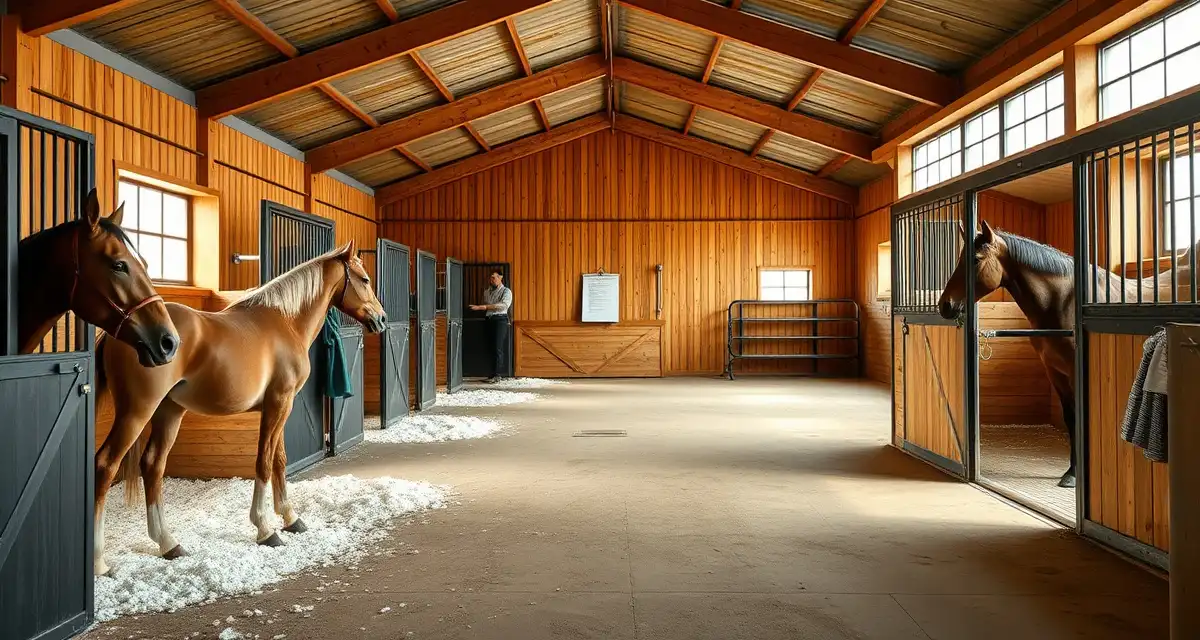
Stall Management at Breeding Facilities: Cleaning and Inspection
Stall management at a breeding barn is not the same as managing a boarding or training operation. Breeding facilities represent a distinct segment with unique management needs: rotating occupancy, mares in late gestation, foals on the ground, and stallion isolation protocols all demand a higher standard of cleanliness, documentation, and staff coordination than most other equine operations.
TL;DR
- Breeding facilities have specific stall management requirements that differ from standard boarding operations.
- Stall condition documentation with timestamps is the foundation of both staff accountability and horse health tracking.
- Bedding standards, cleaning frequency, and inspection protocols should be written down, not communicated verbally.
- Digital stall management tools that update in real time give all staff the same current information without verbal relay chains.
- A weekly manager inspection layer catches quality drift that daily completion logs alone will not surface.
If your current stall management process relies on memory, whiteboards, or generic checklists, you are likely missing critical inspection steps that matter specifically in a breeding environment.
Why Breeding Barns Need a Different Approach
A boarding barn can tolerate a missed cleaning cycle with limited consequence. A breeding barn cannot. Foaling stalls must be disinfected between occupants. Mares in late gestation are more susceptible to respiratory irritation from ammonia buildup. Stallion stalls carry biosecurity implications that affect the entire breeding program.
The stakes are higher, the schedules are tighter, and the documentation requirements are more demanding. Most generic barn management approaches were not built with any of that in mind.
Step 1: Define Stall Categories and Assign Protocols
Identify Your Stall Types
Not every stall in a breeding barn has the same function. Before you build any cleaning or inspection schedule, categorize your stalls:
- Foaling stalls (typically 14x14 or larger, deep bedding, high-frequency disinfection)
- Mare stalls (standard or large, monitored for late-gestation comfort)
- Stallion stalls (isolated, often with additional ventilation requirements)
- Isolation stalls (for new arrivals or post-procedure horses)
- Foal and weanling stalls (lower bedding depth, different inspection criteria)
Each category needs its own written protocol. Applying one universal checklist across all stall types is one of the most common operational mistakes in breeding barn management.
Assign Responsibility by Stall Type
Once categories are defined, assign specific staff members to specific stall types. Cross-training is valuable, but primary accountability should be clear. When everyone is responsible, no one is responsible.
Step 2: Build a Cleaning Schedule That Reflects Breeding Cycles
Daily Cleaning Minimums
For a functioning stall management breeding barn operation, daily tasks should include:
- Full removal of soiled bedding and manure
- Inspection of water buckets or automatic waterers
- Bedding top-up to maintain appropriate depth (minimum 6 inches for foaling stalls)
- Visual check of stall walls, flooring, and hardware
Foaling stalls occupied by mares within 30 days of their due date should be cleaned twice daily.
Deep Cleaning Between Occupants
Every time a stall changes occupants, a full deep clean is required. This is non-negotiable in a breeding facility. The process should include:
- Complete removal of all bedding
- Scrubbing of walls, floor, and feed/water fixtures with an approved disinfectant
- A dry-out period of at least 4 hours before re-bedding
- Documentation of the cleaning date, staff member, and products used
This is especially critical for foaling stalls, where pathogens like Rhodococcus equi and Streptococcus equi can persist on surfaces.
Seasonal Adjustments
Breeding season typically runs from February through July in the Northern Hemisphere. During peak season, stall turnover accelerates and cleaning demands spike. Build a seasonal staffing plan that accounts for this. A facility running 20 active mares in April is not the same operation it is in November.
Step 3: Select Bedding Appropriate for Breeding Use
Straw vs. Shavings vs. Pelleted Bedding
Bedding choice in a breeding barn has direct health implications:
- Straw is traditional for foaling stalls because it is less likely to be inhaled by newborn foals and provides good cushioning. However, it harbors mold and bacteria more readily than other options.
- Wood shavings are widely used for general mare and stallion stalls. Avoid black walnut shavings entirely, as they cause laminitis.
- Pelleted bedding expands on contact with moisture, offers excellent ammonia absorption, and is easier to manage in terms of waste volume. It is increasingly common in high-end breeding operations.
Bedding Depth Standards
Foaling stalls require a minimum of 6 to 8 inches of bedding. General mare stalls should maintain 4 to 6 inches. Stallion stalls benefit from deeper bedding given the volume of urine produced. Inspect bedding depth as part of every daily check, not just during formal inspections.
Step 4: Create an Inspection Checklist Specific to Breeding Operations
What a Breeding Barn Inspection Must Cover
A standard stall inspection checklist misses several items that matter in a breeding context. Your checklist should include:
Structural and Safety
- Stall door latches and hinges (foals can get caught in loose hardware)
- Wall boards for protruding nails or splinters
- Flooring for uneven surfaces or drainage issues
Hygiene and Biosecurity
- Ammonia odor level (a reliable proxy for cleaning frequency)
- Presence of mold in bedding or corners
- Water source cleanliness
- Feed tub condition
Breeding-Specific Items
- Foaling stall camera functionality (if applicable)
- Foal heat detection flags or notes in the stall record
- Isolation status for new arrivals
- Stallion stall biosecurity log
Inspection Frequency
Daily visual checks should be completed by the assigned groom. Formal documented inspections should occur weekly for general stalls and after every occupant change for foaling and isolation stalls. A facility manager or barn supervisor should conduct a full walkthrough at least twice per month.
Step 5: Build Staff Accountability Into the Process
Documentation Is Not Optional
In a breeding facility, documentation protects the business. If a mare develops a respiratory issue, you need to be able to show when her stall was last deep cleaned, what bedding was used, and who performed the inspection. Without records, you have no defense and no data to improve from.
Paper logs work, but they create retrieval problems. Digital records tied to individual stalls and horses are significantly more useful. Barn management software built for equine operations allows you to log cleaning events, attach inspection notes, and assign tasks to specific staff members with timestamps.
Accountability Without Micromanagement
The goal is not surveillance. It is consistency. When staff know that stall records are reviewed and that their work is documented, cleaning standards improve without constant supervision. Build a weekly review into your management routine where you check completion rates and flag any stalls that missed scheduled cleaning or inspection.
For a deeper look at how breeding-specific workflows differ from general barn operations, the breeding barn operations guide covers staffing structures, seasonal planning, and record-keeping in more detail.
Common Mistakes in Breeding Barn Stall Management
Using one checklist for all stall types. Foaling stalls, stallion stalls, and isolation stalls each have distinct requirements. A single generic checklist will miss critical items in each category.
Skipping the dry-out period between occupants. Disinfectants need contact time, and surfaces need to dry before re-bedding. Rushing this step undermines the entire deep cleaning process.
Treating bedding depth as a one-time setup. Bedding compresses and breaks down throughout the day. Depth checks need to happen daily, not just when a stall is initially set up.
No documentation of who did what. When a health issue arises, "I think we cleaned it last Tuesday" is not a useful answer. Timestamped records tied to specific staff members are the baseline standard for any serious breeding operation.
Related Articles
FAQ
What are the unique management needs of a breeding barn?
Breeding barns require stall protocols that account for mares in late gestation, foaling stall biosecurity, stallion isolation, and rotating occupancy tied to breeding cycles. Cleaning frequency, bedding depth standards, and inspection criteria are all more demanding than in a standard boarding or training facility. Documentation requirements are also higher because health outcomes are directly tied to stall conditions.
How do I run a breeding facility efficiently?
Efficiency in a breeding facility comes from clear protocols, defined staff accountability, and consistent documentation. Categorize your stalls by function, assign primary responsibility to specific staff members, and use digital records to track cleaning events and inspections. Seasonal planning is also critical since breeding season creates significant spikes in workload that need to be staffed in advance.
What software do breeding barn managers use?
Most breeding barn managers start with spreadsheets or paper logs, but operations with more than 10 to 15 active horses typically move to dedicated equine barn management software. BarnBeacon is built to adapt to breeding facility workflows, including stall-level record keeping, task assignment with timestamps, and billing structures that reflect the complexity of breeding operations. It addresses gaps that general farm management tools leave unresolved for equine-specific use cases.
What stall management practices are specific to breeding facilities?
Breeding horses have distinct stall management needs based on their activity level, health protocols, and ownership dynamics. Document any facility-specific stall standards in writing and train all staff on the rationale, not just the rules. Staff who understand why a breeding horse's stall requires particular cleaning or bedding standards are more likely to apply them consistently than staff following instructions without context.
How do I handle stall management during periods of high horse turnover?
Periods of high turnover -- show season departures and arrivals, seasonal boarding starts and ends -- are when stall management systems most often break down. Prepare by completing a full stall inventory and condition documentation before the turnover period begins. When a horse departs, photograph and log the stall condition before the next horse arrives. This protects against disputes about stall condition and gives you a documented baseline for the incoming horse's record.
What is Stall Management at Breeding Facilities: Cleaning and Inspection?
Stall management at breeding facilities refers to the specialized protocols required to maintain clean, safe, and well-documented stalls in an environment housing mares in late gestation, foals, and stallions. Unlike standard boarding barns, breeding operations demand stricter cleanliness standards, more frequent inspections, and detailed recordkeeping. Proper stall management in this context covers bedding standards, cleaning schedules, health monitoring, and staff coordination—all tailored to the unique risks and rotating occupancy patterns of an active breeding program.
How much does Stall Management at Breeding Facilities: Cleaning and Inspection cost?
Stall management at breeding facilities is not a product or service with a fixed price—it refers to the operational practices and protocols a facility implements internally. Costs vary depending on staffing levels, bedding materials, and any digital tools or barn management software used to support documentation and inspection workflows. Facilities investing in purpose-built equine management software typically see efficiency gains that offset subscription costs through reduced labor errors and improved health outcomes.
How does Stall Management at Breeding Facilities: Cleaning and Inspection work?
Effective stall management at a breeding facility works through a layered system: daily cleaning and bedding checks completed by barn staff, timestamped documentation of stall condition and horse health observations, and a weekly manager inspection layer to catch quality drift. Digital barn management tools allow real-time updates visible to all staff, eliminating reliance on verbal handoffs. This structure ensures consistent hygiene standards, early detection of health issues, and clear accountability across every role in the operation.
Sources
- American Association of Equine Practitioners (AAEP)
- University of Minnesota Extension Equine Program
- Penn State Extension Horse Management Program
- The Horse magazine
Get Started with BarnBeacon
Breeding stall management requires consistent documentation across every shift -- not just on the days when a manager is present to check. BarnBeacon's stall management tools give your whole team access to current care standards, log completions with timestamps and staff attribution, and flag conditions that need manager review. If stall management consistency is a challenge at your breeding facility, BarnBeacon gives you the structure to make it reliable.