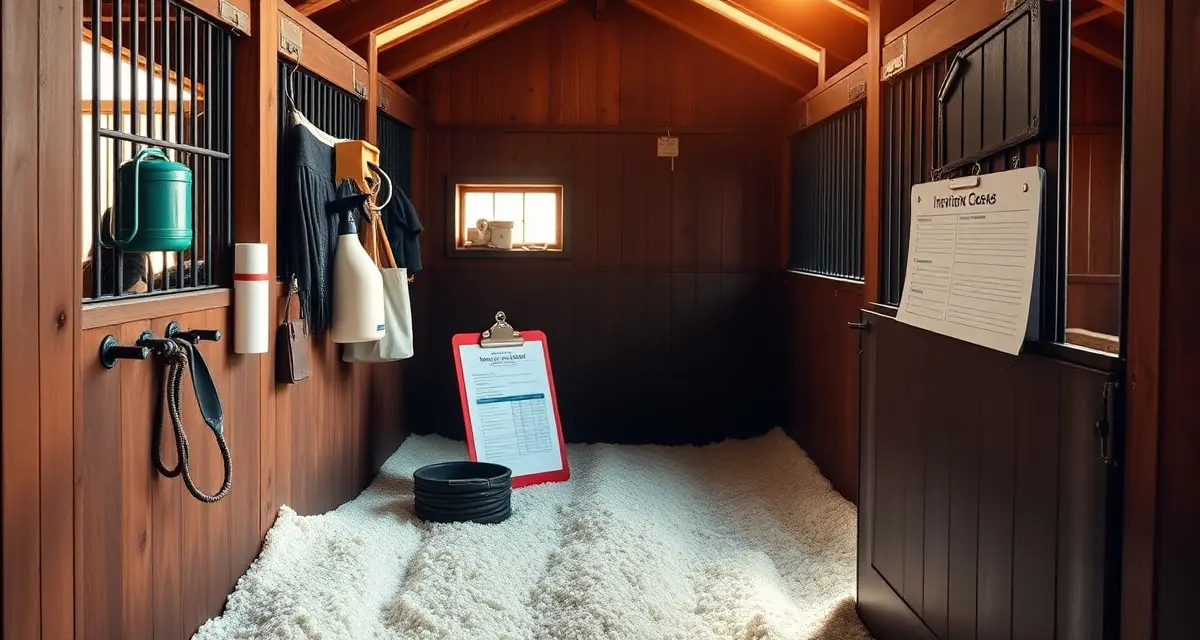
Stall Management at Training Facilities: Cleaning and Inspection
Training barns are not boarding barns. The horses are working harder, sweating more, and spending more time in their stalls between sessions. That intensity changes everything about how you manage stall hygiene, bedding, and inspection routines.
TL;DR
- Training facilities have specific stall management requirements that differ from standard boarding operations.
- Stall condition documentation with timestamps is the foundation of both staff accountability and horse health tracking.
- Bedding standards, cleaning frequency, and inspection protocols should be written down, not communicated verbally.
- Digital stall management tools that update in real time give all staff the same current information without verbal relay chains.
- A weekly manager inspection layer catches quality drift that daily completion logs alone will not surface.
Most stall management content is written for general boarding operations. Training facilities represent a distinct segment with unique management needs, and the gap between generic advice and what actually works in a training environment can cost you horse health, staff time, and client trust.
Why Training Barns Need a Different Approach
A horse in full training can produce 30 to 50 pounds of manure per day, plus significantly more urine output than a horse at pasture or light work. Add in the sweat, the increased water consumption, and the fact that many training horses are stalled 18 to 22 hours a day, and you have a stall environment that degrades faster than most barn management guides account for.
Ammonia buildup is the primary concern. At concentrations above 10 ppm, ammonia begins irritating the respiratory tract. Horses in hard training are already breathing harder and more frequently. Keeping stalls clean is not just about appearance or client satisfaction. It directly affects performance.
Step 1: Set a Cleaning Schedule That Matches Training Volume
Morning Cleaning Before Work
Strip and bed stalls before the first horses go out for training. This gives you a clean, dry surface when horses return hot and need to stand quietly. A full strip takes 15 to 25 minutes per stall depending on bedding type and stall size.
Schedule morning cleaning to finish at least 30 minutes before the first horse returns from the track, arena, or round pen. Horses standing in wet stalls after exercise are at higher risk for thrush, white line disease, and respiratory irritation.
Midday Spot Checks
Training barns typically have horses cycling in and out throughout the day. Assign a staff member to do a midday pass, removing visible manure and wet spots from any stall that has been occupied since morning cleaning.
This takes 3 to 5 minutes per stall and prevents ammonia from building up during the afternoon hours when barn doors are often closed.
Evening Inspection and Top-Off
Before horses settle for the night, inspect every stall. Remove any manure added since midday, check moisture levels, and add bedding where needed. Horses should have a minimum of 6 to 8 inches of clean bedding before overnight.
Document what was added and any observations about stall condition. This creates a baseline for the next morning's crew.
Step 2: Choose Bedding That Works for High-Use Stalls
Shavings vs. Straw vs. Pelleted Bedding
Shavings are the most common choice in training barns because they are absorbent, easy to strip, and widely available. Pine shavings absorb urine well and are relatively low-dust when sourced correctly. Avoid cedar, which can cause respiratory irritation.
Straw is less absorbent and harder to manage in high-output stalls. It composts faster, which generates heat and ammonia more quickly. Most training barns have moved away from straw for primary bedding.
Pelleted bedding has gained traction in performance horse facilities. It expands on contact with moisture, absorbs 3 to 4 times its weight in liquid, and produces less waste volume. The upfront cost is higher, but many managers report lower overall bedding costs due to reduced consumption and easier stripping.
Bedding Depth and Replacement Frequency
Maintain a minimum depth of 6 inches throughout the stall, with banked sides of 8 to 10 inches. Thin spots allow horses to contact the floor, increasing the risk of hock sores and joint stress in horses already under physical load.
Full strip and replace bedding at least once per week in high-use stalls. Spot cleaning daily is not a substitute for a complete strip. Urine saturates the base layer even when the surface looks clean.
Step 3: Build an Inspection Checklist Your Staff Will Actually Use
What to Check Every Day
A daily stall inspection should cover:
- Manure volume and consistency (changes can indicate digestive issues)
- Urine output and color (dark urine can signal dehydration or muscle breakdown in hard-working horses)
- Bedding moisture level and depth
- Water bucket or automatic waterer cleanliness and fill level
- Hay net or feeder condition
- Any signs of pawing, weaving, or stall damage
- Leg wraps or boots left in the stall overnight
Assign each item to a specific staff member and require sign-off. Verbal confirmation is not enough in a busy training barn.
Weekly Structural Inspection
Once per week, inspect the stall itself, not just its contents. Check for:
- Loose boards or kick panels
- Drain function and debris buildup
- Door latch security
- Wall integrity at horse height
- Flooring condition under the bedding
Structural issues in training barns tend to escalate quickly because horses are more reactive and physically stronger than horses in light work.
Step 4: Assign Accountability by Role, Not by Stall
Why Role-Based Assignment Works Better
Assigning one groom to "their" stalls sounds logical, but it creates blind spots. If that person is absent, the coverage gap is immediate and total. Role-based assignment distributes the work by task type across the team.
One person handles morning strips. Another does midday checks. A third manages evening top-offs and documentation. Each role has a checklist, a time window, and a supervisor sign-off requirement.
Tracking Completion Without Micromanaging
Paper checklists get lost or filled in after the fact. Digital tools built for barn operations allow staff to log tasks in real time from a phone, with timestamps and photo documentation when needed.
Barn management software designed for equine facilities can tie stall condition logs to individual horses, making it easy to spot patterns. If a horse's stall is consistently wetter than average, that is a clinical signal worth investigating.
For training-specific workflows, including how to structure daily operations around training schedules and client billing, the training barn operations guide covers the full operational picture.
Common Mistakes in Training Barn Stall Management
Skipping the midday check when the schedule is busy. This is exactly when ammonia builds fastest. Busy training days mean more horses in stalls, not fewer.
Using the same bedding depth standards as a boarding barn. Training horses need more bedding, not less. The physical stress on their legs and joints is higher.
Relying on visual inspection alone. A stall can look clean on the surface and have significant moisture saturation in the base layer. Probe the bedding with a fork before deciding a stall does not need attention.
Failing to document stall observations. Stall condition is a health data point. Changes in manure output, urine color, or bedding consumption often precede veterinary issues by 24 to 48 hours.
Related Articles
FAQ
What are the unique management needs of a training barn?
Training barns house horses under significant physical stress, which increases manure and urine output, raises respiratory sensitivity, and demands more frequent stall cleaning than a standard boarding operation. Horses in full training also require closer daily monitoring because changes in stall behavior or output often signal health issues before clinical symptoms appear.
How do I run a training facility efficiently?
Efficiency in a training barn comes from structured role-based task assignment, documented daily checklists, and consistent scheduling tied to the training calendar. Avoid ad hoc task distribution. When every staff member knows exactly what they are responsible for and when, gaps are easier to identify and correct before they become problems.
What software do training barn managers use?
Training barn managers increasingly use equine-specific barn management software that handles stall logs, horse health records, training schedules, and client billing in one place. BarnBeacon is built to adapt to training facility workflows and billing structures, making it a practical fit for operations that need more than a generic boarding management tool. Look for software that allows real-time task logging, photo documentation, and horse-level reporting.
What stall management practices are specific to training facilities?
Training horses have distinct stall management needs based on their activity level, health protocols, and ownership dynamics. Document any facility-specific stall standards in writing and train all staff on the rationale, not just the rules. Staff who understand why a training horse's stall requires particular cleaning or bedding standards are more likely to apply them consistently than staff following instructions without context.
How do I handle stall management during periods of high horse turnover?
Periods of high turnover -- show season departures and arrivals, seasonal boarding starts and ends -- are when stall management systems most often break down. Prepare by completing a full stall inventory and condition documentation before the turnover period begins. When a horse departs, photograph and log the stall condition before the next horse arrives. This protects against disputes about stall condition and gives you a documented baseline for the incoming horse's record.
What is Stall Management at Training Facilities: Cleaning and Inspection?
Stall Management at Training Facilities: Cleaning and Inspection is a comprehensive guide covering the unique hygiene, bedding, and inspection requirements of training barns. Unlike general boarding operations, training facilities manage horses that work harder, sweat more, and spend extended time in stalls. The guide addresses documentation protocols, cleaning frequency standards, staff accountability systems, and digital tools that help managers maintain consistent stall quality across all staff shifts.
How much does Stall Management at Training Facilities: Cleaning and Inspection cost?
Stall Management at Training Facilities: Cleaning and Inspection is a free educational resource published on BarnBeacon. There is no cost to access the article. BarnBeacon provides barn management guides and best-practice content at no charge to help facility managers, trainers, and barn staff improve their operations. Related digital stall management tools mentioned in the article may carry their own subscription costs depending on the software provider.
How does Stall Management at Training Facilities: Cleaning and Inspection work?
Stall management at a training facility works by combining written protocols, regular inspections, and real-time documentation. Staff follow defined bedding standards and cleaning schedules suited to horses producing 30 to 50 pounds of manure daily. Inspections are logged with timestamps to track patterns and enforce accountability. A weekly manager review layer supplements daily completion logs to catch gradual quality drift before it affects horse health or client satisfaction.
Sources
- United States Equestrian Federation (USEF)
- American Horse Council
- University of Kentucky Equine Initiative
- The Chronicle of the Horse
- Horse & Rider magazine
Get Started with BarnBeacon
Training stall management requires consistent documentation across every shift -- not just on the days when a manager is present to check. BarnBeacon's stall management tools give your whole team access to current care standards, log completions with timestamps and staff attribution, and flag conditions that need manager review. If stall management consistency is a challenge at your training facility, BarnBeacon gives you the structure to make it reliable.