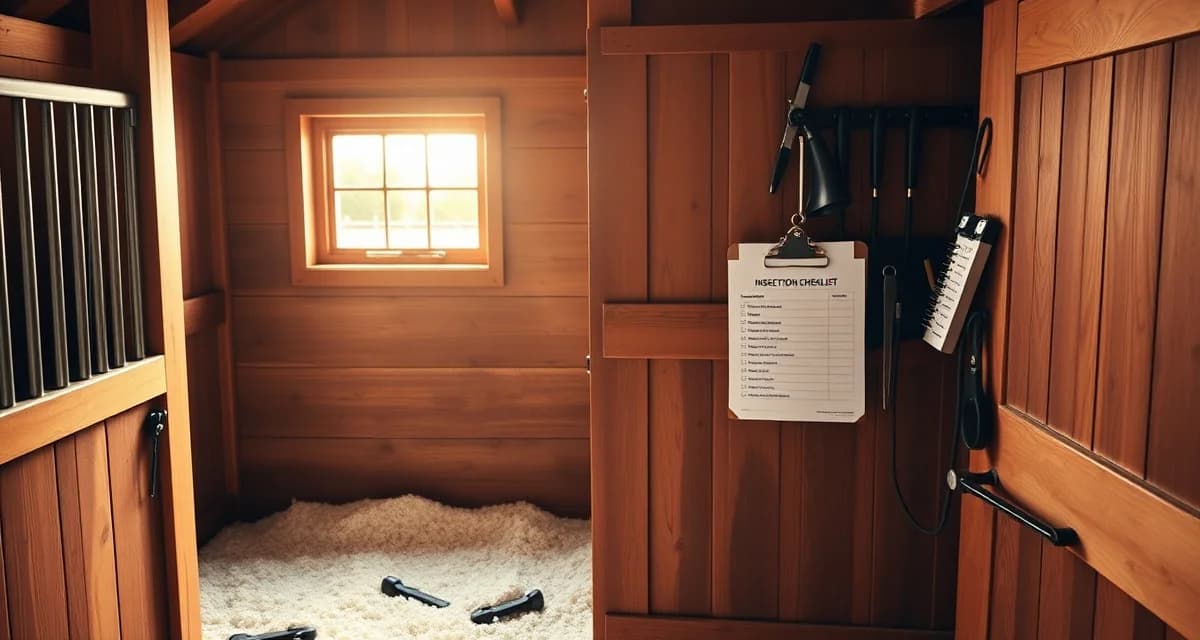
Stall Management at Lesson Facilities: Cleaning and Inspection
Stall management at a lesson barn is not the same as managing a boarding or breeding operation. Lesson facilities represent a distinct segment with unique management needs: high horse traffic, rotating staff, unpredictable scheduling, and horses that may be used by multiple riders in a single day. Getting stall care right here is not just about horse health, it directly affects your liability, your reputation, and your ability to retain students.
TL;DR
- Lesson facilities have specific stall management requirements that differ from standard boarding operations.
- Stall condition documentation with timestamps is the foundation of both staff accountability and horse health tracking.
- Bedding standards, cleaning frequency, and inspection protocols should be written down, not communicated verbally.
- Digital stall management tools that update in real time give all staff the same current information without verbal relay chains.
- A weekly manager inspection layer catches quality drift that daily completion logs alone will not surface.
This guide walks through the practical steps for building a stall management system that actually works in a lesson environment.
Why Lesson Barns Need a Different Approach
Most stall management advice is written for boarding facilities where one horse lives in one stall and one owner is responsible. Lesson barns don't work that way.
A single lesson horse might be ridden three to five times a day, returned to its stall between sessions, and handled by a dozen different people in a week. That means more manure, more bedding disruption, more hoof traffic in and out, and more opportunities for something to be missed.
Without a structured system, small problems compound fast. A wet corner ignored in the morning becomes a thrush risk by evening. A loose board missed on Monday becomes a safety incident on Wednesday.
Step 1: Set a Cleaning Schedule Built Around Lesson Blocks
Map Your Lesson Schedule First
Before you assign any cleaning tasks, print out your weekly lesson schedule. Identify the gaps between lesson blocks, those 20 to 45-minute windows are your primary cleaning opportunities.
Most lesson facilities run morning and afternoon blocks. That means you need at minimum two full stall checks per day: one before morning lessons begin and one between the midday break and afternoon sessions.
Assign Specific Time Windows, Not Just Shifts
Vague instructions like "clean stalls in the afternoon" don't work when you have three staff members and six lessons running simultaneously. Assign stall cleaning to specific 30-minute windows tied to your lesson calendar.
For example: "Stalls 1 through 6 cleaned between 12:00 and 12:30 PM, before the 1:00 PM beginner block." This removes ambiguity and creates accountability.
Account for High-Traffic Horses
Horses used in four or more lessons per day need a spot check after every second ride, not just a full clean twice daily. Build this into your schedule explicitly. A spot check takes five minutes: remove visible manure, fluff bedding, check water.
Step 2: Choose Bedding That Fits Lesson Barn Conditions
Prioritize Absorbency and Turnaround Time
Lesson horses are in and out of their stalls constantly. You need bedding that absorbs quickly, is easy to pick, and doesn't require a full strip every day to stay sanitary.
Pelleted bedding and fine shavings both perform well in high-traffic stalls. Straw is harder to manage when you're doing quick turnarounds between lessons and is not recommended for most lesson barn applications.
Calculate Your Weekly Bedding Use
Track how many bags or bales you go through per stall per week. Lesson barns typically use 15 to 25 percent more bedding per horse than boarding facilities because of the increased traffic and more frequent spot cleaning.
Knowing your actual consumption helps you order accurately and catch stalls that are being under-bedded, which is often a sign that staff are skipping proper cleaning rather than removing wet material.
Maintain a Minimum Depth Standard
Set a written standard: for example, six inches of clean bedding at all times. Post it in the barn. When staff know the standard is documented and inspected, compliance improves significantly.
Step 3: Build an Inspection Checklist
What to Check at Every Inspection
A stall inspection at a lesson facility should cover more than cleanliness. Use a checklist that includes:
- Manure and wet spot removal confirmed
- Bedding depth meets minimum standard
- Water bucket or automatic waterer functioning and clean
- Feed tub clean and empty between meals
- Stall door latch secure
- No loose boards, protruding nails, or sharp edges
- Fly strips or pest control measures in place (seasonal)
Inspect Before and After Lesson Blocks
The pre-lesson inspection protects the horse going into work. The post-lesson inspection catches what happened during the session and sets the stall up for the next use.
This two-point inspection model is the minimum for any lesson facility running more than four horses. Larger operations with 10 or more lesson horses should consider a mid-day third check.
Document Everything
A checklist that lives in someone's head is not a checklist. Use a physical log posted in the barn aisle or a digital system. Barn management software can automate inspection reminders, log completion times, and flag stalls that have missed checks, which is especially useful when you're managing part-time or seasonal staff.
Step 4: Create Staff Accountability Systems
Assign Stalls, Not Just Tasks
When every staff member is responsible for "the stalls," no one is truly responsible. Assign specific stalls to specific people for each shift. Rotate assignments weekly so staff stay familiar with all horses and all areas of the barn.
Use Sign-Off Logs
A simple sign-off log, either paper or digital, where staff initial each completed stall check creates a paper trail. It also changes behavior. People are less likely to skip a step when their name is attached to it.
Conduct Weekly Spot Audits
Once a week, the barn manager or head instructor should walk every stall and compare conditions against the checklist standard. Note any recurring issues: a stall that's consistently under-bedded, a water bucket that's always dirty, a latch that keeps coming loose.
These audits take 20 minutes and prevent the slow drift toward lower standards that happens in any busy operation.
Step 5: Integrate Stall Management Into Your Lesson Facility Workflow
Stall management doesn't exist in isolation. It connects directly to your lesson scheduling, your horse health records, and your staff management.
For lesson facilities specifically, stall condition should be part of your pre-ride horse check protocol. Before any student mounts, the horse's stall condition from the last 12 hours should be noted. Unusual manure output, changes in water consumption, or excessive bedding disturbance can all be early indicators of health issues.
The lesson barn operations guide covers how to connect stall records to horse health tracking and lesson scheduling in a single workflow. For facilities running 10 or more horses and multiple daily lesson blocks, having these systems talk to each other is what separates reactive management from proactive management.
Common Mistakes in Lesson Barn Stall Management
Cleaning around the horse instead of removing it. Horses should be tied or moved during full stall cleans. Cleaning around a loose horse in a stall is slower, less thorough, and a safety risk.
Using the same schedule year-round. Summer heat and winter mud change how fast bedding degrades and how much horses drink. Adjust your inspection frequency and bedding depth standards seasonally.
Skipping documentation when things are busy. The weeks when you're most tempted to skip the log are the weeks when something is most likely to go wrong. Busy periods are when documentation matters most, not least.
Treating all lesson horses the same. A horse in two lessons a week needs different stall management than a horse in 10. Tailor your cleaning frequency to actual use, not a one-size schedule.
What are the unique management needs of a lesson barn?
Lesson barns deal with high horse-to-rider ratios, multiple daily uses per horse, rotating staff, and unpredictable scheduling that doesn't fit standard boarding management models. Stall cleaning, inspection, and health monitoring all need to be tied to the lesson schedule rather than a fixed daily routine. Staff accountability systems are also more critical because lesson facilities typically rely on part-time or seasonal help.
How do I run a lesson facility efficiently?
Efficiency in a lesson facility comes from building systems that run without constant supervision. That means written schedules tied to lesson blocks, assigned responsibilities rather than general task lists, documented inspection checklists, and regular audits. Software built for equine stall management at lesson facilities can automate reminders and track completion, reducing the management overhead on the barn manager or head instructor.
What software do lesson barn managers use?
Most lesson barn managers start with general barn management software, but the best results come from platforms designed to handle lesson-specific workflows including scheduling, billing, and stall management in one place. BarnBeacon is built specifically for lesson facility workflows and billing structures, adapting its features to the way lesson barns actually operate rather than forcing a boarding-facility model onto a different type of operation.
What stall management practices are specific to lesson facilities?
Lesson horses have distinct stall management needs based on their activity level, health protocols, and ownership dynamics. Document any facility-specific stall standards in writing and train all staff on the rationale, not just the rules. Staff who understand why a lesson horse's stall requires particular cleaning or bedding standards are more likely to apply them consistently than staff following instructions without context.
How do I handle stall management during periods of high horse turnover?
Periods of high turnover -- show season departures and arrivals, seasonal boarding starts and ends -- are when stall management systems most often break down. Prepare by completing a full stall inventory and condition documentation before the turnover period begins. When a horse departs, photograph and log the stall condition before the next horse arrives. This protects against disputes about stall condition and gives you a documented baseline for the incoming horse's record.
FAQ
What is Stall Management at Lesson Facilities: Cleaning and Inspection?
Stall management at lesson facilities refers to the structured system of cleaning, inspecting, and documenting stall conditions at barns that primarily serve riding students. Unlike boarding operations, lesson barns face high horse traffic, rotating staff, and horses used by multiple riders daily. Effective stall management in this context includes written cleaning protocols, timestamped inspection logs, bedding standards, and real-time digital tracking tools that keep all staff aligned without relying on verbal communication chains.
How much does Stall Management at Lesson Facilities: Cleaning and Inspection cost?
Stall management at lesson facilities is not a product with a price tag—it is an operational framework you build and maintain. Costs vary based on staffing, bedding materials, and any software tools you adopt. Basic digital barn management platforms start around $50–$150 per month. The real cost of poor stall management is higher: increased vet bills, liability exposure, staff turnover, and student attrition. Investing in systems upfront typically reduces long-term operational costs significantly.
How does Stall Management at Lesson Facilities: Cleaning and Inspection work?
A lesson barn stall management system works by establishing written standards for cleaning frequency, bedding depth, and inspection checkpoints, then enforcing them through documentation. Staff complete cleaning tasks and log conditions with timestamps. A manager layer conducts weekly audits to catch quality drift. Digital tools allow real-time updates visible to all staff simultaneously, eliminating information gaps between shifts. The system creates a feedback loop between daily task completion and ongoing health and liability tracking.
What are the benefits of Stall Management at Lesson Facilities: Cleaning and Inspection?
Proper stall management at lesson facilities protects horse health by reducing ammonia exposure, moisture buildup, and injury risk from poor footing. It reduces liability by creating timestamped documentation of stall conditions. It improves staff accountability through clear written protocols rather than verbal instructions. Students and parents notice clean, well-maintained facilities and are more likely to continue lessons. Consistent stall care also reduces vet costs and helps staff identify early signs of illness or injury.
Who needs Stall Management at Lesson Facilities: Cleaning and Inspection?
Any barn offering riding lessons with resident horses needs structured stall management. This includes small private lesson operations, large equestrian centers, summer camp facilities, therapeutic riding programs, and school or university equestrian programs. If your horses are used by multiple riders in a day and your stall care involves more than one staff member or volunteer, you need written protocols and documentation systems. Lesson barns with rotating or part-time staff benefit most from formalized inspection processes.
How long does Stall Management at Lesson Facilities: Cleaning and Inspection take?
A single stall cleaning typically takes 15–30 minutes depending on stall size, bedding type, soiling level, and staff experience. Full barn cleaning at a lesson facility may take two to four hours for a small team. Weekly manager inspections add 30–60 minutes per session. The time investment is front-loaded when building the system—writing protocols, training staff, and setting up digital tools—but ongoing time costs stabilize quickly once the workflow is established.
What should I look for when choosing Stall Management at Lesson Facilities: Cleaning and Inspection?
Look for a system that fits your staffing reality. Written protocols should be simple enough for part-time and seasonal staff to follow without oversight. Inspection checklists should capture timestamped condition data, not just task completion. Digital tools should update in real time and be accessible from a phone. Bedding standards should be specific—depth, material, and moisture thresholds—not general guidelines. Choose software that supports photo documentation and integrates task assignments with health tracking if your operation has complex needs.
Is Stall Management at Lesson Facilities: Cleaning and Inspection worth it?
Yes. Lesson barns that operate without formal stall management systems consistently face higher vet costs, staff confusion, and liability exposure when horse health incidents occur. A structured system with written protocols, timestamped logs, and weekly manager inspections is not bureaucratic overhead—it is the operational foundation that protects your horses, your students, and your business. Digital tools that automate documentation and give staff real-time information pay for themselves quickly by reducing errors and improving accountability across all shift types.
Sources
- American Association of Equine Practitioners (AAEP)
- University of Minnesota Extension Equine Program
- Penn State Extension Horse Management Program
- The Horse magazine
Get Started with BarnBeacon
Lesson stall management requires consistent documentation across every shift -- not just on the days when a manager is present to check. BarnBeacon's stall management tools give your whole team access to current care standards, log completions with timestamps and staff attribution, and flag conditions that need manager review. If stall management consistency is a challenge at your lesson facility, BarnBeacon gives you the structure to make it reliable.