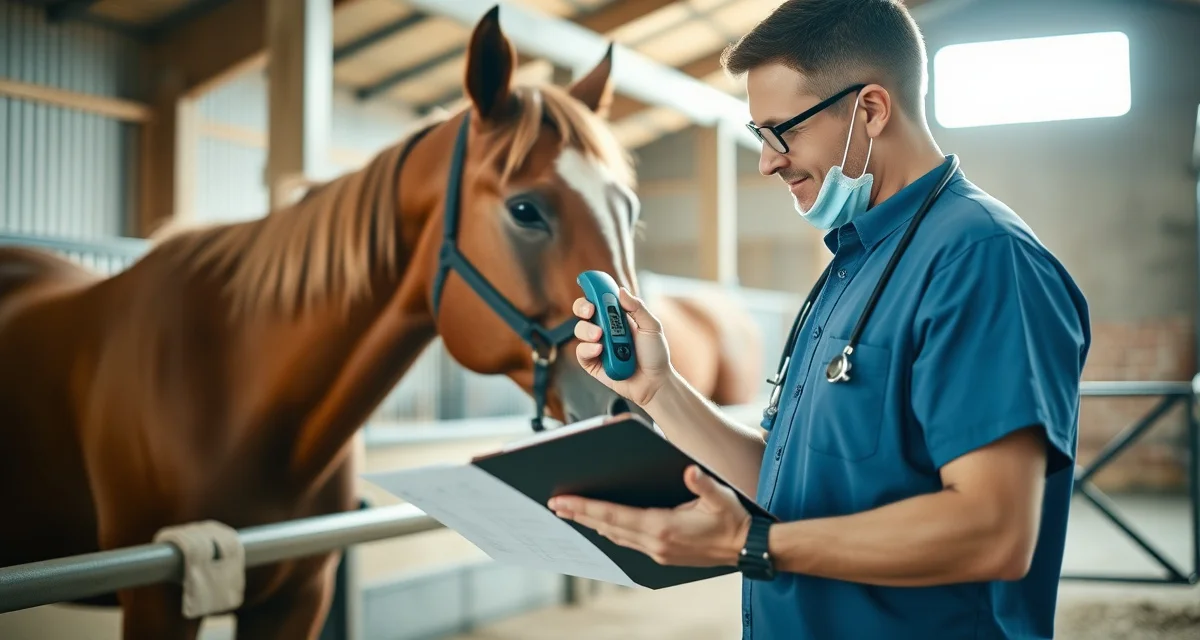
Health Monitoring Systems for Equine Facilities
Health monitoring is the daily practice of observing, measuring, and recording each horse's physical and behavioral condition. A good monitoring system catches problems early, creates a reliable baseline for each animal, and gives you the data to evaluate whether your care practices are working.
What Daily Monitoring Should Include
A minimum daily health check for each horse should cover several areas. Work through these consistently rather than waiting for something to look obviously wrong.
Feed intake. Did the horse finish its grain? Leave feed? Eat hay overnight? Changes in appetite are one of the earliest indicators of developing illness.
Water consumption. Changes in drinking are clinically significant. A horse that is drinking substantially less than usual may be showing early systemic distress. A horse drinking substantially more may have metabolic issues.
Manure. Consistency, frequency, and amount. Normal varies by horse, which is why knowing each animal's baseline matters. Dry, scarce, or absent manure warrants attention.
Attitude and behavior. Is the horse engaged at the stall door? Dull? Aggressive in a way that is out of character? Behavioral changes often precede visible physical symptoms.
Movement. Watch the horse take a few steps at turnout or in the stall. Even low-grade lameness is often visible in the first few steps of the day.
Body surface check. Eyes, nose, legs, and skin. Look for discharge, swelling, cuts, or developing skin conditions.
This check takes a trained eye perhaps three minutes per horse. It catches most problems before they escalate.
Establishing Individual Baselines
The concept of "normal" is individual, not universal. A horse that normally eats grain in five minutes and a horse that normally takes forty minutes are both fine. A horse that normally takes forty minutes and suddenly finishes in three minutes is showing a change worth noting.
When a new horse arrives at your facility, spend the first few weeks documenting its baseline behaviors. Normal eating pace, typical manure output, water consumption, resting posture, usual temperament at turnout. This baseline becomes the reference point for all future monitoring.
Temperature, Pulse, and Respiration Checks
Routine TPR checks are not needed daily for every healthy horse, but staff should know how to take them and should do so whenever a horse seems off.
Normal ranges to memorize:
- Temperature: 99 to 101.5 degrees Fahrenheit
- Heart rate: 28 to 44 beats per minute at rest
- Respiration: 8 to 16 breaths per minute at rest
Any reading outside these ranges warrants logging and probably a vet call. Always note the time and circumstances of the reading, since temperature rises slightly in hot conditions and heart rate rises with recent exercise.
Monitoring Systems in Multi-Staff Environments
When more than one person works in your barn, monitoring only works if everyone is recording observations and the records are visible to everyone who needs them.
A monitoring system that lives in one person's head or one person's notebook creates a single point of failure. If that person is off for two days, the continuity of the record breaks.
BarnBeacon solves this by giving your entire team access to a shared record system, so observations made by the morning groom are visible to the afternoon staff and to you from wherever you are. If a horse was noted as slightly off-feed at morning check, the afternoon shift knows to watch that horse before it becomes an after-hours emergency call.
Monitoring High-Risk Horses More Closely
Some horses in your barn need closer monitoring than others. These include:
- Horses recovering from illness or surgery
- Horses on prescription medications
- Senior horses
- Horses with known metabolic conditions (Cushing's, PPID, EMS)
- Horses in the last month of pregnancy
- New arrivals during quarantine
For these horses, build structured monitoring checklists that include specific observation points beyond the standard daily check. Run through them at the same times each day and log the results.
Responding to Monitoring Alerts
A monitoring system that generates observations but does not trigger responses is not functioning as intended. Define thresholds for escalation so staff know when to monitor and note versus when to call you, and when you need to call the vet.
See health incident reporting for guidance on building an escalation protocol your team can follow consistently.
Track monitoring observations over time in each horse's record so patterns are visible. Connect monitoring notes to your horse health logs for a complete picture of each animal's health history.
FAQ
What is Health Monitoring Systems for Equine Facilities?
Health monitoring systems for equine facilities are structured routines and tools used to observe, measure, and record each horse's physical and behavioral condition on a daily basis. These systems combine consistent visual checks—covering feed intake, water consumption, manure output, attitude, and movement—with record-keeping practices that establish a baseline for each animal. The goal is early problem detection before conditions escalate into serious illness or injury, giving barn managers reliable data to guide care decisions.
How much does Health Monitoring Systems for Equine Facilities cost?
Health monitoring systems range from zero-cost manual checklists you create yourself to software subscriptions running $20–$150 per month for digital barn management platforms. Basic wearable health sensors for individual horses typically cost $200–$800 per unit. The most effective approach for most facilities is a structured paper or spreadsheet log system, which costs nothing beyond your time. Technology adds value at scale but is not required for sound daily monitoring.
How does Health Monitoring Systems for Equine Facilities work?
A health monitoring system works by establishing a known baseline for each horse, then comparing daily observations against that baseline. Staff work through a consistent checklist each morning and evening—noting feed and water intake, manure volume and consistency, behavior, and gait. Observations are logged so patterns become visible over time. When a reading deviates from the horse's normal, it triggers closer evaluation or veterinary contact before a minor issue becomes a crisis.
What are the benefits of Health Monitoring Systems for Equine Facilities?
The primary benefit is early detection—catching illness, colic, lameness, or metabolic changes before they become emergencies. Consistent records also improve veterinary consultations by giving your vet objective trend data rather than impressions. Over time, monitoring reveals whether feed programs, turnout schedules, or management changes are actually working. For multi-horse operations, it creates accountability across staff and ensures no animal is overlooked during a busy barn day.
Who needs Health Monitoring Systems for Equine Facilities?
Any facility housing horses benefits from a formal monitoring system, but it is especially critical for barns with multiple horses, shared staff, or horses in active work or competition. Performance horses under physical stress have narrower margins before health issues affect performance. Breeding operations depend on detecting subtle behavioral and physical changes early. Even a single-horse owner benefits from the discipline of a daily checklist, which builds the observational habit that catches problems fast.
How long does Health Monitoring Systems for Equine Facilities take?
Daily monitoring takes five to fifteen minutes per horse when done consistently. The time investment is front-loaded: setting up your baseline records, creating your checklist, and training staff takes a few hours initially. Once the system is running, it becomes a routine part of morning and evening chores. Digital platforms can reduce logging time with mobile entry. The bigger time cost comes from not monitoring—illness caught late typically demands far more hours to manage.
What should I look for when choosing Health Monitoring Systems for Equine Facilities?
Look for a system that is simple enough that staff will actually use it every day. It should cover the core indicators: feed intake, water consumption, manure, behavior, and movement. Ensure it supports individual baseline records for each horse, not just generic norms. If evaluating software, check that it works on mobile, allows quick entry, and produces exportable records for your veterinarian. Avoid platforms so complex that adoption fails. Consistency matters more than sophistication.
Is Health Monitoring Systems for Equine Facilities worth it?
Yes. The value of health monitoring systems is not theoretical—early detection of colic, respiratory illness, or lameness routinely reduces veterinary costs and saves horses' lives. A horse that receives treatment in the first hours of a problem recovers faster and with fewer complications than one whose symptoms went unnoticed for a day. Beyond emergency value, consistent records improve every routine care decision you make. The time cost is low; the return in animal welfare and reduced emergency expenses is significant.