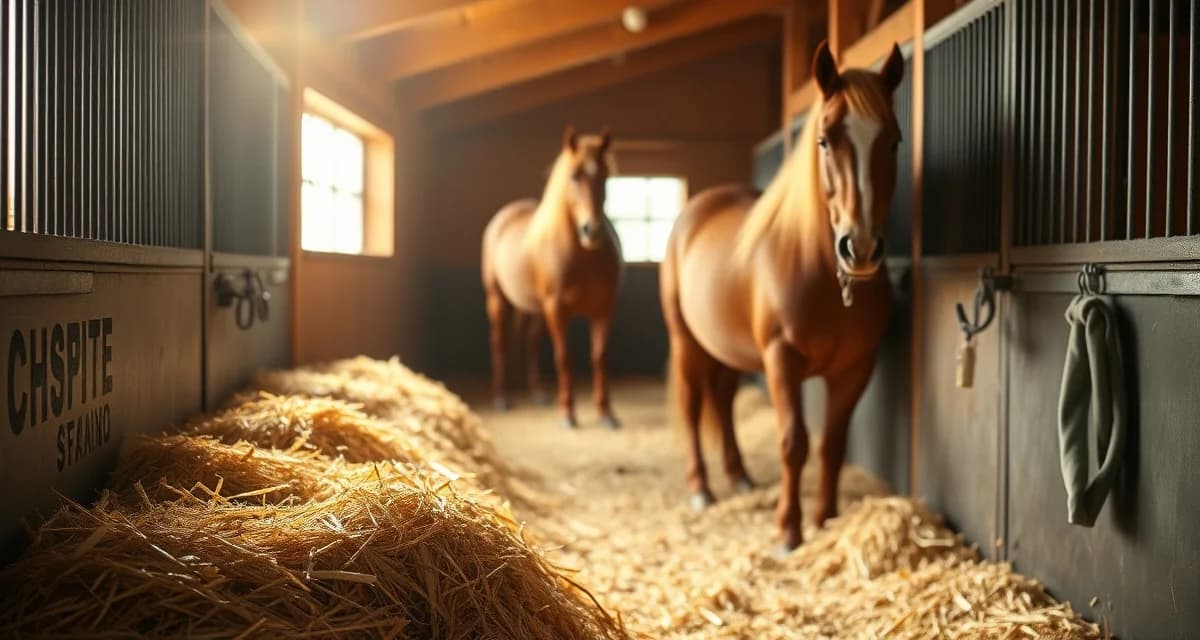
Retirement Horse Barn Stall Cleaning: Senior Horse Protocols
Senior horses are not just older versions of performance horses. They have thinner skin, weaker immune systems, compromised joints, and a much lower tolerance for wet or soiled bedding. Retirement barn stall cleaning protocols requires a different standard than a standard boarding or training facility, and most barns are not operating at that standard.
TL;DR
- Effective barn management requires systems that match actual daily workflows, not adapted generic tools
- Per-horse record keeping with digital access reduces the response time to owner questions from hours to seconds
- Automated owner communication and health alerts reduce inbound calls while increasing owner satisfaction and retention
- Billing errors cost barns thousands of dollars annually; point-of-service charge logging is the most effective prevention
- Staff accountability systems with named task assignments and completion logs prevent care gaps without micromanagement
- Purpose-built equine software connects health records, billing, and owner communication in one place
Facilities with digital cleaning accountability see 44% fewer stall quality complaints. That gap exists because accountability without a system is just a verbal agreement, and verbal agreements fall apart on busy mornings.
Why Retirement Barns Need a Higher Cleaning Standard
A horse with arthritis or Cushing's disease who stands in a wet stall for two hours faces a meaningfully different risk than a healthy 10-year-old. Urine scalding, thrush, and respiratory irritation from ammonia buildup hit senior horses faster and harder.
Deeper bedding, which most retirement barns correctly use, also means more surface area to check. A quick visual pass is not enough. Staff need to physically move through the stall and check corners, along walls, and under any rubber mat edges.
How to Clean Retirement Barn Stalls: Step-by-Step
Step 1: Remove the Horse Before You Start
This sounds obvious, but in retirement barns with horses that move slowly or resist being led, staff sometimes clean around the horse. Do not do this. Senior horses are more likely to slip on wet flooring exposed during cleaning, and ammonia exposure during mucking is worse for horses with compromised respiratory function.
Move the horse to a safe holding area, even if it takes an extra few minutes.
Step 2: Strip the Stall Completely, Not Just the Wet Spots
Spot-cleaning works for healthy horses on a tight schedule. For senior horse stall management, full strips should happen at minimum three times per week, with daily removal of all wet and soiled material.
Pull all bedding to the center, check the floor surface for moisture, and inspect rubber mats for pooling underneath. Ammonia concentrates under mats and is invisible until the mat is lifted.
Step 3: Check the Floor and Drainage
Retirement barn floors take more abuse. Senior horses urinate more frequently, especially those on medications like Pergolide or diuretics. After removing bedding, check that drainage channels are clear and that no standing moisture remains on the floor surface.
If you find consistent wet spots in the same location, flag it. That is either a drainage issue or a horse with a health change worth noting.
Step 4: Apply Stall Freshener Before Re-Bedding
Agricultural lime or a commercial stall freshener applied to the bare floor neutralizes ammonia and reduces bacterial load before new bedding goes down. Use it every time you do a full strip, not just when the stall smells bad.
Allow it to sit for 5 to 10 minutes before adding fresh bedding.
Step 5: Bed Deeper Than You Think You Need To
The standard recommendation for senior horses is a minimum of 6 to 8 inches of clean bedding, with extra depth along walls where horses tend to lie down. Horses with joint pain will lie down more often and need cushioning that prevents pressure sores.
Shavings and pelleted bedding both work well. Straw is harder to manage for moisture detection and is not recommended for horses with respiratory issues.
Step 6: Log the Cleaning With a Timestamp and Staff Name
This is where most barns fall short. A stall that looks clean is not the same as a stall that was cleaned correctly. Without a record, there is no way to know whether a stall was fully stripped or spot-cleaned, who did it, or when.
BarnBeacon timestamps every stall cleaning with the responsible staff member and supports photo attachments, so managers can verify completion without being physically present for every cleaning. This matters especially in multi-staff facilities where morning and evening crews may never overlap.
Pair this with your barn daily checklist to make stall cleaning one line item in a broader accountability system rather than an isolated task.
Step 7: Do a Second Check at Midday
Retirement horses spend more time in their stalls than performance horses. A stall cleaned at 7 AM can be significantly soiled by noon, particularly for horses with metabolic conditions that increase urination.
Build a midday check into your protocol. It does not need to be a full clean, but wet spots should be removed and bedding redistributed. This check should also be logged.
Common Mistakes in Retirement Barn Stall Cleaning
Skipping the mat lift. Ammonia and bacteria accumulate under rubber mats faster than most staff expect. Mats should be pulled and cleaned at least once a week in retirement stalls.
Using the same bedding depth as a standard stall. Senior horses need more. Cutting bedding depth to save on shavings costs is a false economy when you factor in the veterinary bills for pressure sores or thrush.
No documentation system. If a horse develops a hygiene-related health issue, the first question a veterinarian will ask is about stall conditions. Without records, you cannot answer that question accurately. A structured stall cleaning schedule with logged completions gives you that documentation automatically.
Relying on smell alone. Ammonia detection by smell is unreliable. By the time a stall smells strongly of ammonia, the concentration is already high enough to cause respiratory irritation. Visual and physical inspection is the standard, not the backup.
FAQ
What should a stall cleaning schedule include?
A complete stall cleaning schedule for a retirement barn should include daily removal of all wet and soiled bedding, a full strip at least three times per week, a midday check for senior horses, weekly mat cleaning, and a log entry for each task with the staff member's name and completion time. Schedules should be specific to each horse's needs, since horses with metabolic conditions or mobility issues may require more frequent attention.
How do I track which staff member cleaned each stall?
The most reliable method is a digital logging system that requires staff to check off each stall individually and attaches their name and a timestamp to the record. Paper sign-off sheets work in small facilities but are easy to fill out in bulk without actually completing the work. Tools like BarnBeacon assign stall-by-stall completion records to individual staff members, which creates accountability that a shared checklist cannot provide. Some tools also support photo attachments so managers can verify bedding depth and stall condition remotely.
How do I verify stalls are cleaned to standard?
Verification requires a defined standard in the first place. Write down what a correctly cleaned stall looks like: bedding depth, floor condition, freshener application, and mat status. Then use a system that captures photo documentation alongside the completion log. Spot audits by a manager or barn owner are also effective, but they should be random rather than scheduled so staff cannot anticipate them. Digital records with timestamps make it easy to identify patterns, such as a stall that is consistently logged as cleaned but repeatedly fails visual inspection.
How does BarnBeacon compare to spreadsheets for barn management?
Spreadsheets require manual updates, lack real-time notifications, and create version control problems when multiple staff members are working from different files. BarnBeacon centralizes records, pushes alerts automatically based on logged events, and connects care records to billing and owner communication in one system. Most facilities report saving several hours per week after switching from spreadsheets.
What is the setup process like for BarnBeacon?
Most facilities complete the initial setup in under a week. Horse profiles, service templates, and billing configurations can be imported from existing records or entered directly. BarnBeacon's US-based support team is available to assist with setup, and most managers are running their first billing cycle through the platform within days of starting.
Can BarnBeacon support a barn with multiple staff members?
Yes. BarnBeacon supports multiple user accounts with role-based access, so barn managers, barn staff, and owners each see the information relevant to their role. Task assignments, completion logs, and communication history are all attached to the barn's account rather than to individual staff phones or email addresses.
What is Retirement Horse Barn Stall Cleaning: Senior Horse Protocols?
Retirement Horse Barn Stall Cleaning: Senior Horse Protocols refers to a specialized set of stall maintenance standards designed specifically for aging horses. Unlike standard boarding facilities, retirement barns must account for senior horses' thinner skin, weakened immune systems, and compromised joints, which make them far less tolerant of wet or soiled bedding. These protocols emphasize more frequent cleaning schedules, digital accountability systems, and per-horse health tracking to reduce stall quality complaints and support the unique care needs of retired horses.
How much does Retirement Horse Barn Stall Cleaning: Senior Horse Protocols cost?
Retirement Horse Barn Stall Cleaning: Senior Horse Protocols is not a purchasable product but a set of operational best practices for retirement barn facilities. Implementing these protocols typically involves investing in purpose-built equine management software, which varies by provider, and staff training. Facilities that adopt digital cleaning accountability and point-of-service charge logging often offset costs through reduced billing errors, fewer owner complaints, and improved retention—making the investment cost-effective over time compared to adapting generic barn management tools.
Sources
- American Association of Equine Practitioners (AAEP)
- National Cutting Horse Association (NCHA)
- American Horse Council
- UC Davis Center for Equine Health
- Penn State Extension Equine Program
Get Started with BarnBeacon
Running a retirement barn well requires the right tools behind the right protocols. BarnBeacon gives managers the health record tracking, billing automation, and owner communication infrastructure to operate efficiently without adding administrative staff. Start a free trial and see how the platform fits the way your barn already works.