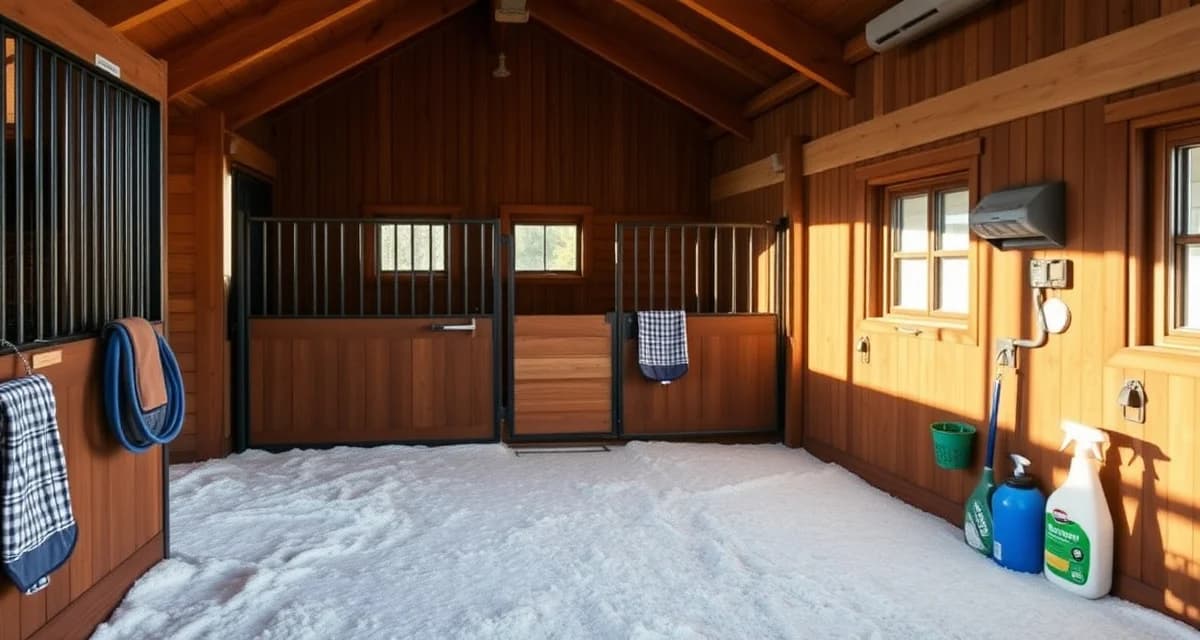
Stall Management at Retirement Facilities: Cleaning and Inspection
Retirement barns operate differently from training or boarding facilities, and most barn management advice ignores that entirely. Horses in retirement often have Cushing's disease, arthritis, chronic laminitis, or compromised immune systems, which means stall management at a retirement barn carries higher clinical stakes than at a standard boarding operation. Stall management at a retirement barn isn't just about cleanliness, it's about reducing fall risk, managing moisture for horses with hoof conditions, and giving aging horses a consistent, low-stress environment.
TL;DR
- Retirement facilities have specific stall management requirements that differ from standard boarding operations.
- Stall condition documentation with timestamps is the foundation of both staff accountability and horse health tracking.
- Bedding standards, cleaning frequency, and inspection protocols should be written down, not communicated verbally.
- Digital stall management tools that update in real time give all staff the same current information without verbal relay chains.
- A weekly manager inspection layer catches quality drift that daily completion logs alone will not surface.
Retirement facilities represent a distinct segment with unique management needs, yet most operational guides treat them the same as any other boarding barn. That gap creates real risk.
Why Standard Stall Protocols Fall Short for Retirement Horses
A 12-year-old sport horse in light work can tolerate a stall that gets a single daily clean. A 28-year-old horse with Cushing's and compromised hooves cannot. Urine pooling, wet bedding, and ammonia buildup are serious problems for horses with existing hoof pathology.
Retirement horses also spend more time in their stalls. Many are on restricted turnout due to mobility issues, weather sensitivity, or veterinary instruction. That means stall conditions directly affect their physical health for more hours per day than in a typical boarding situation.
Staff turnover compounds the problem. Retirement facilities often rely on part-time or rotating staff who may not know each horse's individual needs. Without documented protocols, critical details get missed.
Step 1: Build a Stall-by-stall cleaning schedule
Assess Each Horse's Needs Individually
Start by categorizing every horse in your facility. Horses with active hoof conditions, incontinence, or mobility limitations need more frequent cleaning, sometimes twice daily. Horses in stable health may need only one thorough clean per day.
Create a written profile for each stall that includes cleaning frequency, bedding type, and any special instructions from the attending vet. This document should live in the stall and in your barn management system.
Set Minimum Standards and Track Compliance
Define what a "clean stall" means at your facility. That means specifying how much wet bedding must be removed, what depth of dry bedding is acceptable, and how often full strip-outs occur. Vague standards lead to inconsistent results.
Track completion with a daily sign-off system. Whether you use paper logs or barn management software, every stall clean should be timestamped and attributed to a specific staff member. This creates accountability and gives you data when problems arise.
Step 2: Choose the Right Bedding for Retirement Horses
Prioritize Cushioning and Moisture Control
Shavings are the most common choice, but they're not always the best for retirement horses. Horses with arthritis or laminitis benefit from deeper, softer bedding that reduces joint stress during lying down and rising. Pelleted bedding expands when wet and provides excellent moisture absorption, which matters for horses prone to thrush or white line disease.
Straw is generally not recommended for retirement horses with respiratory issues, as it carries higher mold and dust loads. If a horse has heaves or IAD, switch to a low-dust alternative and document the change in their profile.
Calculate Bedding Use Per Stall
Track how much bedding each stall consumes weekly. Retirement horses with incontinence or those on diuretics will use significantly more. Knowing your per-stall consumption helps you order accurately, reduce waste, and flag stalls where usage suddenly spikes, which can indicate a health change worth investigating.
Step 3: Conduct Structured Stall Inspections
What to Check at Every Inspection
A stall inspection at a retirement facility should go beyond looking for manure. Walk through this checklist at every inspection:
- Flooring condition: Check for uneven surfaces, cracked mats, or areas where bedding has been pushed away, leaving hard floor exposed
- Ammonia levels: If you can smell it at the door, it's already too high. Use ammonia test strips if you have horses with respiratory conditions
- Water quality: Automatic waterers should be checked for algae, debris, and proper flow. Buckets should be scrubbed, not just refilled
- Feeder condition: Hay nets, ground feeders, and grain buckets should be clean and positioned correctly for horses with neck or back pain
- Stall hardware: Latches, hinges, and kick boards should be checked for sharp edges or loose fittings that could injure a horse with limited mobility
Schedule Weekly Deep Inspections
Daily checks catch immediate problems. Weekly deep inspections catch slow-developing ones. Once a week, strip the stall completely, inspect the mats and floor underneath, check the walls for moisture damage or mold, and assess the drainage.
Document what you find. If a mat is starting to deteriorate or a drain is partially blocked, log it with a photo and assign a repair task. Deferred maintenance in a retirement barn creates compounding risk.
Step 4: Create Staff Accountability Systems
Assign Stalls, Not Just Tasks
When staff are assigned to specific stalls rather than rotating through the barn randomly, they develop familiarity with each horse. They notice when a horse is lying down more than usual, when bedding consumption changes, or when a horse is reluctant to move. That observational knowledge is operationally valuable.
Pair stall assignments with written handoff notes at shift changes. The outgoing staff member should note anything unusual observed during their shift. This is especially important in retirement facilities where subtle behavioral changes can signal pain or illness.
Use Software to Close the Accountability Loop
Paper logs work, but they create friction and get lost. Retirement barn operations run more smoothly when task completion, inspection notes, and health observations are captured in one place. BarnBeacon is built to support retirement facility workflows specifically, including billing structures that reflect the higher care levels these horses require.
When a stall inspection is logged digitally, managers can review completion rates, identify patterns, and respond to issues without walking the barn themselves at every hour. That matters when you're managing 30 or 40 horses with complex individual needs.
Common Mistakes in Retirement Barn Stall Management
Using one-size-fits-all cleaning schedules. A horse with Cushing's disease produces more urine. A horse post-surgery may need stall rest with extra bedding depth. Blanket schedules miss these distinctions.
Skipping the strip-out. Partial cleans that leave wet bedding at the bottom of the stall allow ammonia to build up over time. Full strip-outs should happen at least weekly for every stall, more often for horses with hoof conditions.
Not documenting observations. Staff notice things. If those observations aren't written down and communicated, they disappear. A horse that was slow to rise three mornings in a row is telling you something, but only if someone recorded it.
Ignoring water quality. Retirement horses with metabolic conditions are often on specific water intake targets. Dirty waterers reduce voluntary intake. Check them daily, not just when they look visibly dirty.
Deferring mat replacement. Worn mats lose their cushioning and become slippery. For a horse with arthritis or neurological issues, a slippery mat is a fall risk. Replace mats on a scheduled cycle, not just when they fail completely.
What are the unique management needs of a retirement barn?
Retirement barns house horses with age-related and chronic health conditions that require individualized care protocols. Stall management must account for higher moisture output, increased time spent in the stall, and the need for softer, deeper bedding to support arthritic joints. Staff need to be trained to observe and document subtle behavioral changes that may indicate pain or illness.
How do I run a retirement facility efficiently?
Efficiency in a retirement facility comes from standardized protocols applied individually. Build a profile for each horse that defines their specific stall requirements, cleaning frequency, and health notes. Use a digital system to track task completion, log inspections, and manage billing, since retirement horses often require tiered care packages that differ from standard boarding rates.
What software do retirement barn managers use?
Most barn management software is built for training or boarding operations and doesn't account for the care complexity or billing structures common in retirement facilities. BarnBeacon is designed to support equine stall management at retirement facilities specifically, with features for individual care tracking, staff task assignment, inspection logging, and billing that reflects variable care levels across your herd.
What stall management practices are specific to retirement facilities?
Retirement horses have distinct stall management needs based on their activity level, health protocols, and ownership dynamics. Document any facility-specific stall standards in writing and train all staff on the rationale, not just the rules. Staff who understand why a retirement horse's stall requires particular cleaning or bedding standards are more likely to apply them consistently than staff following instructions without context.
How do I handle stall management during periods of high horse turnover?
Periods of high turnover -- show season departures and arrivals, seasonal boarding starts and ends -- are when stall management systems most often break down. Prepare by completing a full stall inventory and condition documentation before the turnover period begins. When a horse departs, photograph and log the stall condition before the next horse arrives. This protects against disputes about stall condition and gives you a documented baseline for the incoming horse's record.
Related Articles
FAQ
What is Stall Management at Retirement Facilities: Cleaning and Inspection?
Stall management at retirement facilities refers to the structured protocols for cleaning, inspecting, and maintaining stalls housing aging horses with conditions like Cushing's disease, arthritis, or chronic laminitis. Unlike standard boarding operations, retirement barn stall management prioritizes moisture control for hoof health, fall risk reduction through proper bedding depth, and consistent low-stress environments. It includes documented inspection routines, bedding standards, and cleaning schedules tailored to the clinical needs of senior horses rather than performance or training horses.
How much does Stall Management at Retirement Facilities: Cleaning and Inspection cost?
Stall management at retirement facilities is not a product with a purchase price — it is an operational practice. Costs vary based on facility size, bedding type, labor hours, and software tools used. Bedding alone can run $200–$600 per stall annually depending on material. Digital stall management platforms that log inspections and cleaning timestamps typically cost $50–$300 per month for small facilities. The real cost of poor stall management, however, is measured in veterinary bills and horse welfare outcomes.
How does Stall Management at Retirement Facilities: Cleaning and Inspection work?
Effective retirement facility stall management works through layered daily and weekly routines. Staff complete stall cleaning on a set schedule, documenting each session with timestamps and condition notes. Inspections check bedding depth, moisture levels, drainage, flooring integrity, and signs of health issues. A manager review layer — typically weekly — audits logged data to catch quality drift. Digital tools synchronize this information across all staff in real time, eliminating gaps caused by verbal handoffs or shift changes.
What are the benefits of Stall Management at Retirement Facilities: Cleaning and Inspection?
Proper stall management at retirement facilities reduces infection risk, supports hoof health in horses with laminitis, and lowers fall risk for arthritic horses through consistent bedding depth. Documented inspection logs create accountability and enable early detection of health changes. Aging horses benefit significantly from routine and environmental stability, reducing stress-related immune suppression. Facilities also benefit operationally: written protocols reduce training time, improve staff consistency, and provide defensible records if a horse's health or welfare is ever questioned.
Who needs Stall Management at Retirement Facilities: Cleaning and Inspection?
Any facility housing retired or senior horses needs specialized stall management protocols. This includes dedicated retirement barns, combined boarding and retirement operations, and rescue organizations housing older horses. Horses with Cushing's disease, chronic laminitis, arthritis, or compromised immune function have elevated environmental sensitivity, making standard boarding protocols insufficient. Owners placing horses in retirement care and managers responsible for staff oversight both benefit from understanding these requirements to evaluate facility quality and ensure appropriate horse care standards.
How long does Stall Management at Retirement Facilities: Cleaning and Inspection take?
Daily stall cleaning typically takes 20–45 minutes per stall depending on bedding type, horse habits, and facility layout. Full inspections — checking flooring, drainage, bedding depth, and noting health observations — add 5–10 minutes per stall. Weekly manager-level audits of logs and spot-check inspections take 1–3 hours for a mid-sized facility. Establishing written protocols upfront requires several hours of planning but reduces long-term training time and prevents the repeated verbal correction cycles that cost more time overall.
What should I look for when choosing Stall Management at Retirement Facilities: Cleaning and Inspection?
When evaluating stall management practices at a retirement facility, look for written protocols rather than verbal-only communication, timestamped cleaning and inspection logs, bedding standards appropriate for horses with hoof conditions, and documented staff training. Ask whether inspections are tracked digitally and whether managers conduct independent quality audits beyond daily completion logs. Facilities that can show you their documentation systems demonstrate operational discipline. Also assess flooring condition, drainage adequacy, and whether bedding depth is actively maintained rather than topped off inconsistently.
Is Stall Management at Retirement Facilities: Cleaning and Inspection worth it?
Yes — for facilities housing senior horses, rigorous stall management is non-negotiable from a welfare and liability standpoint. Aging horses with compromised health are disproportionately affected by wet bedding, uneven flooring, or inconsistent routines. The investment in written protocols, inspection logs, and digital tracking tools pays off in reduced veterinary costs, earlier detection of health issues, and lower staff turnover caused by unclear expectations. For horse owners choosing a retirement facility, it is one of the clearest indicators of whether a barn operates with clinical seriousness or not.
Sources
- American Association of Equine Practitioners (AAEP)
- University of Minnesota Extension Equine Program
- Penn State Extension Horse Management Program
- The Horse magazine
Get Started with BarnBeacon
Retirement stall management requires consistent documentation across every shift -- not just on the days when a manager is present to check. BarnBeacon's stall management tools give your whole team access to current care standards, log completions with timestamps and staff attribution, and flag conditions that need manager review. If stall management consistency is a challenge at your retirement facility, BarnBeacon gives you the structure to make it reliable.