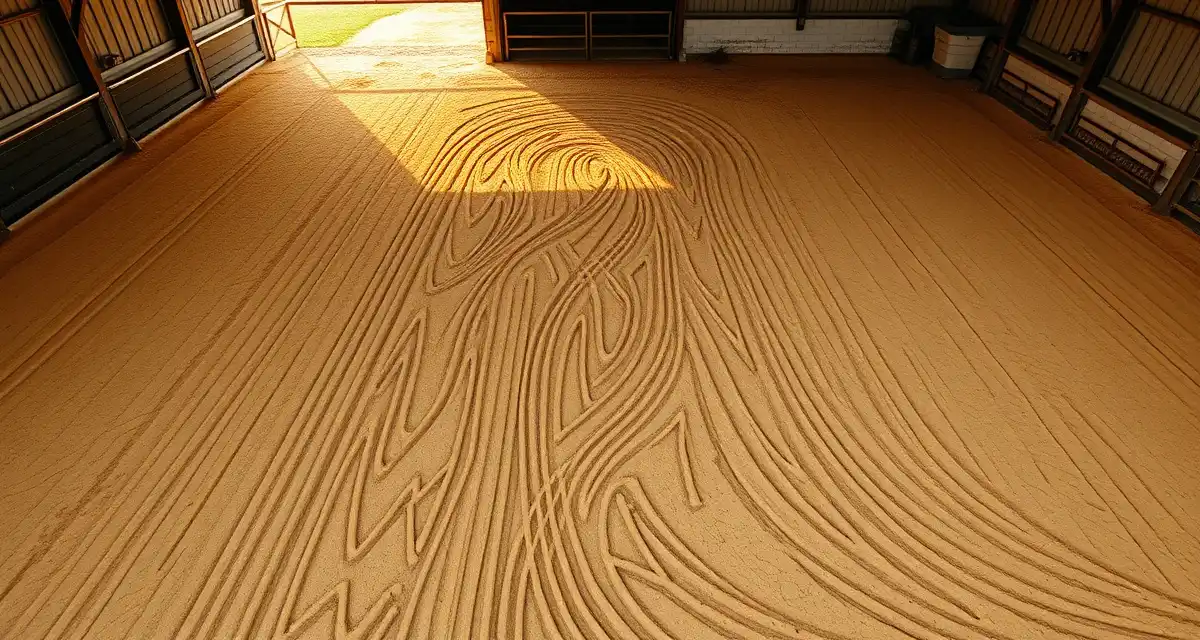
Arena Maintenance Schedule for Horse Facilities
A neglected arena footing is a liability. Uneven drag patterns, inconsistent watering, and footing that's gone past its useful depth are among the leading causes of soft tissue injuries in sport horses. Building a reliable arena maintenance schedule for your horse barn is not complicated, but it does require consistency and documentation.
TL;DR
- Arenas used more than four hours daily need dragging at least once per day, with competition arenas dragged between every two to three rides.
- Track water application in gallons or run-time minutes, not visual estimates, so you can identify patterns like why one end dries faster than the other.
- Measure footing depth at five consistent points weekly; schedule a top-up within two weeks any time a measurement drops more than half an inch below your target.
- Quality silica sand footing in a busy training facility lasts three to five years; tracking cumulative ride hours lets you project replacement 12 to 18 months out and budget accordingly.
- A schedule without assigned roles, completion windows, and log entries is not a schedule, documentation also protects your facility legally if a horse is injured.
- Barn managers spend an average of 4.2 hours per day on administrative tasks; centralizing arena maintenance in dedicated software reduces errors and missed tasks.
Barn managers already spend an average of 4.2 hours per day on administrative tasks. Adding arena tracking to a clipboard or a spreadsheet that nobody checks is how maintenance slips. This guide gives you a practical, step-by-step system for managing your arena footing from daily drag to full replacement planning.
Why Arena Footing Maintenance Fails at Most Facilities
The problem is rarely knowledge. Most barn managers know the footing needs dragging. The failure is in the system, or the lack of one.
Tasks get skipped during busy show prep weeks. Watering gets eyeballed instead of measured. Footing depth gets checked "when it looks low." Without a written schedule tied to accountability, maintenance becomes reactive instead of preventive.
Step 1: Establish Your Drag Frequency Baseline
Daily Use Arenas
Any arena used for more than four hours of riding per day should be dragged at minimum once daily, ideally before the first ride and again mid-day if traffic is heavy. Competition arenas should be dragged between every two to three rides.
Document the drag pattern. A consistent figure-eight or cross-hatch pattern ensures even footing distribution. Rotating your drag direction every few sessions prevents ruts from forming in the same lines.
Lower-Traffic Arenas
Arenas used for two hours or less per day can typically be dragged every other day. However, spot-check high-traffic areas like the rail and center line daily. These zones compact faster and need hand-raking or targeted dragging more often than the rest of the surface.
Step 2: Build a Watering Schedule Based on Footing Type
Sand and Sand-Blend Footings
Sand-based footings typically require watering once or twice daily depending on climate and sun exposure. In hot, dry conditions, a surface that looks fine at 7 a.m. can be dangerously deep and loose by noon. Aim for footing that holds a slight impression from a boot heel without being muddy.
Track water application in gallons or run-time minutes, not just "we watered it." Consistent records let you spot patterns, like why the south end always dries out faster, and adjust accordingly.
Fiber and Rubber-Blend Footings
These materials retain moisture longer but still need scheduled watering. Over-watering fiber blends compacts the material and reduces shock absorption. Under-watering rubber blends creates a slick, unpredictable surface. Check manufacturer guidelines and log actual moisture conditions weekly. When evaluating footing options for a new or renovated arena, reviewing arena footing material comparisons can help you match the surface to your discipline and climate.
Step 3: Conduct Regular Footing Depth Checks
How to Measure Footing Depth
Use a rigid ruler or a dedicated footing depth probe. Take measurements at five consistent points: four corners and center. Record the depth in inches at each point on the same day each week.
Ideal footing depth varies by discipline. Dressage and flat work typically perform best at 3 to 4 inches. Jumping requires 4 to 5 inches for adequate cushion. Reining and cutting disciplines often run 4 to 6 inches depending on the maneuvers involved.
When Depth Drops Below Threshold
When any measurement point falls more than half an inch below your target depth, schedule a footing top-up within two weeks. Waiting until the entire arena is low means you are already riding on compromised footing.
Log every depth check with the date, measurements, and who performed the check. This data becomes your replacement planning baseline.
Step 4: Plan Footing Replacement Before You Need It
Calculating Replacement Intervals
Quality silica sand footing in a busy training facility typically lasts three to five years before full replacement is warranted. Fiber and rubber blends can last longer but degrade differently, with fiber breaking down and rubber migrating to the edges over time.
Track cumulative ride hours if possible. A footing that handles 10 horses per day degrades roughly twice as fast as one handling five. Your depth check logs will show you the rate of loss over time, which lets you project replacement 12 to 18 months out and budget accordingly.
Signs Replacement Is Overdue
Watch for footing that packs hard after watering, excessive dust even with regular watering, inconsistent depth that cannot be corrected by dragging, and horses showing unusual reluctance or stiffness after arena work. Any two of these together is a strong signal that top-dressing alone will not fix the problem. Connecting these observations to your horse health tracking records can help you identify whether footing degradation is contributing to recurring soundness issues across your herd.
Step 5: Assign Tasks and Track Completion
A schedule that lives in one person's head is not a schedule. Every maintenance task needs an assigned role, a completion window, and a log entry.
For equine arena footing management to actually work at scale, you need a system where staff can check off tasks, managers can verify completion, and patterns in missed tasks are visible before they become problems. A whiteboard in the barn aisle works for a two-stall operation. A 30-horse training facility needs something more reliable.
This is where barn management software changes the daily workflow. Instead of chasing down whether the arena was dragged or the footing was watered, managers get a real-time task log with timestamps and staff accountability built in.
Common Mistakes to Avoid
Dragging wet footing. Dragging after heavy rain or over-watering compacts the base and destroys the texture you are trying to maintain. Wait until the surface has dried to the correct moisture level before dragging.
Skipping depth checks in winter. Frozen footing reads differently on a probe, and many managers stop checking until spring. By then, you may have months of untracked degradation. Check depth monthly even in cold months.
No documentation trail. When a horse gets injured and the question is whether the footing was maintained, a verbal "we always drag it" is not enough. Written logs with dates and staff initials protect your facility legally and operationally.
Treating all areas the same. The rail, the center line, and the corners all wear differently. A single depth measurement in the middle of the arena misses the spots that actually fail first.
Putting It All Together With the Right Tools
Most barn managers are currently tracking arena maintenance across sticky notes, shared spreadsheets, text message threads, and memory. That is not a system, it is a liability.
BarnBeacon consolidates arena maintenance scheduling, task assignment, footing logs, and facility-wide operations into one platform, replacing the six or more separate tools most facilities currently juggle. Staff get daily task lists. Managers get completion visibility. And when it is time to plan a footing replacement, the historical depth data is already there.
Facilities using integrated management platforms also report cleaner billing workflows. When arena time is tied to lessons or training rides, connecting maintenance logs to billing and invoicing means you always know what the arena cost to maintain relative to the revenue it generated.
What software manages all horse barn operations in one place?
BarnBeacon is built to manage the full scope of daily barn operations from a single platform. It covers arena maintenance scheduling, task tracking, horse health records, staff management, and billing, eliminating the need to switch between multiple tools throughout the day.
How does barn management software save time at a large facility?
At a facility with 20 or more horses, the administrative overhead of tracking maintenance, scheduling, and communications manually adds up fast. Barn managers report spending over four hours daily on tasks that software can automate or streamline, including maintenance logs, reminders, and staff task assignments. Centralizing these functions cuts that time significantly and reduces errors from miscommunication.
What is the best equine facility management platform?
The best platform for equine arena footing management and overall barn operations is one that handles daily task tracking, maintenance scheduling, health records, and billing without requiring separate apps for each function. BarnBeacon is designed specifically for horse facilities and integrates all of these workflows in one place, making it a strong choice for training barns, boarding facilities, and competition venues.
How do I know when to top-dress versus fully replace arena footing?
Top-dressing is appropriate when depth measurements are slightly below target but the base material is still structurally sound and draining correctly. Full replacement is warranted when footing packs hard after watering, dust persists despite regular watering, or depth inconsistencies cannot be corrected by dragging and adding material. Tracking weekly depth measurements over time gives you a rate-of-loss figure that makes this decision much clearer than visual inspection alone.
Can arena footing problems cause horse injuries?
Yes. Footing that is too deep increases tendon and ligament strain, while footing that is too shallow or compacted reduces shock absorption and increases concussive stress on joints. Inconsistent depth across the arena surface is particularly problematic because horses adjust their movement mid-stride in ways that can cause soft tissue injuries. Maintaining documented depth checks and drag logs is one of the most direct ways a facility can reduce injury risk and demonstrate due diligence.
How should footing maintenance change between summer and winter?
In summer, watering frequency typically increases significantly, sometimes to two or three times daily in hot, dry climates, to prevent dangerous looseness and dust. In winter, frozen footing should not be dragged until it has thawed to avoid damaging the base, and depth checks should continue monthly even when the arena is used less. Facilities in freeze-thaw climates should also monitor for heaving in the base layer, which can create uneven spots that depth probes alone will not reveal.
FAQ
What is Arena Maintenance Schedule for Horse Facilities?
An arena maintenance schedule for horse facilities is a documented, recurring plan that outlines when and how to drag footing, apply water, measure footing depth, and perform seasonal upkeep. It assigns specific tasks to named staff members with completion windows and requires log entries for each action. The goal is to maintain safe, consistent footing that reduces soft tissue injury risk and extends the lifespan of your arena surface.
How much does Arena Maintenance Schedule for Horse Facilities cost?
Creating an arena maintenance schedule itself costs nothing beyond staff time. The ongoing operational costs include water, fuel for dragging equipment, footing top-ups when depth drops below target, and full footing replacement every three to five years for busy facilities. Centralized management software that tracks tasks and logs can run from free basic tools to several hundred dollars per year for dedicated barn management platforms.
How does Arena Maintenance Schedule for Horse Facilities work?
Arena maintenance works by breaking footing care into daily, weekly, monthly, and seasonal tasks. Daily dragging redistributes and levels footing after each session. Water is applied in measured gallons or timed runs rather than visual estimates. Footing depth is checked at five consistent points weekly. Logs record every task, allowing managers to identify patterns, schedule top-ups proactively, and project full footing replacement 12 to 18 months in advance.
What are the benefits of Arena Maintenance Schedule for Horse Facilities?
A consistent arena maintenance schedule reduces horse injury risk by eliminating uneven footing, hard spots, and unsafe depth variations. It extends footing lifespan by preventing compaction and over-drying. Documentation provides legal protection if an injury occurs on your property. Scheduled maintenance also reduces emergency repair costs and helps facilities budget predictably for footing replacement. Staff accountability improves when tasks have assigned roles and completion windows rather than informal routines.
Who needs Arena Maintenance Schedule for Horse Facilities?
Any facility with a horse arena benefits from a formal maintenance schedule, but it is especially critical for busy training barns used more than four hours daily, competition venues where consistent footing between rounds matters, and boarding facilities with multiple horses and rotating staff. Equine veterinarians and farriers also recommend formal schedules to property owners whose horses have recovered from soft tissue injuries and need reliable, low-impact footing going forward.
How long does Arena Maintenance Schedule for Horse Facilities take?
Daily dragging takes 15 to 45 minutes depending on arena size and equipment. Weekly depth measurements at five points take under 10 minutes. Full documentation and schedule review adds minimal time when centralized in software. The larger time investment is upfront: designing the schedule, calibrating your watering system for accurate tracking, and training staff. Barn managers who centralize arena tasks in dedicated software report meaningful reductions in the average 4.2 hours per day spent on administrative work.
What should I look for when choosing Arena Maintenance Schedule for Horse Facilities?
Look for a schedule that is specific enough to be actionable: named roles, exact task windows, and measurable targets rather than vague directives. Watering logs should record gallons or run-time minutes, not visual judgments. Footing depth targets should be written down with a defined threshold that triggers a top-up order. The schedule should also include documentation requirements, since a log that cannot demonstrate consistent care provides little legal protection if a horse is injured on your property.
Is Arena Maintenance Schedule for Horse Facilities worth it?
Yes. The cost of a neglected arena is measured in veterinary bills, lost training time, and potential liability if a horse is injured on unsafe footing. A documented schedule with consistent dragging, calibrated watering, and depth tracking directly reduces those risks. Facilities that track cumulative ride hours can also budget for footing replacement well in advance, avoiding emergency expenses. The time investment is modest compared to the financial and animal welfare consequences of deferred arena care.
Sources
- American Association of Equine Practitioners (AAEP), equine injury prevention and facility safety resources
- University of Minnesota Extension, Horse Program, arena footing and facility management publications
- The United States Equestrian Federation (USEF), competition arena footing standards and guidelines
- Penn State Extension, equine facility design and footing management resources
- Equine Land Conservation Resource (ELCR), horse facility best practices and land management guides
Get Started with BarnBeacon
BarnBeacon gives your facility a single place to schedule arena maintenance, log footing depth checks, assign staff tasks, and track completion over time, so the data you need for replacement planning is already built up when you need it. If you are managing a boarding barn or training facility and still relying on spreadsheets and sticky notes to keep the arena on schedule, try BarnBeacon free and see how much cleaner daily operations become.