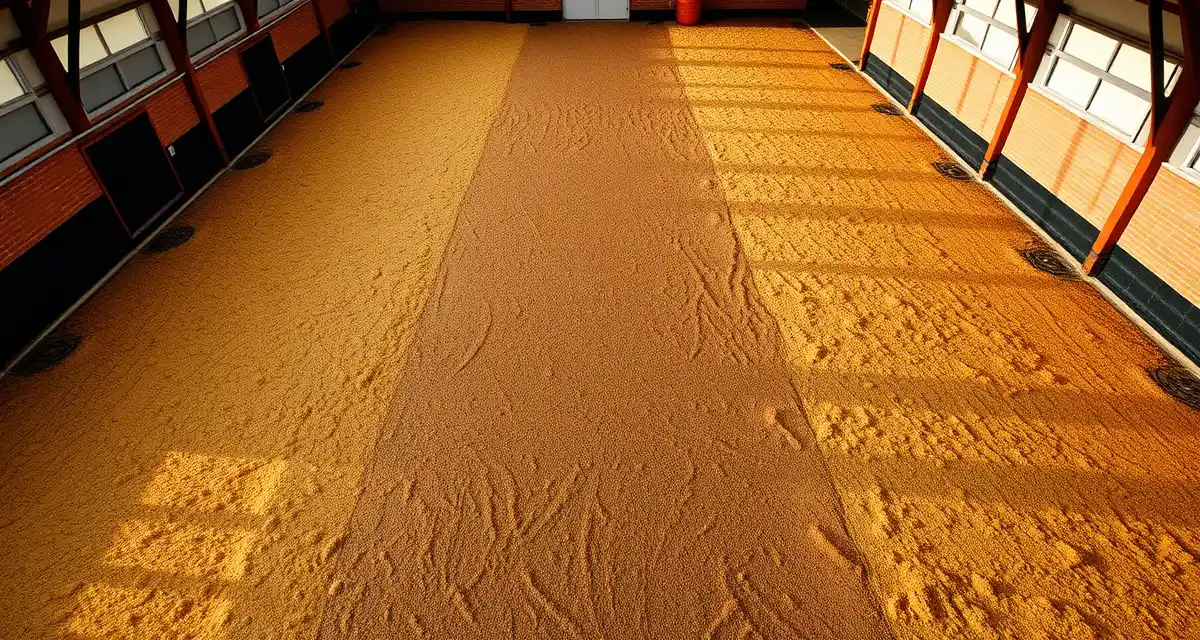
Arena Footing Materials: Sand, Rubber, and Maintenance
Footing is one of the most consequential decisions you make for your equestrian facility. Good footing protects horses from injury, lets riders work effectively, and holds up over years of use. Poor footing costs you in horse injuries, vet bills, and riders who take their horses elsewhere. Understanding what materials work and why helps you make better decisions whether you're installing a new arena or maintaining an existing one.
What Makes Good Footing
Good arena footing has four properties in balance:
Cushion: Absorbs the impact of hoofbeats to reduce concussion on joints and tendons. Too little cushion on a hard base increases injury risk. Too much cushion (deep, loose footing) strains tendons and exhausts horses quickly.
Stability: Footing that doesn't shift or compact under the horse allows it to push off predictably. Unstable footing that moves too much underfoot creates inconsistent traction and fatigue.
Traction: The surface needs to grip the hoof for push-off without gripping so firmly that the horse can't pivot or slide intentionally. The right amount of traction varies by discipline: reining horses need some slide; dressage horses need firm push-off.
Dust control: Excessive dust is a respiratory health issue for horses and riders and makes an arena unpleasant to use. Managing dust is an ongoing maintenance task, not a one-time fix.
Sand Types and Selection
Sand is the most common base material for equestrian arenas. Not all sand is equal, and the wrong sand can underperform or fail quickly.
Angular vs. round sand: Angular sand particles interlock when compacted, providing stability and traction. Round particles roll against each other, creating soft, unstable footing that tends to migrate to the rail. For most equestrian applications, angular or sub-angular sand is preferred.
Particle size: Medium-coarse sand (roughly 0.3 to 2 mm particle size) performs well for most disciplines. Very fine sand packs down hard or generates excessive dust. Coarse sand can be abrasive on hooves.
Silica content: High-silica sands are hard, durable, and drain well. Mason sand (high silica, medium grind) is a common choice for indoor and outdoor arenas.
Depth: Arena sand depth depends on what's underneath. On a compacted, well-draining base, 3 to 4 inches of sand works for most disciplines. Jumping arenas may benefit from 4 to 5 inches. Going deeper than that without a high-quality base often creates soft, unpredictable footing rather than better cushion.
When selecting sand, request a sample and have it analyzed for particle size distribution. A reputable footing supplier should be able to provide specifications. If possible, visit a facility using the same material before committing.
Rubber Additives
Rubber fiber or chip additives are blended into sand to improve cushion, reduce compaction, and help retain moisture. Recycled rubber from tires is the most common source.
Benefits of rubber additives:
- Reduces dust by helping the footing retain moisture longer
- Adds cushion without increasing depth significantly
- Helps maintain footing consistency between maintenances
- Reduces the tendency of sand to compact under heavy use
Rubber is typically blended at 10 to 15 percent by volume, though recommendations vary by product and discipline. Too much rubber creates inconsistent, unpredictable footing and can be problematic for horses that need firm push-off (dressage, jumping).
Rubber fiber (shredded into long strands) tends to integrate better with sand than rubber crumb (small chips), which can separate over time. Synthetic fiber additives (polypropylene or similar) serve a similar binding function.
The downside of rubber: it eventually works its way to the surface or migrates to the rail and needs to be reincorporated through dragging. Over several years, rubber content depletes and needs to be replenished.
Dust Control
Dust management is a practical requirement, not a luxury. Options include:
Watering: The most basic approach. A drag with a water tanker before use reduces dust significantly. In dry climates, arenas may need daily watering. The challenge is consistency: too little water and dust returns quickly; too much and footing becomes slippery.
Magnesium chloride: A hygroscopic salt that draws moisture from the air and holds it in the footing. Applied as a solution or in granular form, it reduces how often you need to water. Effective in humid climates; less so in very arid conditions. Can be corrosive to metal arena hardware over time.
Calcium chloride: Similar to magnesium chloride. Slightly more hygroscopic, works well in low-humidity environments. More expensive than magnesium chloride.
Polymer treatments: Water-holding polymer products are incorporated into footing and reduce moisture loss. These are higher cost but can significantly reduce watering frequency.
Wax-coated footing: Premium indoor arenas sometimes use sand coated with a paraffin wax blend. The wax holds footing together, nearly eliminates dust, and maintains consistent moisture. High upfront cost, but requires very little maintenance over time.
Footing Maintenance
Even well-designed footing degrades without regular maintenance. A grooming and dragging schedule should include:
- Before every use: Drag the arena to level the surface and break up compacted spots
- After heavy use: Check for ruts near the rail, compaction in the center, and buildup in corners
- Weekly: Deep drag or harrow to pull up compacted lower layers
- Monthly: Check footing depth in multiple locations; add material where low spots develop
- Annually: Full arena assessment, possible footing refresh or addition
The base below the footing matters as much as the surface material. A base that has settled unevenly, developed drainage problems, or cracked will degrade the performance of any footing on top of it.
See also: arena management, arena scheduling, barn maintenance scheduling
FAQ
What is Arena Footing Materials: Sand, Rubber, and Maintenance?
Arena footing refers to the surface material installed in an equestrian riding arena. Sand, rubber, and fiber blends are the most common materials used. The right footing balances cushion, stability, traction, and dust control to protect horses from injury and allow effective training. This article covers how different materials perform, how to select the right sand type, and how to maintain your surface over time.
How much does Arena Footing Materials: Sand, Rubber, and Maintenance cost?
Costs vary widely based on arena size, material choice, and whether you're installing new or renovating. Basic sand footing for a standard 60x120 arena can run $3,000–$8,000 for materials alone. Adding rubber crumb or fiber additives increases costs by $5,000–$15,000 or more. Ongoing maintenance—watering, dragging, periodic top-dressing—adds several hundred to a few thousand dollars annually depending on your setup.
How does Arena Footing Materials: Sand, Rubber, and Maintenance work?
Arena footing works by absorbing and distributing the force of each hoofbeat across a stable, textured surface layer. The base provides firm support underneath, while the footing layer on top provides cushion and traction. Sand particles interlock to resist shifting, while rubber or fiber additives improve springback and moisture retention. Regular dragging redistributes compacted material and keeps the surface consistent.
What are the benefits of Arena Footing Materials: Sand, Rubber, and Maintenance?
Good arena footing reduces joint concussion and tendon strain, lowering injury risk and vet bills. It improves horse performance by providing reliable traction and push-off. Riders work more effectively on consistent surfaces. Proper footing also reduces dust, improving respiratory health for both horses and riders. Long-term, quality footing retains facility value and keeps boarders and trainers from taking their horses elsewhere.
Who needs Arena Footing Materials: Sand, Rubber, and Maintenance?
Any equestrian facility owner, barn manager, or trainer responsible for a riding arena benefits from understanding footing materials. This includes owners of private training barns, boarding facilities, competition venues, and therapy or lesson programs. Even riders who lease arena time benefit from knowing what good footing looks and feels like so they can advocate for proper maintenance and make informed facility choices.
How long does Arena Footing Materials: Sand, Rubber, and Maintenance take?
Installing new arena footing typically takes one to three days for a standard-size arena, depending on material delivery, site prep, and labor. Renovation or top-dressing takes less time—often a single day. Ongoing maintenance is continuous: arenas should be dragged after heavy use and watered regularly in dry conditions. Annual deep renovation or material replenishment keeps footing performing correctly over its lifespan.
What should I look for when choosing Arena Footing Materials: Sand, Rubber, and Maintenance?
Look for sand with angular, medium-sized particles rather than round or fine grains—angular sand interlocks better and resists shifting. Test for dust production before purchasing. If adding rubber or fiber, evaluate how the additive blends with your sand type. Consider your discipline: reining needs more slide, dressage needs firm push-off. Assess your drainage, base quality, and water access, since even perfect footing fails on a poor base.
Is Arena Footing Materials: Sand, Rubber, and Maintenance worth it?
Yes—quality arena footing is one of the highest-return investments for an equestrian facility. Injuries from poor footing cost far more than good materials. Horses work better, trainers stay, and boarders trust facilities that take footing seriously. A well-maintained surface also lasts longer, reducing long-term replacement costs. If you're operating any serious riding program, understanding and investing in footing materials pays off consistently over time.