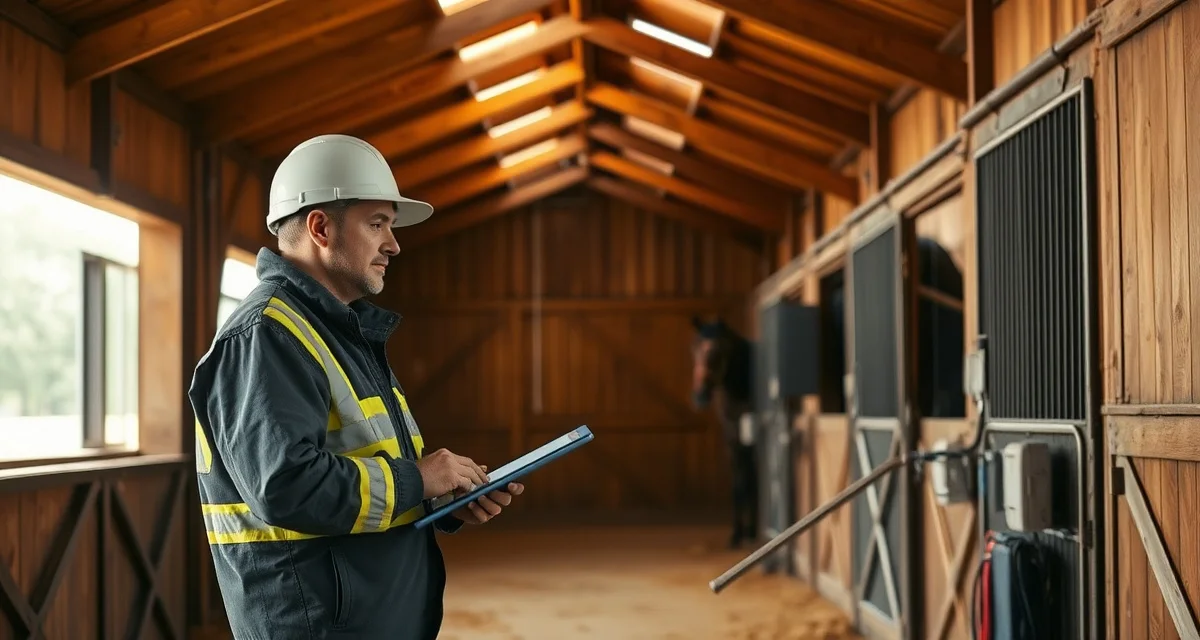
Facility Safety Inspection: Keeping Your Equine Property Safe
A facility safety inspection is a formal, documented review of your property for conditions that could injure horses or people. The goal is to identify problems before they cause harm rather than after. Safety inspections should be scheduled at regular intervals and conducted with the specific intention of finding issues, not confirming that everything looks fine.
Fencing
Fencing is one of the most common sources of horse injury on equine properties. Inspect all fencing at minimum quarterly, and after any major weather event.
- [ ] No broken boards, loose wire, or protruding nails at any fencing point
- [ ] All fence posts are secure and upright with no lean or rot at the ground line
- [ ] Electric fence working and tested at appropriate intervals; voltage adequate
- [ ] No gaps at gate entries or corner posts where a horse could put a foot through
- [ ] Fence height appropriate for the horses currently in each paddock
- [ ] No baling twine, wire, or debris caught in or near fencing
- [ ] Fence boards not splintered or broken in a way that creates sharp edges at horse head height
Footing and Surfaces
- [ ] Arena footing at appropriate depth (measure in multiple locations, not just by visual assessment)
- [ ] No ruts or uneven spots in arena that represent trip or stumble hazards
- [ ] Paddock high-traffic areas (gates, water troughs) not deeply mudded or pitted
- [ ] Barn aisle footing has appropriate grip (rubber mats in good condition, not slippery when wet)
- [ ] Wash stall mats textured and draining; no slick surfaces
- [ ] Paths between barn and paddocks clear of trip hazards and maintained after rain
Stalls and Barn Interior
- [ ] All stall latches functional and no stall door can be opened by a horse manipulating the latch
- [ ] No protruding hardware in stalls at horse head or body height
- [ ] Water buckets or automatic waterers functioning in every stall
- [ ] No broken boards in stall walls or floors
- [ ] Stall mats in good condition without edges that curl and create trip points
- [ ] Ventilation adequate; no ammonia buildup from stall waste
- [ ] Hay storage separated from horse areas with appropriate fire break if hay is stored in or adjacent to the barn
- [ ] Feed room secured; horses cannot access grain storage
- [ ] Aisles clear of trip hazards: hoses coiled, equipment stored
Electrical
Electrical issues are the leading cause of barn fires. Inspections should be thorough.
- [ ] No exposed or chewed wiring visible anywhere in the barn
- [ ] All light fixtures intact; no broken bulbs in contact with flammable material
- [ ] Electrical panel accessible and labeled; no modifications made outside proper electrical work
- [ ] Extension cords not run under bedding or hay; not used as permanent wiring
- [ ] Fans secured and not positioned where horses can reach the blades or cords
- [ ] Smoke detectors and heat detectors present in the barn and tested recently
Water
- [ ] All water sources functional (automatic waterers, troughs, barn water lines)
- [ ] No standing water in traffic areas that could freeze or create mud hazards
- [ ] Water heaters for winter use operational and inspected; not in contact with combustible material
Equipment and Tools
- [ ] Pitchforks, rakes, and other tools stored away from horse areas with tines down or covered
- [ ] Wheelbarrows parked clear of aisles and not blocking emergency exits
- [ ] Tractors and equipment stored securely; hydraulics secured when equipment is parked
Emergency Preparedness
- [ ] Emergency contacts posted in the barn including primary vet, emergency vet clinic, and facility manager's phone number
- [ ] Fire extinguisher present, charged, and inspected within the past year
- [ ] First aid kit present and stocked
- [ ] Halters and leads accessible and not locked away from horse areas
- [ ] Clear evacuation plan for horses in case of fire or other emergency
Document each inspection with the date, name of the inspector, findings, and actions taken. BarnBeacon provides a place to log facility inspection notes so records are maintained and any repeat issues are visible over time. For footing-specific maintenance, see equine footing management.
FAQ
What is Facility Safety Inspection: Keeping Your Equine Property Safe?
A facility safety inspection is a formal, documented review of your equine property designed to identify hazards before they cause injury to horses or people. It covers critical areas including fencing integrity, footing conditions, electrical systems, water sources, and structural soundness of barns and shelters. Unlike a casual walkthrough, it follows a checklist-based approach with the explicit goal of finding problems, not confirming everything appears fine.
How much does Facility Safety Inspection: Keeping Your Equine Property Safe cost?
Conducting a facility safety inspection yourself costs nothing beyond your time and a printed checklist. Hiring a professional equine facility consultant typically runs $200–$600 depending on property size and region. Some insurance providers offer free or discounted inspections. The real cost consideration is what you risk by skipping them — veterinary bills, liability exposure, and horse loss far exceed any inspection fee.
How does Facility Safety Inspection: Keeping Your Equine Property Safe work?
A facility safety inspection works by systematically walking every area of your property against a structured checklist. You assess fencing for broken boards, loose wire, and protruding nails; test electric fence voltage; evaluate footing depth and drainage; check water systems, lighting, fire safety equipment, and stall hardware. Findings are documented, prioritized by severity, and converted into a repair action list with follow-up dates.
What are the benefits of Facility Safety Inspection: Keeping Your Equine Property Safe?
Regular facility safety inspections reduce horse injuries from fencing hazards, footing failures, and structural defects. They help catch slow-developing problems like fence post rot or drainage issues before they become emergencies. Documented inspections also support insurance claims, demonstrate due diligence if liability is ever questioned, and create a maintenance schedule that extends the lifespan of expensive infrastructure.
Who needs Facility Safety Inspection: Keeping Your Equine Property Safe?
Any equine property owner or manager needs facility safety inspections — from a single backyard horse owner to a large boarding, breeding, or training operation. Properties with multiple horses, public access, employees, or lesson programs face heightened liability and should inspect more frequently. Even well-maintained facilities benefit because conditions change with weather, season, and use patterns that aren't always obvious without a deliberate, systematic review.
How long does Facility Safety Inspection: Keeping Your Equine Property Safe take?
A thorough facility safety inspection of a small property with a few paddocks and a barn typically takes two to four hours. Larger operations with multiple arenas, pastures, and outbuildings may require a full day or multiple sessions. Quarterly inspections of a well-maintained property move faster once you have a baseline. Post-storm or post-incident checks of specific areas can be completed in under an hour.
What should I look for when choosing Facility Safety Inspection: Keeping Your Equine Property Safe?
Choose an inspection approach that is specific to equine facilities, not generic farm or property checklists. Look for coverage of horse-specific hazards: fence height relative to horse size, electric fence voltage standards, stall hardware that prevents pawing injuries, and arena footing depth guidelines. If hiring a consultant, verify equine facility experience. Prioritize checklists that require documentation and follow-up dates, not just yes/no boxes.
Is Facility Safety Inspection: Keeping Your Equine Property Safe worth it?
Yes. A single avoided fence injury, colic from a contaminated water source, or fire that started from faulty wiring more than justifies the time invested in regular inspections. Equine veterinary and emergency costs routinely reach thousands of dollars per incident. Beyond direct costs, safety inspections protect against liability claims if a horse, employee, or visitor is injured on your property. Consistent documentation also demonstrates responsible management to insurers and potential buyers.