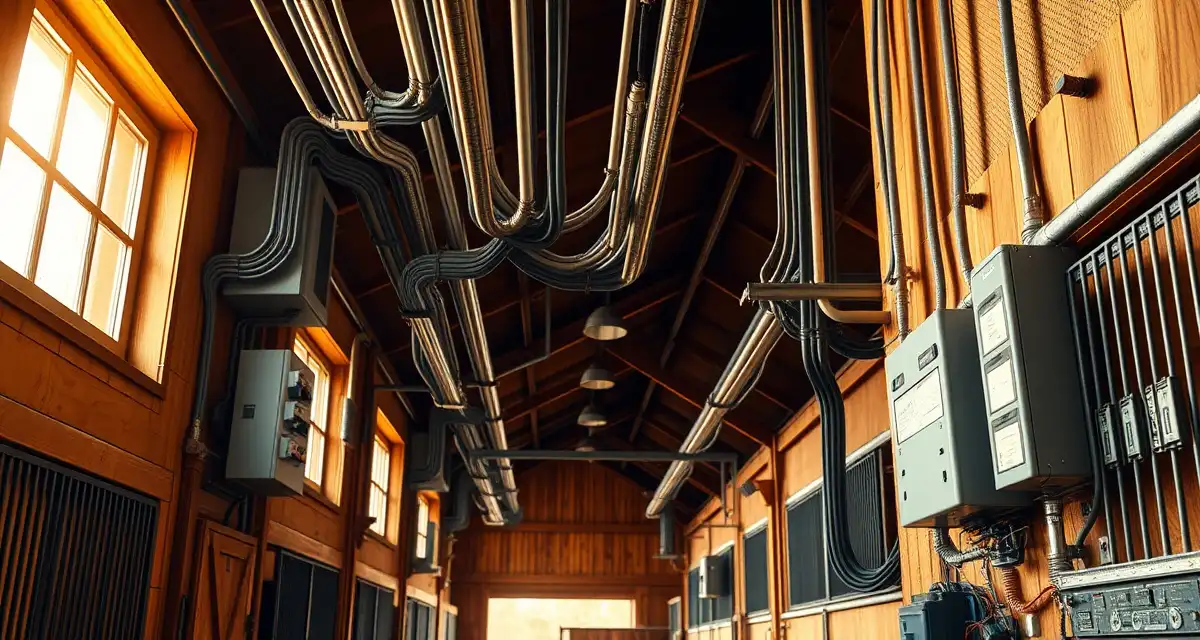
Electrical Safety in Horse Barns: What Every Facility Manager Must Know
Barn fires caused by electrical faults are among the most catastrophic events in equestrian facility management. They can kill horses, destroy property, and end a business in hours. Unlike many risks in barn management, electrical hazards are not always visible and can develop silently over time. Understanding and managing electrical safety is a fundamental responsibility for every barn operator.
Why Barns Are Electrically High-Risk
Horse barns present a combination of factors that make electrical systems particularly vulnerable:
- Moisture: Humidity, manure gases, and water systems create a corrosive environment that degrades wiring insulation and connections faster than in dry indoor environments
- Rodents: Mice and rats chew through wire insulation, creating exposed conductors that can spark or arc
- Ammonia: Urine and manure produce ammonia gas that accelerates corrosion of metal components including wire connections and panel hardware
- Vibration: Horses moving, trailer traffic, and mechanical equipment create vibration that loosens electrical connections over time
- Extension cords: Temporary electrical solutions become permanent in barn settings, creating overloaded circuits and tripping hazards
Daily Electrical Safety Checks
Your daily barn inspection should include specific electrical checks:
- Visually inspect lighting fixtures for burn marks, discoloration, or signs of arcing
- Verify that no extension cords are present in horse areas
- Check that all electrical panels are accessible and not blocked by hay, feed, or equipment
- Look for signs of rodent activity near any electrical wiring or conduit
- Verify that heat lamps and heated water buckets are properly secured and not in contact with bedding or wood
These checks take only a few minutes but catch developing problems before they reach ignition risk.
High-Risk Electrical Areas in Barns
Hay Storage
Hay is extremely flammable, and electrical fixtures near hay storage are a serious fire risk. No bare bulb fixtures should be present near hay. All fixtures near hay should be rated for dusty or agricultural environments. Ideally, hay storage is in a separate structure from stabling.
Tack Rooms and Feed Rooms
Tack rooms and feed rooms often accumulate extension cords and power strips as refrigerators, clippers, and other equipment are added over time. These areas should be inspected regularly for circuit overloading.
Water Heaters and Heated Equipment
Electric water heaters, heat tapes, and heated bucket systems are particularly high-risk because they run continuously in damp environments. These systems should be on dedicated circuits with appropriate amperage and should be inspected by a licensed electrician annually.
Wash Racks and Grooming Areas
Any area where water and electricity are in proximity requires ground fault circuit interrupter (GFCI) protection. All outlets in wash racks, cross-tie areas, and near water sources should be GFCI-protected.
Stray Voltage: A Hidden Danger
Stray voltage, or tingle voltage, occurs when small electrical currents travel through ground paths and can be felt by horses and humans. Horses are particularly sensitive to stray voltage and may refuse to drink from electric waterers, display unusual behavior near certain areas of the barn, or be reluctant to enter specific stalls.
If you notice horses behaving unusually near water sources or electrical equipment, have the facility inspected by an electrician familiar with agricultural stray voltage issues. This is a common and correctable problem that can be missed if the cause is not understood.
Annual Electrical Inspection
Have a licensed electrician inspect your entire barn electrical system at least once per year. The inspection should cover:
- Panel boxes: check for overheating, corrosion, and proper breaker sizing
- All wiring visible in the barn: check for damaged insulation, improper connections, and signs of rodent damage
- Grounding: verify that the system is properly grounded and that ground connections are secure
- GFCI protection: test all GFCI outlets for proper function
- Exterior wiring: check weather seals on all exterior outlets and connections
Document the inspection results and any corrective actions taken. Keep these records alongside your facility safety inspection documentation.
Fire Prevention Basics
Electrical safety is a component of broader fire prevention:
- Keep a minimum 10-foot clearance between electrical panels and flammable materials
- Use metal conduit rather than PVC where possible in horse areas
- Install and maintain properly rated fire extinguishers at the barn entrance, in the hay area, and in the tack room
- Consider automatic fire suppression systems for hay storage areas
- Create and practice a horse evacuation plan
For questions about fire safety requirements specific to your state, consult your local fire marshal and review the guidelines from the American Fire Sprinkler Association, which has published agricultural fire safety resources.
Connect your electrical safety documentation to your regular daily barn care checklists so that electrical checks are a required part of every daily inspection, not an afterthought.
FAQ
What is Electrical Safety in Horse Barns: What Every Facility Manager Must Know?
Electrical Safety in Horse Barns: What Every Facility Manager Must Know is a comprehensive guide covering the unique electrical hazards present in equine facilities. It addresses why barns are high-risk environments due to moisture, ammonia, rodents, and vibration, and provides facility managers with practical knowledge to prevent electrical fires, protect horses, and maintain safe, code-compliant operations.
How much does Electrical Safety in Horse Barns: What Every Facility Manager Must Know cost?
This is a free educational resource available on BarnBeacon. There is no cost to access the article. However, implementing the recommendations—such as hiring licensed electricians, installing GFCIs, upgrading wiring, or conducting professional inspections—will involve costs that vary depending on your facility's size, age, and current electrical condition.
How does Electrical Safety in Horse Barns: What Every Facility Manager Must Know work?
The guide works by breaking down electrical risk factors specific to horse barns, then providing actionable safety protocols. Facility managers learn to identify hazards during daily walkthroughs, establish inspection schedules, work with qualified electricians, and build systemic habits that catch developing problems before they become fires or fatalities.
What are the benefits of Electrical Safety in Horse Barns: What Every Facility Manager Must Know?
Key benefits include dramatically reducing the risk of barn fires, protecting horses and staff from electrical shock, maintaining insurance coverage and code compliance, and preserving your business. Proactive electrical management also helps identify aging infrastructure early, avoiding costly emergency repairs and the irreplaceable loss of animals that a fire can cause.
Who needs Electrical Safety in Horse Barns: What Every Facility Manager Must Know?
Any operator or manager of a horse barn, boarding facility, training center, or equine property needs this information. It is especially critical for managers of older facilities with aging wiring, high-moisture environments, or barns that rely on extension cords and temporary electrical solutions that have become permanent fixtures over time.
How long does Electrical Safety in Horse Barns: What Every Facility Manager Must Know take?
Reading the guide takes under 15 minutes. Implementing the recommendations is an ongoing commitment: daily visual checks take minutes, while monthly and annual inspections require more structured time. A full electrical assessment by a licensed electrician may take several hours to a full day depending on facility size, with any remediation work scheduled separately.
What should I look for when choosing Electrical Safety in Horse Barns: What Every Facility Manager Must Know?
Look for actionable, barn-specific guidance rather than generic electrical safety advice. The best resources address the unique hazards of equine environments—ammonia corrosion, rodent damage, humidity—and give you concrete checklists, inspection frameworks, and guidance on working with licensed electricians who understand agricultural and equestrian facility requirements.
Is Electrical Safety in Horse Barns: What Every Facility Manager Must Know worth it?
Absolutely. Barn fires caused by electrical faults can kill horses, destroy infrastructure, and end a business within hours. The cost of prevention—inspections, proper wiring, GFCI installation—is a fraction of the financial and emotional devastation of a fire. For any facility manager responsible for animals and staff, electrical safety is non-negotiable.