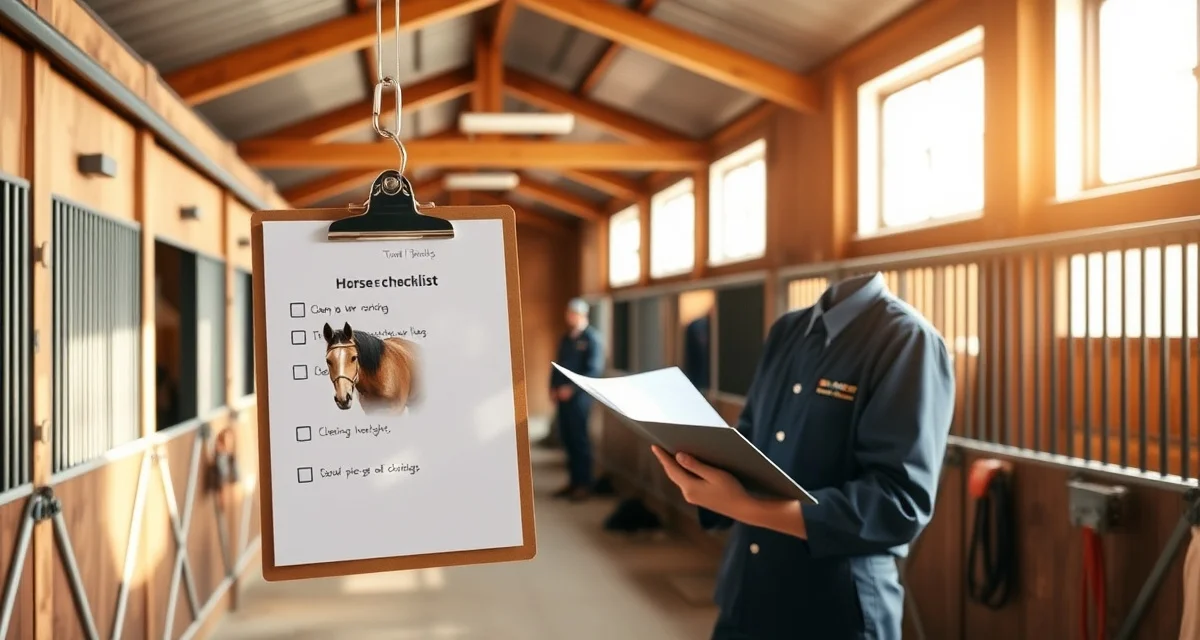
Daily Barn Care Checklists for Equestrian Facilities
A daily barn care checklist is the backbone of consistent horse care. Without one, even experienced staff miss steps during busy mornings, shift handoffs, or when working in unfamiliar routines. With one, your entire operation becomes repeatable regardless of who is on the property.
What Belongs on a Daily Barn Care Checklist
The most effective checklists cover three shifts: morning, midday, and evening. Each shift has its own set of tasks that, when completed in sequence, keep horses healthy and the facility running smoothly.
Morning Tasks
Morning is the most critical shift. Horses have been in stalls overnight, and the first visual check of the day catches any problems that developed since the previous evening.
- Check each horse for signs of injury, illness, or unusual behavior
- Fill water buckets and automatic waterers
- Feed hay and grain per each horse's individual feed program
- Administer morning medications as prescribed
- Clean stalls and add bedding
- Turn out horses according to the daily turnout schedule
- Check perimeter fencing and gate latches
- Note any health concerns in the horse's record
Midday Tasks
Not every facility has a midday check, but larger operations and those with horses on restricted turnout or special care protocols should include it.
- Visual check of horses in turnout
- Water checks in paddocks and pastures
- Administer midday medications if required
- Address any tasks flagged during the morning shift
Evening Tasks
- Return horses from turnout
- Feed evening hay and grain
- Administer evening medications
- Refresh water buckets
- Bed down stalls
- Final visual check of each horse
- Secure the barn and check lighting
Why Paper Checklists Fall Short
Paper checklists work until they don't. Common failure points include checklists that get wet or lost, no clear timestamp for when tasks were completed, and no way to verify which staff member completed each item. When a health issue arises and you need to know who checked a horse at what time, a crumpled paper checklist gives you nothing useful.
Digital checklists solve these problems by timestamping completions, linking tasks to specific staff logins, and keeping records accessible from anywhere. When a horse owner asks whether their horse was checked at 7 a.m., you can pull that record in seconds.
Connecting Checklists to Health Records
The real value of a daily checklist system comes when task completions connect directly to horse health records. A note like "horse off feed at evening check" should automatically appear in that horse's health log, not just disappear into a completed checklist.
This connection is what turns a task management system into a genuine health monitoring tool. Patterns emerge over time: if a horse consistently shows reduced appetite on Monday evenings, that pattern is visible in the data rather than buried in individual shift notes.
Customizing Checklists by Horse
Not every horse on your property has the same care requirements. A horse on stall rest after surgery has completely different daily care needs than a healthy horse in full work. Your checklist system should accommodate horse care instructions that are specific to individual animals, with flags or alerts for horses that need special attention.
BarnBeacon lets you build checklist templates at the facility level and then customize them per horse, so staff always see the right tasks for each animal without needing to memorize individual care plans.
Staff Accountability and Shift Handoffs
One of the most common sources of care errors is the shift handoff. The morning person leaves before the evening person arrives, and nothing gets communicated except what's written down. A completed digital checklist becomes the shift report, showing exactly what was done and what was flagged.
This accountability structure also protects your facility. If a horse owner claims their horse wasn't checked during a specific shift, you have timestamped records showing what was completed and by whom. This kind of documentation is increasingly important as boarding facilities face more scrutiny over care standards.
Link your daily checklists to your daily care logs so every shift produces a permanent, searchable record. Over time, these records become the most reliable documentation your facility has.
Getting Started
The simplest way to implement a daily barn care checklist is to write down everything you already do in a normal day, organize it by shift, and then eliminate anything that doesn't actually happen consistently. Start with the essentials and add complexity only where your operation genuinely requires it.
For facilities ready to move beyond paper, BarnBeacon's barn management software includes digital checklists with staff assignment, timestamp tracking, and direct integration with horse health profiles.
FAQ
What is Daily Barn Care Checklists for Equestrian Facilities?
A daily barn care checklist for equestrian facilities is a structured task list covering morning, midday, and evening shifts to ensure consistent horse care and facility management. It includes feeding, watering, stall cleaning, turnout, health checks, and equipment inspections. Rather than relying on memory, staff follow a repeatable sequence that keeps horses healthy and operations running smoothly regardless of who is working that day.
How much does Daily Barn Care Checklists for Equestrian Facilities cost?
Daily barn care checklists are free to create and implement. You can build one using a simple spreadsheet, printed form, or barn management software. Digital platforms range from free basic tiers to paid plans starting around $30–$100 per month for larger operations. The real investment is staff time to complete tasks consistently — the checklist itself costs nothing but delivers significant value in preventing missed care and avoidable health issues.
How does Daily Barn Care Checklists for Equestrian Facilities work?
A daily barn care checklist works by breaking each day into structured shifts — typically morning, midday, and evening — with specific tasks assigned to each. Staff work through the list in sequence, checking off items as completed. Health observations, feed changes, and medication notes are recorded alongside routine tasks. This sequential approach prevents steps from being skipped during busy periods, shift handoffs, or when unfamiliar staff are covering the barn.
What are the benefits of Daily Barn Care Checklists for Equestrian Facilities?
Daily barn care checklists improve horse health outcomes by ensuring no feeding, watering, or health check is missed. They create accountability across staff, reduce errors during shift changes, and provide a written record useful for veterinary consultations. Checklists also streamline training for new employees and make your operation scalable. Facilities using consistent checklists catch early signs of illness or injury faster, which can significantly reduce veterinary costs over time.
Who needs Daily Barn Care Checklists for Equestrian Facilities?
Any equestrian facility benefits from daily barn care checklists — from single-horse hobby farms to large boarding, training, and breeding operations. They are especially critical for facilities with multiple horses, rotating staff, or horses on complex care protocols involving medications, restricted turnout, or special diets. Barn managers, grooms, and owners who want consistent, documented care regardless of who is on property will find checklists essential to reliable daily operations.
How long does Daily Barn Care Checklists for Equestrian Facilities take?
Completing a daily barn care checklist takes approximately two to four hours for a full morning shift in a mid-sized facility, depending on horse count and individual care needs. Midday checks typically run 30–60 minutes, and evening shifts mirror the morning in duration. The checklist itself does not add significant time — it simply organizes tasks that would need to happen anyway, making each shift faster and less prone to omissions.
What should I look for when choosing Daily Barn Care Checklists for Equestrian Facilities?
Look for a checklist that covers all three daily shifts — morning, midday, and evening — with tasks specific to your facility's horses and protocols. It should include health observation prompts, not just routine tasks. Choose a format your team will actually use: printed sheets, a whiteboard, or a digital app. The best checklists are editable, horse-specific where needed, and include space to log notes so concerns are communicated clearly across shifts and to your veterinarian.
Is Daily Barn Care Checklists for Equestrian Facilities worth it?
Yes. A daily barn care checklist is one of the highest-return investments in equine facility management. It costs nothing to implement and directly reduces the risk of missed feedings, overlooked health issues, and communication failures between staff. Horses on consistent care routines stay healthier, perform better, and require fewer emergency veterinary calls. For any facility with more than one horse or more than one caregiver, a checklist pays for itself the first time it catches a problem before it becomes serious.