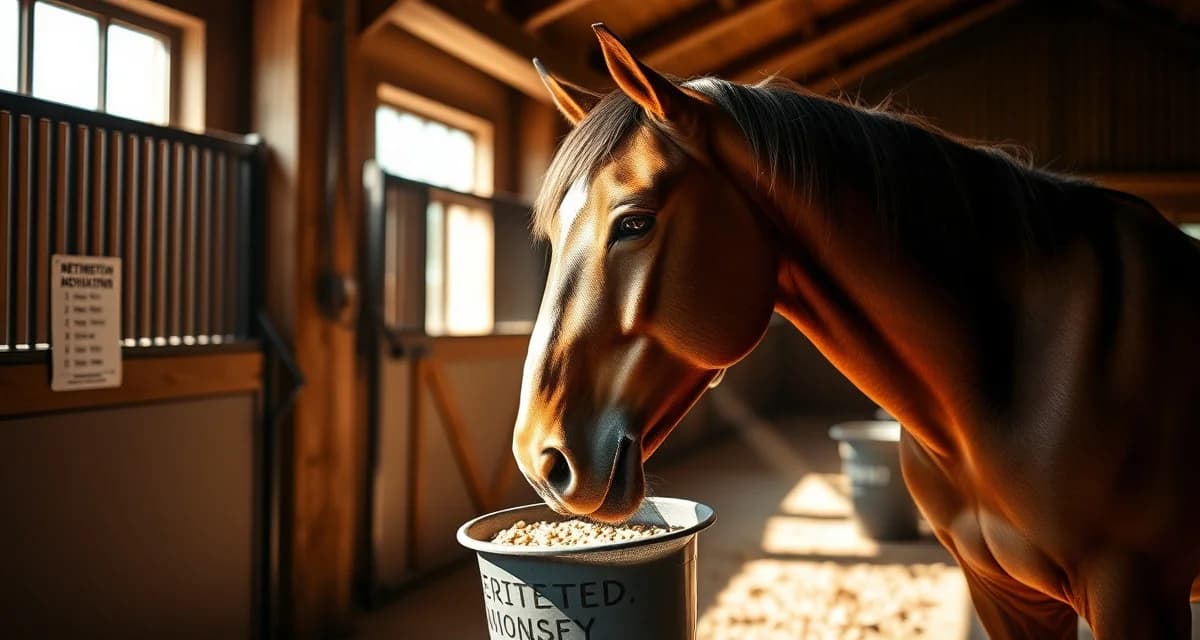
Horse Feeding Management at Retirement Facilities: Complete Guide
Retirement barns are not just boarding facilities with older horses. They are specialized care environments where horse feeding management at the retirement barn level requires a fundamentally different approach than standard boarding or training operations.
TL;DR
- Feed errors are the second leading cause of preventable colic, according to AAEP data
- All rations should be measured by weight, not volume; different feeds have very different densities per scoop
- Any concentrate change must follow a 7-to-14-day transition to reduce colic and GI upset risk
- A feed cards is only useful if it is current; updates must push to all staff in real time, not just to a posted board
- Fixed feeding windows within 30 minutes of schedule reduce ulcer risk from irregular gastric acid cycles
- Verbal feed change handoffs are the most common source of dosing errors in multi-staff barns
Retirement facilities represent a distinct segment with unique management needs: horses arrive with complex medical histories, multiple dietary restrictions, and conditions like Cushing's disease, insulin resistance, or chronic laminitis that demand precise, individualized feeding protocols. Getting it wrong is not just an inconvenience. It can be a health crisis.
Why Standard Feed Schedules Break Down in Retirement Settings
At a typical boarding barn, you might feed a standard hay ration with a handful of grain variations. At a retirement facility, you might have 20 horses on 15 different feed programs.
One horse gets soaked hay to reduce sugar content. Another gets a mash three times a day. A third cannot be near a hay net because of a neurological condition affecting swallowing. These are not edge cases. They are the norm.
Staff turnover compounds the problem. When a new groom starts, they need to know exactly what each horse gets, in what order, at what time, and what to watch for. A verbal handoff is not enough when the stakes are this high.
Step 1: Build Individual Feed Profiles for Every Horse
Capture the Full Medical and Dietary Picture
Before you write a single feed schedule, collect complete intake documentation for each horse. This means current medications, known allergies, dental status, body condition score, and any vet-recommended dietary restrictions.
Do not rely on what the owner tells you verbally. Get it in writing, and get it from the attending vet where possible. Owners sometimes underreport conditions or forget supplements their horse has been on for years.
Assign a Feed Category to Each Horse
Group horses into feed categories based on complexity. A simple three-tier system works well:
- Standard: Hay and basic ration balancer, no special handling
- Modified: Soaked hay, low-sugar feed, or timed grazing restrictions
- Complex: Multiple supplements, mash preparation, hand-feeding, or medical monitoring at feed time
This categorization helps with staffing decisions and makes it immediately clear which horses require senior staff attention at feeding time.
Step 2: Create Written Feed Instructions That Any Staff Member Can Follow
Write for the Least Experienced Person on Your Team
Your feed instructions should be written as if a competent but brand-new employee is reading them on their first solo shift. That means no assumed knowledge, no shorthand, and no "you'll figure it out."
For each horse, document: feed type and brand, exact quantity by weight (not scoops), preparation method, feeding order if it matters, and any behavioral notes relevant to safe feeding. If a horse is a cribber who needs to be separated before feeding, that goes in the instructions.
Post Instructions at the Point of Use
Digital records are useful, but physical feed cards posted at each stall or feed station eliminate the need for staff to look anything up during a busy feeding round. Use a laminated card format that can be updated without reprinting the whole document.
Some facilities use a whiteboard system at the feed room entrance showing any same-day changes. This is especially useful when a vet has adjusted a horse's diet and the change needs to be communicated before the next feeding.
Step 3: Build a Supplement Tracking System
The Problem With Informal Supplement Management
Retirement horses often arrive with a bag or box of supplements the owner has been giving for years. Some of these overlap with what you already feed. Some interact with medications. Some have no documented rationale at all.
Without a tracking system, supplements get added, forgotten, or doubled up. A horse on a joint supplement from the owner and a similar product from the barn is getting an uncontrolled dose of the same ingredients.
Track Every Supplement Formally
Create a supplement log that records: product name, manufacturer, daily dose, who authorized it (owner or vet), start date, and review date. Review dates matter. A supplement started three years ago may no longer be appropriate for a horse whose condition has changed.
Connect supplement records to your billing system. Owners who supply their own supplements should be documented separately from barn-supplied products. This prevents billing disputes and makes it easy to see what the barn is actually providing versus what the owner is managing.
Step 4: Set Up a Feed Scheduling System That Accounts for Variability
Retirement Horses Need Consistent Timing
Horses with metabolic conditions like Cushing's or insulin resistance benefit significantly from consistent feeding times. Irregular schedules cause stress and can spike cortisol, which worsens insulin dysregulation. Build your schedule around fixed windows, not approximate times.
For horses on soaked hay, factor in soak time. A horse that needs hay soaked for 30 to 60 minutes requires that step to start well before the feeding window. This is a common point of failure in retirement barn operations when staff are rushed.
Plan for Staffing Gaps
Your feeding schedule should include contingency notes for reduced staffing days. Which horses can have their feeding slightly delayed without medical risk? Which horses absolutely cannot? Document this clearly so that whoever is covering a short-staffed shift knows where to focus.
For a deeper look at how to structure barn operations around these variables, the retirement barn operations guide covers staffing models and workflow design in detail.
Step 5: Use Software Built for Retirement Barn Complexity
What Most Barn Software Gets Wrong
Most barn management platforms are built for boarding or training facilities. They handle stall assignments, invoicing, and basic scheduling well. What they often lack is the ability to attach detailed, horse-specific feed instructions to daily task lists, track supplement inventories separately from feed, or flag when a horse's diet has not been reviewed in a set period.
This is where equine diet management at a retirement facility requires purpose-fit tools rather than workarounds.
What to Look For in a Management Platform
A platform designed with retirement workflows in mind should allow you to:
- Attach feed instructions directly to each horse's profile
- Generate daily feeding task lists by staff member or barn section
- Track supplement inventory and flag low stock
- Log feeding observations (did the horse finish its meal? Any changes in appetite?)
- Connect dietary notes to billing for owner-supplied versus barn-supplied items
BarnBeacon is built to adapt to retirement facility workflows and billing structures, including the kind of per-horse complexity that standard barn software cannot handle without significant manual workarounds. You can explore the full feature set through the barn management software overview.
Common Mistakes in Retirement Barn Feeding Management
Relying on memory instead of documentation. Even experienced staff make errors when managing 20 or more individual feed programs from memory. Write everything down.
Skipping feed reviews when a horse's condition changes. A horse that develops a new health issue mid-stay needs a diet review, not just a medication update. Build quarterly feed reviews into your standard operating procedure.
Treating owner-supplied supplements as informal. Every supplement entering your barn should be logged, regardless of who supplies it. This protects the horse and protects you.
Underestimating preparation time. Soaked hay, mashes, and medication-laced feeds take time to prepare. If your staffing model does not account for preparation time, feeding rounds will run late and horses will be stressed.
How do I handle feed changes requested by a horse owner?
All feed change requests from owners should be filtered through the barn manager and confirmed with the attending veterinarian if the change is clinically significant. Document the request, the authorization, and the effective date before anything changes in the feed room. A verbal request from an owner to a staff member that bypasses the manager is the most common path to a feeding error.
What is the safest way to introduce a new feed at my barn?
Transition over a minimum of seven days, starting with 25% new feed mixed with 75% old feed and shifting the ratio every two to three days. Document the transition schedule on each affected horse's feed card so every feeder knows the correct ratio on each day of the transition. Mark each day complete to track progress and catch any horse that goes off feed during the change.
How should I store feed to prevent spoilage and contamination?
Store bulk feed in sealed, rodent-proof containers in a dry, ventilated space. Keep feed off the ground and away from direct sunlight. Most commercial horse feeds have a 90-day shelf life once opened; label bags or containers with the opening date and rotate stock so older product is used first. Contaminated or spoiled feed should be disposed of immediately, never fed.
FAQ
What is Horse Feeding Management at Retirement Facilities: Complete Guide?
Horse feeding management at retirement facilities is a specialized approach to nutrition and diet planning tailored to aging horses with complex medical histories. Unlike standard boarding, retirement care requires individualized protocols for conditions like Cushing's disease, insulin resistance, and chronic laminitis. It encompasses feed selection, precise measurement by weight, scheduled feeding windows, staff communication systems, and real-time feed card updates to prevent errors that could cause colic or worsen chronic conditions.
How much does Horse Feeding Management at Retirement Facilities: Complete Guide cost?
Proper retirement feeding management is not a purchasable product — it is an operational framework implemented by barn managers and equine nutritionists. Costs vary based on facility size, feed choices, and veterinary oversight. Specialized feeds for metabolic conditions, regular vet consultations, and digital management tools may increase expenses compared to standard boarding. Expect feed costs per horse to run higher than a general boarding barn due to individualized rations and therapeutic forage requirements.
How does Horse Feeding Management at Retirement Facilities: Complete Guide work?
Retirement feeding management works by assigning each horse a documented feed card listing exact rations measured by weight, not volume. Feeding windows are kept within 30-minute schedules to stabilize gastric acid cycles. Any diet changes follow a 7-to-14-day transition protocol. Staff receive real-time updates through digital systems rather than posted boards. Verbal handoffs are minimized to reduce dosing errors, and all changes are logged to maintain continuity across shifts and personnel.
What are the benefits of Horse Feeding Management at Retirement Facilities: Complete Guide?
A well-executed retirement feeding program reduces colic risk, supports horses with metabolic diseases, and extends quality of life for aging animals. Consistent feeding schedules lower ulcer incidence. Weight-based rationing ensures accurate nutrient delivery. Real-time feed card updates prevent staff miscommunication, a leading source of dosing errors. Horses with Cushing's, IR, or laminitis benefit most, as precise carbohydrate and sugar management can meaningfully slow disease progression and reduce pain episodes.
Who needs Horse Feeding Management at Retirement Facilities: Complete Guide?
Any barn housing retired horses with age-related or chronic health conditions needs this level of feeding management. Facilities caring for horses with Cushing's disease, insulin resistance, laminitis, or dental issues are especially dependent on individualized protocols. Multi-staff barns where communication gaps are more likely also benefit significantly. Horse owners placing retired horses in care should specifically ask facilities whether they use weight-based rationing and documented, updatable feed cards before committing.
How long does Horse Feeding Management at Retirement Facilities: Complete Guide take?
Implementing a full retirement feeding management system typically takes two to four weeks to set up properly per horse. This includes veterinary or nutritionist intake assessment, establishing baseline rations, creating feed cards, training staff on protocols, and running the initial dietary transition if feed changes are needed. Ongoing management is continuous — feed cards require updates as horses age, seasons change, or health status shifts, meaning this is a living system rather than a one-time setup.
What should I look for when choosing Horse Feeding Management at Retirement Facilities: Complete Guide?
Look for facilities that measure all feed by weight using a scale, not scoops. Ask whether feed cards are digital and updated in real time across all staff. Confirm they follow a minimum 7-day transition for any feed changes. Check how diet updates are communicated between shifts — verbal-only handoffs are a red flag. Ask whether a veterinarian or equine nutritionist is involved in ration design. Facilities that track individual intake and body condition scores monthly indicate a higher standard of care.
Is Horse Feeding Management at Retirement Facilities: Complete Guide worth it?
For horses with chronic conditions, yes — proper retirement feeding management is essential, not optional. Feed errors are the second leading cause of preventable colic according to AAEP data, and metabolic horses face serious health consequences from inconsistent or incorrect nutrition. The investment in structured protocols, staff training, and accurate record-keeping directly reduces emergency vet calls, stabilizes chronic conditions, and extends a horse's comfortable years. Owners who prioritize feeding oversight at intake tend to report fewer health crises over time.
Sources
- American Association of Equine Practitioners (AAEP)
- United States Equestrian Federation (USEF)
- American Horse Council
- Kentucky Equine Research
- UC Davis Center for Equine Health
Get Started with BarnBeacon
A feeding system is only as reliable as its documentation. BarnBeacon gives retirement barns individual digital feed cards that update in real time, push alerts when rations change, and log every feeding with a timestamp and staff name. If feed errors are part of your current risk picture, start a free trial and build your first grain feeding schedule in a system built to close the information gap.