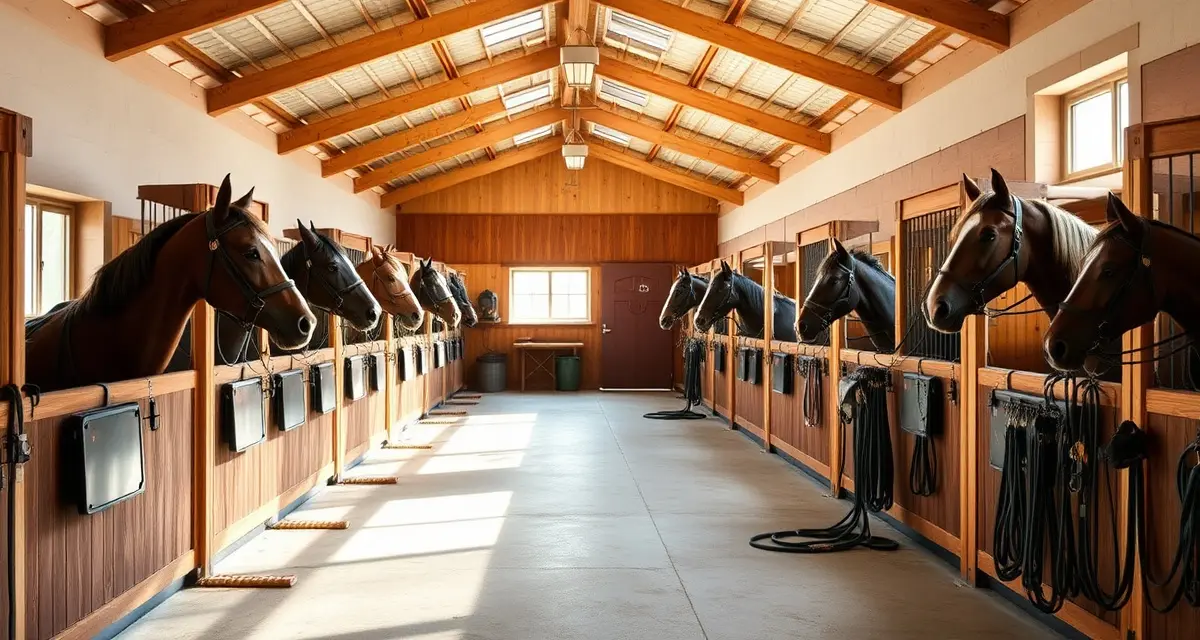
Combined Driving Barn Operations: Managing a Driving-Focused Equestrian Facility
Combined driving (also called combined driving trials or CDT) is an equestrian discipline that combines dressage, marathon (cross-country obstacle driving), and cones (precision obstacle navigation) in a single competition format. Managing a barn focused on combined driving has some unique operational requirements that differ from riding disciplines, particularly around equipment, vehicle storage, and preparation for the marathon phase.
What Makes Combined Driving Operations Different
Vehicle and harness inventory: Combined driving horses are trained and competed in carriages ranging from single-horse vehicles to four-in-hand teams. These vehicles require storage, maintenance, and careful organization. A vehicle that's damaged before a competition day is a significant problem. Equipment inventory tracking, including which vehicle is assigned to which horse or team, belongs in your operations records.
Multiple horse teams: Combined driving is one of the few equestrian disciplines where multiple horses must work in coordinated pairs or teams. The care and conditioning of each horse in a pair needs to be coordinated, and their training schedules need to account for their work together.
Marathon fitness requirements: The marathon phase of combined driving is demanding cardiovascular work for the horses. Conditioning programs for CDT horses are more intensive than for horses in other disciplines, and health monitoring during conditioning is important. Track conditioning rides and fitness assessments in your horse health records.
Competition scheduling: CDT competitions often require multi-day commitments with horses housed away from home. Competition scheduling, including stabling reservations at competition venues, transport planning, and health documentation for travel, requires careful coordination.
Daily Operations for Driving Facilities
The daily care routine for combined driving horses is similar to other boarding operations: feeding, watering, turnout, stall care, and health monitoring. The differences are in the training schedule and the equipment involved.
Harnessing and unharnessing: Proper harnessing is a skill that requires training. New staff should be trained explicitly, not expected to figure it out. Include harnessing protocols in your staff training documentation.
Equipment care post-drive: Harness and vehicles should be cleaned and inspected after every use. A harness that isn't cleaned deteriorates faster, and a vehicle that isn't inspected may develop a problem that's discovered during the next marathon, not before it.
Turnout considerations: Driving horses that are also used for liberty or pasture turnout need appropriate acreage and pasture mates. Horses in pairs or teams often do better when turned out together.
Billing for Driving Operations
Combined driving training billing includes the standard boarding billing management components plus:
- Training board fees that reflect the additional time and expertise of a CDT trainer
- Vehicle and equipment use fees if the facility owns competition vehicles
- Competition preparation fees (special conditioning rides, harness fitting, practice obstacle courses)
- Farrier fees for driving-specific shoeing, which differs from riding disciplines
BarnBeacon handles billing for driving facilities with the same per-horse charge tracking and automated invoicing that works for riding disciplines. See boarding and training billing for the billing structure guidance.
For how combined driving facilities fit into the broader barn operations framework, see that guide for general operational principles.
FAQ
What is Combined Driving Barn Operations: Managing a Driving-Focused Equestrian Facility?
Combined driving barn operations refers to the specialized management practices required to run a facility focused on combined driving trials (CDT). This discipline involves three phases—dressage, marathon, and cones—and demands unique infrastructure including carriage storage, harness rooms, and conditioning tracks. Unlike riding-only barns, a driving facility must manage vehicles, multi-horse teams, and marathon fitness programs alongside standard equine care, making operational systems more complex and detail-oriented.
How much does Combined Driving Barn Operations: Managing a Driving-Focused Equestrian Facility cost?
There is no single fixed cost for managing a combined driving facility—expenses vary widely based on herd size, vehicle inventory, and facility scale. Carriage maintenance, harness upkeep, and team conditioning programs add costs beyond typical barn operations. Budgeting should account for vehicle repair, specialized feed and conditioning plans for marathon fitness, and competition logistics including trailer capacity for both horses and carriages.
How does Combined Driving Barn Operations: Managing a Driving-Focused Equestrian Facility work?
A combined driving barn operates by coordinating horse care, harness and vehicle maintenance, and structured training schedules across all three CDT phases. Daily operations include conditioning work tailored to marathon demands, equipment inspection, and team training for pairs or four-in-hands. Barn management software or detailed logs help track individual horse health alongside vehicle assignments, ensuring everything is competition-ready when needed.
What are the benefits of Combined Driving Barn Operations: Managing a Driving-Focused Equestrian Facility?
A well-run combined driving facility improves horse welfare, reduces equipment failures, and supports competitive performance. Coordinated conditioning programs ensure horses are fit for the physically demanding marathon phase. Organized vehicle and harness inventories prevent costly last-minute repairs. Structured team training improves synchronization between paired or grouped horses, and clear operational records make it easier to manage vet schedules, farrier visits, and competition logistics efficiently.
Who needs Combined Driving Barn Operations: Managing a Driving-Focused Equestrian Facility?
Owners, barn managers, and trainers running facilities with combined driving horses need these operational practices. This includes small private barns with one or two driving horses as well as larger programs fielding pairs or four-in-hand teams. Anyone preparing horses for CDT competitions, whether amateur or professional, benefits from applying driving-specific management principles to their barn routines.
How long does Combined Driving Barn Operations: Managing a Driving-Focused Equestrian Facility take?
Setting up a functional combined driving barn management system typically takes several weeks to implement fully. Inventorying vehicles and harness, establishing conditioning schedules, and creating tracking systems for team coordination all require upfront time. Once in place, daily operations become routine. Competition preparation timelines vary by event, but marathon conditioning alone may require months of progressive fitness work before a horse is ready to compete safely.
What should I look for when choosing Combined Driving Barn Operations: Managing a Driving-Focused Equestrian Facility?
Look for a management approach that addresses vehicle storage and maintenance tracking, individual and team conditioning protocols, and harness inspection routines. It should accommodate the coordination required for pairs or team driving, not just single horses. Strong record-keeping for equipment assignments and horse fitness metrics is essential. If using software, confirm it supports the multi-horse and multi-vehicle complexity unique to combined driving programs.
Is Combined Driving Barn Operations: Managing a Driving-Focused Equestrian Facility worth it?
Yes, for anyone running a driving-focused facility, applying structured combined driving barn operations is worth the effort. The discipline's equipment demands and multi-horse coordination create real risks when management is informal—damaged carriages, unfit horses, or poorly matched teams can derail competition seasons. A systematic approach protects your investment in horses and vehicles, improves performance outcomes, and reduces the stress of competition preparation.