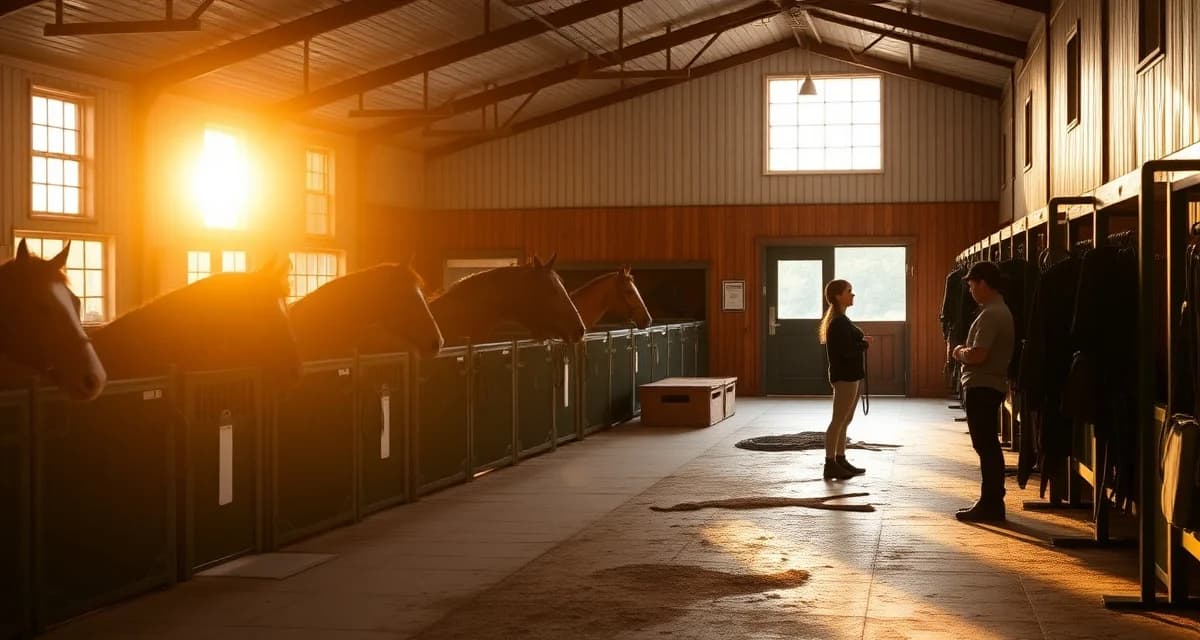
Eventing Barn Operations Guide: Managing a Combined Training Facility Year-Round
Running an eventing barn is a year-round operation that moves through distinct phases: the off-season conditioning and development work, the early-season competition build, the peak season competition management, and the end-of-season wind-down and horse evaluation. Each phase has different operational priorities and different demands on staff, facilities, and management systems.
Off-Season Operations (November through February in most regions)
The off-season is when the most important development work happens. Horses come off the competition season, get assessed for any soundness issues that accumulated, receive veterinary care they need, and begin the foundational work for the following year.
Off-season priorities:
Health maintenance: This is the right time for dental work, farrier assessments including any corrective shoeing, veterinary evaluations for any issues that were managed through the season rather than addressed, and Coggins renewal for horses that will travel next season.
Base conditioning: After any rest period, horses begin gradual conditioning build. Off-season flatwork focuses on developing suppleness, strength, and correct movement rather than competition-level performance.
Young horse development: The off-season is when young horses and green horses get the most foundational training time. The competition season is too compressed for patient development work.
Facility maintenance: Major facility projects (arena footing work, fence repair, obstacle construction or renovation) happen in the off-season when the operation is less time-pressured.
Early Season Preparation (March through April)
As the first competitions of the season approach, preparation work intensifies. Conditioning gallops are introduced or increased. Jump schooling is more frequent and more specific to upcoming competition requirements. Cross-country schooling over relevant fence types is scheduled.
Entry planning for the first competitions needs to happen in January or February. Entry deadlines come quickly, stabling fills up at popular venues, and a last-minute entry approach creates unnecessary stress.
Health document preparation begins 4 to 6 weeks before the first trip: confirm Coggins status, identify which horses will need health certificates for out-of-state travel, schedule vet visits accordingly.
Peak Season Operations
During the peak competition season, the operational focus shifts to execution: getting horses to competitions well-prepared, competing safely, and returning home healthy.
Pre-competition week: Final schooling sessions, equipment check (tack, boots, protective gear), supply packing, confirm all health documents, arrange hauling logistics.
At the competition: Horse monitoring, leg care, veterinary veterinary jog-up compliance, managing the physical and mental workload across a multi-day event, hydration and feed management during long competition days.
Post-competition recovery: Structured cool-out, leg care, monitoring for soreness or injury in the 48 hours after cross-country, veterinary assessment if anything is concerning.
Managing Multiple Horses at Different Levels
An eventing barn typically has horses at multiple levels of competition, from introductory and beginner novice through preliminary, intermediate, and advanced. Each level has different conditioning demands, different competition schedules, and different preparation requirements.
The training schedule needs to accommodate this spread. A preliminary horse and a beginner novice horse have very different work loads and the schedule needs to reflect that without creating unrealistic demands on the trainer's time.
BarnBeacon allows trainers and managers to maintain individual records for each horse that capture their current program, competition schedule, and health status, providing a clear picture of the full barn operation at any given time.
Year-Round Facility Standards for Eventing
Cross-country facilities require maintenance that exceeds most other discipline-specific barn types. The fixed obstacles, the galloping lines, the water complexes, and the varied terrain all need regular inspection and upkeep. Schedule a full course walk-through and inspection monthly during the off-season and weekly during active use.
Arena footing gets intense use at an eventing barn. Track the maintenance schedule, footing depth, and moisture levels consistently rather than addressing problems reactively.
For more on the daily operations and conditioning management at an eventing facility, see eventing barn operations. For the health scheduling that keeps event horses competition-ready, see equine health scheduling.
FAQ
What is Eventing Barn Operations Guide: Managing a Combined Training Facility Year-Round?
The Eventing Barn Operations Guide: Managing a Combined Training Facility Year-Round is a comprehensive operational framework for running a combined training facility through all four seasonal phases — off-season conditioning, early-season build, peak competition management, and end-of-season wind-down. It covers staffing, horse health protocols, facility management, and training priorities specific to the demands of eventing barns.
How much does Eventing Barn Operations Guide: Managing a Combined Training Facility Year-Round cost?
This guide is a free educational resource available on BarnBeacon. There is no cost to access the article. The operational systems, protocols, and frameworks it describes can be implemented at varying budget levels depending on your facility size, number of horses, and competition schedule.
How does Eventing Barn Operations Guide: Managing a Combined Training Facility Year-Round work?
The guide works by breaking the eventing year into four distinct operational phases, each with specific priorities. Managers follow phase-appropriate protocols covering horse health, conditioning, competition prep, and facility management. By aligning barn operations with the natural rhythm of the eventing calendar, facilities can improve horse welfare, staff efficiency, and competitive outcomes.
What are the benefits of Eventing Barn Operations Guide: Managing a Combined Training Facility Year-Round?
Key benefits include better horse health outcomes through proactive seasonal veterinary planning, improved staff workflow by anticipating phase-specific demands, stronger competitive results through structured conditioning and preparation, and reduced operational stress by replacing reactive management with a predictable annual system tailored to combined training.
Who needs Eventing Barn Operations Guide: Managing a Combined Training Facility Year-Round?
This guide is essential for eventing barn managers, combined training facility owners, head grooms, and equestrian program directors overseeing horses that compete across dressage, cross-country, and show jumping. It is also valuable for anyone transitioning a general boarding facility into a dedicated eventing operation.
How long does Eventing Barn Operations Guide: Managing a Combined Training Facility Year-Round take?
Implementing the full annual framework takes one complete competition year to cycle through. Individual phases — off-season, early-season, peak season, and wind-down — each span roughly two to three months. Initial setup of systems and protocols can be done in a few weeks before the off-season begins in November.
What should I look for when choosing Eventing Barn Operations Guide: Managing a Combined Training Facility Year-Round?
Look for a guide that addresses all four seasonal phases with specific, actionable protocols rather than general advice. It should cover veterinary scheduling, conditioning progression, young horse development, and competition logistics. The best resources include practical checklists, realistic staffing guidance, and content written by or with input from experienced eventing professionals.
Is Eventing Barn Operations Guide: Managing a Combined Training Facility Year-Round worth it?
Yes. A structured year-round operations framework prevents the costly mistakes that come from reactive barn management — missed veterinary windows, under-conditioned horses at competition, and staff burnout. For any facility running horses through a full eventing season, the organizational clarity this guide provides pays dividends in horse welfare, competitive performance, and operational consistency.